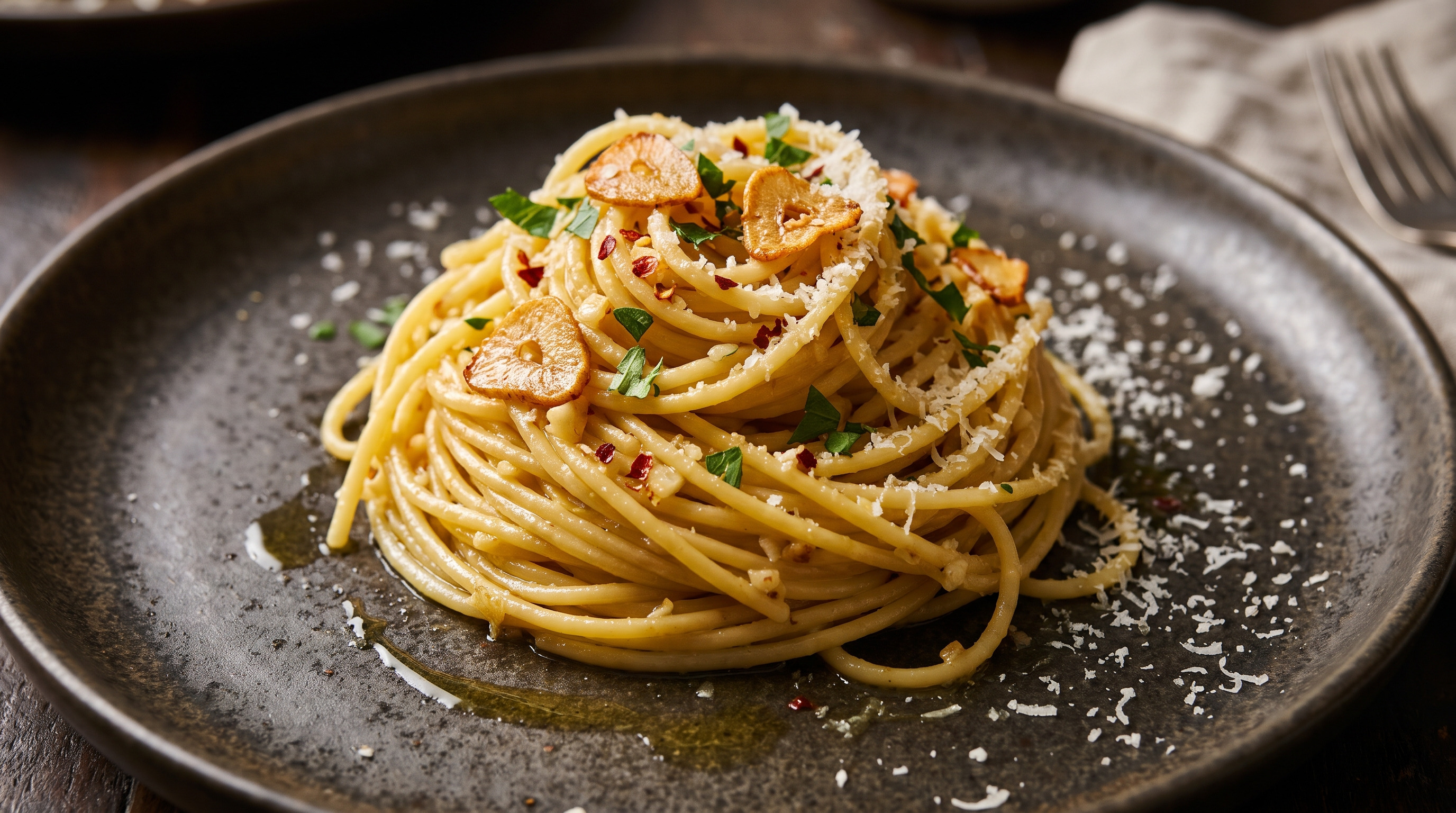
Quick Recipe Snapshot: ⏱️ Prep: 5 mins | 🔥 Cook: 10 mins | 🍽️ Servings: 2 | 💡 Key Secret: Cold-start garlic infusion in extra virgin olive oil + high-energy mantecare emulsion using 1% salinity starchy pasta water.
Few dishes in world gastronomy demonstrate the sheer magic of culinary minimalism like traditional Neapolitan Spaghetti Aglio e Olio. Composed of merely garlic (aglio), extra virgin olive oil (olio), dried hot chilies (peperoncino), and spaghetti, this iconic Italian pasta delivers an explosion of fragrant nutty sweetness, fruity olive richness, and fiery warmth that rivals any complex multi-hour sauce.
Yet home cooks frequently encounter frustrating setbacks when attempting this classic: the oil pools greasily at the bottom of the plate, the garlic burns into bitter brown specks that taint the entire dish, or the pasta tastes completely disconnected from the bland, watery sauce.
The difference between a lackluster homemade oil pasta and the glossy, clingy masterpiece served by Italian and modern Asian bistro chefs lies in three precise food science principles: cold-start low-temperature lipophilic oil infusion, rapid mechanical agitation with colloidal starch water (the Italian technique of mantecare), and the rigorous 1% water salinity rule.
With just 15 minutes of kitchen time and a handful of pantry staples, understanding these foundational mechanics guarantees an exquisite plate of pasta with a lustrous sauce that hugs every single strand.
1. The Culinary Science Behind Restaurant-Quality Aglio e Olio
Because Aglio e Olio contains virtually no heavy cream, butter, or tomato paste to mask mistakes, the physical interactions between fat, water, and aromatic heat dictate 99% of your final flavor profile.
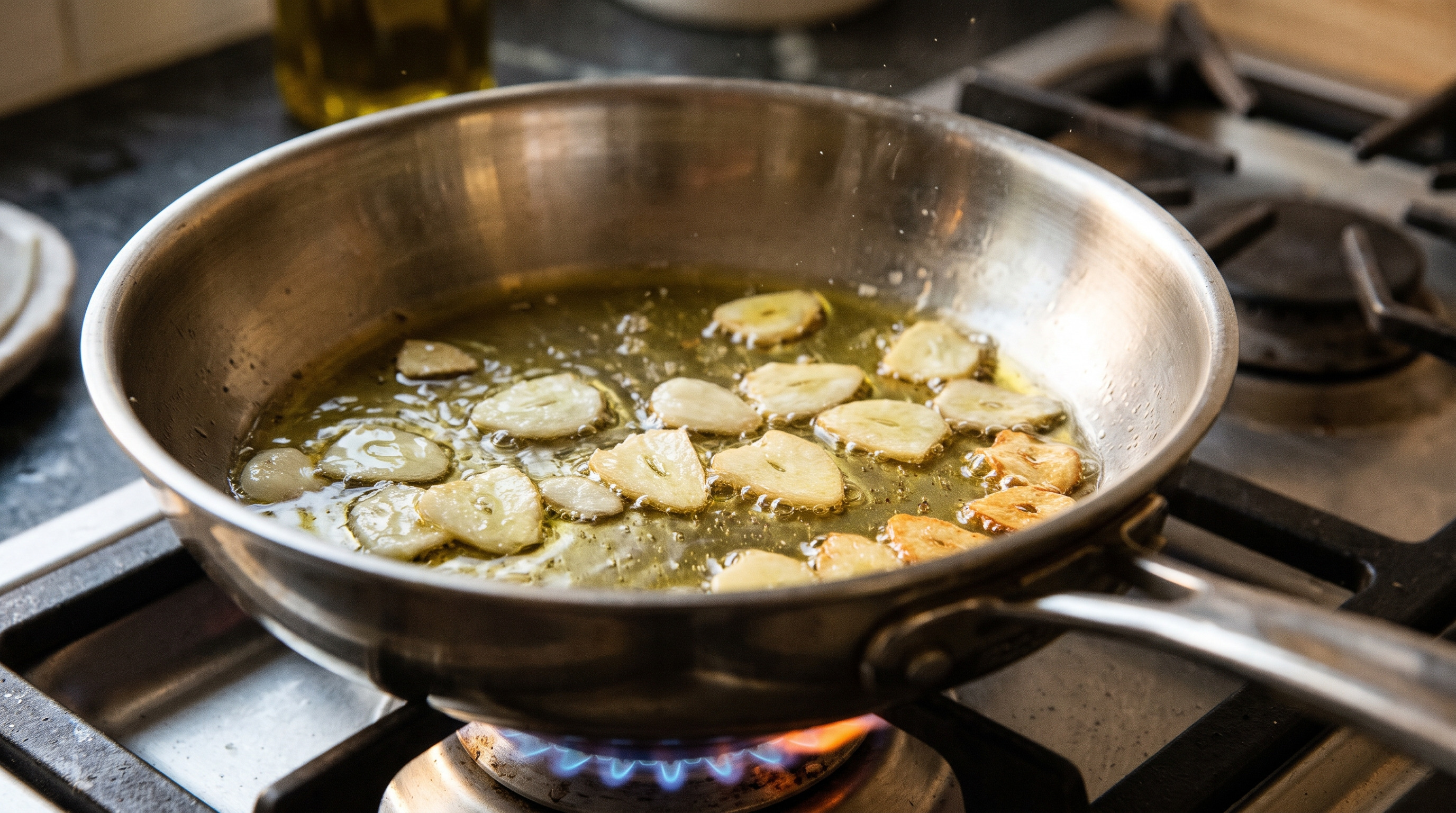
💡 Culinary Science 1: Cold-Start Low-Heat Extraction of Garlic Allicin Garlic cloves owe their pungent, intoxicating perfume to sulfurous volatile compounds, primarily allicin. When subjected to sudden high heat (such as dropping garlic into smoking oil), allicin degrades instantaneously, scorching the sugars and generating bitter, acrid compounds that ruin the oil base. By starting thinly sliced garlic in cold extra virgin olive oil over gentle low heat (the ‘Cold Start’ method), cell walls gradually soften and release their sweet, nutty aromatic essences without browning prematurely, thoroughly infusing every drop of cooking fat.
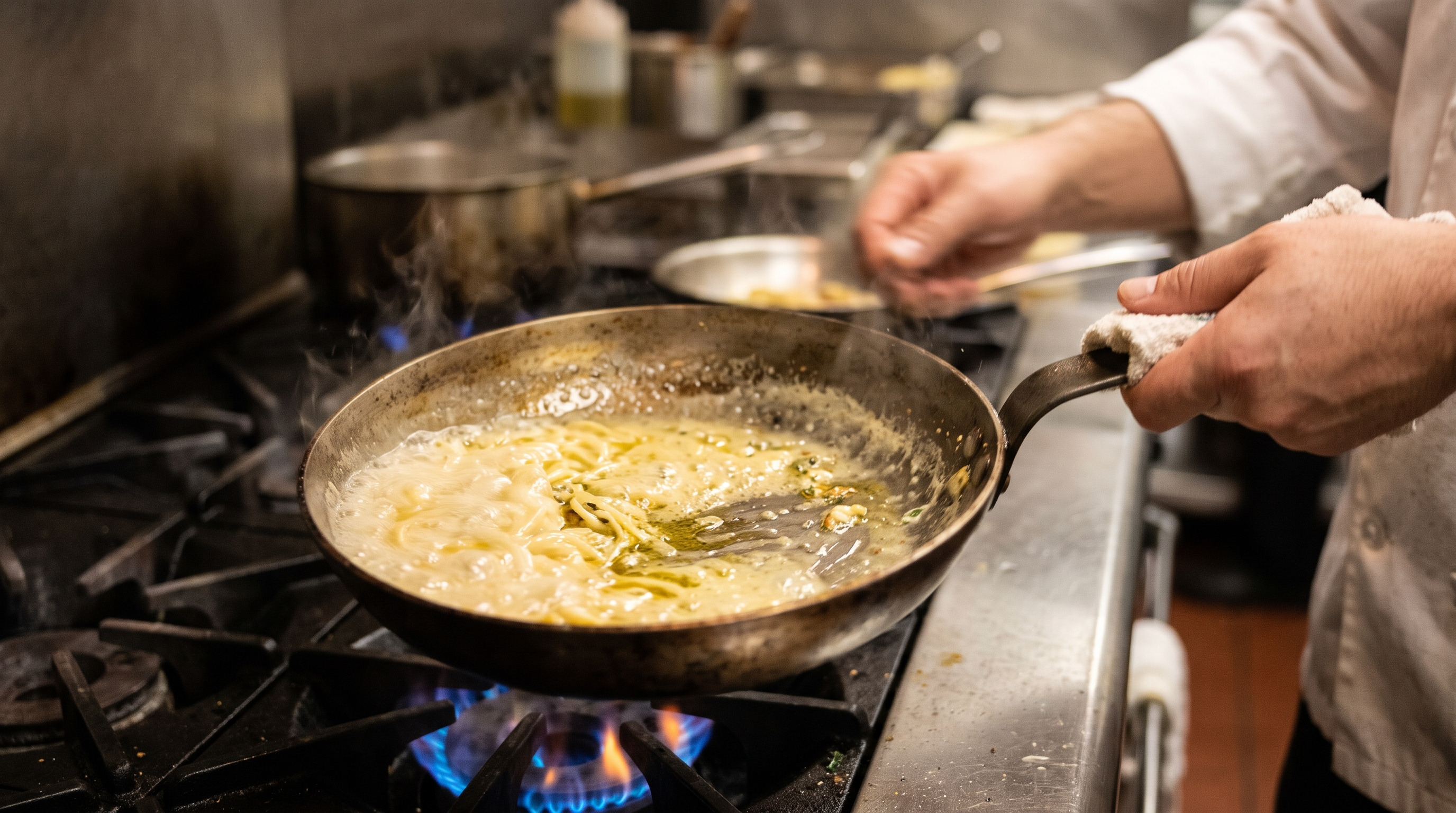
💡 Culinary Science 2: The Starch-Mediated Mantecare Emulsion Mechanism Oil and water are naturally immiscible due to differing molecular polarities. However, water in which pasta has boiled is rich in suspended amylose and amylopectin starches. When hot pasta water is introduced to seasoned olive oil and agitated vigorously over medium-high heat, these starch molecules act as microscopic colloidal emulsifiers. They surround and suspend tiny droplets of oil in the water phase, creating a creamy, opaque emulsion (mantecare) that clings tenaciously to the pasta instead of separating into a greasy pool.
2. Essential Ingredients & The Golden Ratio Sauce
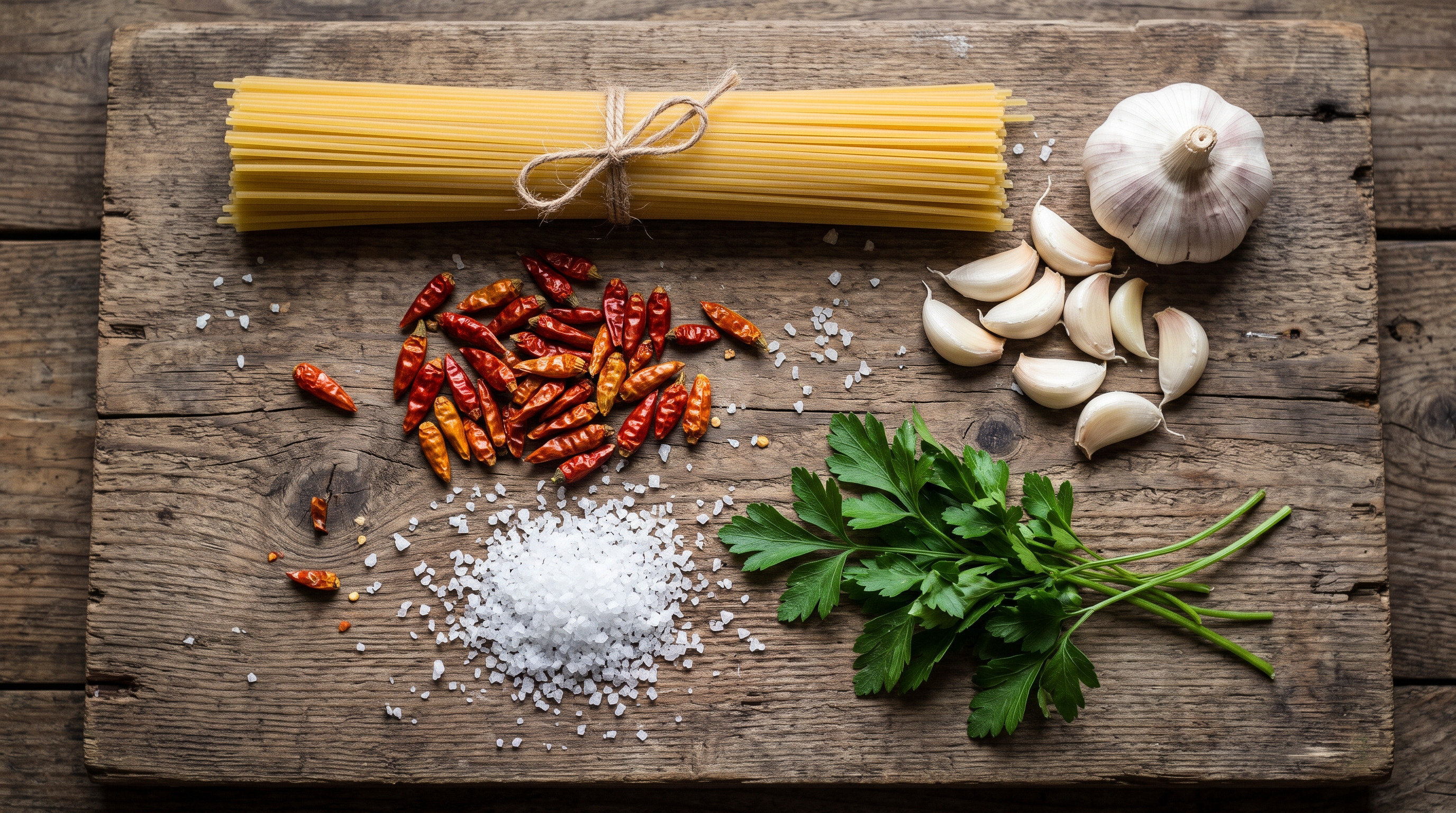
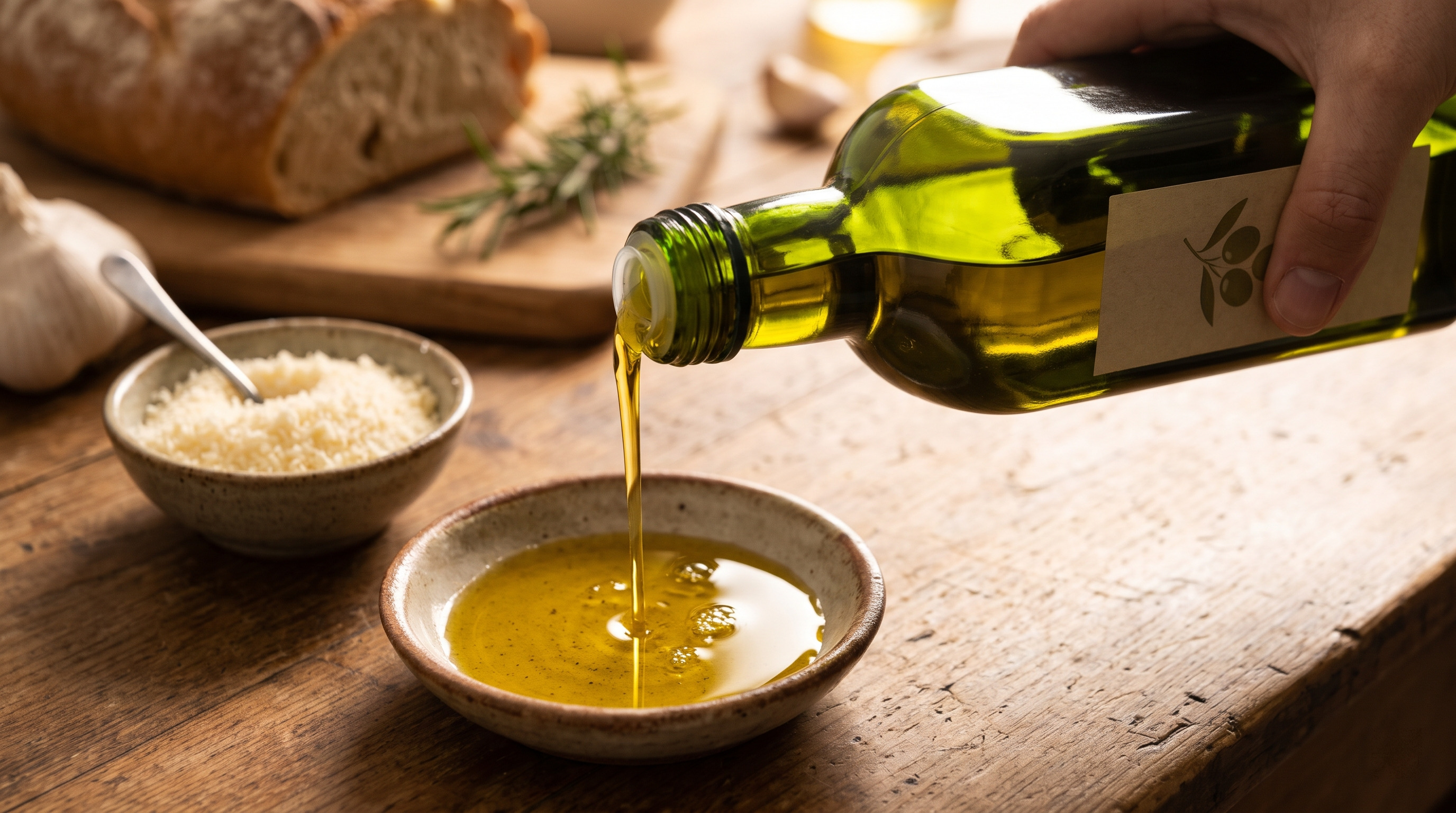
The golden ratio for two generous adult servings relies on 200g of high-quality pasta balanced with roughly 70ml of fresh extra virgin olive oil and 120ml of reserved starchy cooking water.
| Category | Ingredients & Amounts (Metric & US) | Chef’s Notes & Substitutions |
|---|---|---|
| Pasta Base | 200g (7 oz) bronze-cut spaghetti | Choose bronze-die (trafilata al bronzo) pasta. Its coarse, matte surface captures emulsified sauces vastly better than smooth Teflon-extruded noodles. |
| Aromatic Oil | 70ml (1/3 cup / 5 tbsp) extra virgin olive oil | Use fresh, cold-pressed extra virgin olive oil with low acidity. Save an extra 1 tbsp of raw oil for drizzling off the heat. |
| Garlic Profile | 10–12 plump garlic cloves (approx. 50g / 1.8 oz) | Use the 70/30 split strategy: 70% thinly sliced lengthwise for crunchy golden chips, and 30% coarsely minced to thoroughly scent the oil. |
| Heat & Spice | 5–6 dried Italian peperoncino (or 1/2 tsp red pepper flakes) | Crush by hand into the oil. At Asian grocers or H-Mart, dried whole bird’s eye chilies or fresh Korean Cheongyang peppers make a delicious spicy substitute. |
| Saline Pasta Water | 2L (8.5 cups) water + 20g (1.5 tbsp / 0.7 oz) coarse kosher salt | Yields exact 1% salinity. Crucial: Reserve 1–2 cups of hot pasta water before draining; do not discard! |
| Finishing Touches | 1 tbsp fresh flat-leaf parsley (minced) + freshly grated Parmigiano-Reggiano + black pepper | Parsley cuts through rich oil with fresh herbaceous aroma. Cheese is optional but provides savory glutamic umami depth. |
3. Step-by-Step Cooking Instructions
Follow these chronological steps closely. Total cooking time is under 15 minutes, so have all garlic sliced and ingredients within arm’s reach before lighting the stove.
Step 1. Boil Pasta in 1% Saline Water to Al Dente (80% Cooked)
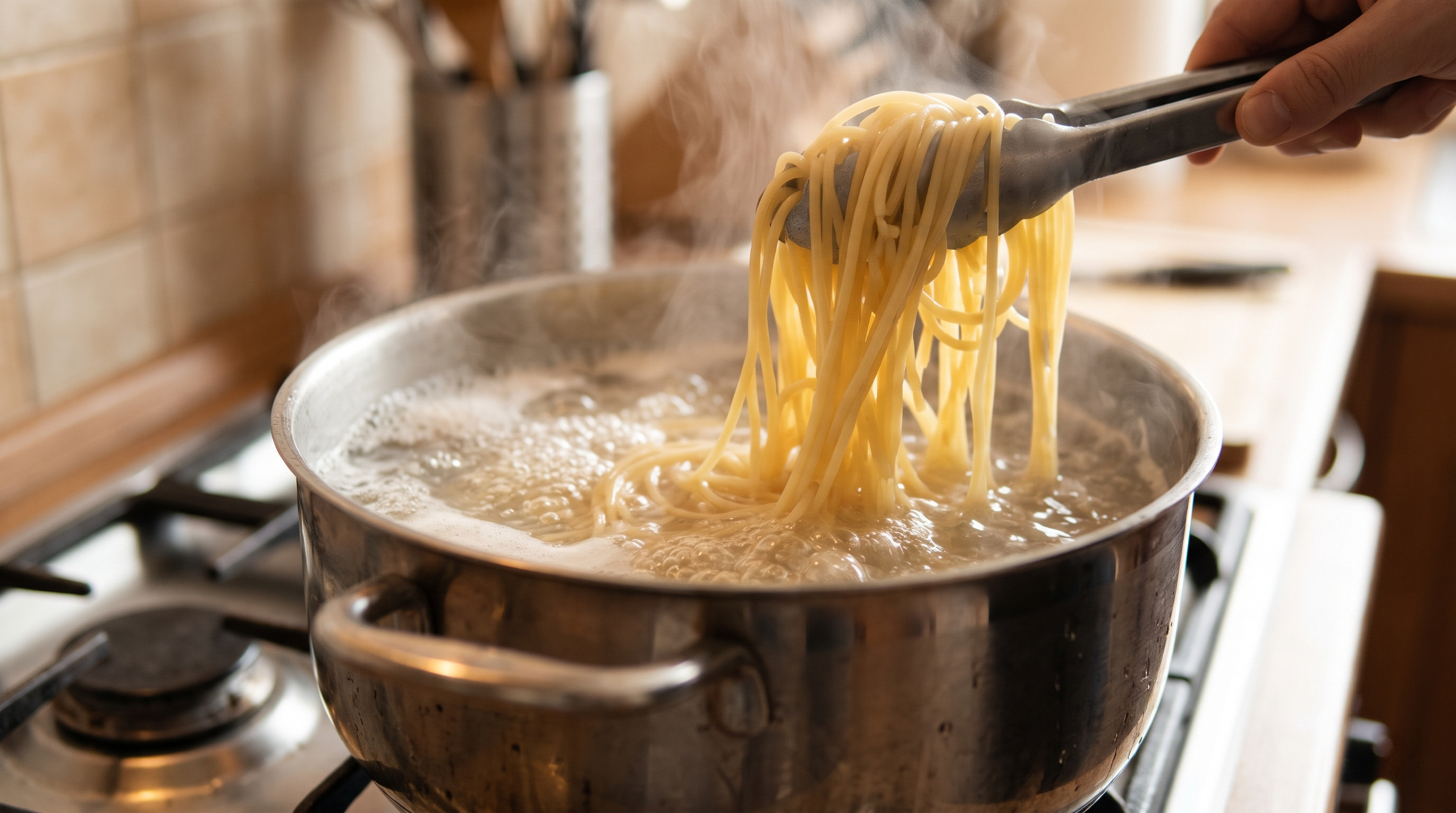
Bring 2 liters (8.5 cups) of fresh water to a rolling boil in a deep stockpot. Add 20g (1.5 tbsp) coarse kosher salt, ensuring it dissolves completely. Fan 200g (7 oz) of spaghetti into the boiling water and stir gently to prevent sticking.
Cook the pasta for 2 minutes less than the package instructions (typically 6 to 7 minutes for spaghetti). The pasta must still possess a firm chalky core (al dente), as it will continue cooking in the emulsifying sauce. Right before draining, scoop out at least 240ml (1 cup) of cloudy, starchy pasta water and set it aside. Drain the pasta and immediately refrain from rinsing it under tap water.
Step 2. Cold-Start Low-Heat Garlic & Peperoncino Oil Infusion
Into a wide, unheated cold skillet or sauté pan, pour 70ml (5 tbsp) of extra virgin olive oil. Add the thinly sliced garlic and minced garlic simultaneously into the cold oil.
Turn the heat to low. Allow the pan to warm gently; after 2 to 3 minutes, small, quiet bubbles will surround the garlic slices. Swirl the pan occasionally to cook the garlic evenly. As soon as the garlic slices turn pale blonde (light cream color), crush 5 to 6 dried peperoncino peppers between your fingers directly into the pan. Sauté for an additional 30 seconds until the garlic edges transform into a crisp, light golden amber.
Step 3. Pour Starchy Pasta Water & Vigorous Mantecare Emulsion
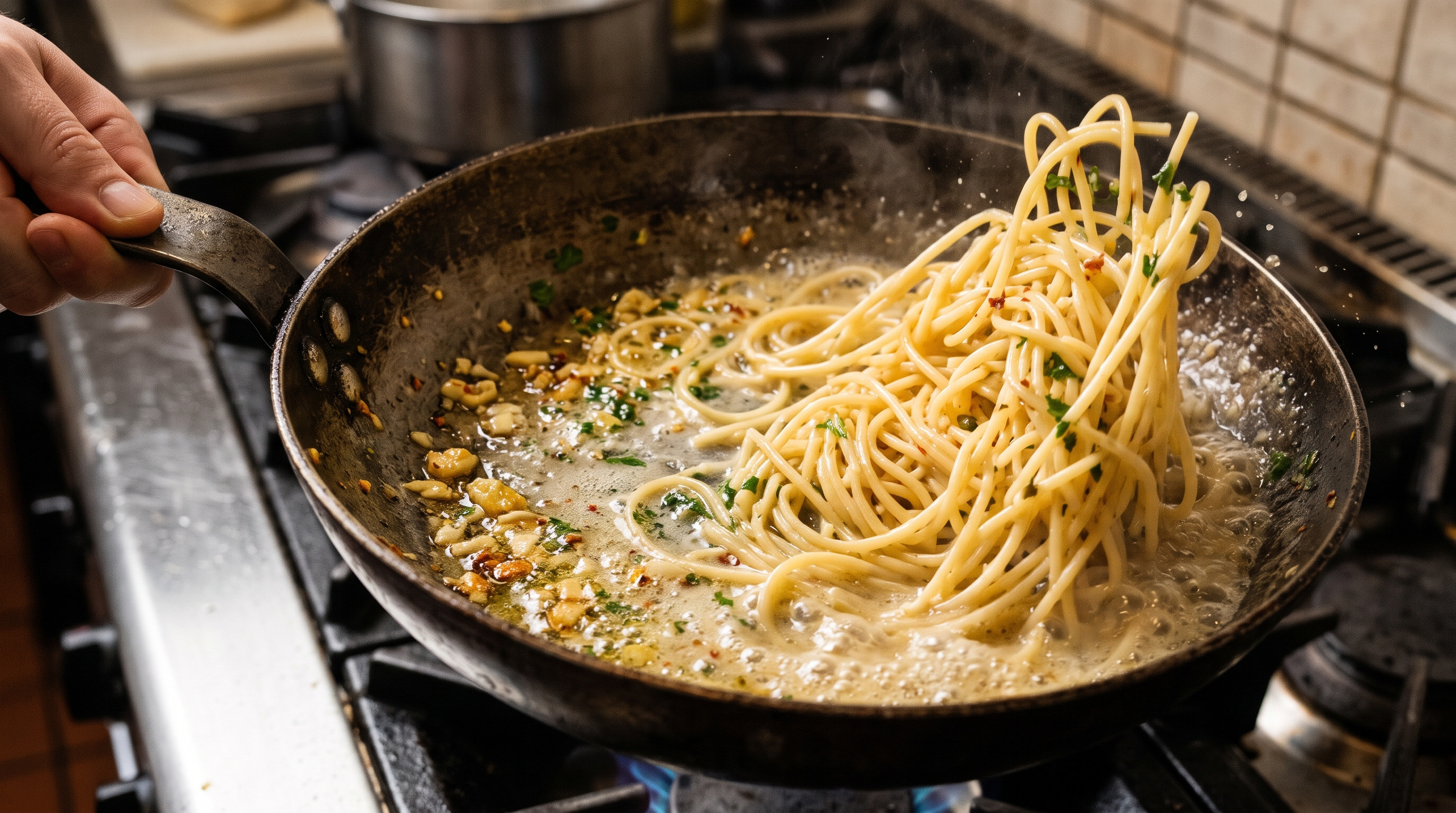
With the garlic at a perfect golden shade, immediately pour 120ml (1/2 cup) of the reserved boiling pasta water directly into the hot oil pan. Take caution, as the hot fat and water will sizzle loudly upon contact.
Raise the heat to medium-high. Using a silicone spatula or wooden spoon, swirl and shake the pan vigorously in a continuous circular motion. As the water boils rapidly, the suspended amylose starch droplets collide with the olive oil. Within 45 to 60 seconds, the clear separation of oil and water vanishes, morphing into an opaque, pale yellow, glossy sauce with a creamy broth-like consistency.
Step 4. Toss Spaghetti, Reduce & Garnish with Finishing Oil
Transfer the drained, hot spaghetti directly into the bubbling emulsion pan. Keep the heat on high and toss vigorously with tongs, stirring the pasta in wide swirling motions for 60 to 90 seconds. The porous, undercooked pasta will rapidly drink in the savory garlic-infused liquid while its remaining surface starch thickens the sauce into a silk-like glaze coating every strand.
Turn off the burner completely. Drizzle 1 tablespoon of fresh, unheated extra virgin olive oil over the noodles, then sprinkle with finely chopped Italian flat-leaf parsley and freshly cracked black pepper. Using kitchen tongs and a large ladle, twirl portions into tall, elegant nests in warm shallow pasta bowls. Spoon the remaining golden garlic chips and glossy pan juices over top, and dust with freshly grated Parmigiano-Reggiano cheese if desired.
4. Pro Chef Tips to Elevate Your Dish
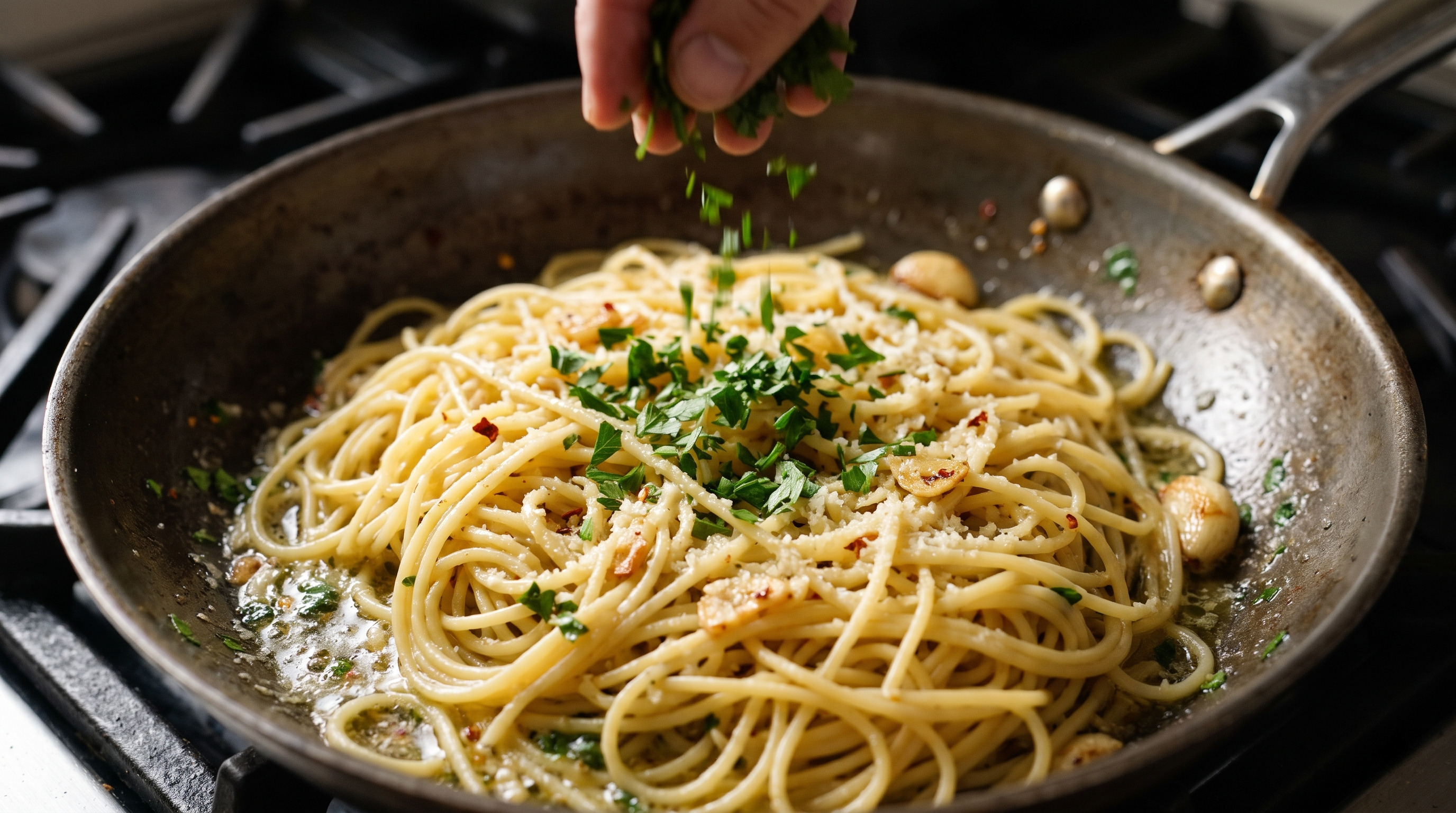
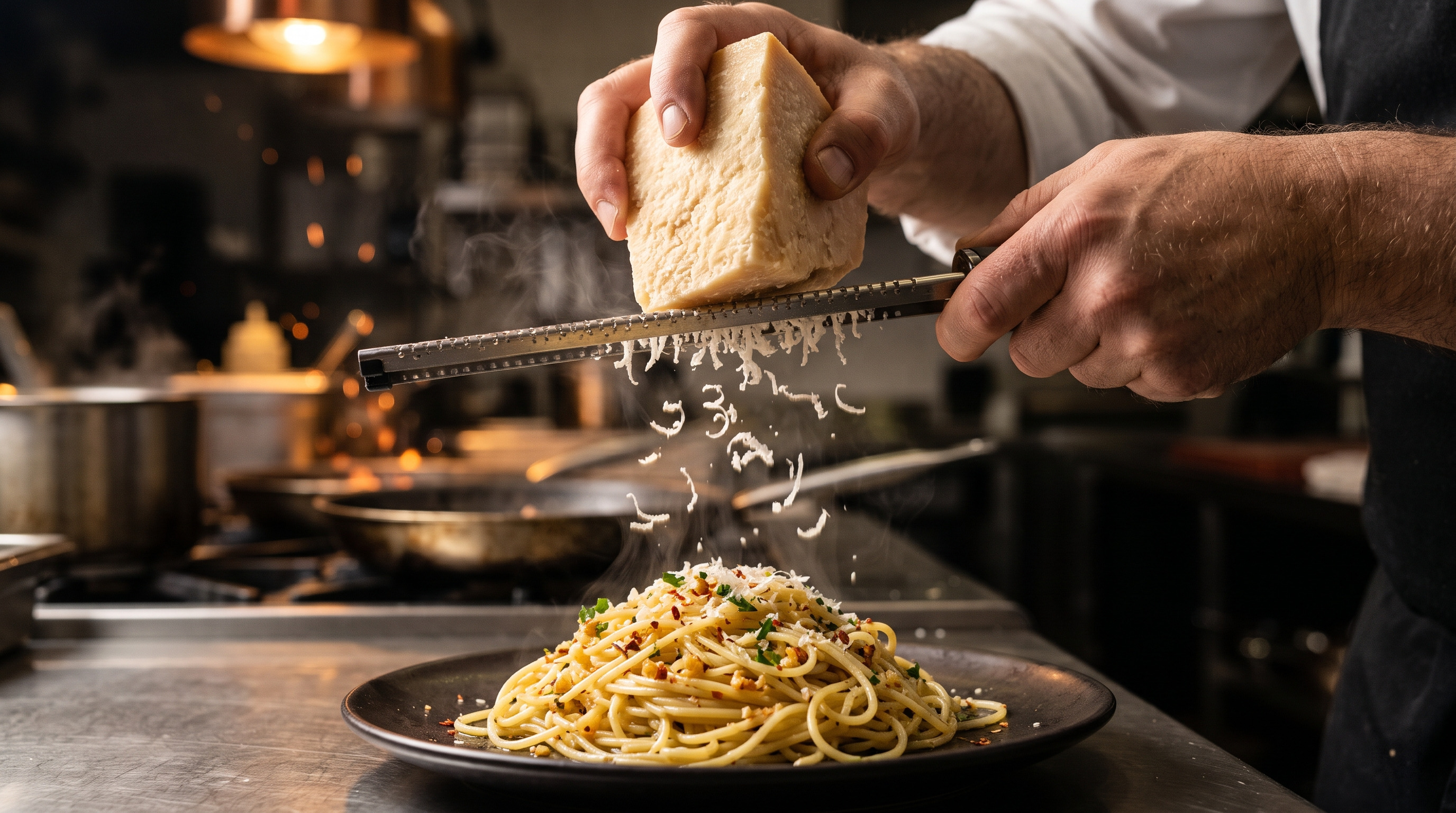
Elevate this humble classic from ordinary home fare to fine-dining standards with these three insider culinary techniques:
- The Uncompromised 1% Saline Rule: Pasta dough absorbs water and dissolved mineral ions as its starch granules swell during boiling. If cooked in unseasoned water, the interior of the pasta strand remains permanently bland, requiring excessive surface salting later. Strictly maintaining 10g of salt per liter of boiling water guarantees evenly seasoned pasta from core to surface.
- The Dual-Garlic Cutting Strategy (Sliced + Minced): Slicing garlic lengthwise gives beautiful crispy chips with delicate aromatics, but larger slices surrender their allicin slowly. Coarsely mincing 30% of your garlic exposes greater surface area, dispersing deep savory pungency directly into the oil matrix. Combining both techniques provides crispy texture and intense garlic aroma simultaneously.
- The Off-Heat Raw Finishing Oil Drizzle: High cooking temperatures inevitably volatilize the subtle grassy, peppery polyphenols found in extra virgin olive oil. Drizzling one tablespoon of raw, unheated premium oil over the pasta after removing the pan from the heat restores vivid freshness and elevates the dish with an unforgettable aroma.
5. Frequently Asked Questions (FAQ)
Q1. What should I do if the sauce reduces too quickly and becomes dry or sticky?
Do not panic! Simply ladle in 2 to 3 tablespoons of hot reserved pasta water and swirl the skillet over medium heat. The natural starch will immediately rebuild a silky, glossy emulsified glaze. Keep your reserved pasta water warm on the back burner until plating is complete.
Q2. What can I substitute for Italian dried peperoncino?
Crushed red pepper flakes (1/2 tsp) work very well. For a vibrant Asian bistro twist popular in Seoul, finely slice 1 fresh Korean Cheongyang green chili (or serrano/jalapeño) and toss it into the oil right after the garlic turns golden. Avoid fine chili powder, which scorches in oil.
Q3. Can I add protein like shrimp, pancetta, or bacon?
Absolutely. Crisp diced pancetta, bacon, or peeled prawns in the skillet first in 1 tbsp olive oil. Remove the crisped protein to a side plate, use the flavorful rendered fat and olive oil to infuse the garlic, and toss the protein back into the skillet during the final tossing step.
6. Serving Suggestions & Wine/Side Pairing
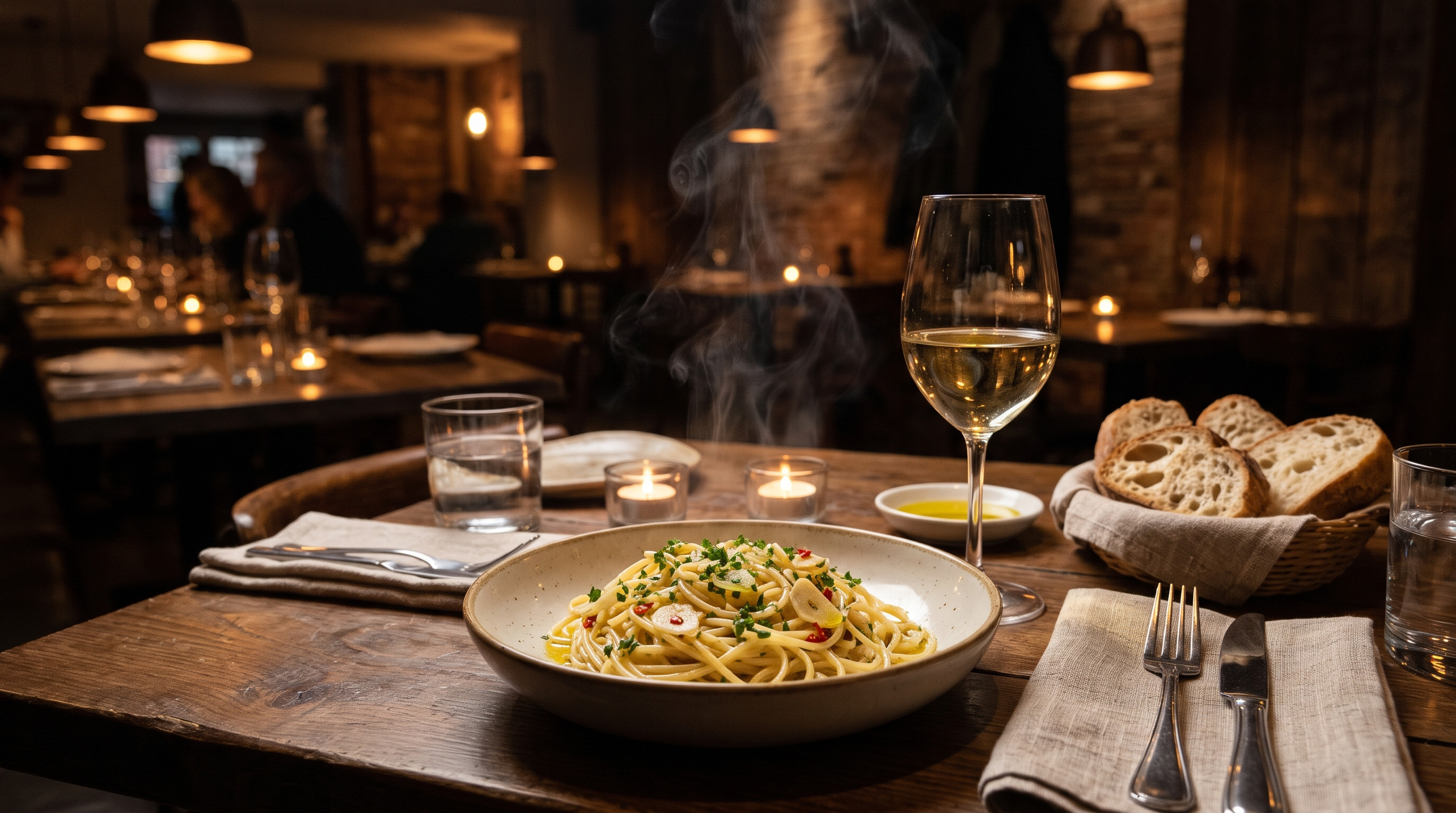
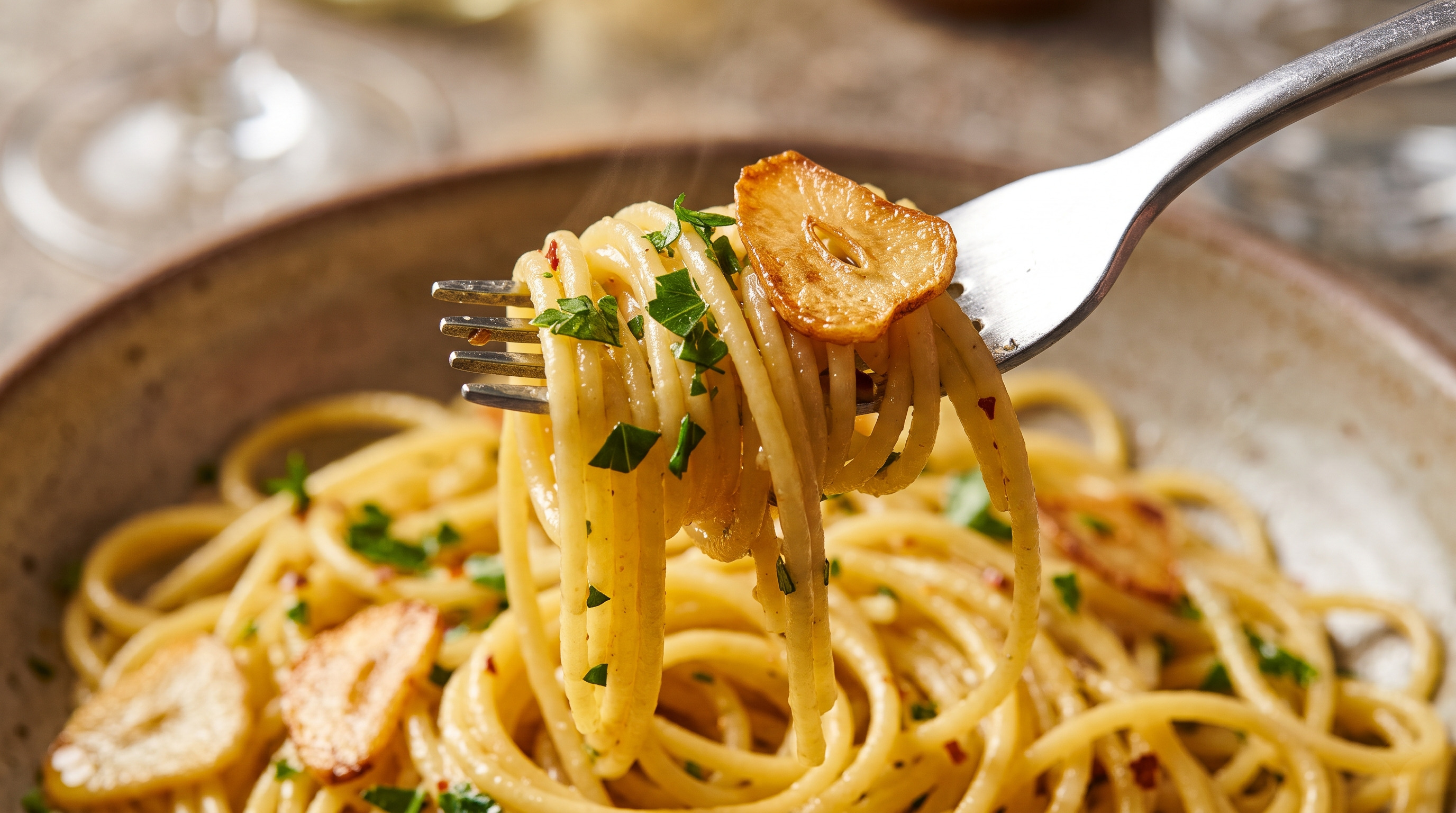
Aglio e Olio is best enjoyed piping hot straight from the skillet. Serve it alongside a peppery wild arugula salad dressed with fresh lemon juice and shaved Parmigiano-Reggiano to cut through the rich olive oil. For beverage pairings, pour a chilled glass of crisp, high-acidity Italian white wine such as Pinot Grigio, Vermentino, or dry sparkling Prosecco to cleanse the palate between savory mouthfuls.
If you enjoy fast, garlic-forward olive oil dishes, you will also love our sizzling Spanish-inspired Gambas al Ajillo (Garlic Shrimp). For an equally beloved weeknight favorite with deep caramelized umami, check out our rich Homemade Tomato Spaghetti.