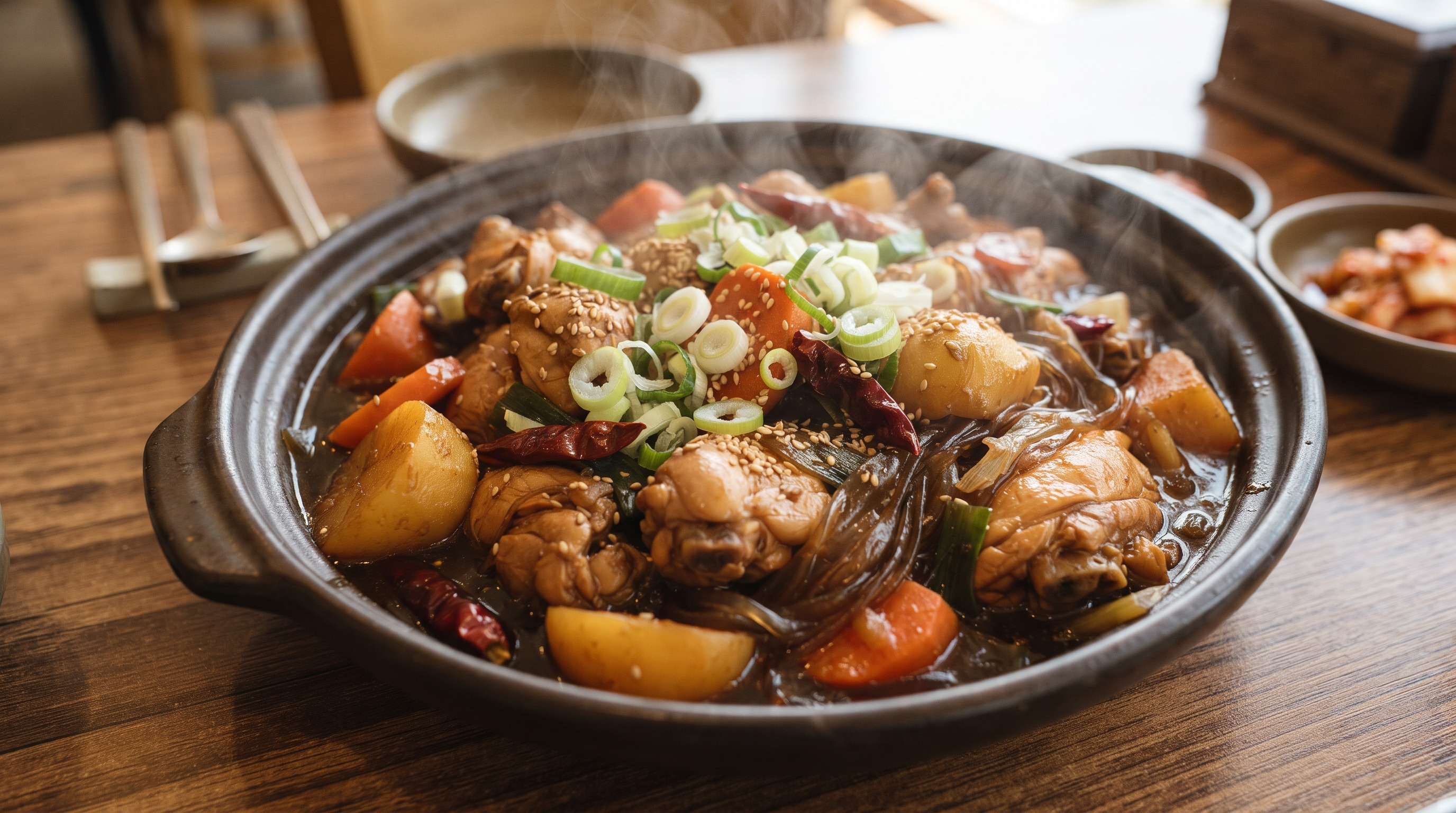
Quick Recipe Snapshot: ⏱️ Prep: 15 mins | 🔥 Cook: 30 mins | 🍽️ Servings: 3–4 | 💡 Key Secret: 3-minute parboil cleanse + high-heat soy caramelization + adding pre-soaked glass noodles in the final 5 minutes.
Hailing from the historic city of Andong in Gyeongsangbuk-do, Andong Jjimdak (안동찜닭) is one of South Korea’s most celebrated communal braised chicken dishes. Featuring tender chicken bathed in a glossy, dark savory-sweet soy sauce, paired with fluffy potatoes, sweet carrots, and slippery sweet potato glass noodles (dangmyeon), it offers an addictive balance of sweet, salty, and sharp chili warmth that leaves everyone craving seconds.
However, home cooks tackling Jjimdak frequently encounter three classic pitfalls: the chicken turns out pale and bland because the sauce merely floats on the surface, the chicken emits an unpleasant gamey aroma from bone marrow seepage, or the thirsty glass noodles absorb every drop of broth, burning onto the bottom of the pot into a starchy clump.
The secret behind famous Korean market stalls and franchise restaurants is rooted in three precise culinary science techniques: a preliminary 3-minute blanching cleanse, early Maillard caramelization of soy amino acids and sucrose, and moisture-controlled noodle hydration timing.
Master these straightforward steps and you will produce a stunning, restaurant-caliber braised chicken feast right on your home stovetop in just 45 minutes.
1. The Culinary Science Behind Restaurant-Style Andong Jjimdak
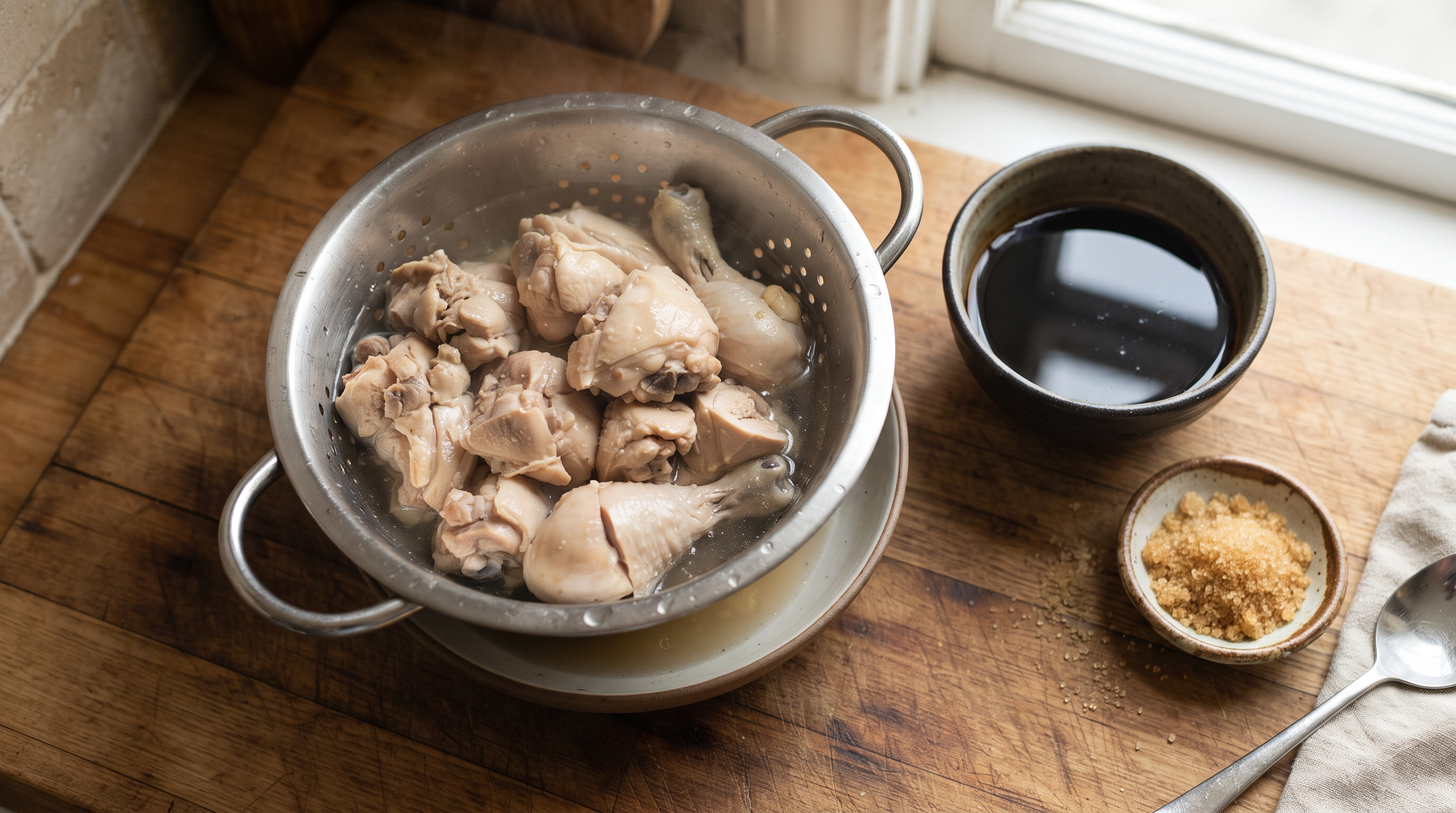
Pouring cold water and soy sauce directly over raw bone-in chicken yields a murky, diluted broth with persistent gamey odors. Flawless flavor extraction requires deliberate pre-treatment and thermal staging.
💡 Culinary Science 1: Blanching Cleanse & Osmotic Meat Tenderization Bone-in stewing chicken retains coagulated marrow blood and oxidized free fatty acids at the cut bone surfaces. Parboiling chicken in boiling water with rice wine for 2 to 3 minutes triggers rapid surface protein denaturation, purging impurities and trapping internal juices. Rinsing the blanched chicken in cold water removes bone shards. Seeding the drained meat with sucrose (brown sugar) prior to prolonged boiling allows smaller sugar molecules to penetrate the muscle bundles, binding water molecules and dramatically tenderizing the chicken fibers through osmotic moisture retention.
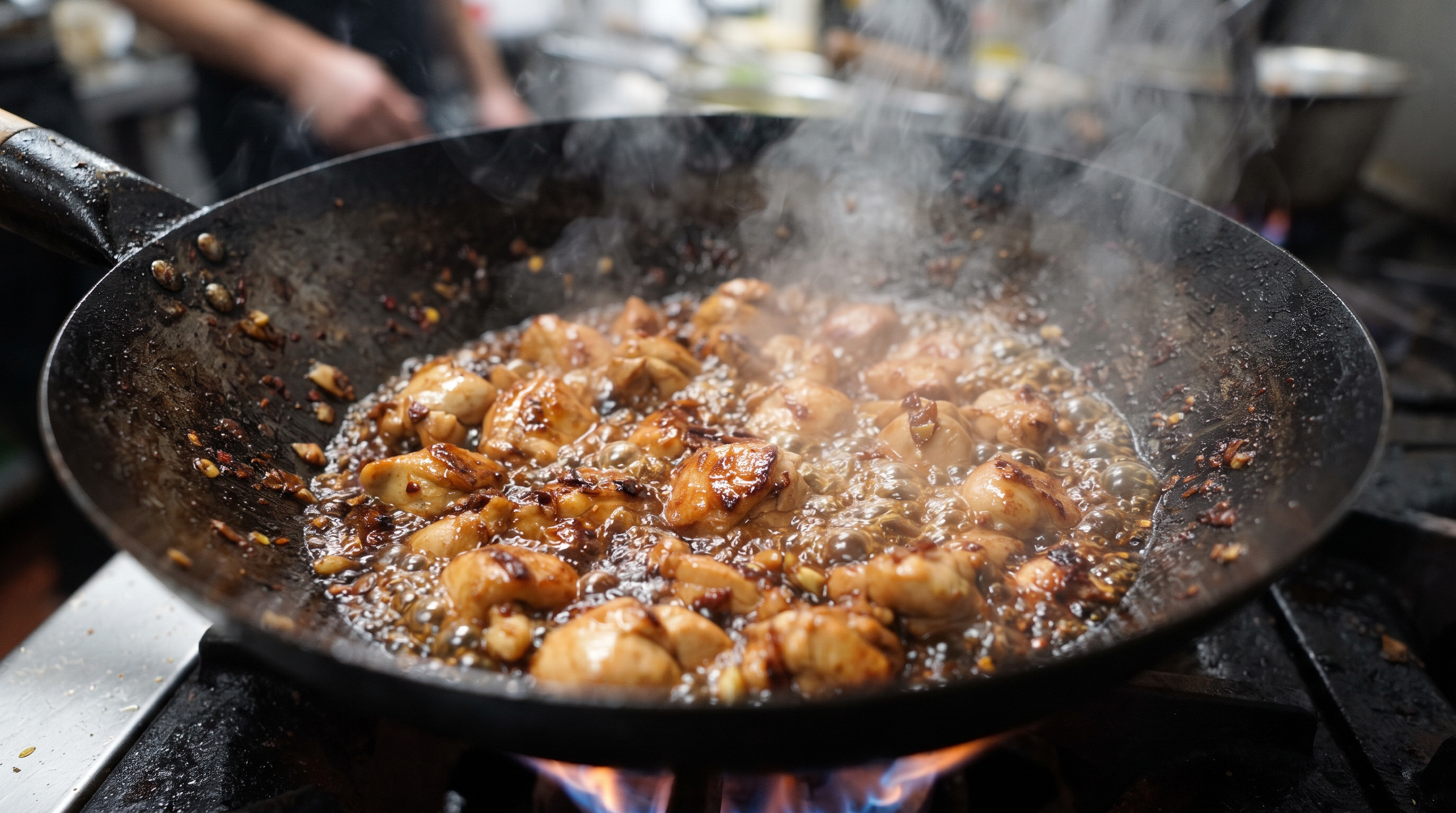
💡 Culinary Science 2: Soy Sauce Caramelization & The Secret of Dark Soy Glaze The signature mahogany glaze of authentic Jjimdak originates from high-temperature reactions between reducing sugars and free amino acids in soy sauce—a dual Maillard reaction and thermal caramelization. Sautéing blanched chicken in a concentrated soy-sugar reduction before flooding the pan with broth allows rendered skin fat and amino acids to fuse, producing rich pyrazine aromatics. Adding a half-tablespoon of aged dark soy sauce (no-du-yu / 老抽) or dark brown sugar imparts a luxurious ebony sheen without oversaturating the stew with sodium chloride.
2. Essential Ingredients & The Golden Ratio Sauce
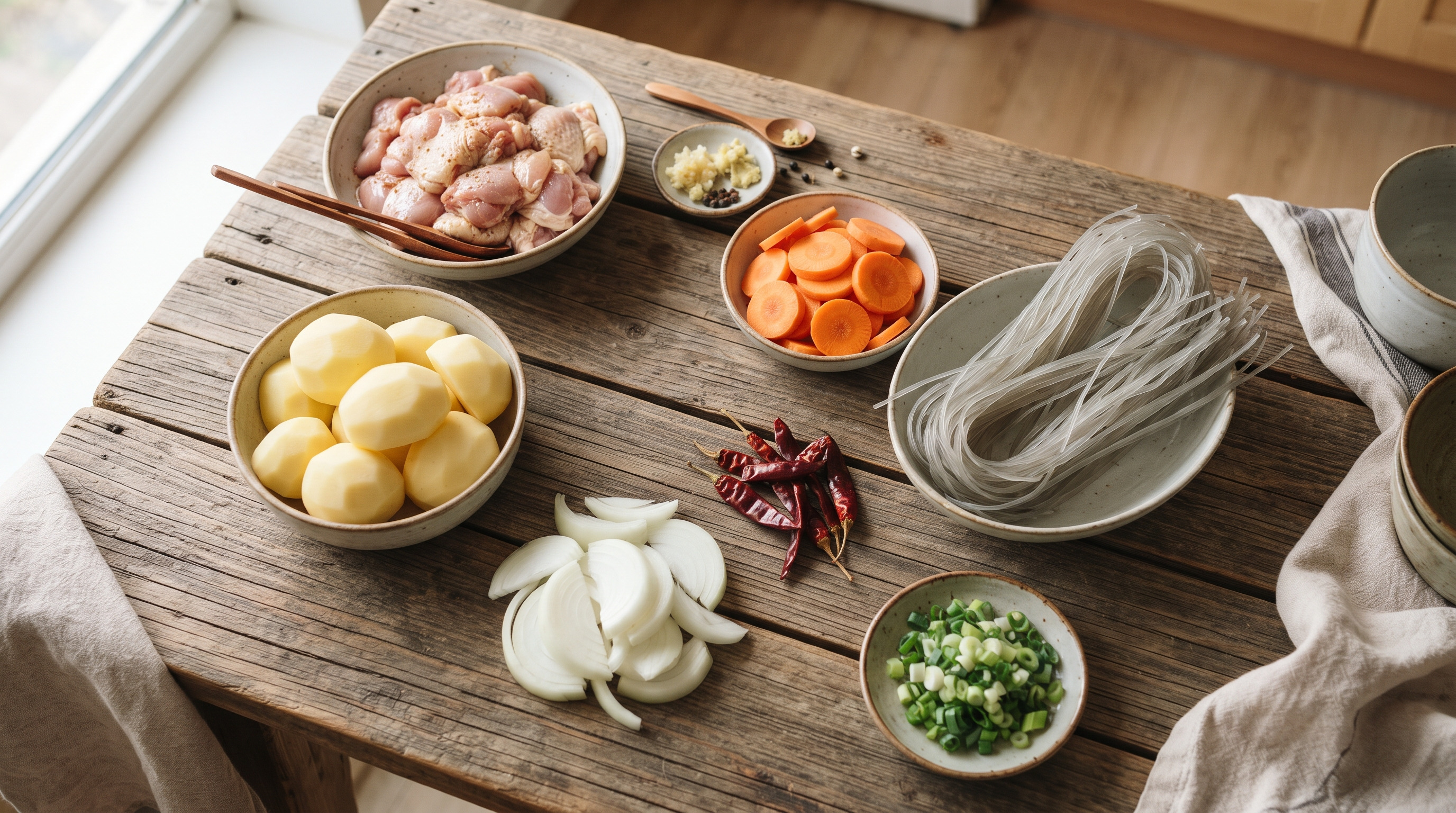
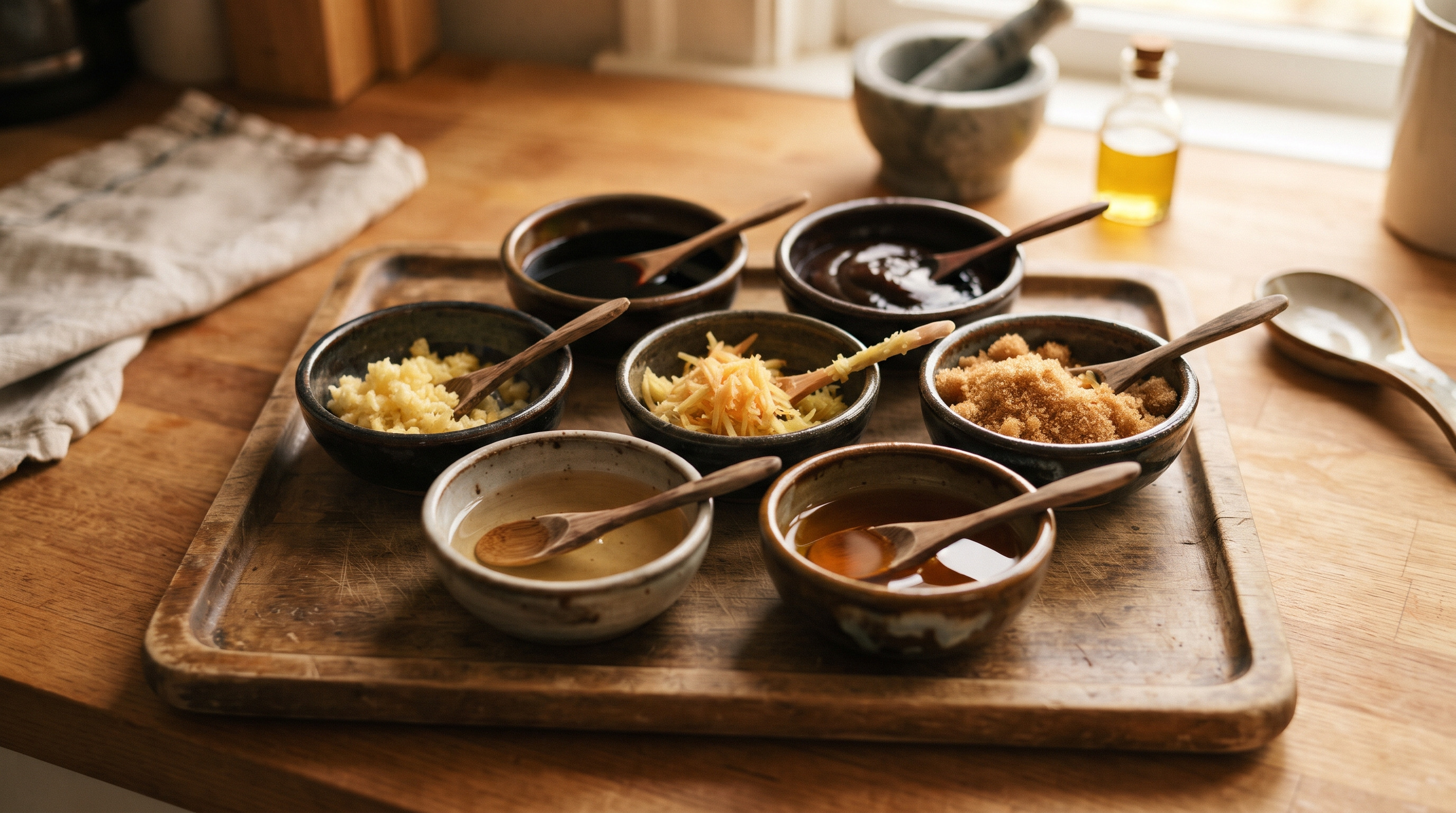
This formula serves 3 to 4 adults generously. Korean flat glass noodles (napjak dangmyeon) provide superior chewiness compared to standard round vermicelli.
| Category | Ingredients & Amounts (Metric & US) | Chef’s Notes & Substitutions |
|---|---|---|
| Poultry Base | 1kg (2.2 lbs) bone-in cut chicken (or boneless skin-on thighs) | Fresh bone-in chicken produces richer gelatin and flavor. Ensure cut bone ends are clean and pink, not dark grey. |
| Chewy Noodles | 100g (3.5 oz) Korean sweet potato flat glass noodles (dangmyeon) | Must be soaked in cool or lukewarm water for at least 1 hour before cooking. Available at H-Mart or Asian grocers. |
| Vegetable Medley | 2 medium potatoes (350g / 12 oz), 1/2 carrot, 1 onion, 1 green onion | Peel and round the sharp edges of potato chunks so they do not disintegrate during prolonged simmering. |
| Chili Kick | 4–5 dried whole red chilies + 2 fresh Cheongyang green chilies | Dried chilies impart clean, smoky heat to the braising sauce, while fresh green chilies add sharp crispness at the finish. |
| Braising Broth | 600ml (2.5 cups) kelp stock (dashima water) | Steep 2 dried kelp squares (5x5cm) in cold water for 20 minutes to extract natural glutamic acid umami. |
| Golden Soy Sauce Blend | 100ml (7 tbsp) soy sauce + 1/2 tbsp dark soy sauce + 3 tbsp brown sugar + 2 tbsp mirin + 3 tbsp minced garlic + 1/2 tbsp ginger | The dark soy sauce adds restaurant-depth color. Whisk thoroughly until sugar dissolves completely. |
| Glossy Finish | 2 tbsp Korean corn syrup (mulyeot) or oligodang + 1 tbsp toasted sesame oil + 1 tbsp sesame seeds | Adding corn syrup in the final 3 minutes creates an irresistible glossy sheen. |
3. Step-by-Step Cooking Instructions
Preparation takes roughly 15 minutes once the glass noodles have been soaked. Keep heat levels high during the opening and closing stages.
Step 1. Parboil Chicken with Rice Wine (3-Minute Cleanse)
Bring 1 liter (4 cups) of water to a rolling boil in a stockpot. Add 3 tablespoons of cooking rice wine (mirin or sake). Carefully slide the cut chicken pieces into the bubbling water.
Parboil for exactly 2 to 3 minutes over high heat. Grayish scum and coagulated blood will rapidly rise to the surface while the chicken skin tightens. Drain the chicken into a colander, discard the murky blanching liquid, and rinse the chicken thoroughly under cold running tap water to wash away residual bone grit. Pat dry with paper towels.
Step 2. High-Heat Soy-Sugar Caramelization Sear
Place a wide, deep braising pan or wok over medium-high heat. Add the parboiled chicken directly to the dry pan. Sprinkle 3 tablespoons of brown sugar and pour in 3 tablespoons of the prepared soy sauce mixture.
Sauté vigorously for 3 to 4 minutes. As the heat rises, the sugar melts and foams, coating the chicken skin while rendered chicken fat emulsifies with the soy sauce. The chicken pieces will take on an appetizing golden-brown caramelized glaze while filling your kitchen with an enticing sweet-savory roasted aroma.
Step 3. Pour Kelp Stock & Simmer Root Vegetables
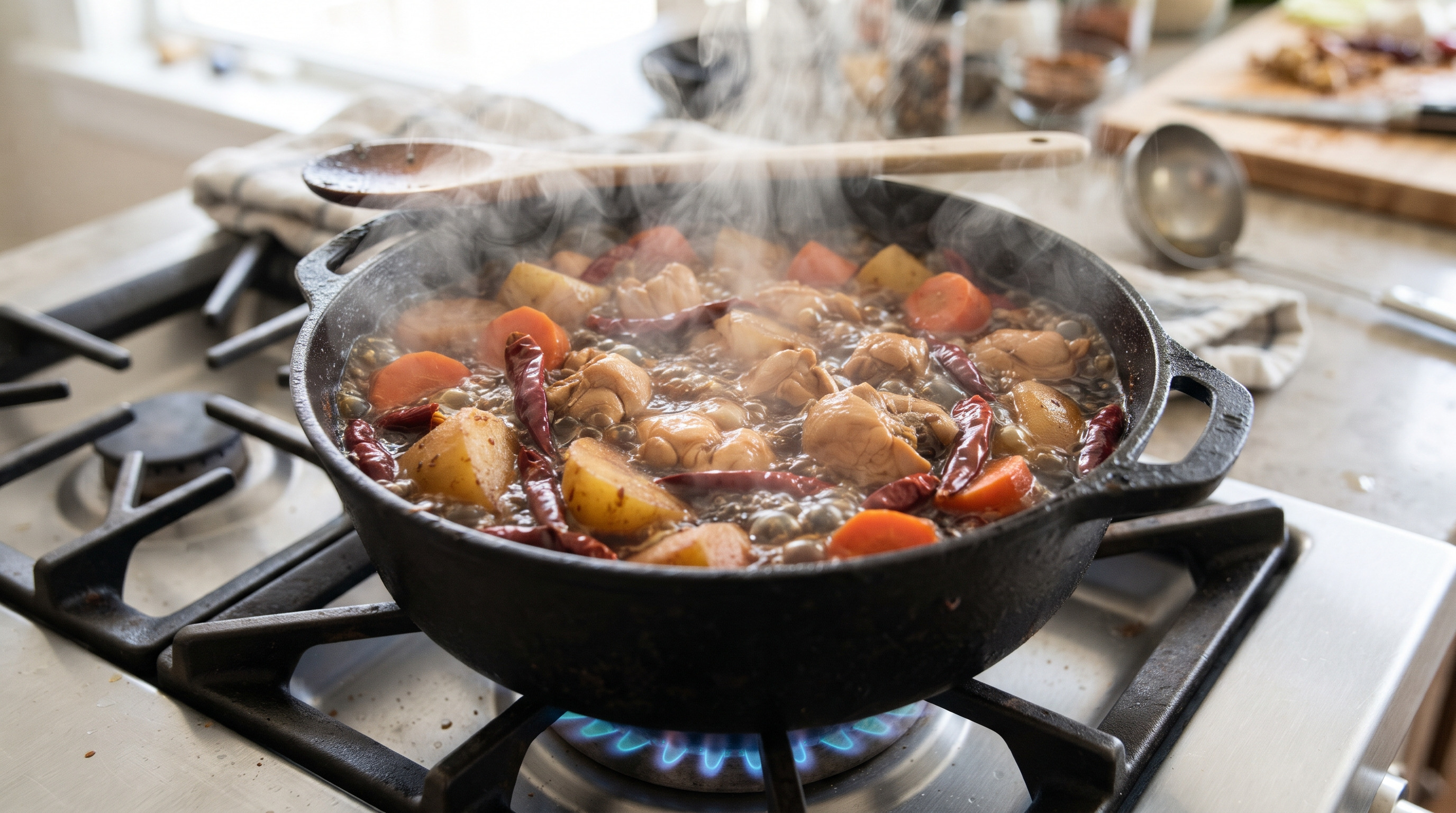
Pour in the remaining soy sauce blend, snap the dried red chilies in half (dropping seeds and pods into the pan), and pour in 600ml (2.5 cups) of kelp stock. Bring the liquid to a rolling boil over high heat, skimming off any frothy foam from the surface.
Add the prepped potato and carrot chunks. Once bubbling vigorously, reduce heat to medium-low, cover with a lid, and simmer gently for 15 minutes. At the 15-minute mark, test the potatoes with a skewer or fork—they should yield smoothly without crumbling into the liquid.
Step 4. Add Soaked Glass Noodles, Aromatics & Glaze
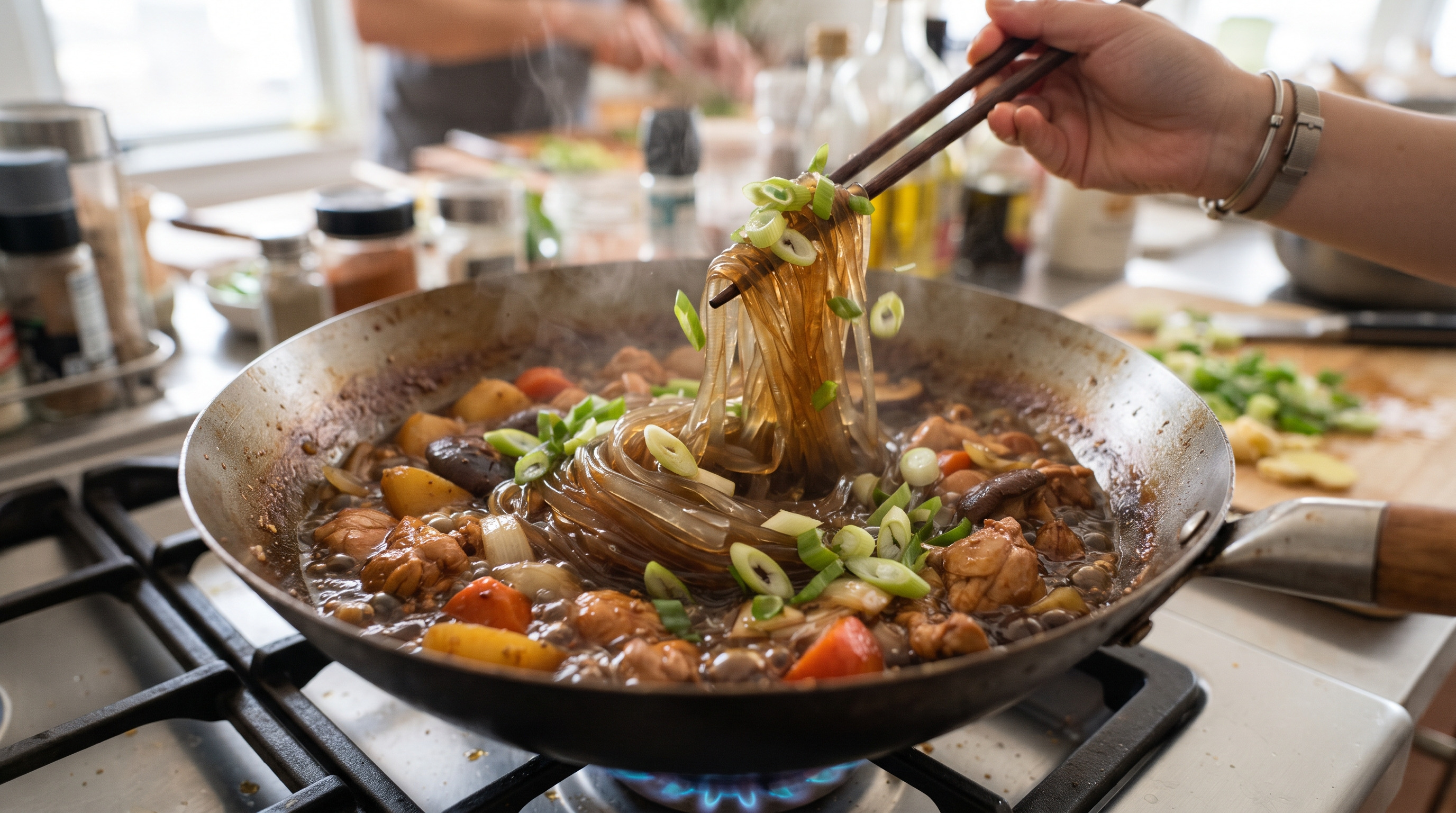
Remove the lid. Slide the pre-soaked sweet potato flat glass noodles into the bubbling broth, followed by the sliced onions, green onions, and fresh chilies. Drizzle 2 tablespoons of Korean corn syrup (mulyeot) over the mixture.
Turn the heat back up to high. Stir continuously with a long wooden spoon for 4 to 5 minutes, basting the noodles and chicken in the simmering sauce. The noodles will turn glossy, translucent, and delightfully chewy while the sauce thickens into a clingy, dark syrup. Turn off the heat, stir in 1 tablespoon of toasted sesame oil, and garnish with sesame seeds before serving family-style.
4. Pro Chef Tips to Elevate Your Dish
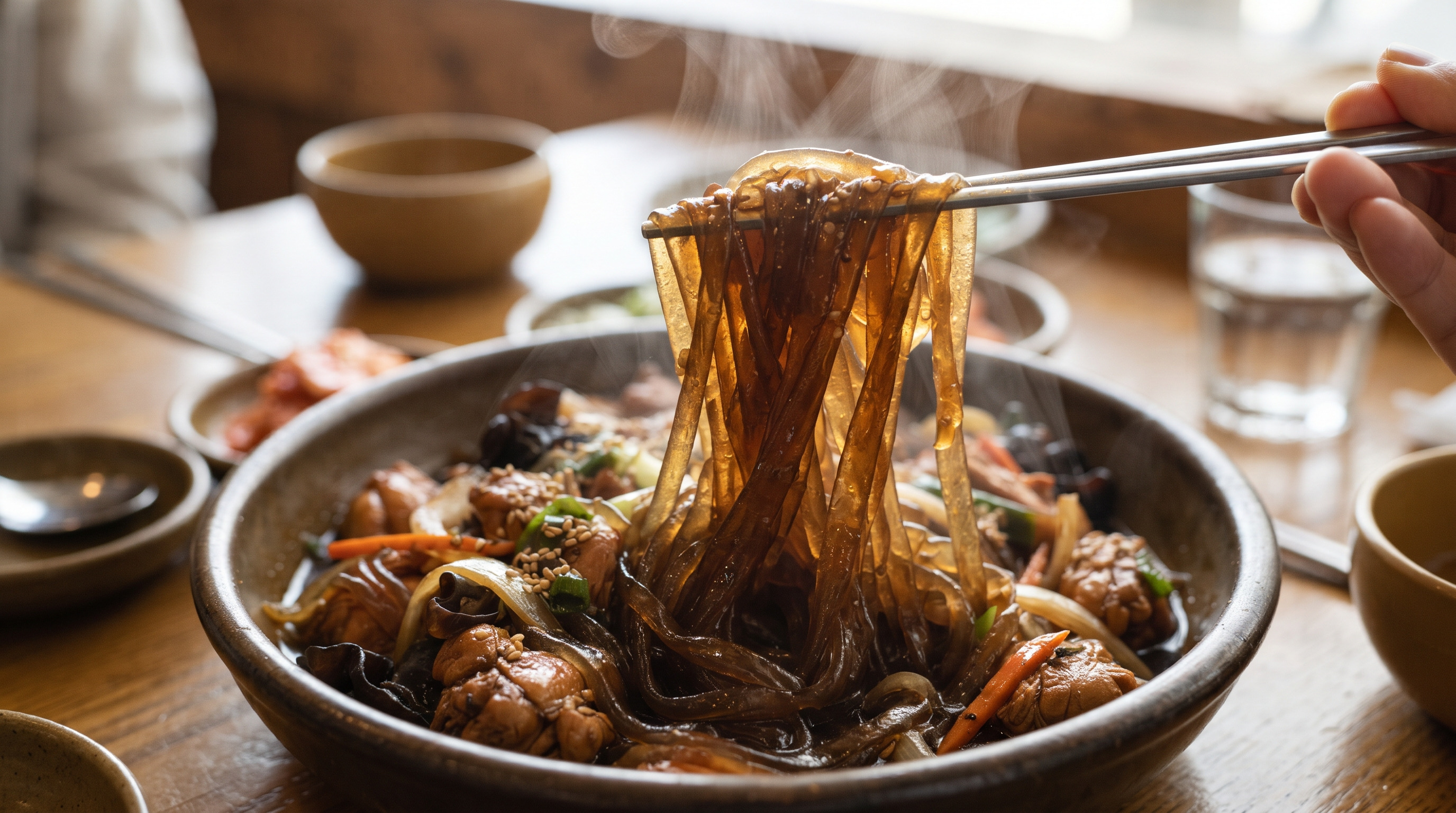
Apply these three professional tips to ensure your homemade Jjimdak matches the finest restaurants in Korea:
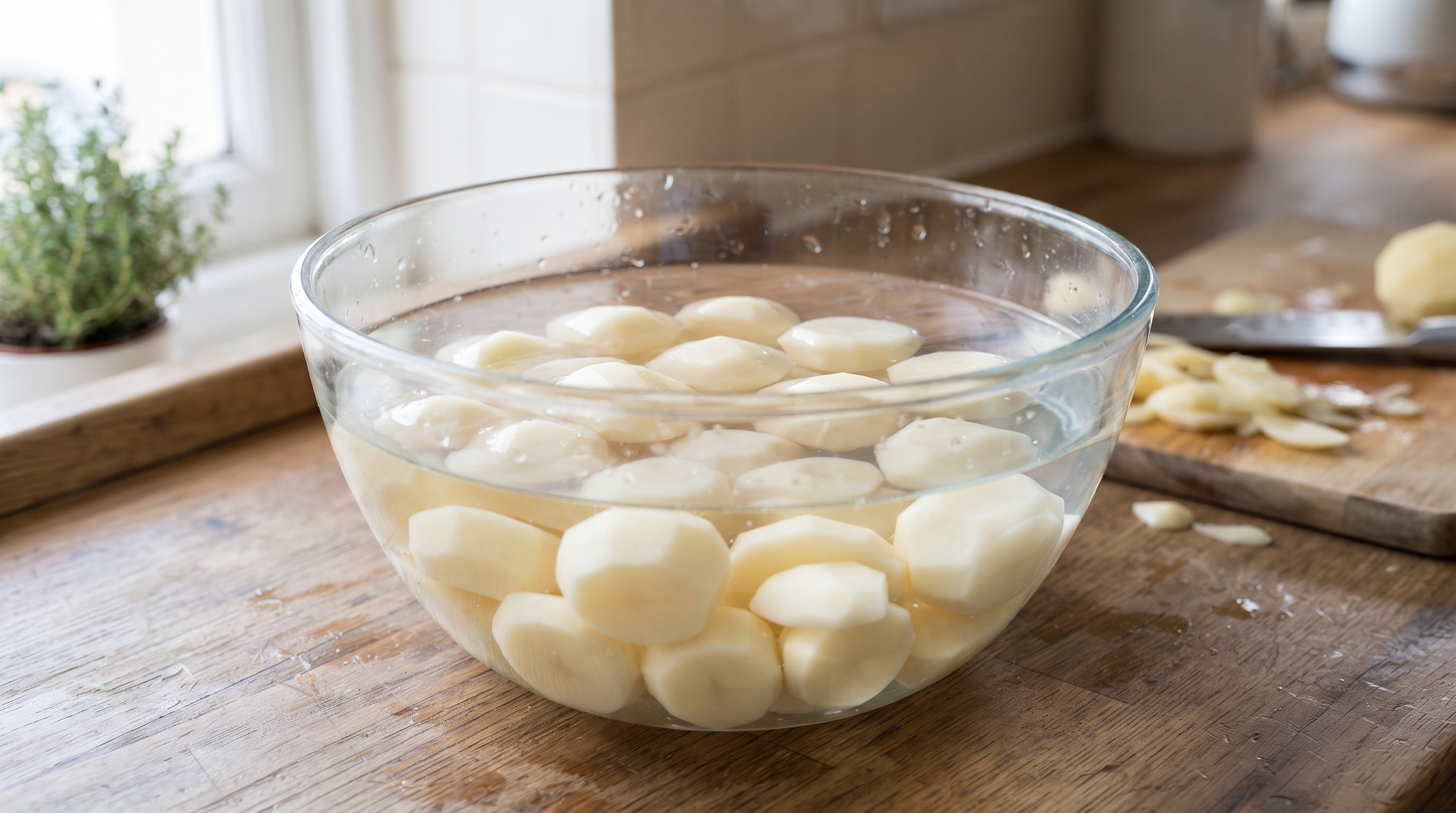
- Round the Edges of Potatoes (Myeon-chigi): Cut potatoes and carrots into large chunks, then use a paring knife or peeler to shave off the sharp 90-degree corners. As the stew boils, rounded vegetables tumble smoothly against each other rather than splintering. This keeps the braising broth clear and silken instead of muddy and thick from disintegrated potato starch.
- Pre-Soak Glass Noodles in Cold Water for 1 Hour Minimum: Dry glass noodles dropped directly into boiling Jjimdak act like thirsty sponges, instantly sucking up 80% of your braising liquid and turning sticky. Soaking them in cold water fully hydrates the inner starch core, so they cook in under 5 minutes without depleting the broth.
- Break Dried Red Chilies for Layered Heat: Do not leave dried chilies whole. Snapping them in half releases the internal seeds into the oil and soy base, infusing an assertive, lingering chili heat that cleanly cuts through the sweet, rich poultry fat.
5. Frequently Asked Questions (FAQ)
Q1. Is Chinese dark soy sauce (no-du-yu) mandatory for that deep restaurant color?
Not mandatory, but 1/2 tablespoon gives that signature glossy mahogany hue without adding excess saltiness. If unavailable at your local H-Mart, substitute with 1.5 tbsp dark brown sugar or 1/3 tsp instant espresso powder (which completely loses coffee aroma when cooked).
Q2. What if the glass noodles absorb too much liquid and the pan runs dry?
Simply pour 1/2 cup (120ml) of warm kelp stock or water mixed with 1/2 tbsp soy sauce and 1/2 tbsp corn syrup around the edges of the pan, then bring to a quick boil over high heat to restore sauce volume.
Q3. How should I enjoy leftover Jjimdak sauce and chicken?
Dice leftover chicken, combine 3-4 ladles of sauce in a hot skillet with steamed white rice, chopped kimchi, nori seaweed strips, and sesame oil. Fry until crispy at the bottom, then top with mozzarella cheese for an irresistible Korean fried rice course.
6. Serving Suggestions & Wine/Side Pairing
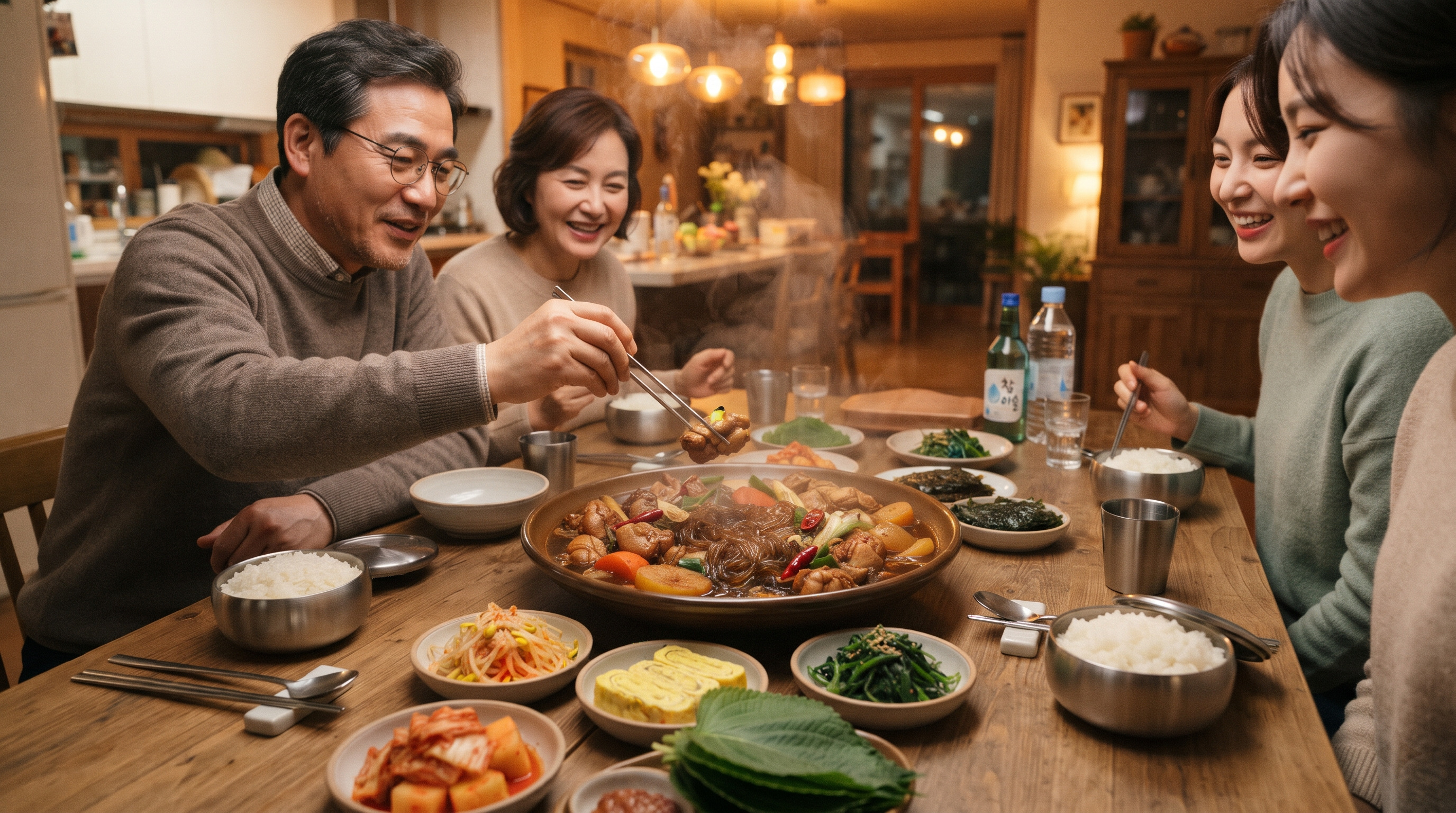
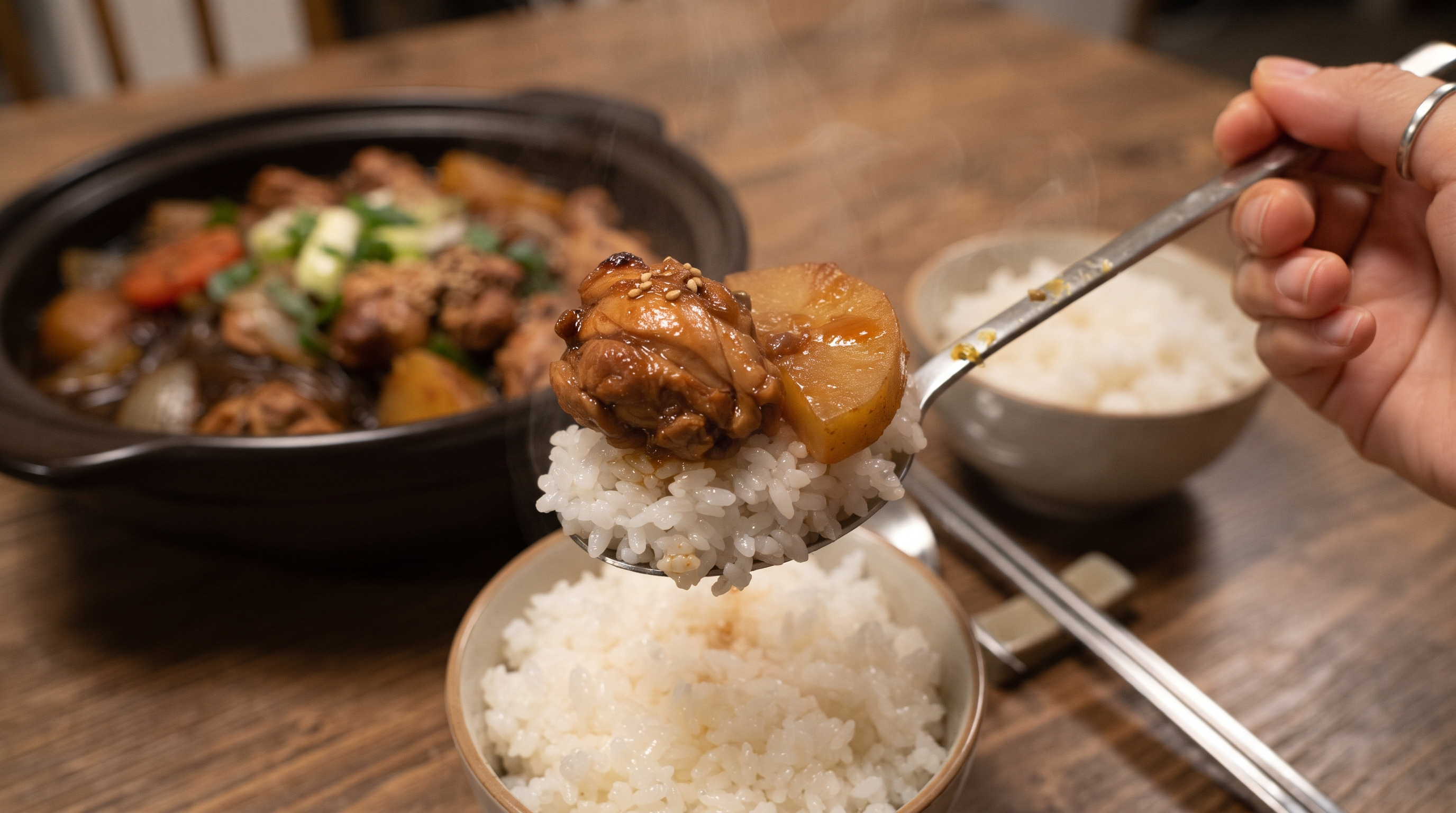
Serve Andong Jjimdak piping hot in a wide, shallow ceramic platter placed right in the center of the table. Provide bowls of freshly steamed short-grain white rice, tart radish kimchi (kkakdugi), and crisp pickled yellow radish (danmuji) to counterbalance the rich soy glaze. For adult gatherings, pair with chilled Korean soju, draft beer, or a semi-dry Riesling that complements the sweet-spicy chili notes.
If you enjoy Korean braised poultry with deeper fiery gochujang heat, try our classic Spicy Braised Chicken (Dakbokkeumtang). For beef lovers, explore our tender, sweet-savory Korean Beef Bulgogi or fiery Spicy Pork Stir-Fry (Jeyuk Bokkeum).