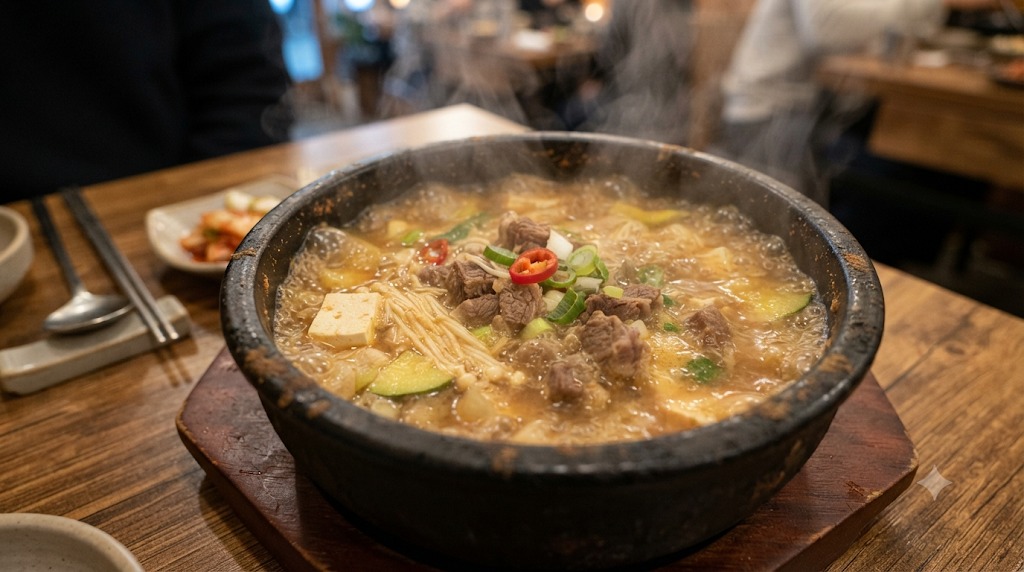
Quick Recipe Snapshot: ⏱️ Prep: 10 mins | 🔥 Cook: 15 mins | 🍽️ Servings: 2–3 | 💡 Key Secret: Sear beef brisket first to render natural beef fat + use starchy rice water to emulsify + mix 1.5 tbsp doenjang with 0.7 tbsp ssamjang.
Steaming in a scorching black earthenware pot (ttukbaegi), Chadol Doenjang Jjigae (차돌박이 된장찌개) is the undisputed crown jewel of Korean barbecue restaurant side dishes. Laden with thinly shaved ribbons of beef brisket, silken cubes of tofu, tender zucchini, and sweet onions steeped in a deeply savory, earthy fermented broth, this stew is the ultimate definition of Korean soul food comfort.
Yet many who try making it at home wonder: “Why does my broth taste thin, watery, and overly pungent compared to the mouth-coating richness served at Korean BBQ joints?” or “Why is my stew unpleasantly greasy on top while the tofu remains bland inside?”
The difference between mediocre home stew and legendary K-BBQ restaurant flavor comes down to three fundamental cooking science principles: high-heat Maillard searing of brisket fat, colloidal emulsification via starchy rice-washing water (ssaltteumul), and the golden umami ratio of traditional doenjang balanced with sweet seasoned ssamjang.
With basic supermarket produce and authentic Korean pantry staples from H-Mart, you can whip up this restaurant-caliber stew in just 20 minutes.
1. The Culinary Science Behind K-BBQ Restaurant Flavor
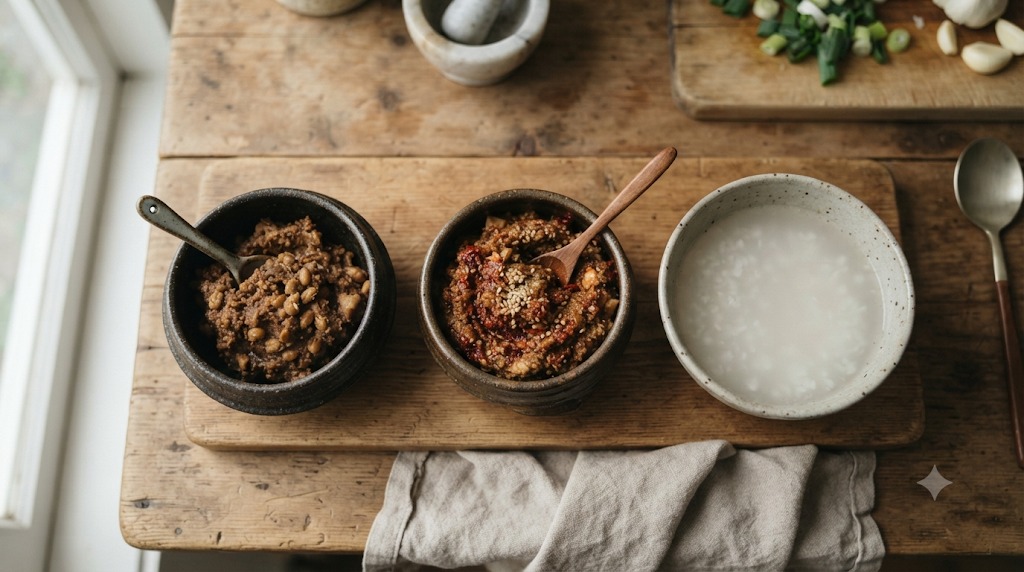
Simply dumping fermented bean paste into cold water with raw beef results in a greasy oil slick separated from a harsh, salty broth. Great stew starts with fat manipulation and starch suspension.
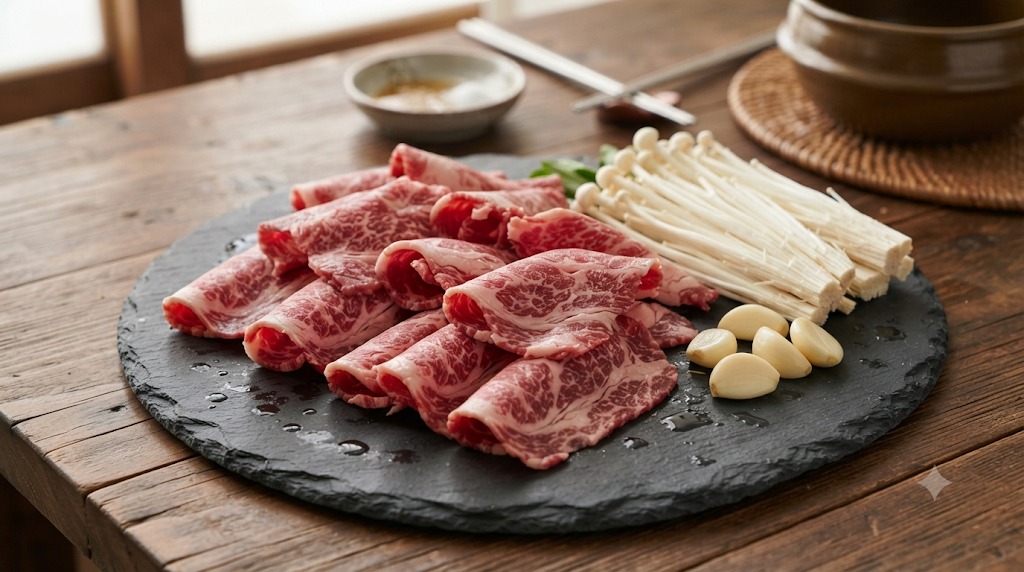
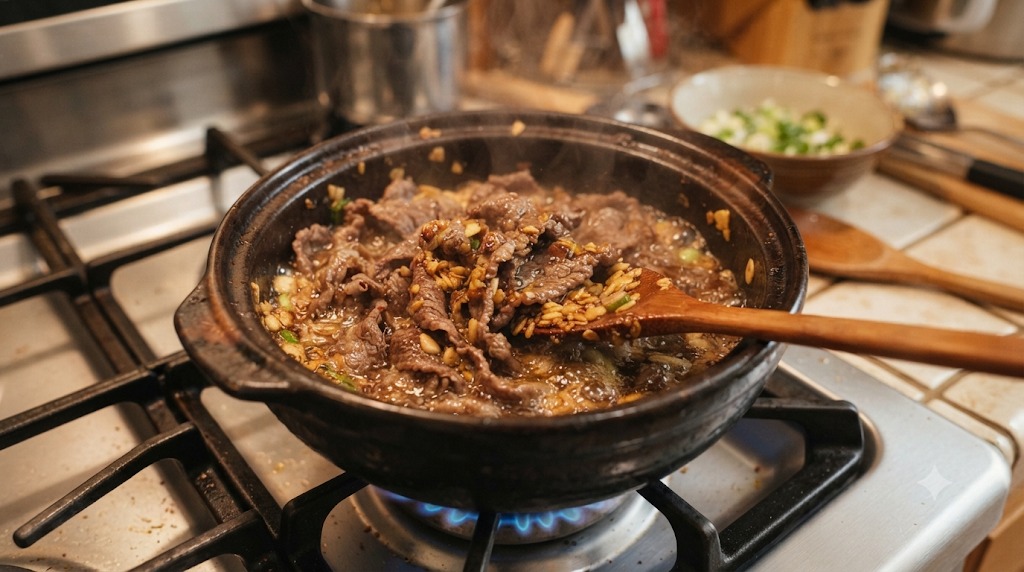
💡 Culinary Science 1: Maillard Sear & Rendering Natural Beef Fat Beef brisket (chadolbagi) is intensely marbled with connective tissue and rich intramuscular fat. Searing the thin beef slices directly in a hot dry pot triggers the Maillard reaction, forming roasted pyrazines and unlocking fragrant beef tallow. This rendered beef fat acts as a concentrated natural flavor carrier. Sautéing fresh minced garlic in this hot rendered fat deodorizes the meat while infusing deep savory aromatics into the base of the pot.
💡 Culinary Science 2: The Starch Emulsion of Ssaltteumul (Rice Water) Pure water cannot bind with beef fat; without an emulsifier, rendered oil floats on top, leaving the soup greasy on the lips yet watery on the tongue. Using starchy rice-washing water (ssaltteumul) introduces microscopic amylose and protein granules. These starches act as natural colloidal emulsifiers, binding melted beef tallow directly into the broth. The result is a voluptuous, full-bodied soup with a silky mouthfeel that allows the deep umami of fermented soy to fuse seamlessly with beef juices.
2. Essential Ingredients & The Golden Ratio Sauce
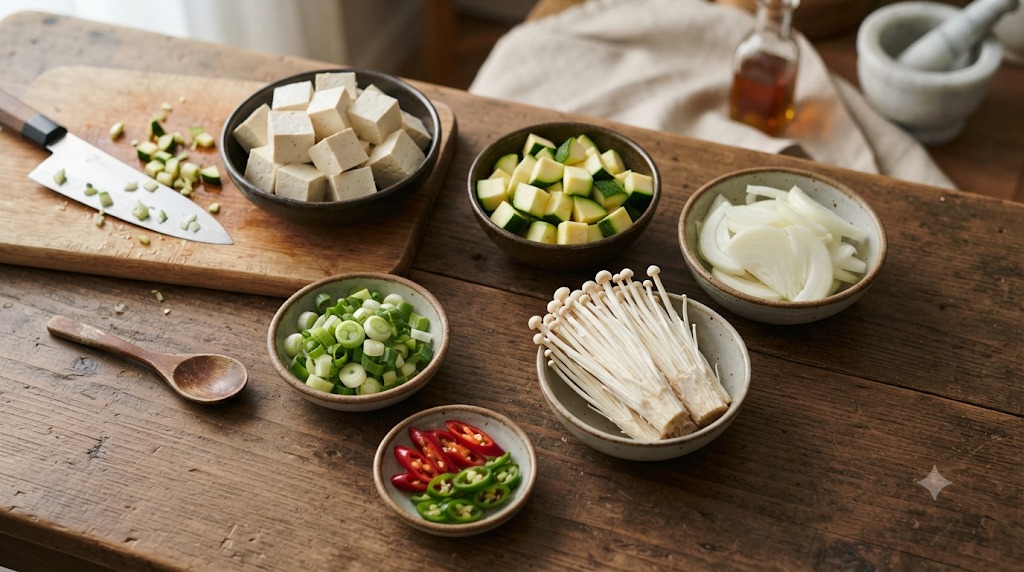
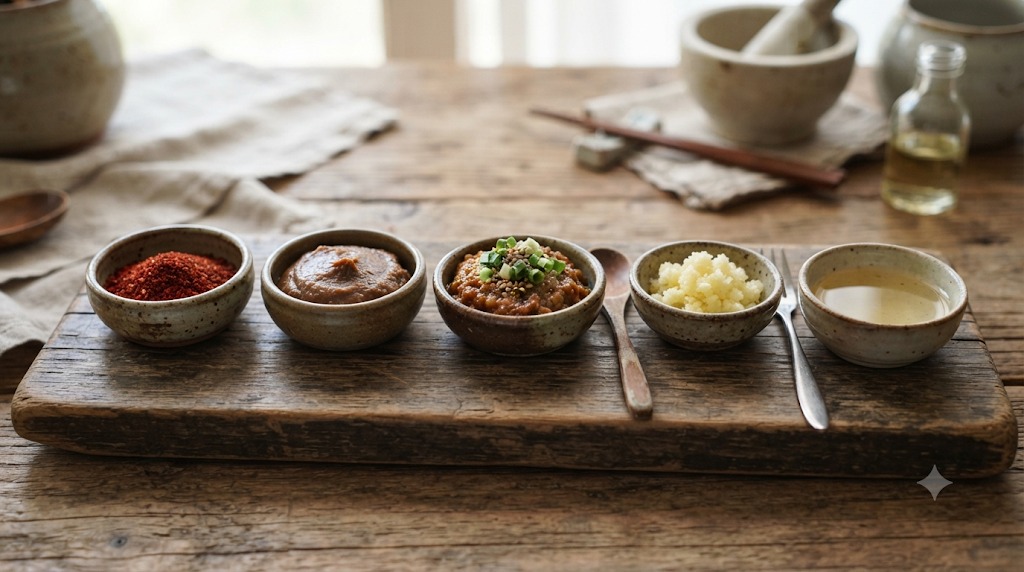
This recipe yields 2 to 3 generous servings. For authentic presentation, cook and serve in a 1-quart Korean earthenware pot (ttukbaegi) or a small Dutch oven.
| Category | Ingredients & Amounts (Metric & US) | Chef’s Notes & Substitutions |
|---|---|---|
| Beef Cut | 150g (5.3 oz) thinly shaved beef brisket (chadolbagi) | Thinly sliced beef short plate (usamgyeop) or shaved pork belly (daepae samgyeopsal) from H-Mart works identically. |
| Tofu & Squash | 150g (5.3 oz / 1/2 block) medium-firm tofu + 1/3 zucchini | Cut into uniform 1.5cm (0.6-inch) dice. Zucchini releases natural sweetness that balances fermented bean paste. |
| Aromatic Veggies | 1/2 onion + 1 shiitake mushroom + 1/2 stalk scallion + 1–2 green chilies | Korean Cheongyang chilies provide sharp, clean heat. Substitute with 1 jalapeño or serrano pepper. |
| Broth Base | 600ml (2.5 cups) milky rice water (ssaltteumul) | Save water from the 2nd or 3rd rinse of washing white rice. Alternatively, whisk 1 tsp flour into 600ml water. |
| Searing Aromatics | 1 tbsp minced garlic + 1 tbsp mirin (rice wine) | Deodorizes beef and sweetens the pan fond before broth is added. |
| Golden Paste Blend | 1.5 tbsp doenjang + 0.7 tbsp ssamjang + 1 tbsp gochugaru | Ssamjang contains onion, garlic, and corn syrup that tame rustic doenjang bitterness, unlocking instant restaurant taste. |
3. Step-by-Step Cooking Instructions
Total stovetop cooking time is under 15 minutes. Prepare all diced ingredients before heating your cookware.
Step 1. Prep Vegetables & Cube Tofu Uniformly
Thoroughly rinse the zucchini, onion, mushrooms, and scallions. Dice the zucchini and white onion into neat 1.5cm (0.6-inch) cubes. Cut the tofu into matching cubes so every spoonful captures a harmonious bite of vegetable and tofu.
Thinly slice the shiitake mushroom caps. Diagonally slice the scallion and fresh green chili peppers. Set the prepped ingredients aside on a prep tray.
Step 2. Sear Beef Brisket with Garlic (Maillard Reaction)
Place your earthenware pot (ttukbaegi) or heavy-bottomed saucepan over medium heat. Do not add cooking oil—the brisket contains ample natural fat. Once the pot is warm, add the 150g (5.3 oz) of thinly sliced beef brisket.
Immediately add 1 tbsp minced garlic and 1 tbsp mirin. Sauté the meat briskly for 1.5 to 2 minutes, using chopsticks or tongs to separate the folded slices. The meat will shed its red hue, brown lightly on the edges, and release clear, fragrant beef tallow across the base of the pot. Do not overcook into dry crisps; proceed immediately once browned.
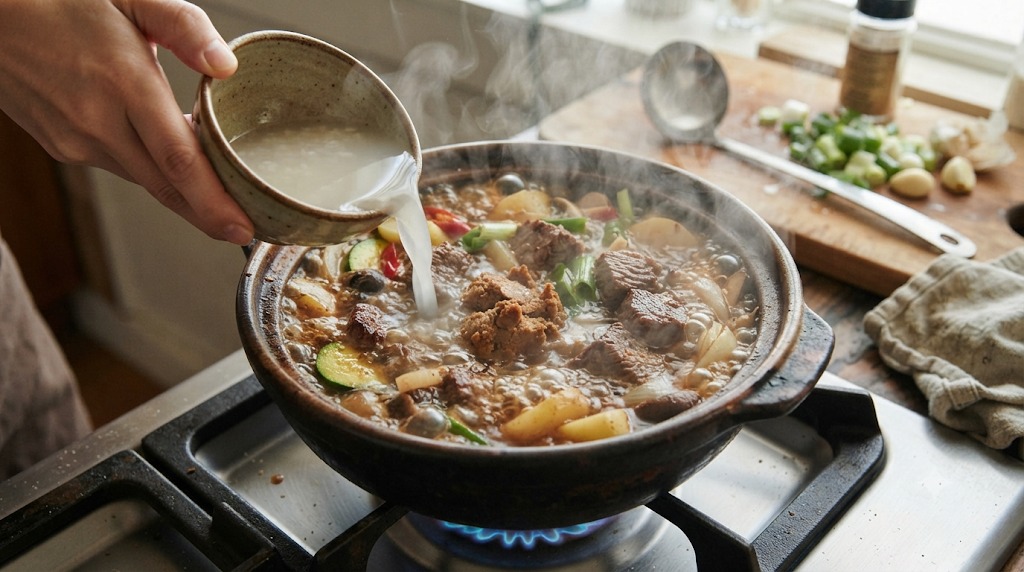
Step 3. Pour Rice Water & Dissolve Golden Ratio Soybean Paste
Pour 600ml (2.5 cups) of milky rice water directly into the sizzling beef fat. Place a fine mesh strainer over the pot and measure in 1.5 tbsp doenjang, 0.7 tbsp ssamjang, and 1 tbsp gochugaru (Korean chili flakes).
Using the back of a spoon, press and stir the pastes through the mesh strainer directly into the liquid. This dissolves the flavorful fermented essences while catching hard, fibrous soybean hulls for a clean, velvety broth. Bring the stew to a rapid rolling boil over high heat. Skim off any excessive white foam that rises in the first minute.
Step 4. Simmer Vegetables, Tofu & Garnish
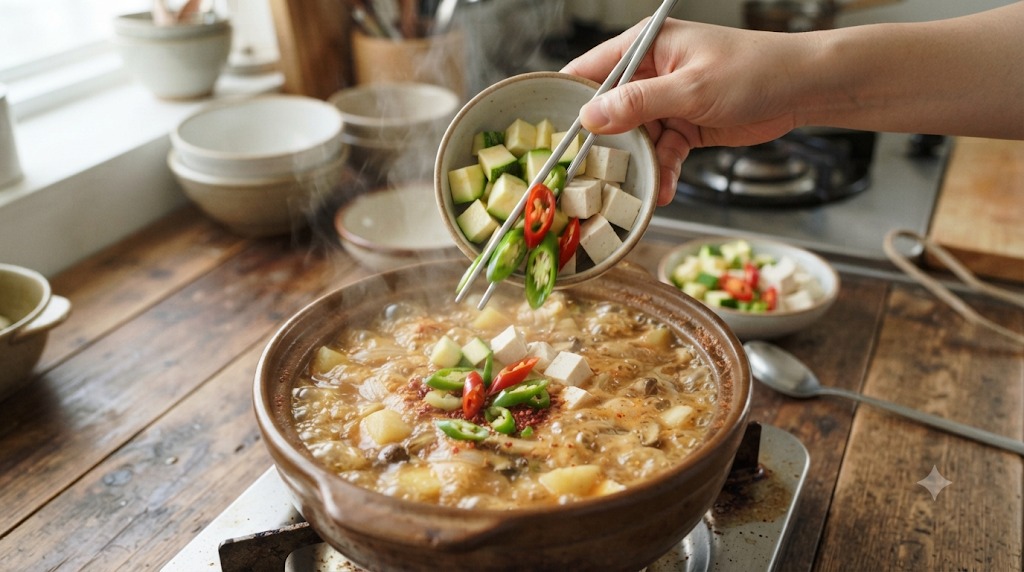
Add the diced zucchini, white onion, and sliced shiitake mushrooms to the boiling stew. Reduce heat to medium, cover loosely, and simmer for 5 to 7 minutes until the zucchini becomes translucent and sweet vegetable juices enrich the broth.
Gently slide in the cubed tofu and simmer for an additional 2 to 3 minutes, allowing the tofu to soak in the savory bean paste seasoning. Finally, scatter the sliced scallions and fresh chili peppers across the surface. Let the stew boil furiously for 1 final minute, remove from heat, and serve while still bubbling enthusiastically.
4. Pro Chef Tips to Elevate Your Dish
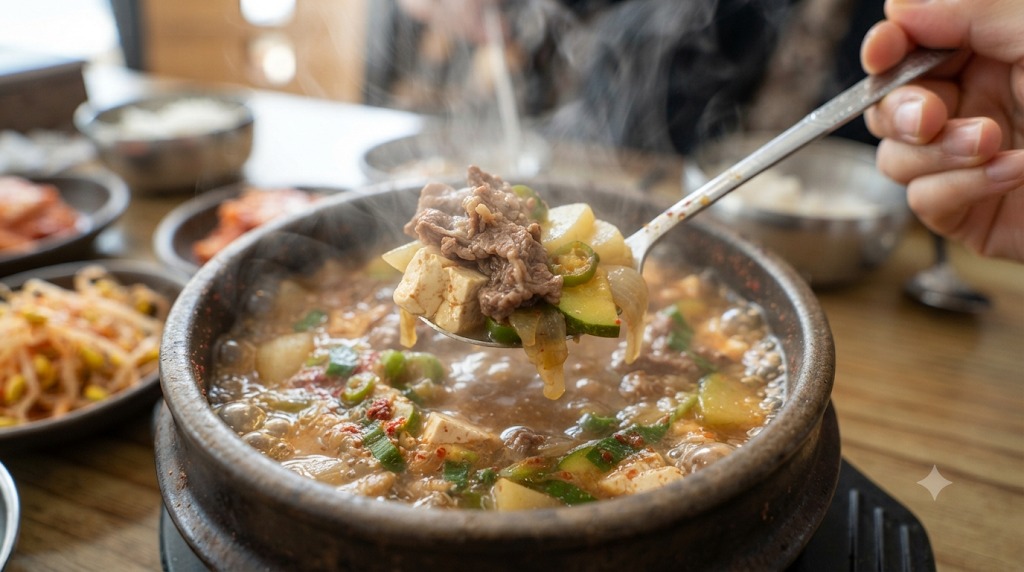
Take your homemade Doenjang Jjigae to culinary school level with these three essential chef tips:
- The Magic of 0.7 Tbsp Ssamjang: 100% traditional artisanal doenjang can taste harsh, intensely salty, or mildly bitter to modern palates. Adding roughly 0.7 tablespoon of commercial seasoned soybean paste (ssamjang) introduces subtle onion, garlic, and corn syrup notes that round out the sharp edges, replicating the exact addictive profile of K-BBQ restaurant stews.
- Timing the Oil Skim: The primary appeal of brisket stew is rich beef fat. Discarding the rendered fat in the initial sear deprives the soup of body. Allow the fat to emulsify with the starchy rice water during boiling; only skim off excessive surface oil at the very end if you prefer a leaner finish.
- Add Thinly Sliced Potato or Radish for Body: If you love an extra-thick, earthy stew, add a small handful of thinly sliced Korean radish (mu) or half a thinly sliced Russet potato along with the zucchini. As potato starches break down, they thicken the stew into an ultra-comforting, gravy-like consistency.
5. Frequently Asked Questions (FAQ)
Q1. Can I substitute beef brisket with beef short plate or thinly sliced pork belly?
Yes! Thinly sliced beef short plate (usamgyeop) is an exact 1:1 substitute with identical marbling and flavor. Thinly sliced pork belly (daepae samgyeopsal) also works wonderfully; add an extra 1/2 tsp of gochugaru at the end to balance the richer pork fat.
Q2. What if my stew turns out too salty or slightly bitter?
Because saltiness varies between doenjang brands, add 100-150ml (1/2 cup) of plain water or rice water along with extra diced onions or zucchini. The natural vegetable sweetness harmoniously softens the sodium.
Q3. What can I use if I do not have milky rice-washing water (ssaltteumul)?
Whisk 1 teaspoon of all-purpose flour or sweet rice flour into 600ml of plain water, or simmer half a thinly sliced potato in the broth. The natural starches provide the exact same emulsifying effect.
6. Serving Suggestions & Wine/Side Pairing
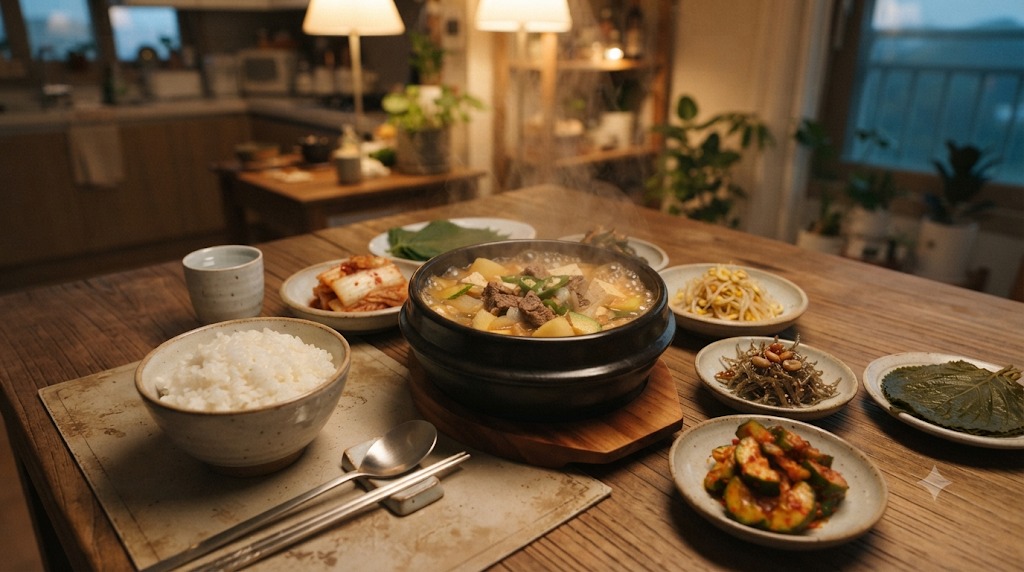
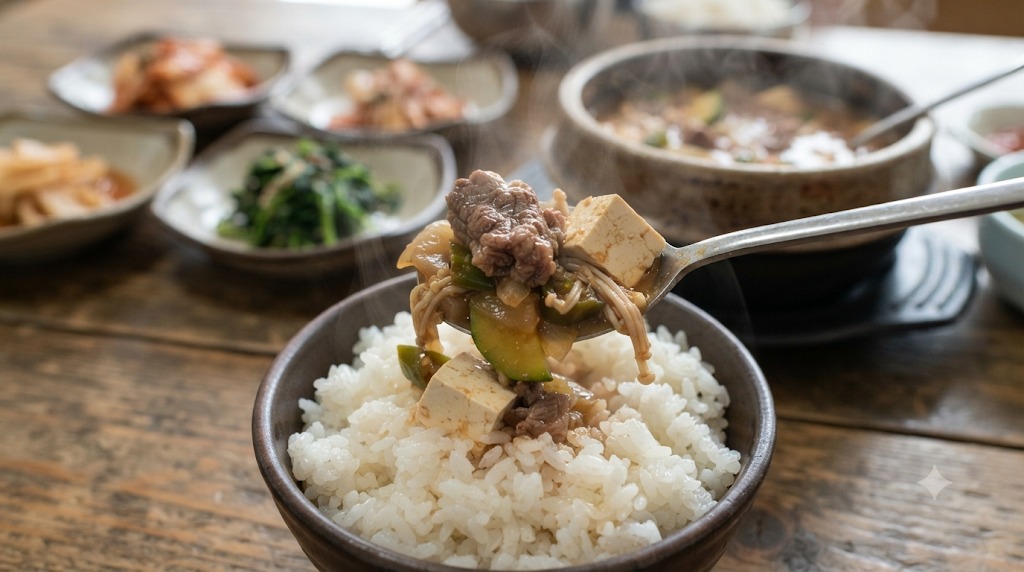
In Korea, Chadol Doenjang Jjigae is served piping hot alongside a bowl of freshly cooked short-grain white rice, perilla leaves and red leaf lettuce for wraps (ssam), and grilled meats. Spoon ladles of the hearty stew over warm rice, mash the tender tofu into the grains, and enjoy with well-fermented Napa cabbage kimchi.
Pair this stew with classic grilled Korean proteins: try our savory Authentic Korean Beef Bulgogi or balance your meal with other iconic Korean stews like our spicy, tangy Authentic Pork Kimchi Jjigae and velvety Spicy Soft Tofu Stew (Sundubu Jjigae).