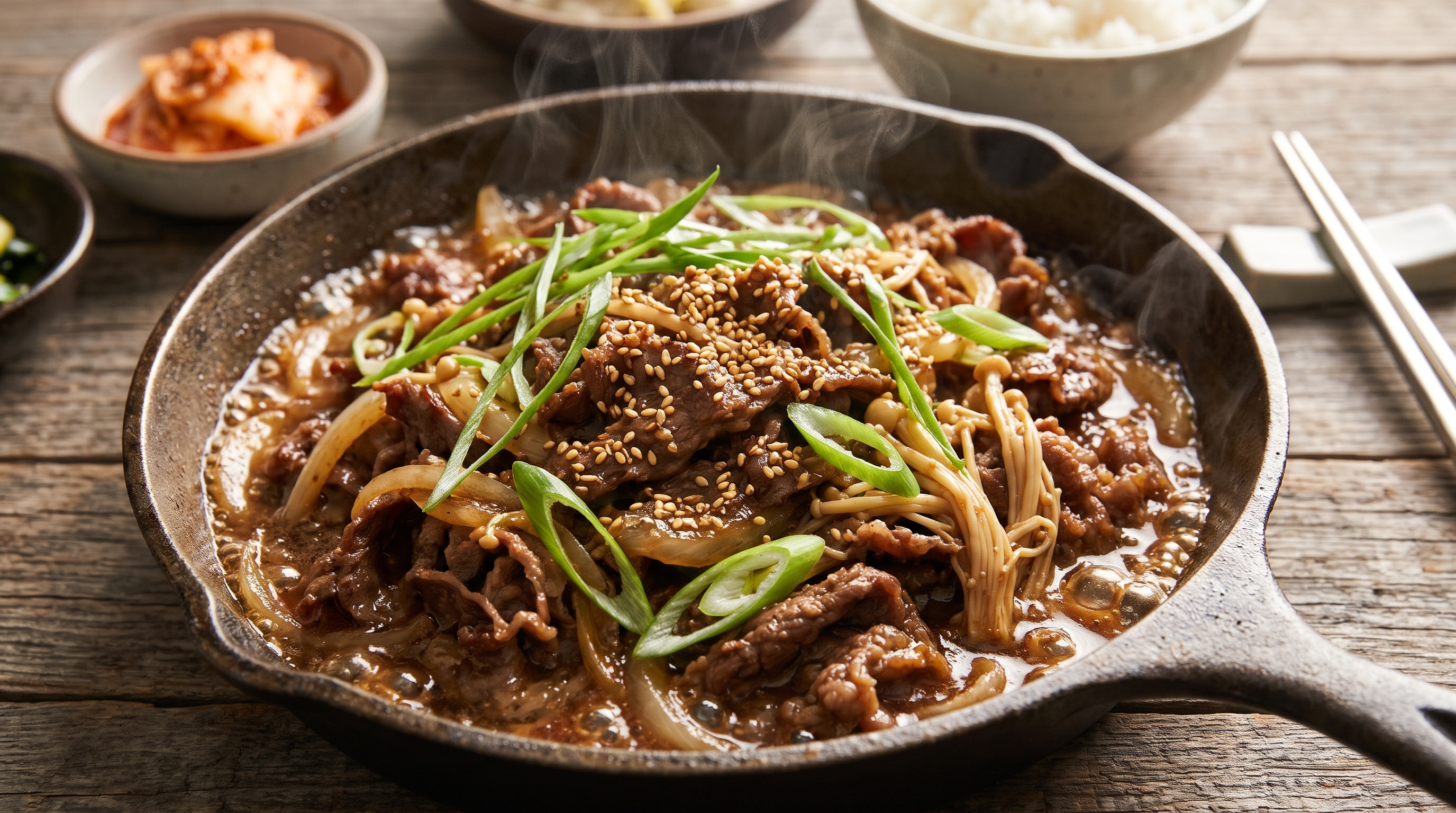
Quick Recipe Snapshot: ⏱️ Prep: 20 mins | 🔥 Cook: 10 mins | 🍽️ Servings: 3–4 | 💡 Key Secret: Two-stage marinade (sugar and pear enzyme first, soy sauce second) + high-heat batch searing to prevent liquid pooling.
Literally translated as “fire meat,” Beef Bulgogi (소불고기) is internationally revered as the ambassador of Korean culinary culture. Characterized by paper-thin slices of tender beef saturated in a sweet, savory, garlicky soy marinade, every bite bursts with rich meaty juices, subtle fruit undertones, and toasted sesame aromatics that make a bowl of warm rice disappear in seconds.
However, home cooks often encounter three frustrating issues: the cooked beef feels tough and leathery, the meat releases a flood of liquid into the pan—turning a crispy stir-fry into a gray, boiled stew—or the marinade tastes sweet on the outside while the beef interior remains bland.
The secrets behind royal palace-style banquets and renowned Seoul bulgogi houses lie in three food science fundamentals: proteolytic enzyme tenderization with fresh Asian pear, staged osmotic penetration (sugar before salt), and high-heat surface sear management.
Follow this foolproof recipe to achieve melt-in-your-mouth, restaurant-grade bulgogi on any home stove in just 30 minutes.
1. The Culinary Science Behind Tender Restaurant Bulgogi
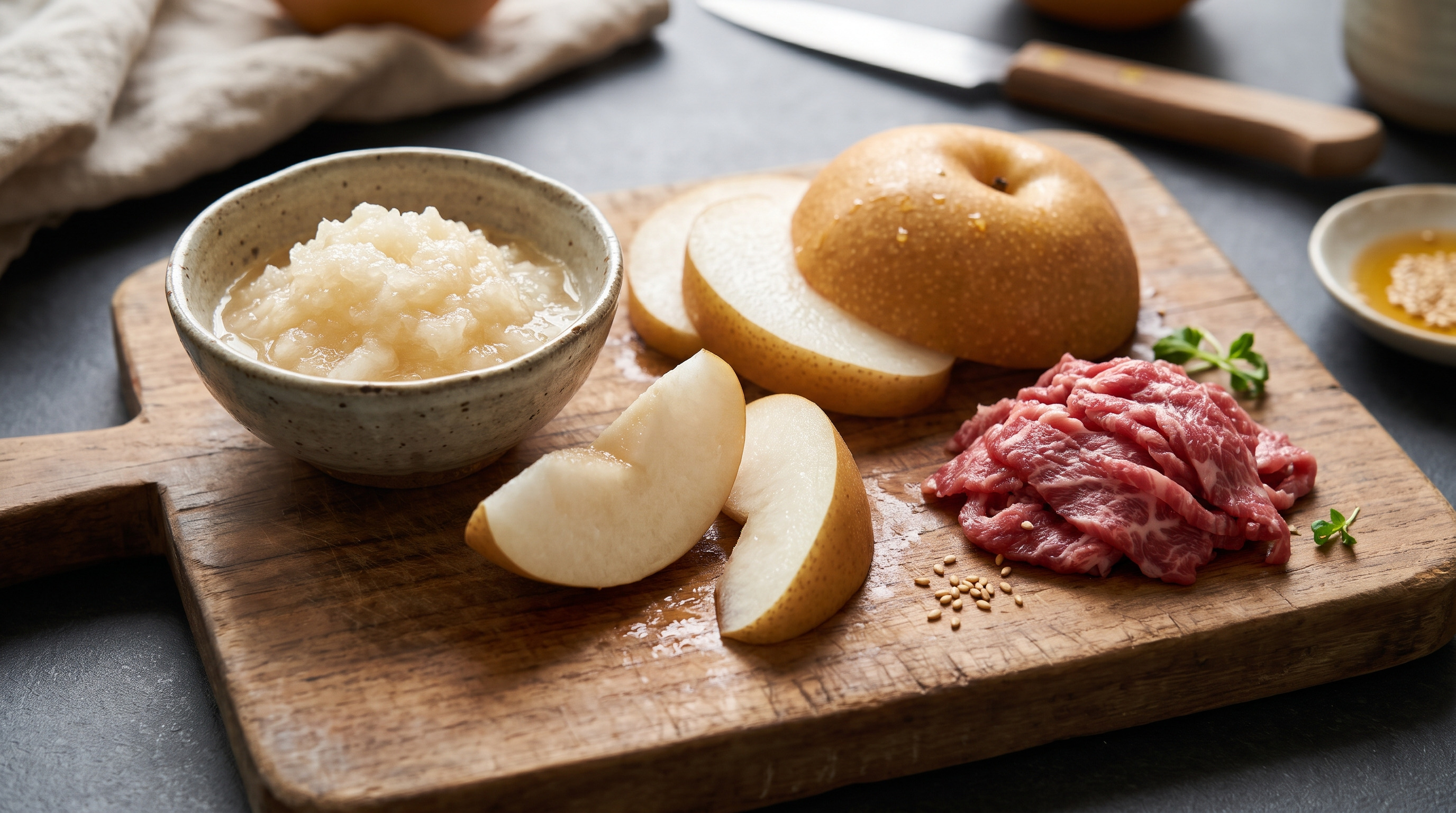
Why do professional restaurants serve silky, tender beef while home attempts can turn out chewy? The answer lies in biochemistry and thermal dynamics.
💡 Culinary Science 1: Proteolytic Tenderization via Asian Pear Enzymes Traditional bulgogi cuts (such as beef top blade, chuck roll, or round) contain dense muscle fibrils and connective collagen. Grated Asian pear (bae) contains a natural protease enzyme called calpain/peptidase. When massaged into raw beef, these enzymes gently snip peptide bonds within tough collagen without obliterating muscle structure. Unlike kiwi or pineapple (which contain actinidin and bromelain so aggressive they turn beef into unpalatable mush), Asian pear delivers gentle, uniform tenderness while contributing clean, elegant fruit sugars.
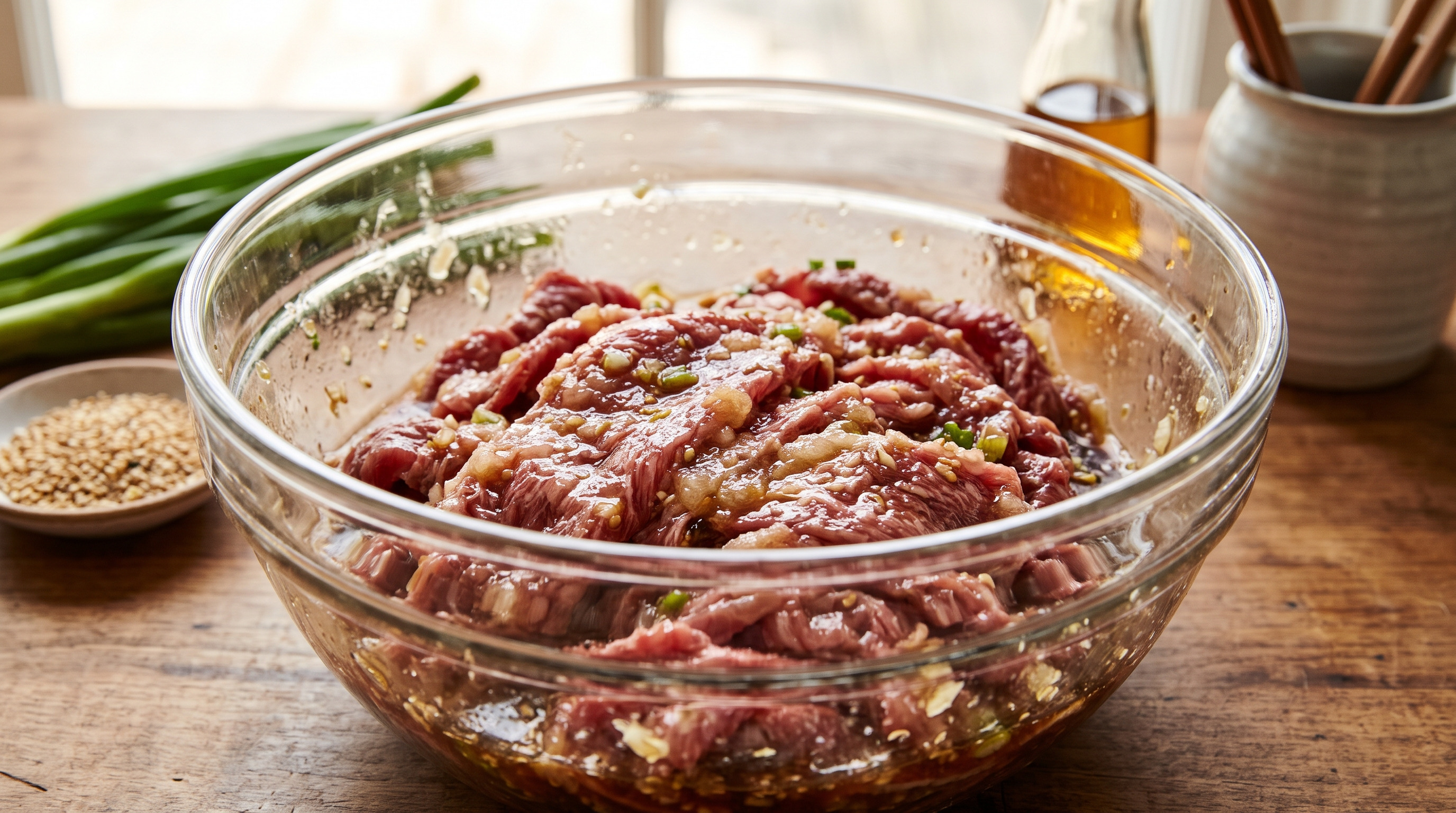
💡 Culinary Science 2: Staged Osmosis (Sucrose First, Sodium Second) Mixing soy sauce and sugar together in one go is a common mistake. Sucrose (table sugar) has a molecular weight roughly six times larger than sodium chloride (salt). If salt touches raw meat first, osmotic pressure immediately draws intracellular water out of the beef, dehydrating muscle fibers into a tough, dry texture. By tossing beef with grated pear, sugar, and mirin first for 10 minutes, sugars hydrate and plump the meat fibers. Only then is the soy sauce added, allowing savory umami to penetrate deep into the core without moisture loss.
2. Essential Ingredients & The Golden Ratio Sauce
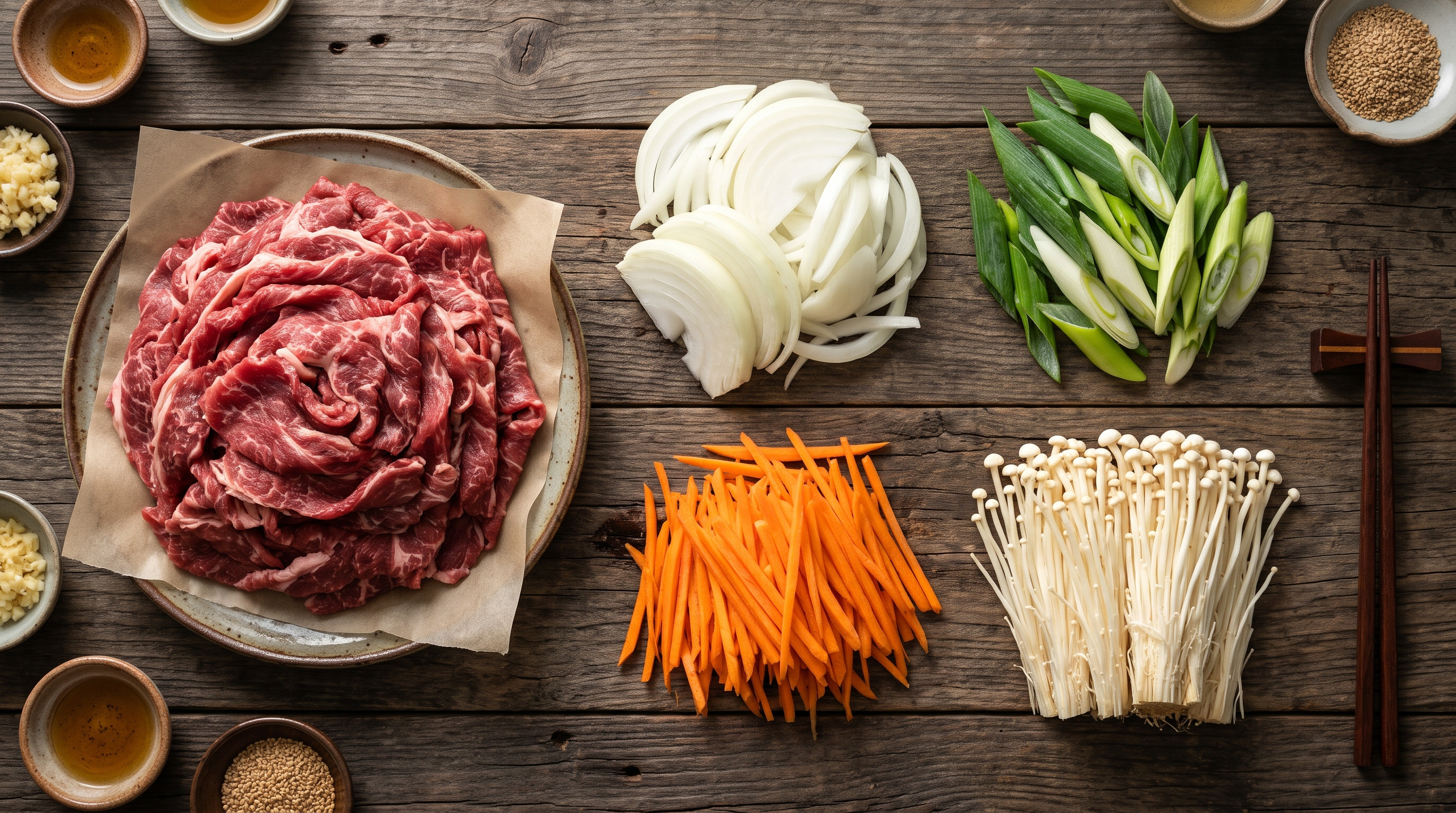
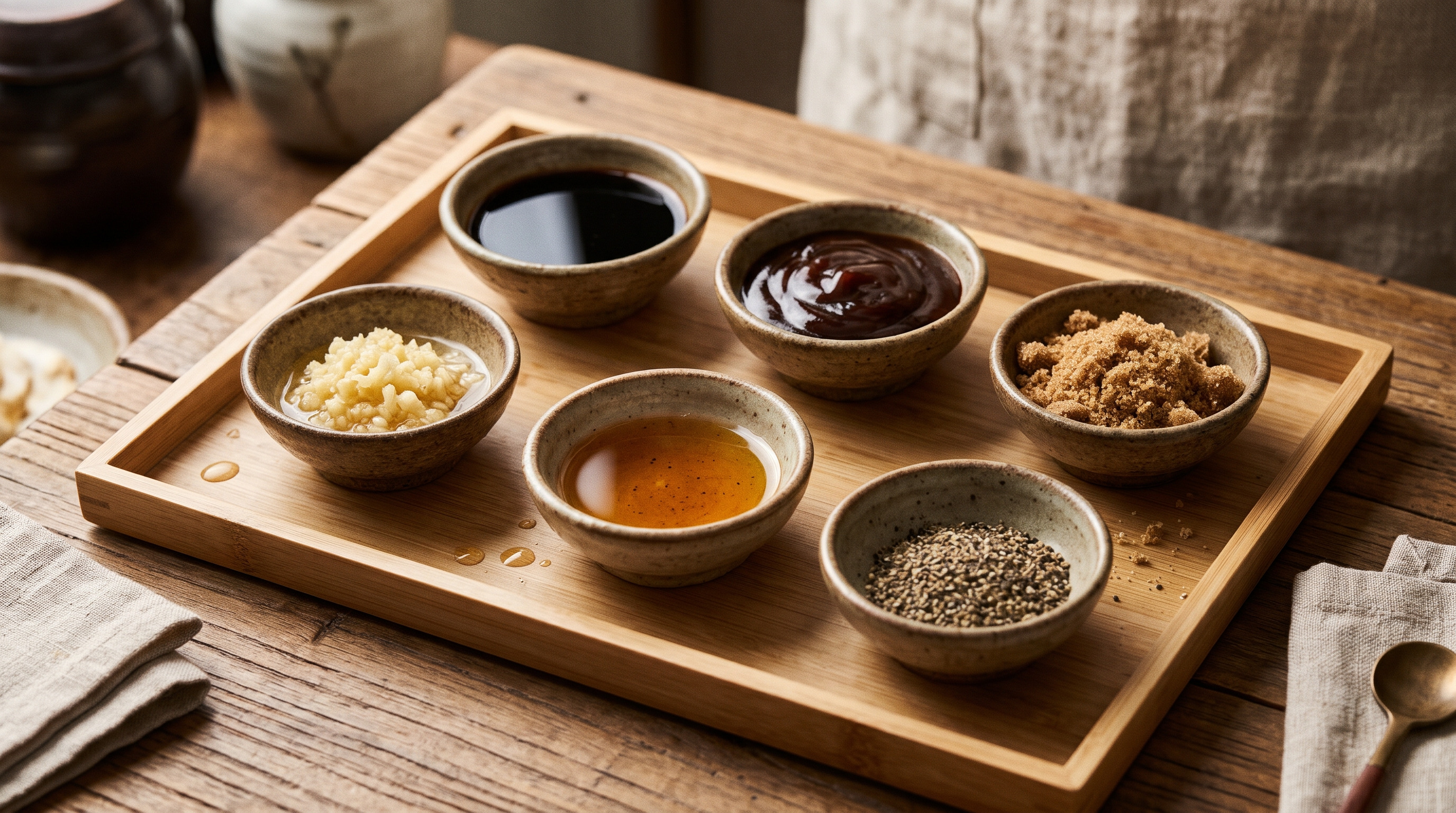
This standard recipe utilizes 600g (1.3 lbs / 1 Korean geun) of beef, comfortably feeding 3 to 4 family members.
| Category | Ingredients & Amounts (Metric & US) | Chef’s Notes & Substitutions |
|---|---|---|
| Beef Selection | 600g (1.3 lbs) thinly sliced beef chuck roll, top blade, or ribeye | Look for pre-shaved “Bulgogi Cut” at H-Mart or butcher shops. Ensure slices are thoroughly patted dry to prevent dilution. |
| Stage 1: Tenderizer | 1/4 Korean Asian pear (grated, 5 tbsp / 80g) + 2 tbsp brown sugar + 2 tbsp mirin | Substitute pear with 5 tbsp canned Korean pear juice (Crushed Pear) or 100% pure apple juice. |
| Stage 2: Umami Glaze | 6 tbsp Korean soy sauce + 1 tbsp oyster sauce + 2 tbsp minced garlic + 1/3 tbsp ginger + 1 tbsp oligodang | 1 tbsp oyster sauce is the secret restaurant booster that delivers deep savory finish and glossy cling. |
| Aromatic Finish | 2 tbsp toasted sesame oil + 1/2 tsp black pepper + 1 tbsp toasted sesame seeds | Pure toasted sesame oil seals moisture and infuses classic Korean barbecue fragrance. |
| Vegetable Accents | 1 onion + 1 scallion + 1/3 carrot + 2 shiitake mushrooms (or 1 pack enoki) | Slice thinly so they cook through rapidly alongside the beef in under 4 minutes. |
| Cooking Fat | 1 tbsp high-smoke-point neutral oil (canola, vegetable, or avocado) | Lubricates the pan to trigger rapid caramelization without scorching. |
3. Step-by-Step Cooking Instructions
Follow these chronological steps closely. Searing takes merely 5 to 7 minutes once the meat is marinated.
Step 1. Separate Beef Slices & Pre-tenderize with Fruit Enzyme
Place 600g (1.3 lbs) of thinly sliced beef onto paper towels and press firmly to absorb excess surface moisture and myoglobin. Butcher-cut bulgogi meat is typically compressed into tight layers; carefully peel the slices apart one by one into a large mixing bowl.
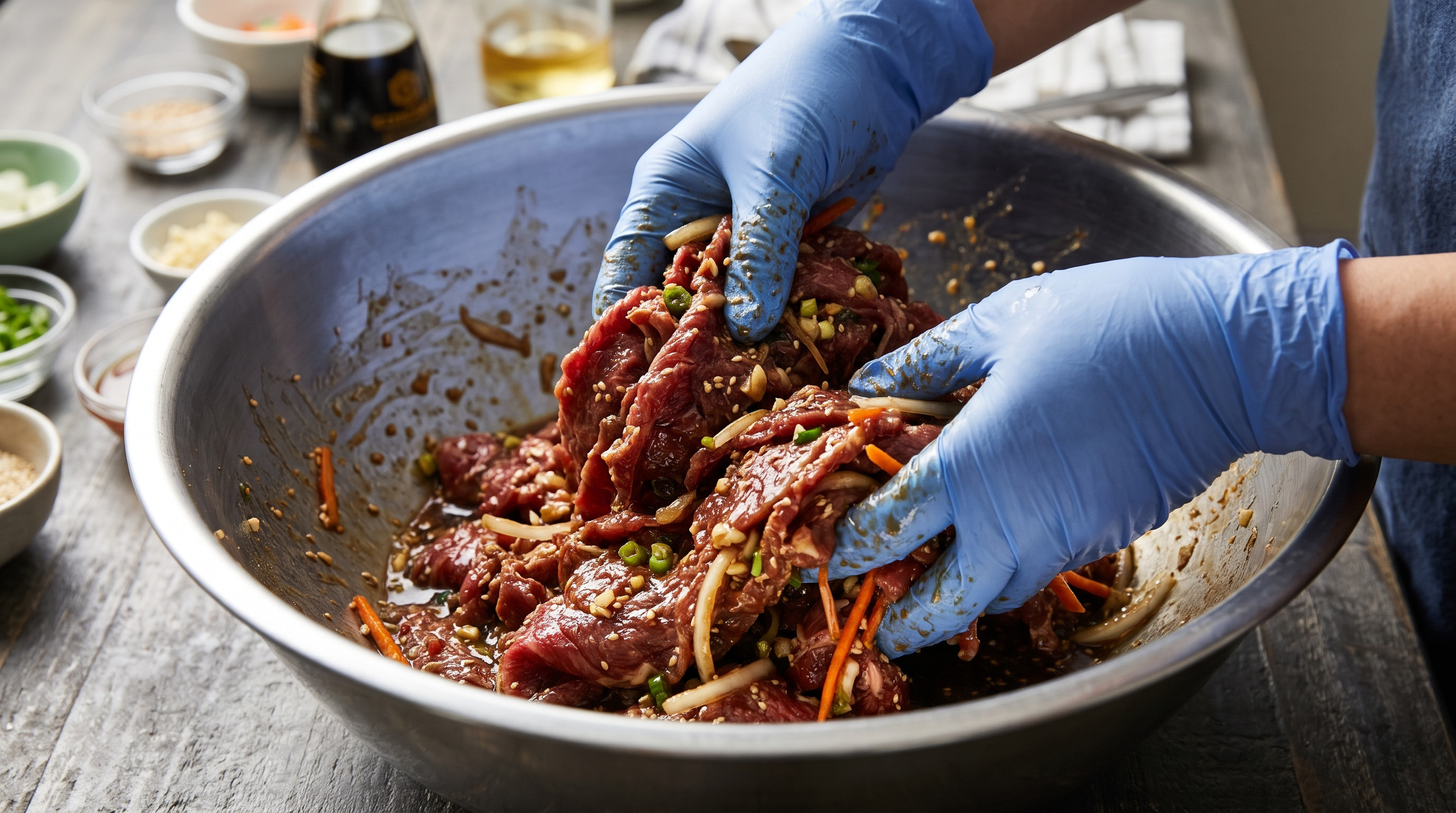
Add 5 tablespoons of finely grated Asian pear, 2 tablespoons of brown sugar, and 2 tablespoons of mirin. Gently massage the fruit mixture into the beef slices with your hands for 1 minute, ensuring every ribbon is coated. Let rest at room temperature for 10 to 15 minutes to allow natural enzymes to soften the protein fibers.
Step 2. Whisk Golden Ratio Soy Umami Sauce & Marinate
In a medium bowl, combine 6 tbsp Korean soy sauce, 1 tbsp oyster sauce, 2 tbsp minced garlic, 1/3 tbsp finely grated ginger, 1 tbsp oligodang (or honey), 2 tbsp toasted sesame oil, and 1/2 tsp freshly ground black pepper. Whisk vigorously until the sugar grains fully dissolve.
Pour the marinade over the pre-tenderized beef. Use your fingers to gently fold and coat the meat slices, allowing the savory seasonings to distribute evenly. Cover the bowl and refrigerate for at least 30 minutes (or up to overnight) for optimal flavor penetration.
Step 3. Prep Vegetables & Preheat Skillet to Smoking Point
While the beef marinates, thinly slice the yellow onion into 0.5cm (0.2-inch) strips. Cut the green onion diagonally into 2-inch segments. Julienne the carrot into matchsticks, and slice the shiitake mushrooms into delicate slivers.
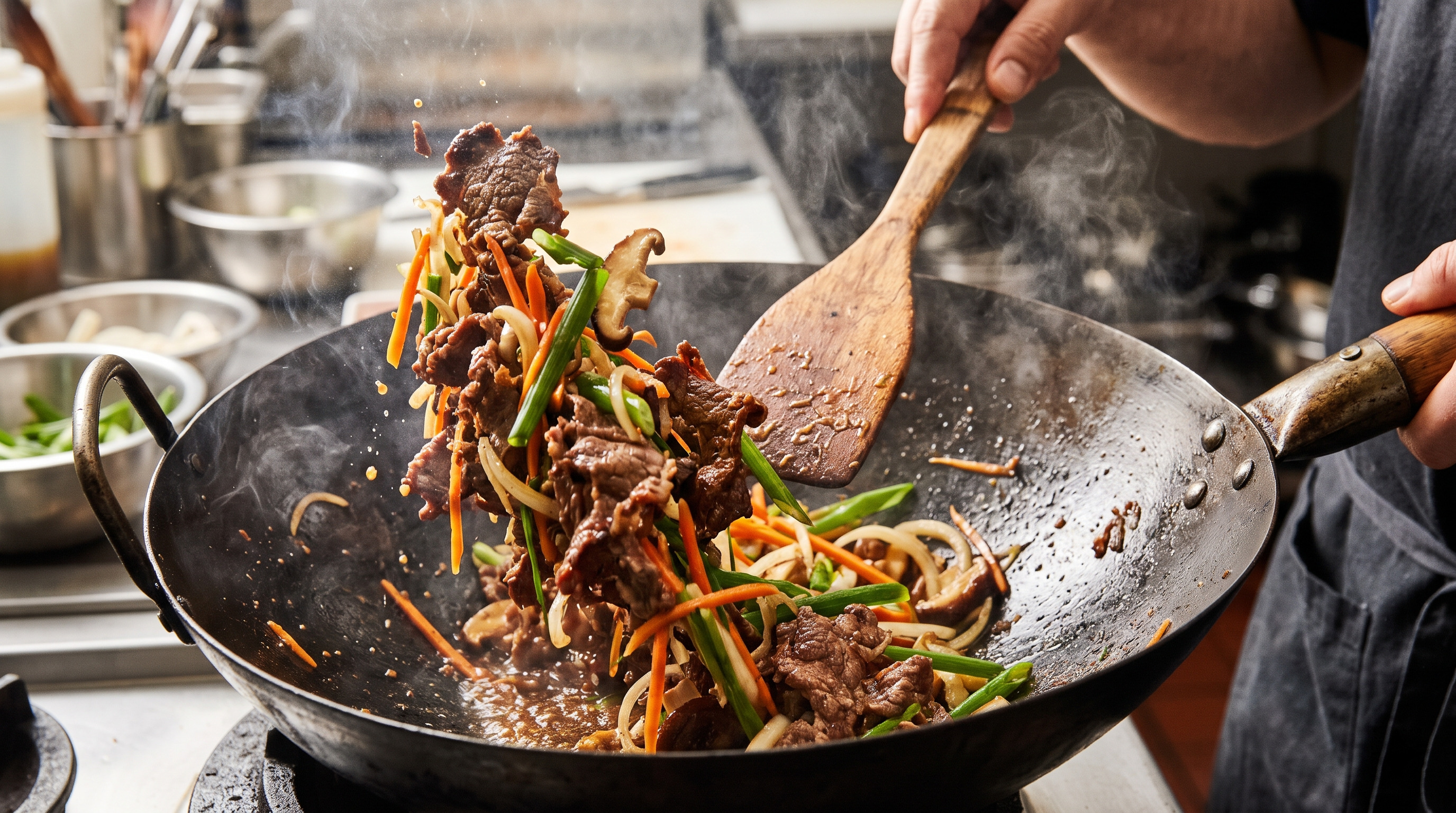
Place a wide, heavy cast-iron skillet, carbon steel pan, or large wok over maximum high heat. Add 1 tablespoon of neutral cooking oil. Heat the pan until you see light wisps of smoke rising from the surface—the pan must be blazing hot.
Step 4. High-Heat Quick Sear in Batches & Sesame Garnish
Do not dump all 600g into the pan at once, as home stove burners cannot sustain heat against a large cold mass, causing meat juices to pool. Add half the marinated beef (300g), spreading it out across the pan surface.
Let the meat sear undisturbed for 30 to 45 seconds to establish deep brown Maillard caramelization. Using tongs or chopsticks, toss the meat rapidly over high heat. When the meat is halfway cooked (pinkness fading), add half of the prepared vegetables and mushrooms. Stir-fry aggressively for 2 to 3 minutes until the vegetables soften slightly while retaining a crisp crunch and the sauce glazes the beef. Transfer to a serving platter, repeat with the second batch, sprinkle generously with toasted sesame seeds, and serve immediately.
4. Pro Chef Tips to Elevate Your Dish
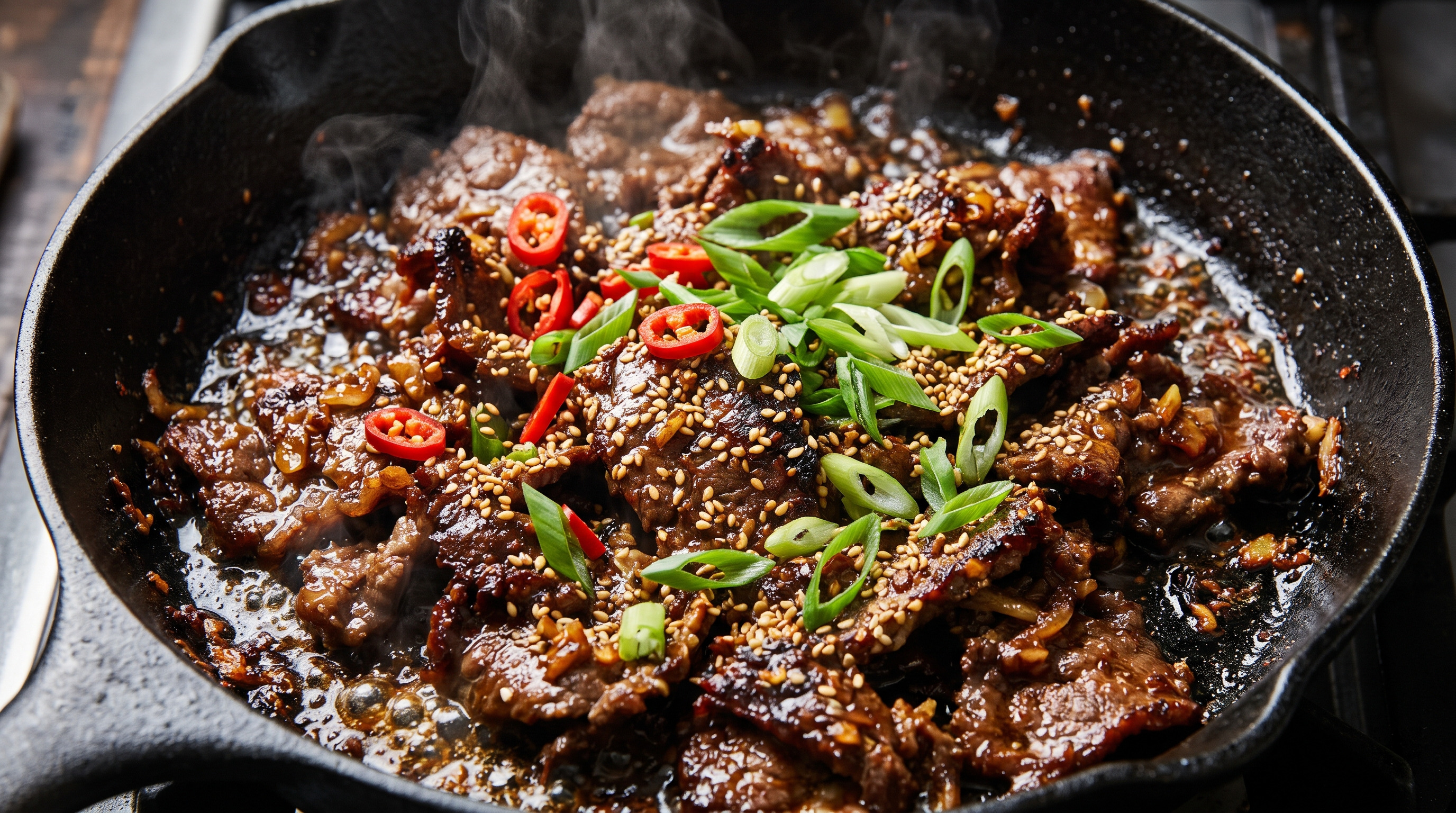
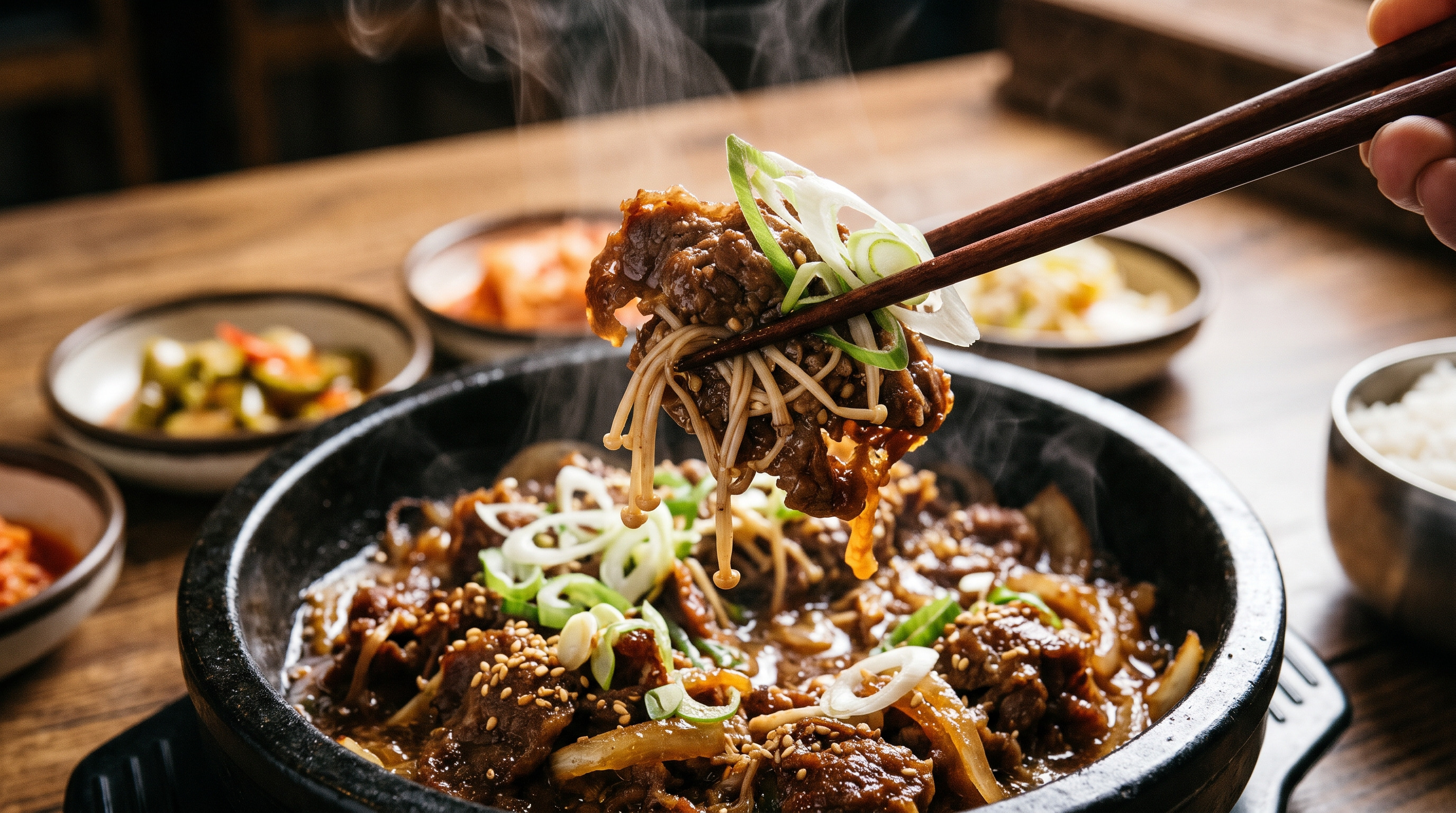
Master these three insider techniques to ensure your beef bulgogi rivals high-end Korean dining establishments:
- Separate Compressed Slices by Hand: Supermarket beef packs press thin slices into tight bricks. Pouring marinade over compacted meat leaves the inner layers completely unseasoned. Taking 2 minutes to peel and separate each sheet ensures every square inch absorbs fruit enzymes and soy umami.
- The Two-Batch Searing Rule: The number one reason home bulgogi turns into a watery stew is overcrowding the pan. Splitting 600g into two quick 3-minute high-heat batches preserves skillet temperature, vaporizing moisture instantly and locking juices inside crispy, caramelized edges.
- Convert to Clay Pot Bulgogi (Ttukbaegi Bulgogi): If you crave a comforting, soupy variation, arrange marinated bulgogi, pre-soaked glass noodles, enoki mushrooms, and vegetables in an earthenware pot. Pour in 300ml (1.25 cups) of mild anchovy-kelp stock and boil for 5 minutes. The marinade seasons the broth into a rich, sweet-savory soup perfect for spooning over rice.
5. Frequently Asked Questions (FAQ)
Q1. What can I substitute if fresh Asian pear (Bae) is unavailable?
Canned Korean pear beverage (‘Crushed Pear’ / Haitai Bae Juice, 5-6 tbsp) or 100% cloudy pure apple juice works perfectly. Alternatively, puree 1/2 yellow onion with 1 tbsp honey. Avoid kiwi or pineapple, which contain aggressive enzymes that turn beef into mush.
Q2. What are the best cuts of beef for homemade bulgogi?
Pre-sliced beef chuck roll, ribeye, top blade, or brisket from H-Mart or Asian grocers are ideal. If slicing yourself, freeze a boneless ribeye or sirloin for 45 minutes until firm and slice paper-thin across the grain.
Q3. Can I freeze pre-marinated bulgogi for meal prep?
Yes! Bulgogi freezes exceptionally well. Portion marinated beef into freezer zip-top bags and freeze for up to 2 months. Thaw overnight in the refrigerator before searing over high heat.
6. Serving Suggestions & Wine/Side Pairing
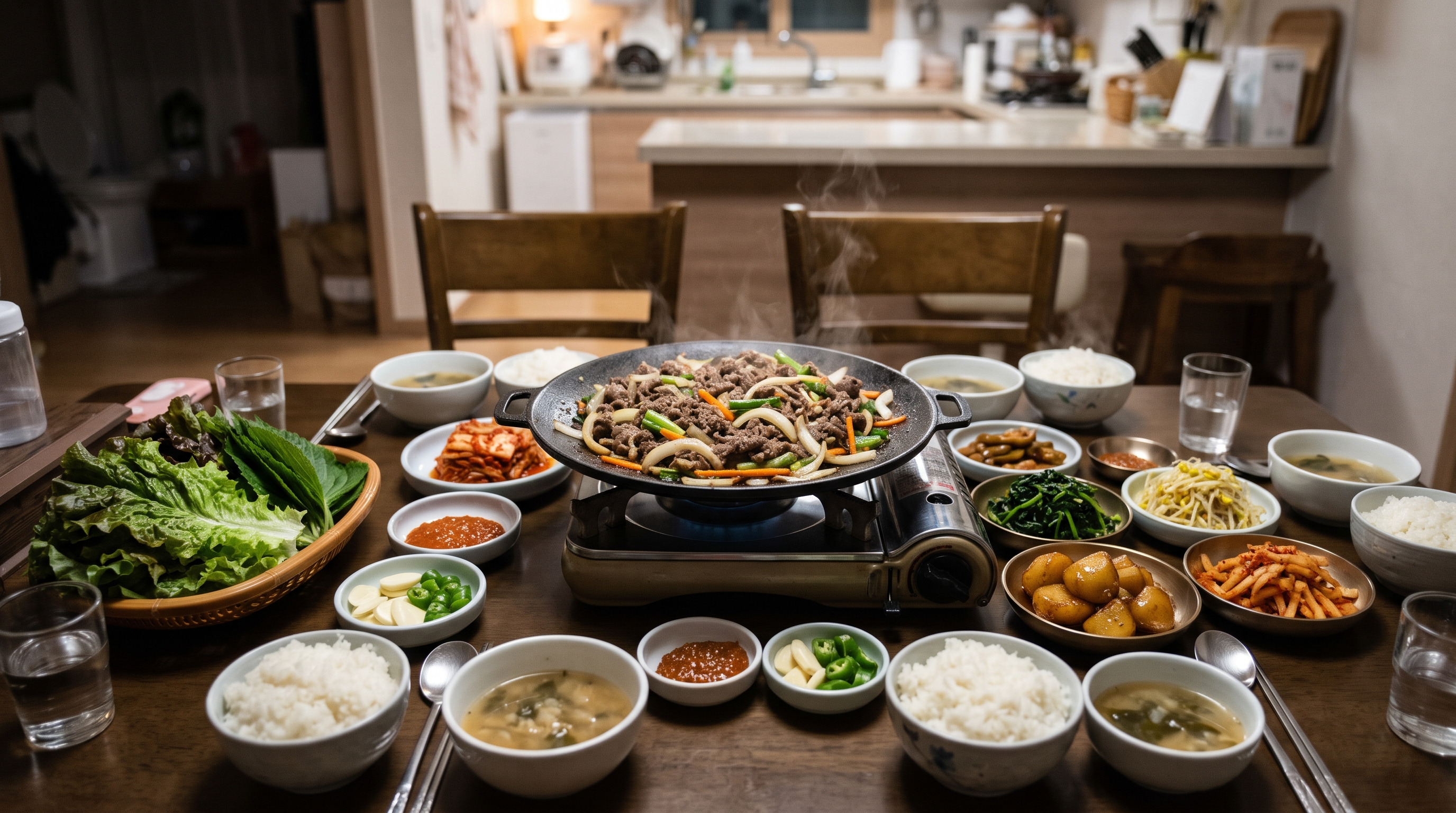
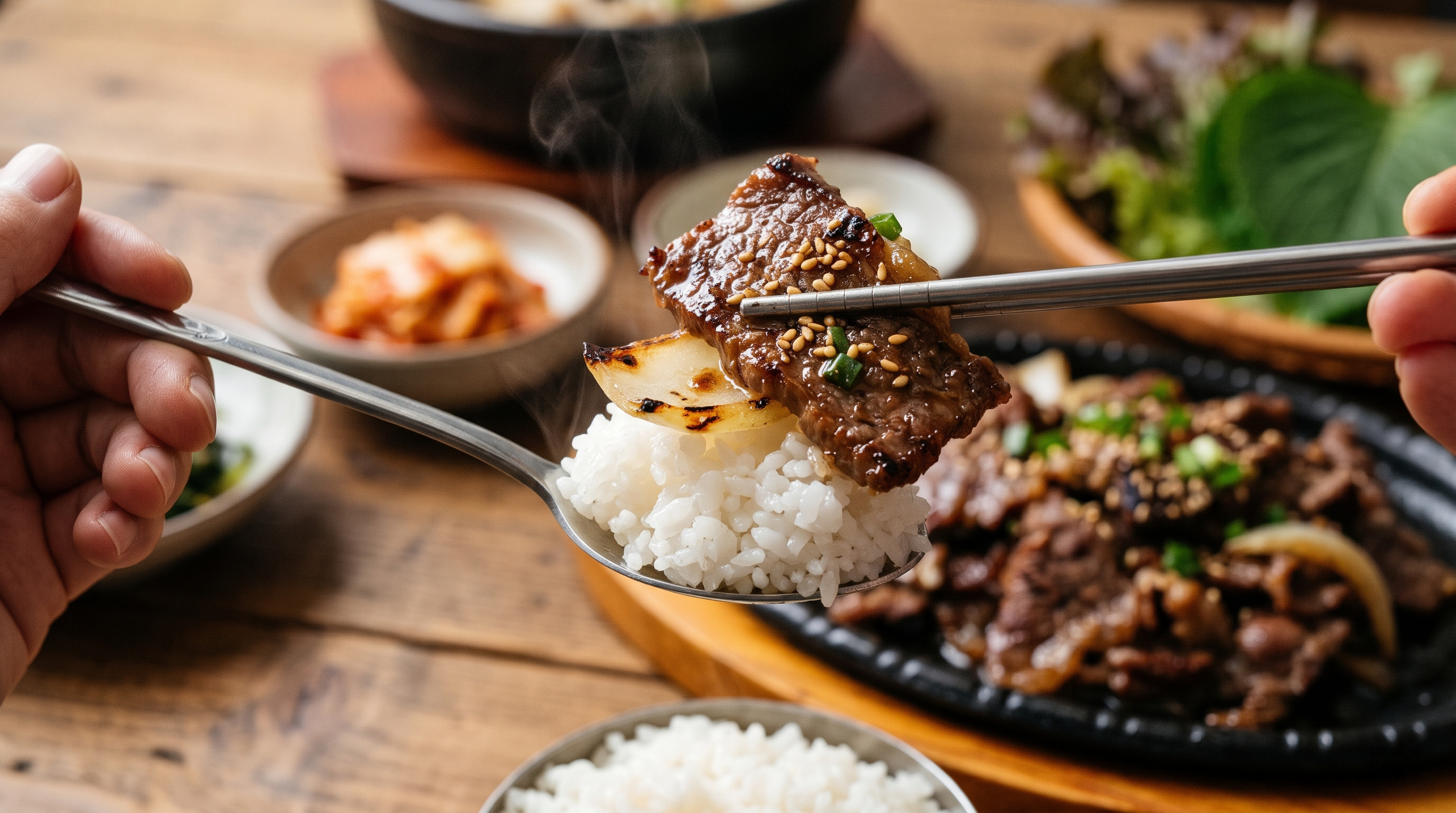
The quintessential way to enjoy Beef Bulgogi is Korean BBQ style: take a fresh red leaf lettuce or aromatic perilla leaf (kkaennip), add a spoonful of warm rice, top with sizzling bulgogi, a dab of savory ssamjang, and a raw garlic sliver, then wrap into a neat mouthful. Pair with a full-bodied Korean lager, chilled makgeolli (sparkling rice wine), or a fruit-forward Pinot Noir.
Bulgogi forms an iconic duo with bubbling Beef Brisket Doenjang Jjigae. If you enjoy marinated meats, also explore our spicy counterpart Jeyuk Bokkeum (Spicy Pork Stir-Fry) or compare with our Japanese sweet-savory Japanese Beef Gyudon (Beef Rice Bowl).