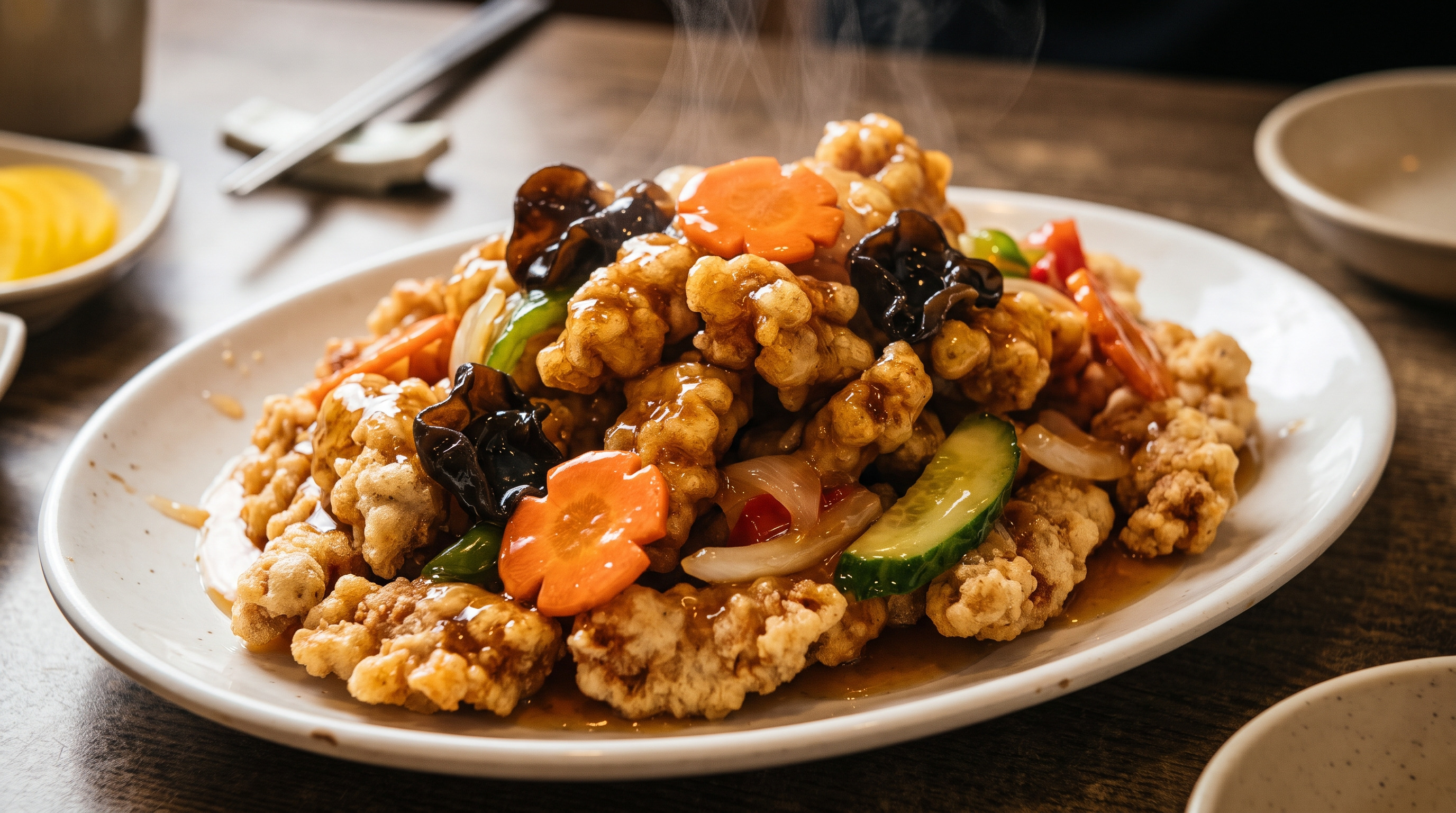
Quick Recipe Snapshot: ⏱️ Prep: 40 mins | 🔥 Cook: 20 mins | 🍽️ Servings: 3–4 | 💡 Key Secret: Settle 100% potato starch sediment + incorporate 2 tbsp oil into batter (micro-bubble crust) + two-stage double frying (160°C then 180°C).
Undisputed king of Korean-Chinese cuisine (Junghwa Yori), Tangsuyuk (탕수육) features finger-length batons of fresh pork coated in a glass-shattering, airy starch crust, served alongside a glistening sweet and sour translucent sauce bursting with crisp vegetables and tangy pineapple. Whether shared as the centerpiece of a family weekend feast or paired with noodle classics, authentic Tangsuyuk is a masterclass in textural contrast.
Yet making Tangsuyuk at home often leads to disappointment: the crust turns out either soggy like wet bread or rock-hard like concrete, the meat tastes dry and gamey, or the sauce ends up cloudy, gluey, or unpleasantly sour.
Professional Chinese-Korean chefs achieve signature cloud-light crispness that stays crunchy even when drenched in hot sauce through three culinary science pillars: hydrated potato starch settling (ang-geum jeon-bun), thermal expansion micro-bubble battering (oil-in-batter technique), and two-stage moisture-evacuation double frying.
Follow this guide to master the ultimate crispy pork feast right in your home kitchen.
1. The Culinary Science Behind Glass-Crisp Tangsuyuk
Standard flour or cornstarch batters cannot produce the feather-light, shattering crunch characteristic of premium Chinese restaurant Tangsuyuk. The secret lies in starch grain geometry and moisture release.
💡 Culinary Science 1: Settled Potato Starch Sediment & Oil Emulsion Bubbles When 100% pure potato starch is dissolved in water and left undisturbed for an hour, large, heavy amylopectin granules precipitate to the bottom, forming a dense, rock-hard sediment (ang-geum). After decanting the excess water, adding 2 tablespoons of cooking oil and an egg white creates a dense non-Newtonian fluid. When dropped into hot frying oil, the oil droplets trapped inside the batter flash-heat and expand, creating millions of microscopic porous air channels. This creates an airy, blistered crust that shatters like a wafer instead of hardening into a solid shell.
💡 Culinary Science 2: Two-Stage Double Frying (160°C Par-Fry & 180°C Crisp-Fry) Deep-frying only once traps internal meat steam inside the batter. As the pork rests, steam migrates outward, softening the crust within minutes. In this two-stage technique, the pork is first par-fried at 160°C (320°F) for 3 minutes to cook the meat through and set the batter. During a 2-minute resting phase on a wire rack, internal water vapor migrates to the surface. Plunging the pork into 180°C (356°F) oil for 60 to 90 seconds flash-vaporizes that surface moisture instantly, sealing an impervious, ultra-crispy crust that remains crunchy even under warm sauce.
2. Essential Ingredients & The Golden Ratio Sauce
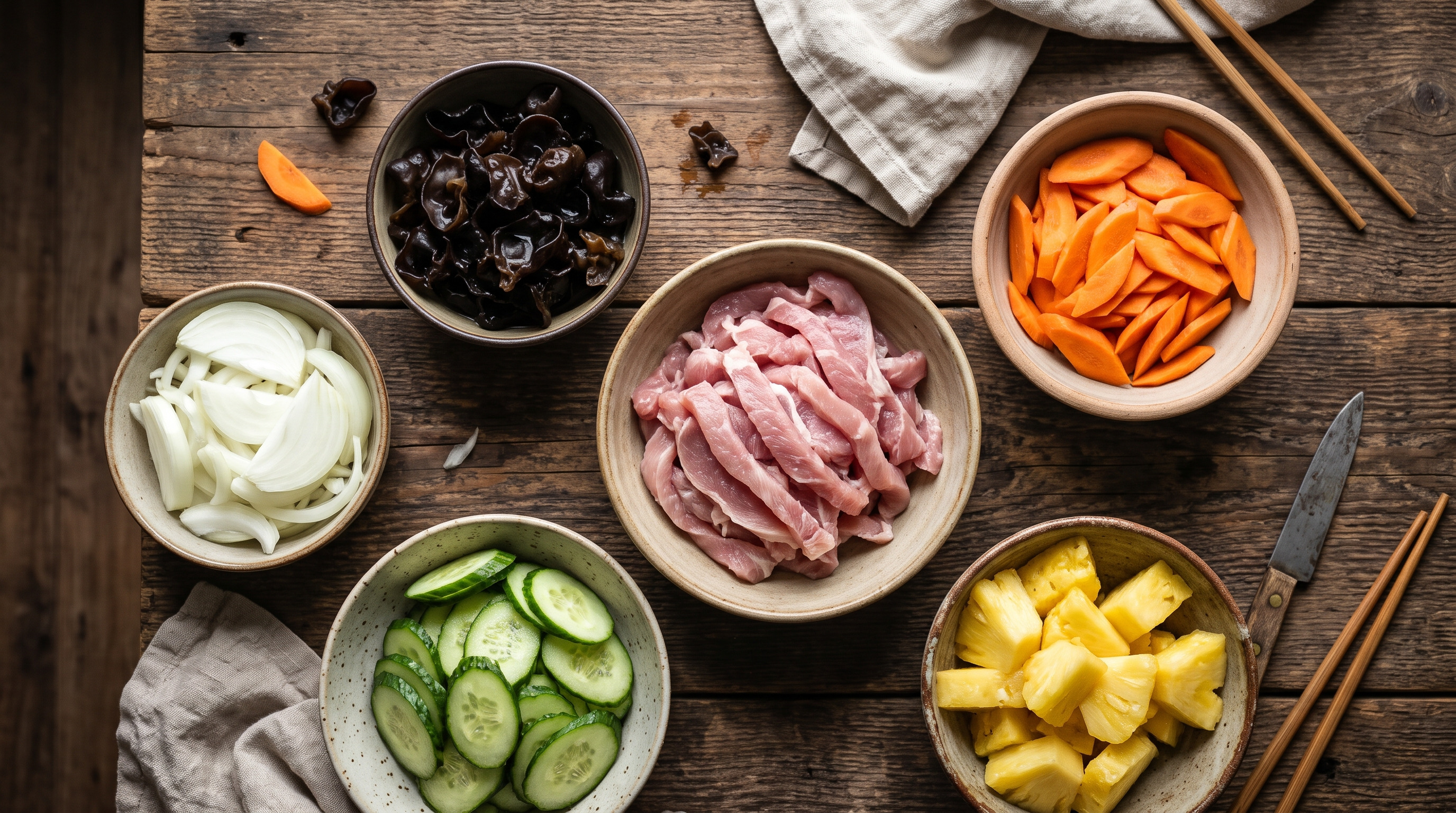
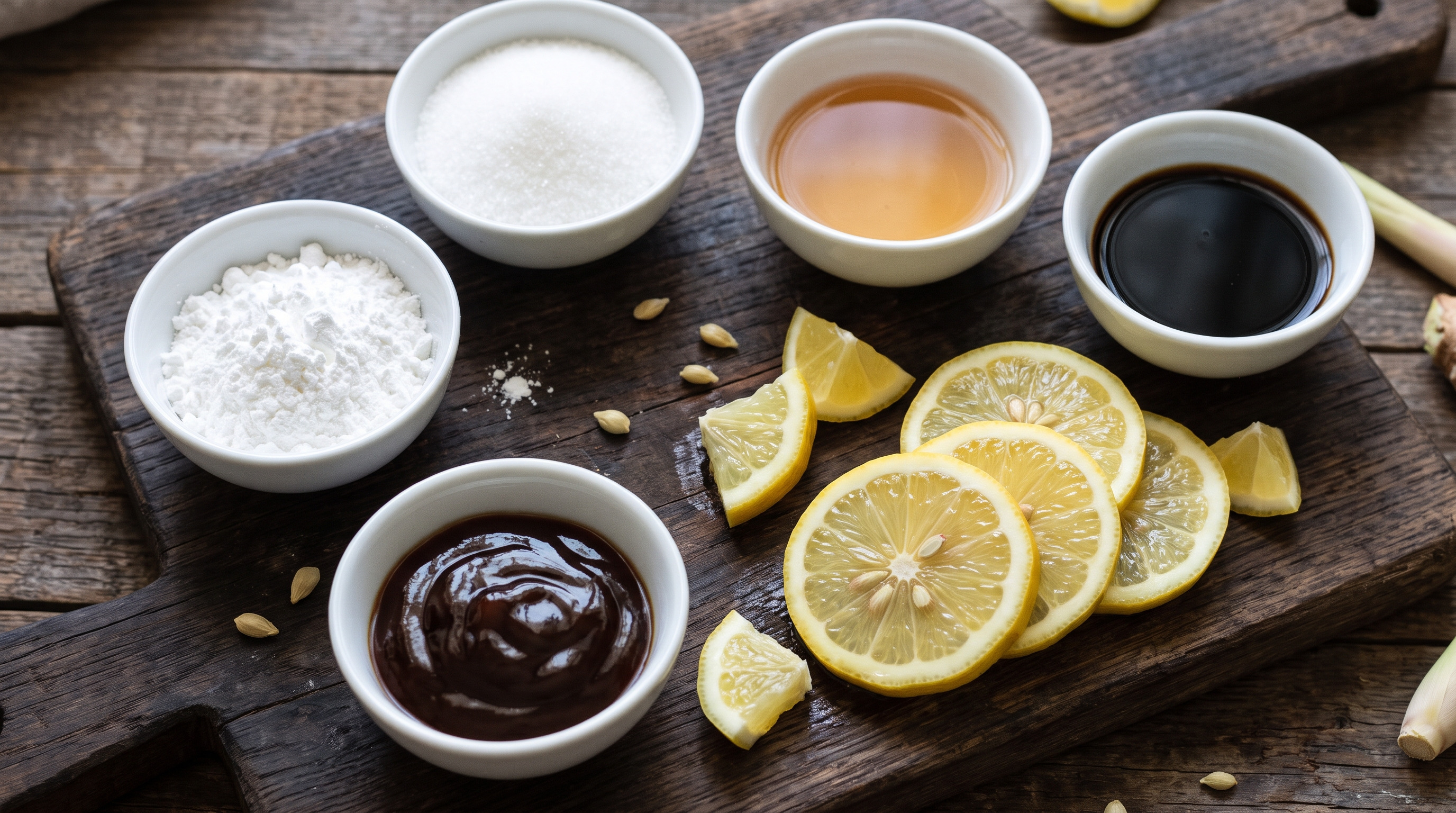
This recipe serves 3 to 4 adults. Pure 100% potato starch (gamja jeonbun) is non-negotiable for authentic texture.
| Category | Ingredients & Amounts (Metric & US) | Chef’s Notes & Substitutions |
|---|---|---|
| Pork Cut | 400g (14 oz) pork loin (deungsim) or pork tenderloin (ansim) | Cut into 1x5cm (0.4x2-inch) finger-length batons. Tenderloin yields an even juicier, softer interior. |
| Meat Marinade | 1.5 tbsp rice wine + 1 tbsp soy sauce + 1/3 tbsp minced ginger + 1/4 tsp salt + 1/4 tsp pepper | Minced fresh ginger is the crucial aromatics that removes any pork gaminess. |
| Starch Sediment | 200g (1.5 cups) 100% potato starch + 2 cups cold water | Must be 100% potato starch. Cornstarch produces a yellow, hard crust rather than a white, airy crunch. |
| Batter Emulsion | 1 egg white + 2 tbsp neutral cooking oil | Kneaded into the settled starch sediment to create the micro-bubble frying matrix. |
| Frying Medium | 1L (4–5 cups) neutral high-smoke-point oil | Canola, peanut, corn, or vegetable oil for deep frying. |
| Sauce Aromatics | 1/2 onion + 1/4 carrot + 3–4 wood ear mushrooms + 1/3 cucumber + 2 pineapple rings | Rehydrate dried wood ear mushrooms (mok-i beoseot) in warm water for 15 minutes. |
| Sweet & Sour Ratio | 200ml water + 5 tbsp sugar + 4 tbsp vinegar + 2 tbsp soy sauce + 0.5 tbsp oyster sauce | The 5:4:2 sugar-vinegar-soy ratio produces a clean, restaurant-balanced sweet and sour tang. |
| Thickener | 1.5 tbsp potato starch + 2 tbsp water (cornstarch slurry) | Drizzled into boiling sauce in stages until it coats the back of a spoon. |
3. Step-by-Step Cooking Instructions
Total hands-on cooking time is roughly 25 minutes once the starch sediment has settled.
Step 1. Settle Wet Potato Starch & Season Pork Loin
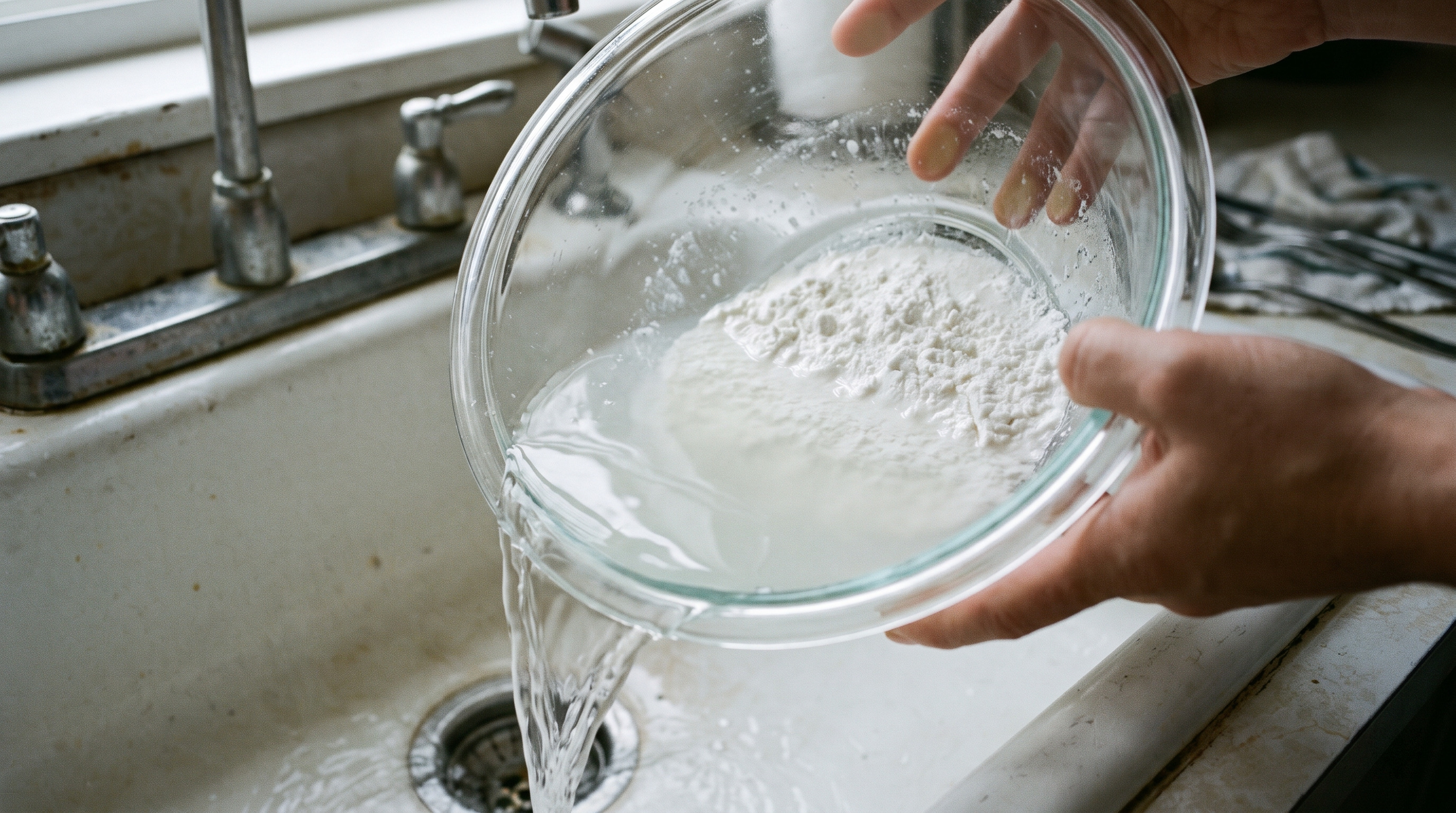
In a mixing bowl, combine 200g (1.5 cups) of 100% potato starch with 2 cups of cold water. Whisk thoroughly until fully dissolved, then set the bowl on your counter undisturbed for at least 1 hour. The starch particles will precipitate to the bottom, forming a firm, chalk-white sediment layer beneath clear water.
Cut 400g (14 oz) of pork loin into uniform finger-length batons (approx. 1cm thick by 5cm long). Place in a bowl and add 1.5 tbsp cooking wine (mirin or Shaoxing wine), 1 tbsp soy sauce, 1/3 tbsp finely minced ginger, 1/4 tsp fine sea salt, and 1/4 tsp black or white pepper. Massage the seasoning into the pork strips and let marinate for 15 minutes.
Step 2. Whip Aerated Emulsion Batter with Oil & Egg White
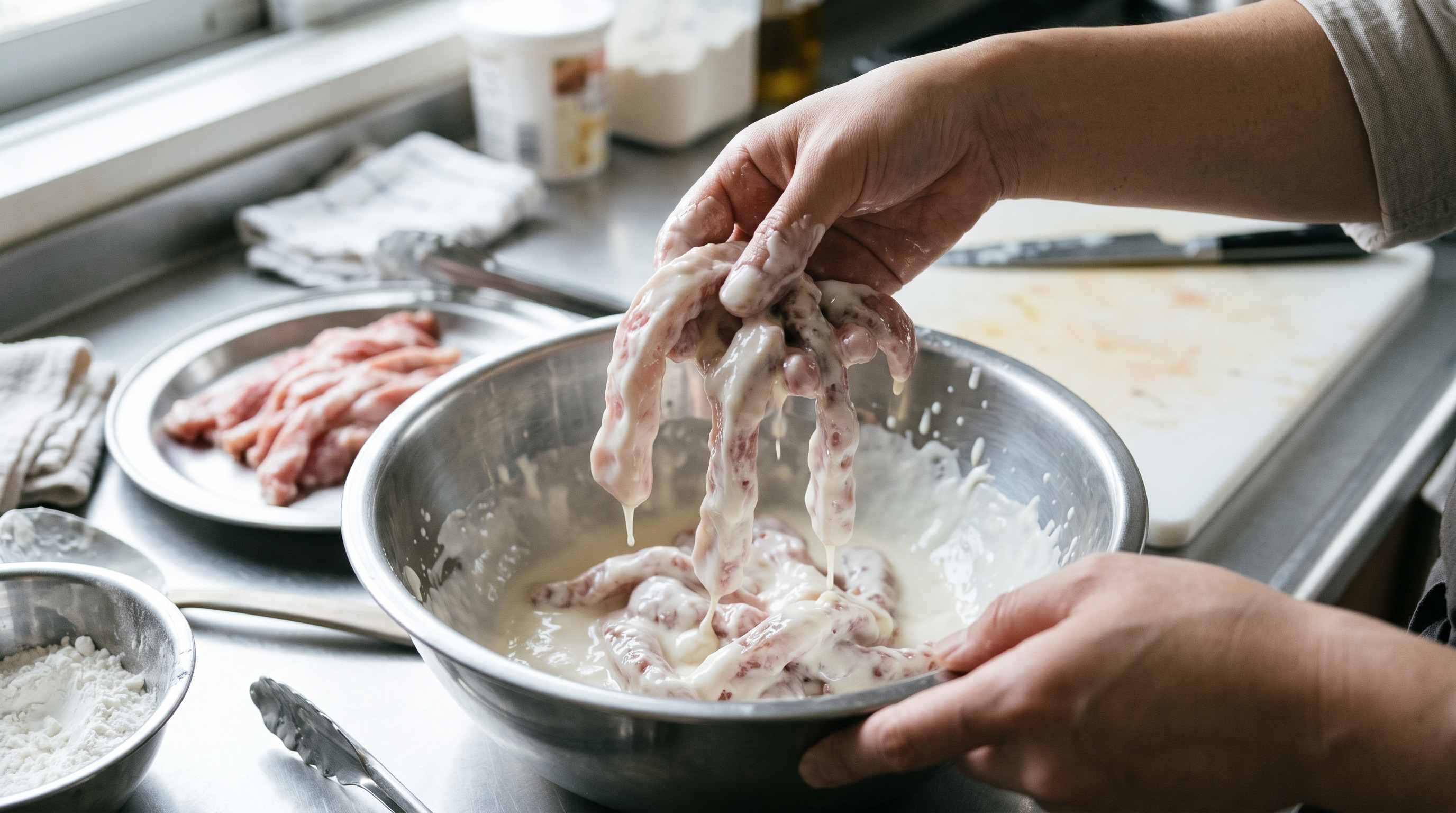
Carefully tilt the starch bowl and slowly pour off the clear surface water into the sink, taking care not to disturb the solid white sediment beneath. What remains is a dense, rock-hard starch block (ang-geum).
Add 1 egg white and 2 tablespoons of neutral cooking oil directly onto the settled starch. Use your fingers to break apart the brittle starch sediment and knead everything together. It will initially feel unyielding, but within 60 seconds it transforms into a smooth, pearlescent, mayonnaise-like batter. Add the marinated pork strips into the batter and fold gently until every piece is generously coated.
Step 3. Two-Stage Double Frying (160°C Par-Fry & 180°C Crisp-Fry)
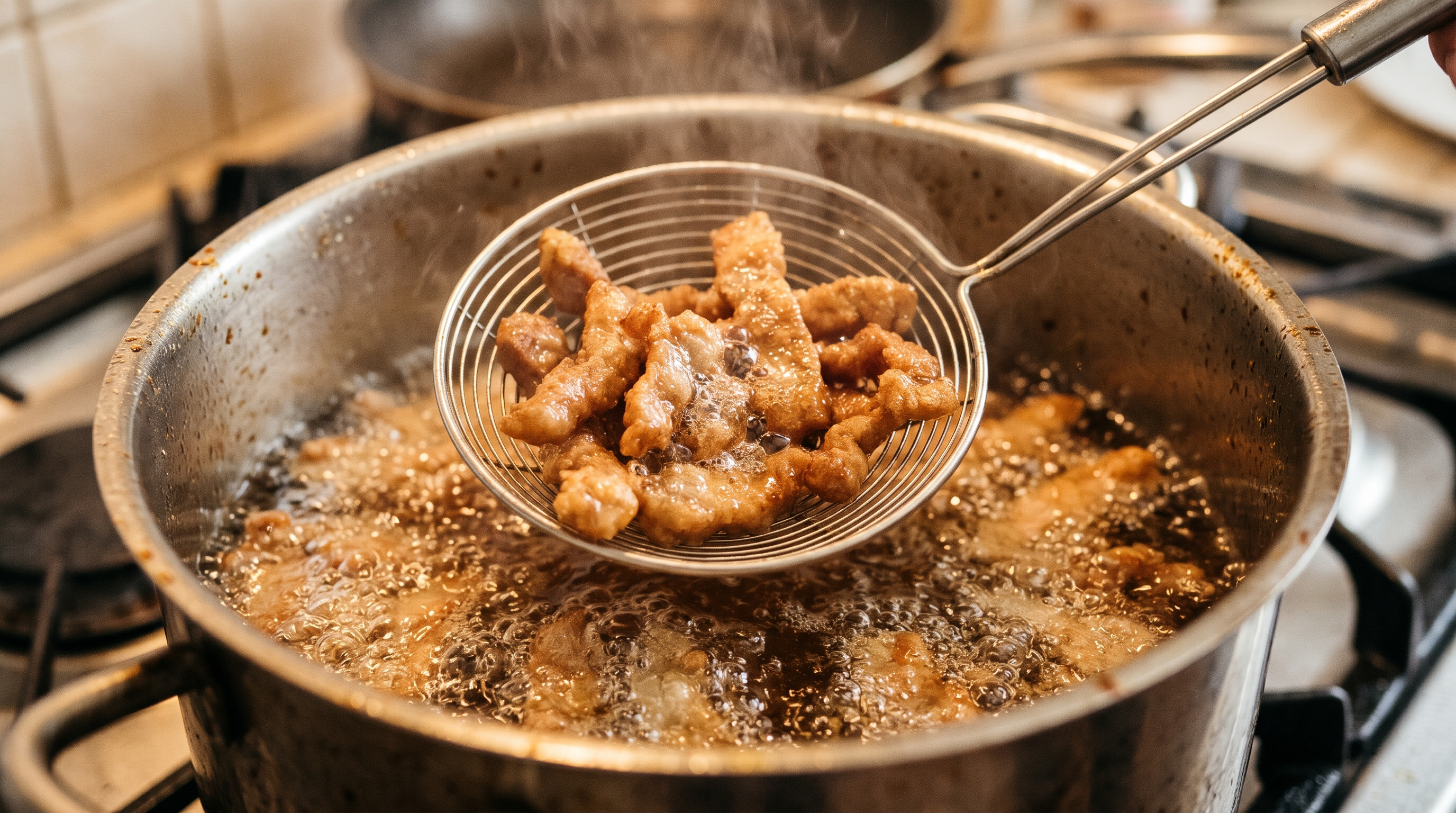
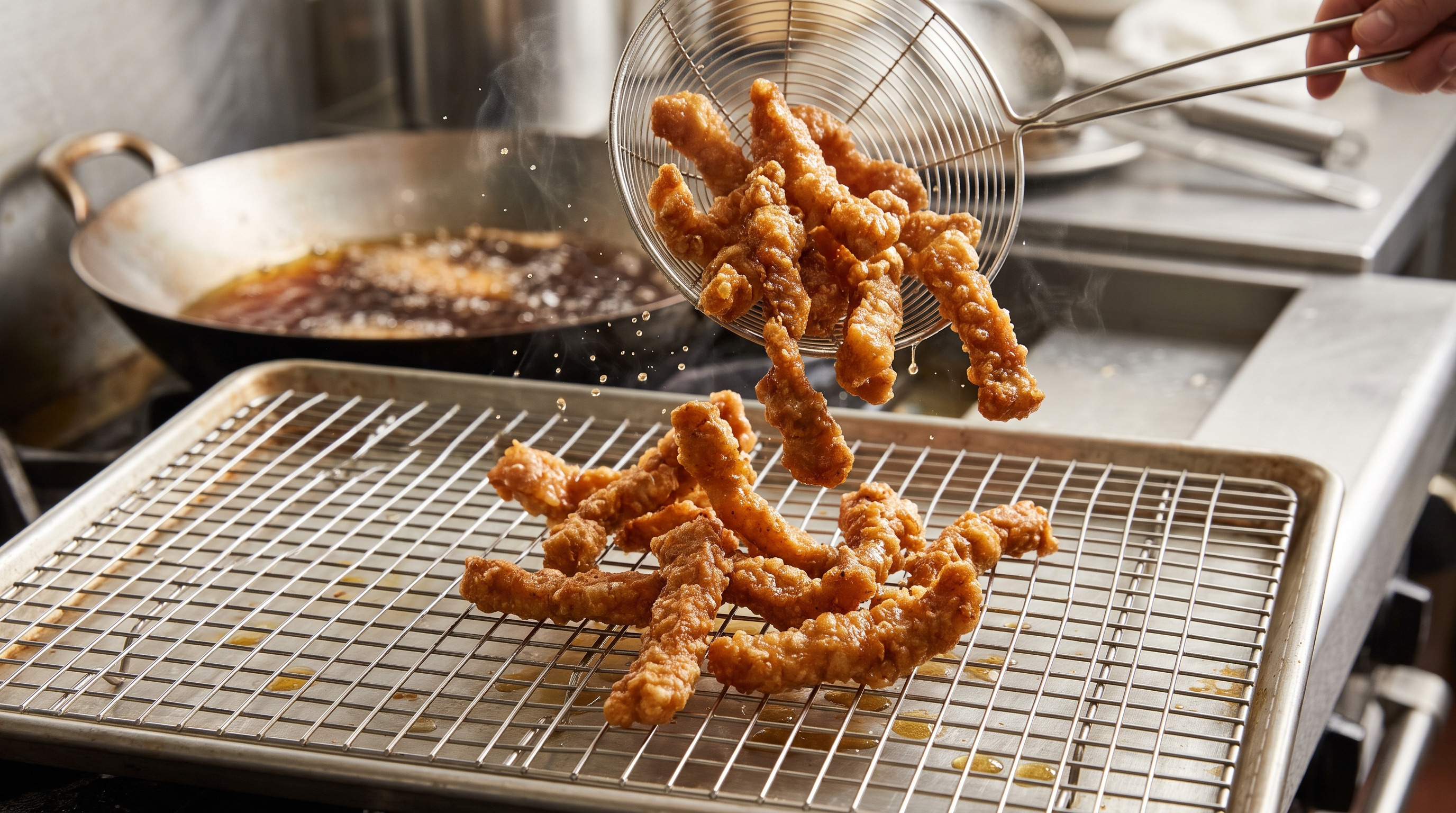
Pour 1 liter of neutral cooking oil into a wok or deep Dutch oven and heat to 160°C (320°F)—when a drop of batter sinks halfway and floats up in 2 seconds. Drop the battered pork strips into the oil one by one to prevent clumping.
Fry over medium heat for 3 minutes, nudging the pieces gently with long wooden chopsticks. The pork will cook through while the batter sets into a pale, delicate blonde crust. Remove with a stainless-steel strainer and transfer to a wire cooling rack. Lightly tap the pieces to shake off excess oil, and let rest for 2 minutes to allow internal steam to migrate outward.
Increase burner heat until the oil temperature reaches 180°C (356°F)—when a drop of batter sizzles instantly on the surface. Return all par-fried pork to the hot oil. Fry aggressively over high heat for 60 to 90 seconds, stirring constantly. The crust will turn golden, light, and crackly; when tapped with metal tongs, it will emit a crisp, hollow clicking sound. Drain immediately on a wire rack.
Step 4. Simmer Translucent Sweet & Sour Sauce & Serve
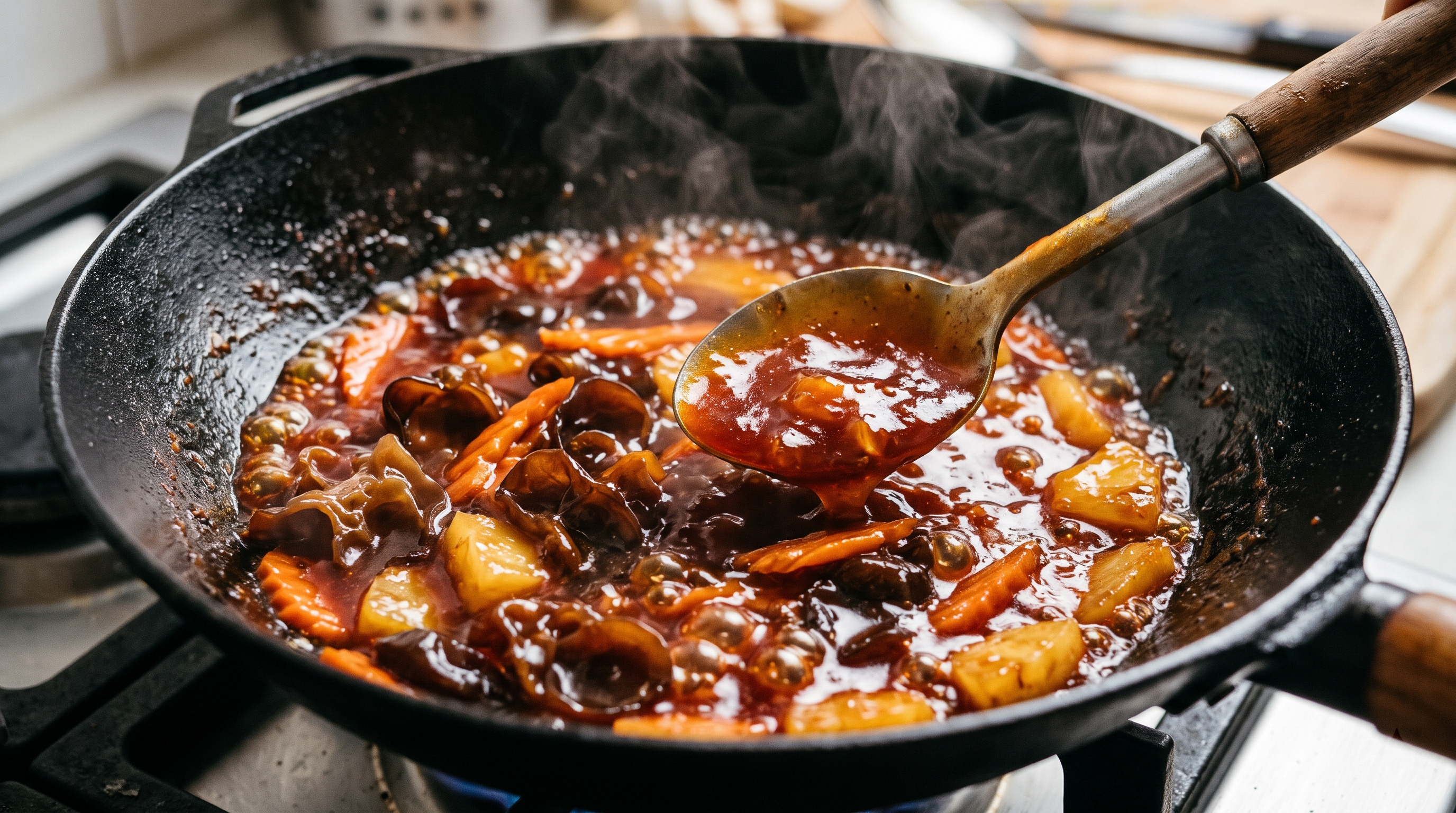
In a clean saucepan, combine 200ml (3/4 cup + 1 tbsp) water, 5 tbsp sugar, 4 tbsp distilled white vinegar, 2 tbsp regular soy sauce, and 0.5 tbsp oyster sauce. Bring to a rapid rolling boil over high heat.
Add the sliced onion, carrot, rehydrated wood ear mushrooms, cucumber, and pineapple chunks. Boil for 30 to 40 seconds so the vegetables absorb flavor while maintaining a crisp bite. Turn heat to low. Re-whisk your cornstarch slurry (1.5 tbsp potato starch + 2 tbsp water) and drizzle it into the sauce in 2 or 3 circular additions, stirring constantly with a wooden spoon. Once the sauce thickens into a crystal-clear, glossy glaze, turn off the heat. Serve immediately with the piping-hot pork.
4. Pro Chef Tips to Elevate Your Dish
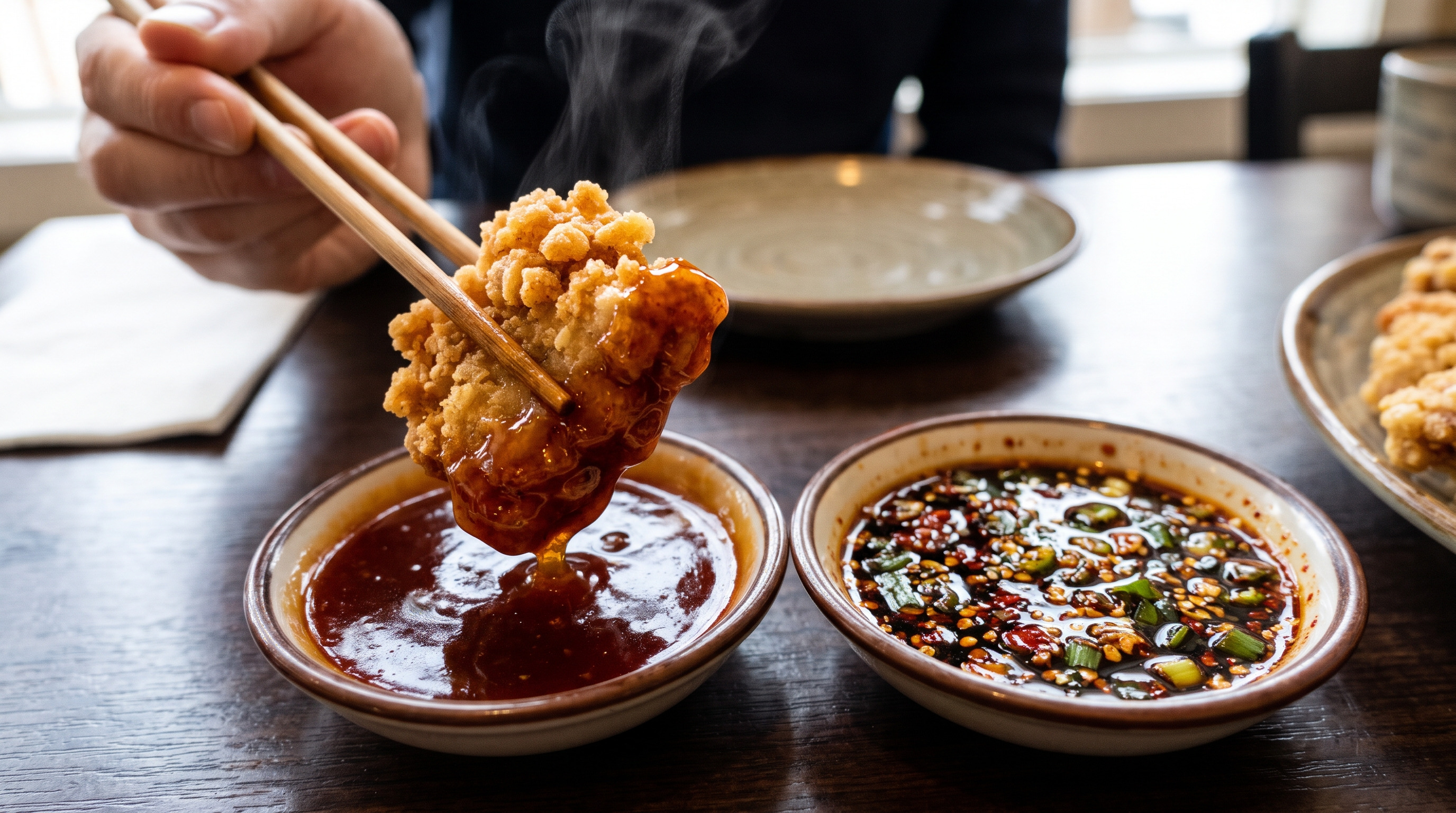
Elevate your homemade Tangsuyuk to five-star Chinese bistro standards with these three insider secrets:
- 100% Potato Starch is Mandatory: Never substitute with cornstarch or all-purpose flour. Potato starch contains larger amylose granules with superior water-binding capacity that gelatinize into a snowy-white, paper-thin, shatteringly crisp shell that resists sogginess far longer than any grain flour.
- The Magic of 2 Tablespoons Oil in Batter: Mixing cooking oil into the starch sediment seems counterintuitive, but it is the premier secret of Korean-Chinese master chefs. In the hot fryer, the internal oil drops escape into the bath, leaving behind an airy lattice of microscopic air bubbles that make the crust puff up like a crunchy cloud.
- Serve with Spicy Vinegar-Soy Dipping Sauce (Cho-Ganjang): Mix 1 tbsp soy sauce, 0.5 tbsp vinegar, and 1 tbsp Korean red pepper flakes (gochugaru) into a thick paste. Dipping the sweet-and-sour coated pork into this spicy, tart dip provides a sharp savory contrast that cuts through richness and keeps you coming back for more.
5. Frequently Asked Questions (FAQ)
Q1. What if I do not have 1 hour to wait for the potato starch sediment to settle?
Speed up settling by using ice-cold water and 3-4 ice cubes; the density difference forces the starch to settle in 20-25 minutes. In a pinch, whisk potato starch and Korean frying mix (twigim-garu) in an 8:2 ratio with ice water until it reaches the consistency of pancake batter.
Q2. Can I substitute pork tenderloin or pork shoulder for pork loin?
Yes! Pork tenderloin (ansim) makes exceptionally tender, juicy tangsuyuk. Pork shoulder or rear leg (huji) can also be used; slice slightly thinner and toss with 1 tbsp oil in the marinade to soften the meat fibers.
Q3. How do I reheat leftover tangsuyuk so it stays crispy?
Never microwave! Preheat an air fryer to 180°C (350°F) and bake the pork pieces in a single layer for 5-7 minutes. The circulating hot air vaporizes trapped moisture and renders leftover surface oil, restoring factory-fresh crunch.
6. Serving Suggestions & Wine/Side Pairing
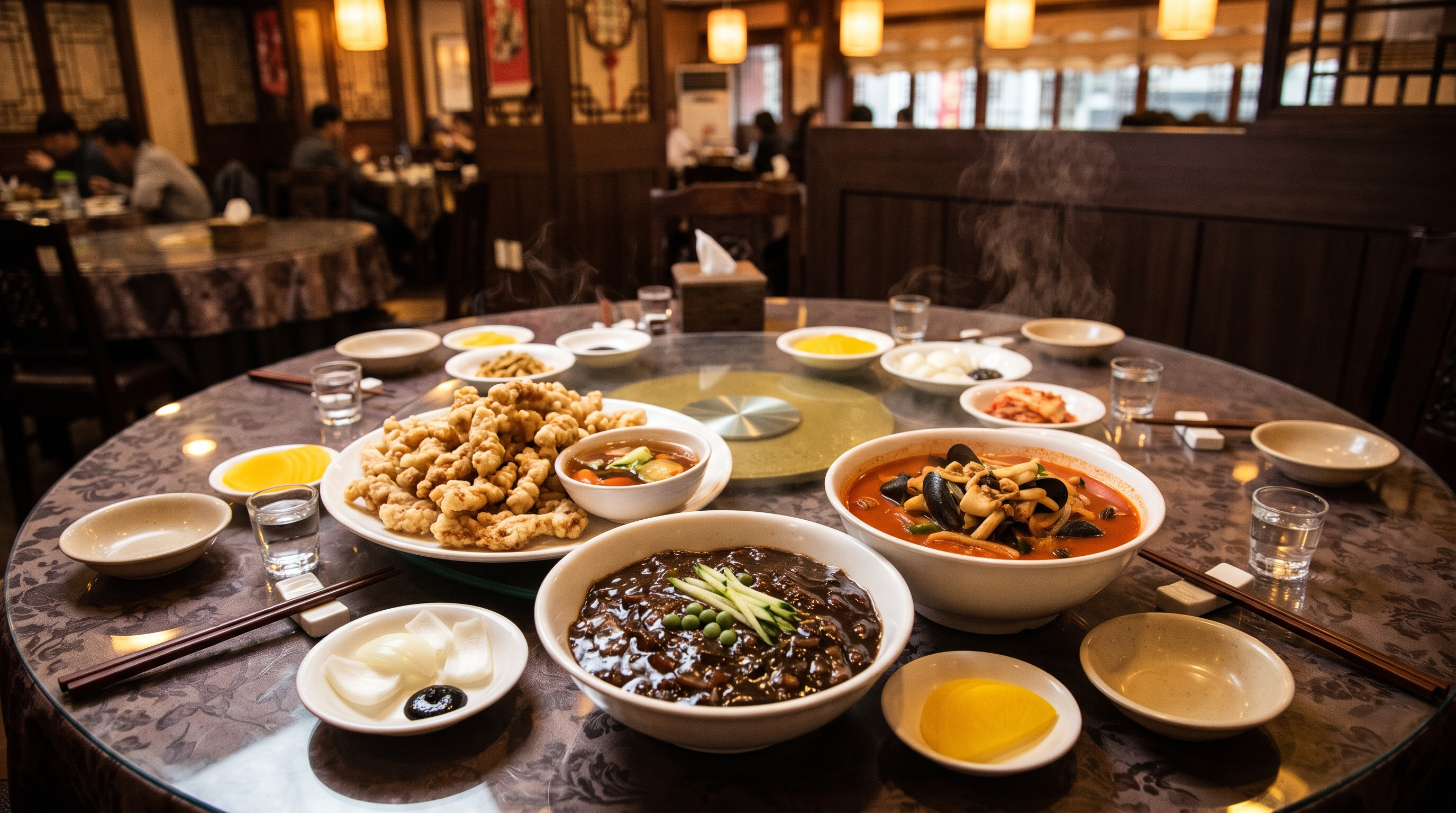
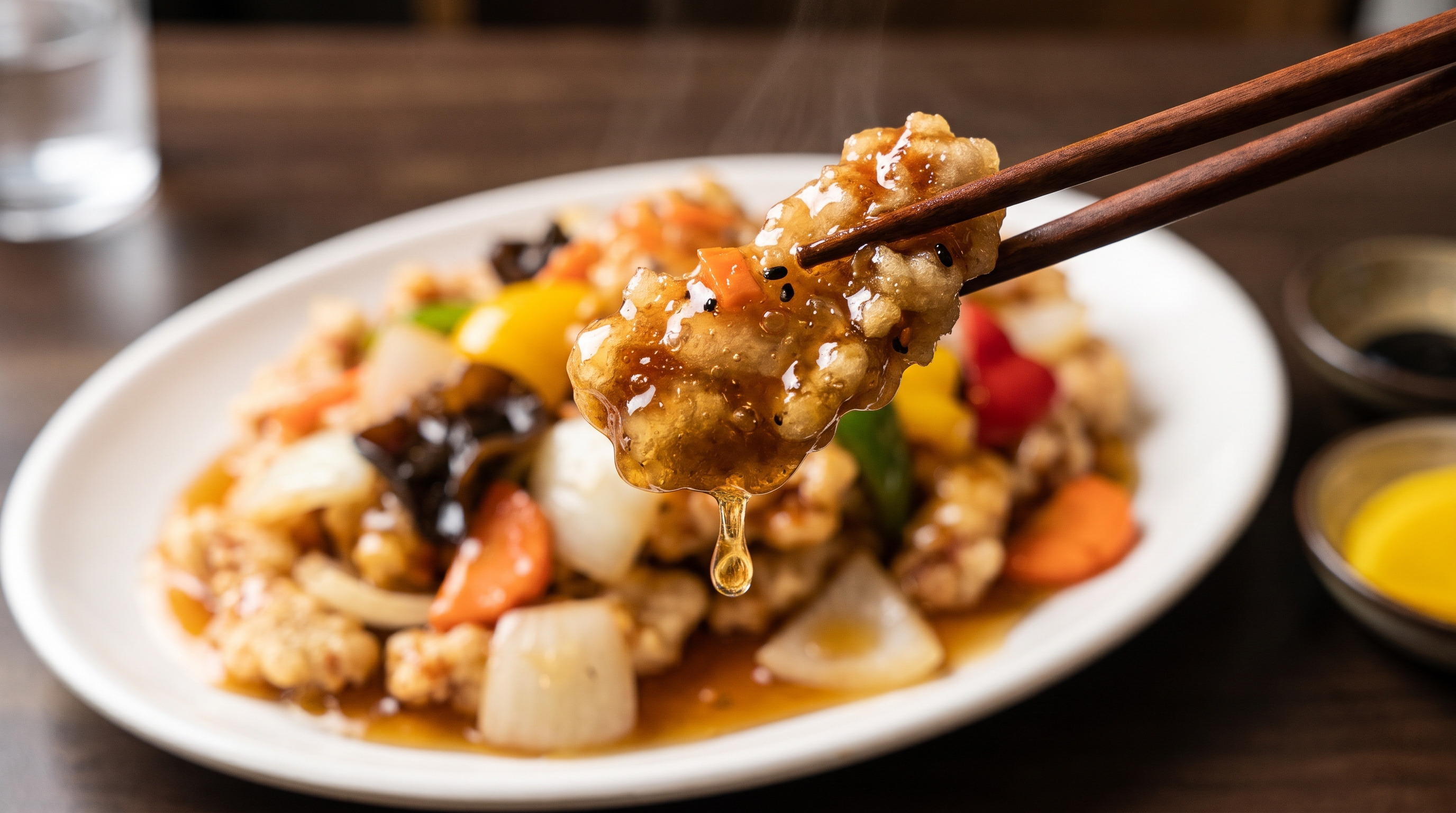
Tangsuyuk inspires a famous culinary debate in South Korea: Bumuk (pouring sauce over the pork for a soft, chewy texture) vs. Jjikmuk (dipping crispy pork pieces into sauce for maximum crunch). Serve the sauce in a side bowl so your guests can choose their preferred style!
No Korean-Chinese meal is complete without Tangsuyuk’s iconic partners. Pair this crispy pork with rich, savory Homemade Jajangmyeon (Black Bean Noodles) and fiery, smoky Seafood Jjamppong (Spicy Noodle Soup). If you enjoy Sichuan-style heat, also try our fragrant Mapo Tofu Recipe. Serve with ice-cold Tsingtao beer or dry Chinese Kaoliang liquor.