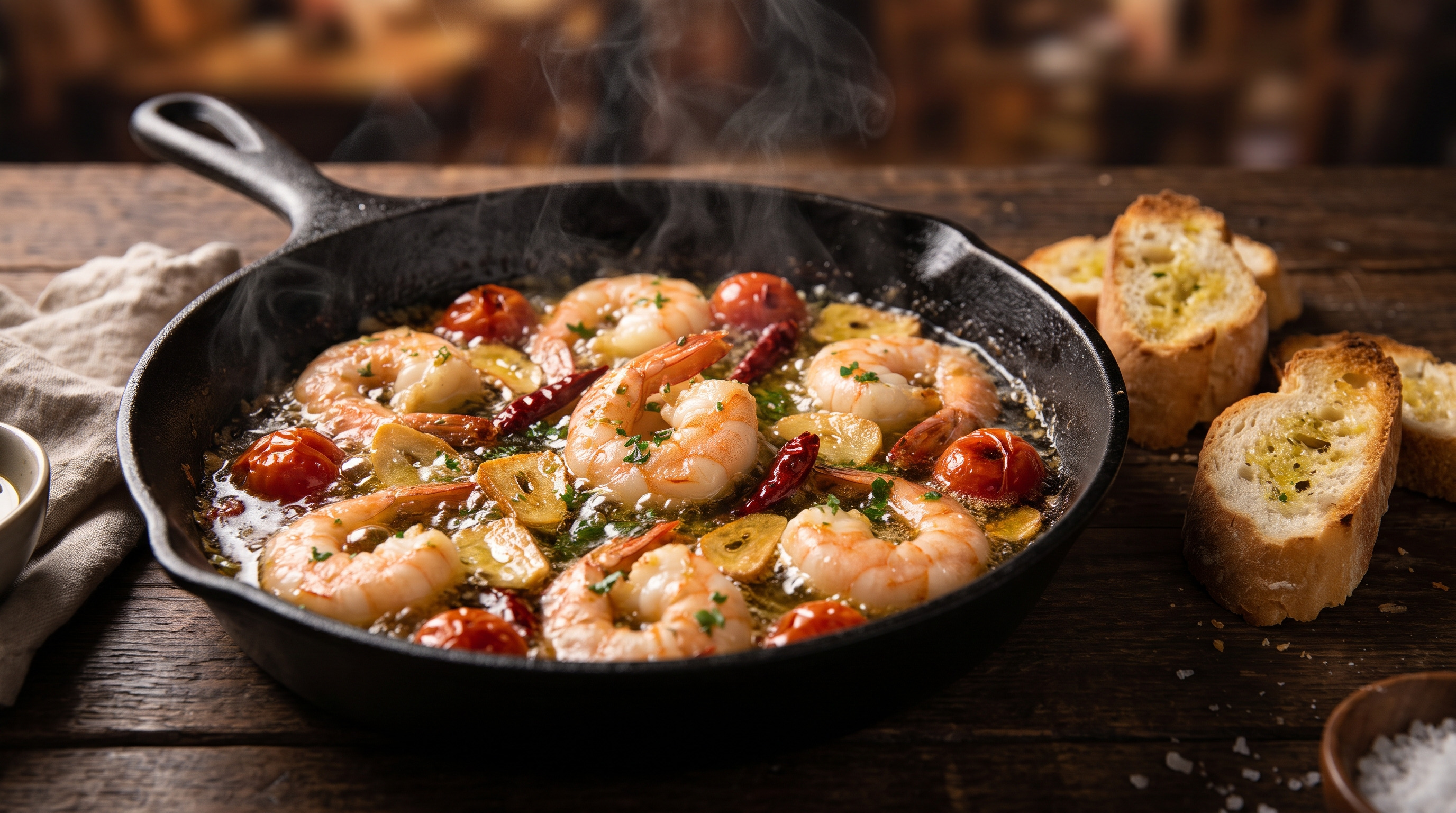
Quick Recipe Snapshot: ⏱️ Prep: 10 mins | 🔥 Cook: 10 mins | 🍽️ Servings: 2–3 | 💡 Key Secret: Start garlic in cold olive oil over medium-low heat + snip the shrimp tail water-sac + finish with 1/2 tsp chicken bouillon powder for bistro umami.
The mesmerizing sizzle of plump pink prawns gently bobbing in golden olive oil, punctuated by the intoxicating aroma of toasted garlic chips and spicy dried chilies, makes Gambas al Ajillo (Spanish Garlic Shrimp) one of the world’s most beloved tapas. Served piping hot straight from a cast iron skillet alongside a basket of crusty toasted baguette slices, each bite bursts with the sun-drenched flavors of the Mediterranean coast.
Yet many home cooks encounter frustrating pitfalls when attempting this classic dish. Common complaints include scary oil splatters that make kitchen clean-up a nightmare, rubbery and shriveled shrimp stripped of their sweet juices, or an overwhelming greasiness where the garlic and oil feel completely separated rather than harmoniously integrated.
The secret behind the vibrant dishes served in Madrid’s tapas bars and high-end bistros lies in straightforward culinary physics. By mastering cold-pan low-temperature oil infusion, understanding shrimp protein denaturation thresholds (60–65°C / 140–149°F), and introducing a tiny touch of glutamate-rich bouillon, you can consistently create succulent, fork-tender shrimp enveloped in liquid gold.
Whether you are hosting a lively weekend gathering, preparing an elegant date-night appetizer, or looking for an effortless seafood supper, this foolproof guide delivers restaurant-level perfection in just 15 minutes.
1. The Culinary Science Behind Restaurant Flavor
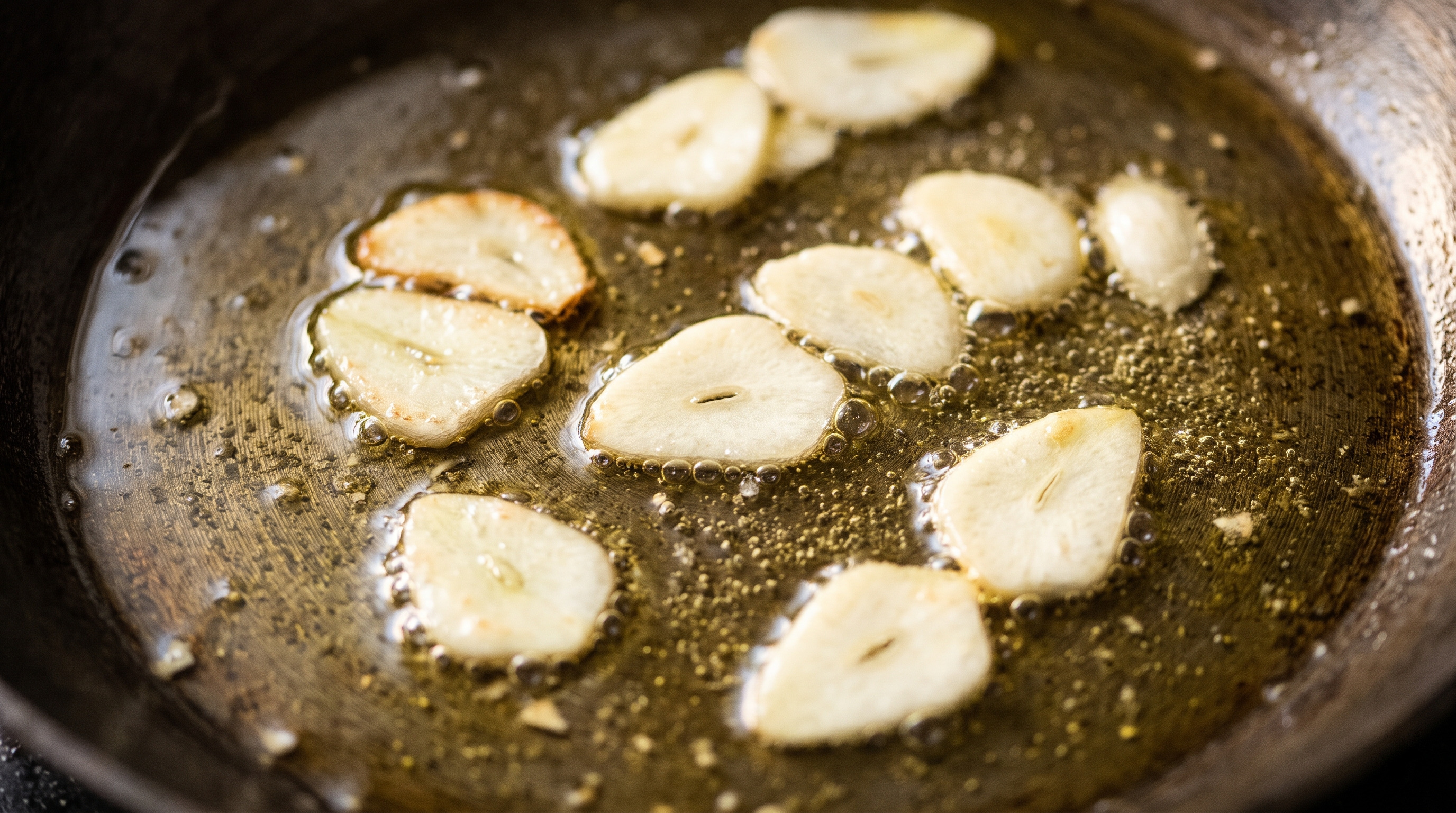
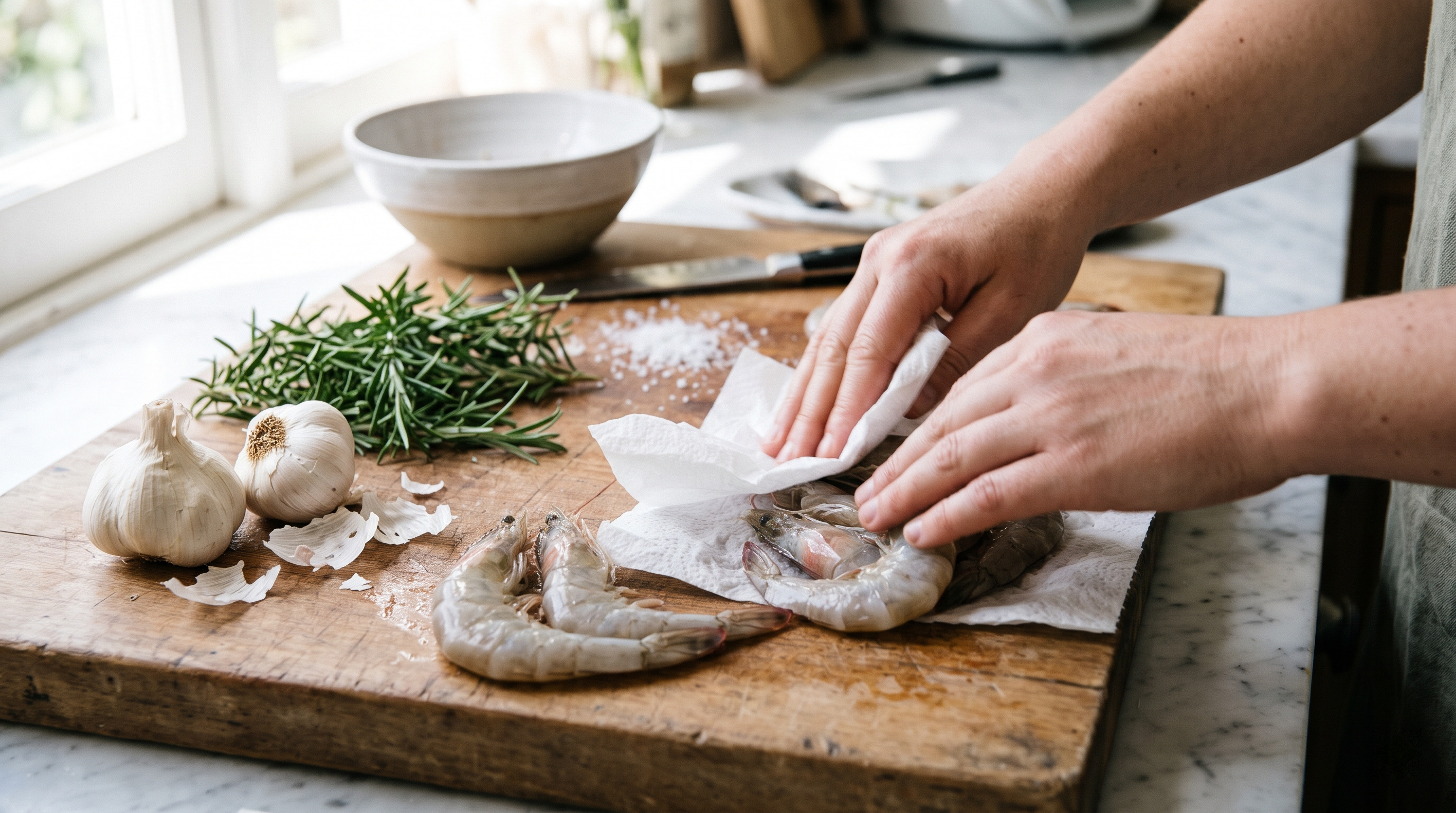
Achieving succulent, non-greasy Gambas al Ajillo without terrifying oil splatters comes down to controlling oil temperatures and managing moisture boundaries.
💡 Culinary Science 1: Cold-Pan Low-Temperature Oil Infusion
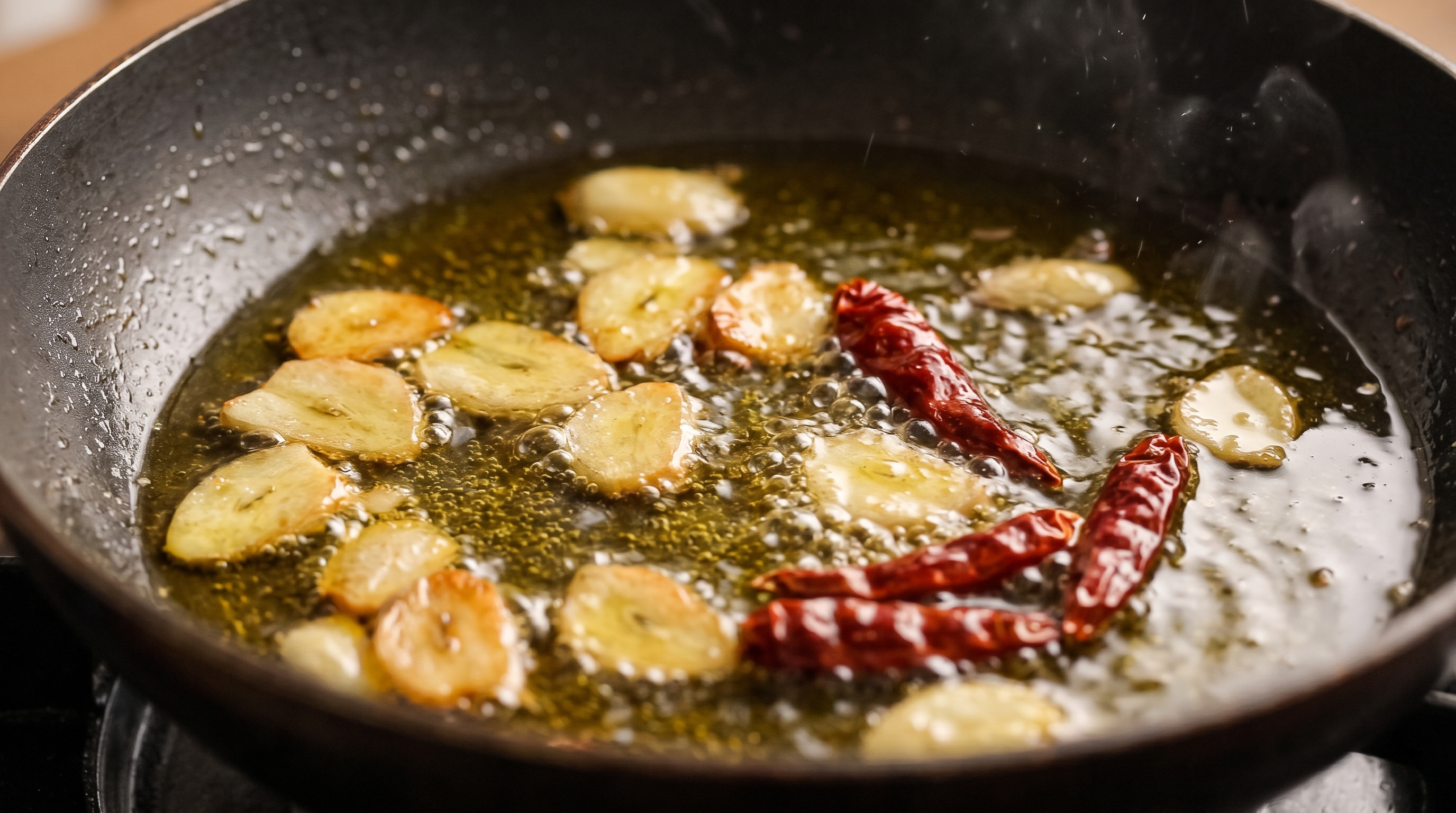
Extra virgin olive oil features a relatively modest smoke point (approximately 180–190°C / 356–374°F), and fresh garlic chips contain natural fructan sugars that burn into bitter, acrid compounds within seconds if thrown into preheated oil. Instead of dropping garlic into a searing pan, place your sliced garlic, dried chili flakes, and cold olive oil into the skillet simultaneously before turning on the flame. Warming everything gradually over medium-low heat allows the garlic’s moisture to gently evaporate, initiating a slow Maillard reaction that infuses sweet, nutty allicin compounds directly into the fat lipid molecules without scorch marks.
💡 Culinary Science 2: Water Elimination & Shrimp Protein Denaturation (60–65°C)
When external water meets hot oil, the water droplets instantly vaporize into steam, violently expanding by 1,700 times their liquid volume and triggering explosive oil splatter. Cutting away the tiny triangular water pocket (telson) at the tail and patting the shrimp bone-dry eliminates this hazard entirely. Furthermore, shrimp muscle protein (myosin) begins coagulating at 60°C (140°F); once internal temperatures exceed 70°C (158°F), the protein fibers tighten excessively, squeezing out precious intracellular juices. By cooking the shrimp over medium heat for only 2 to 3 minutes until barely pink and finishing off the burner with carryover heat, the shrimp retain their signature snappy, juicy texture.
2. Essential Ingredients & The Golden Ratio Sauce
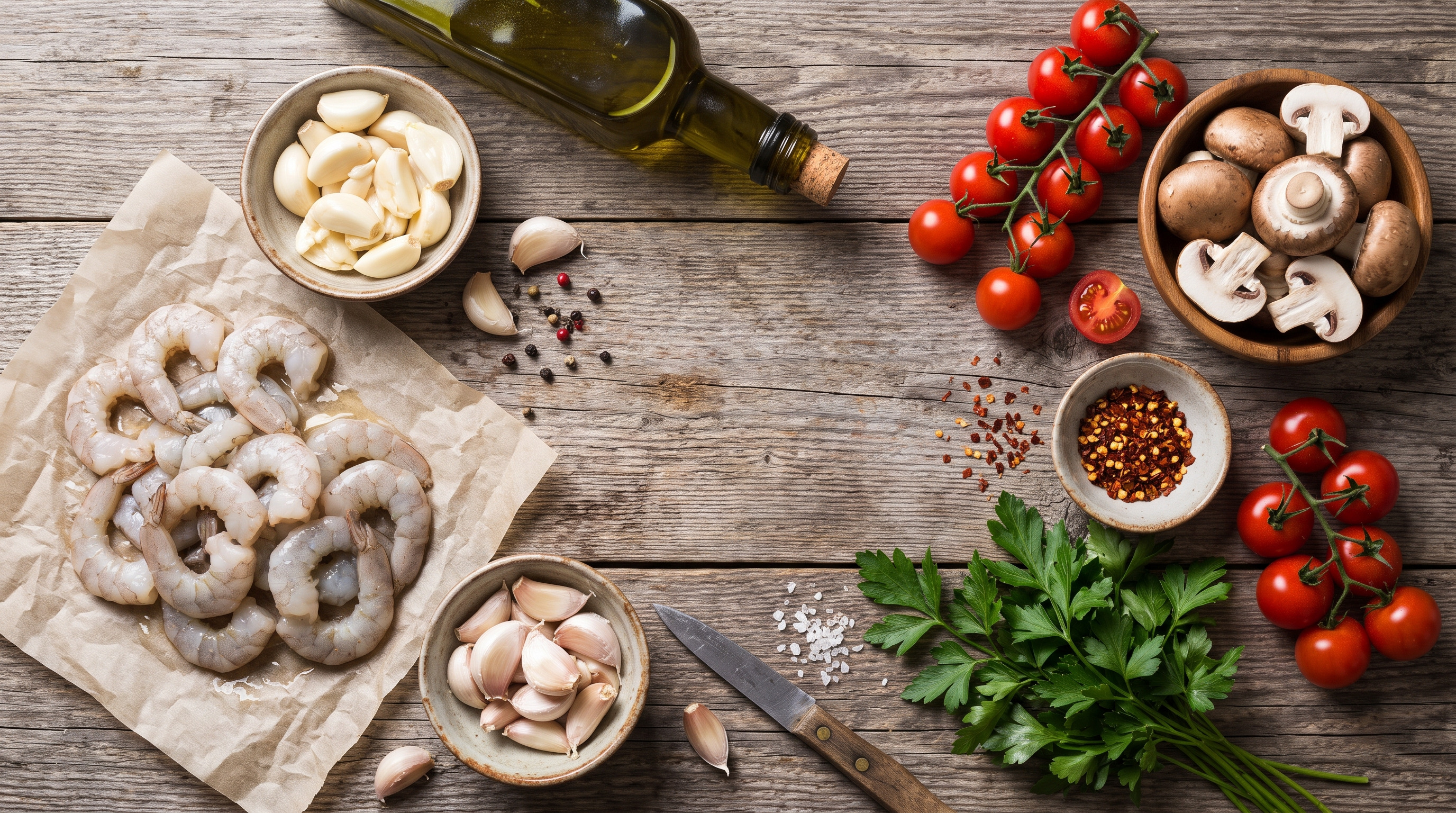
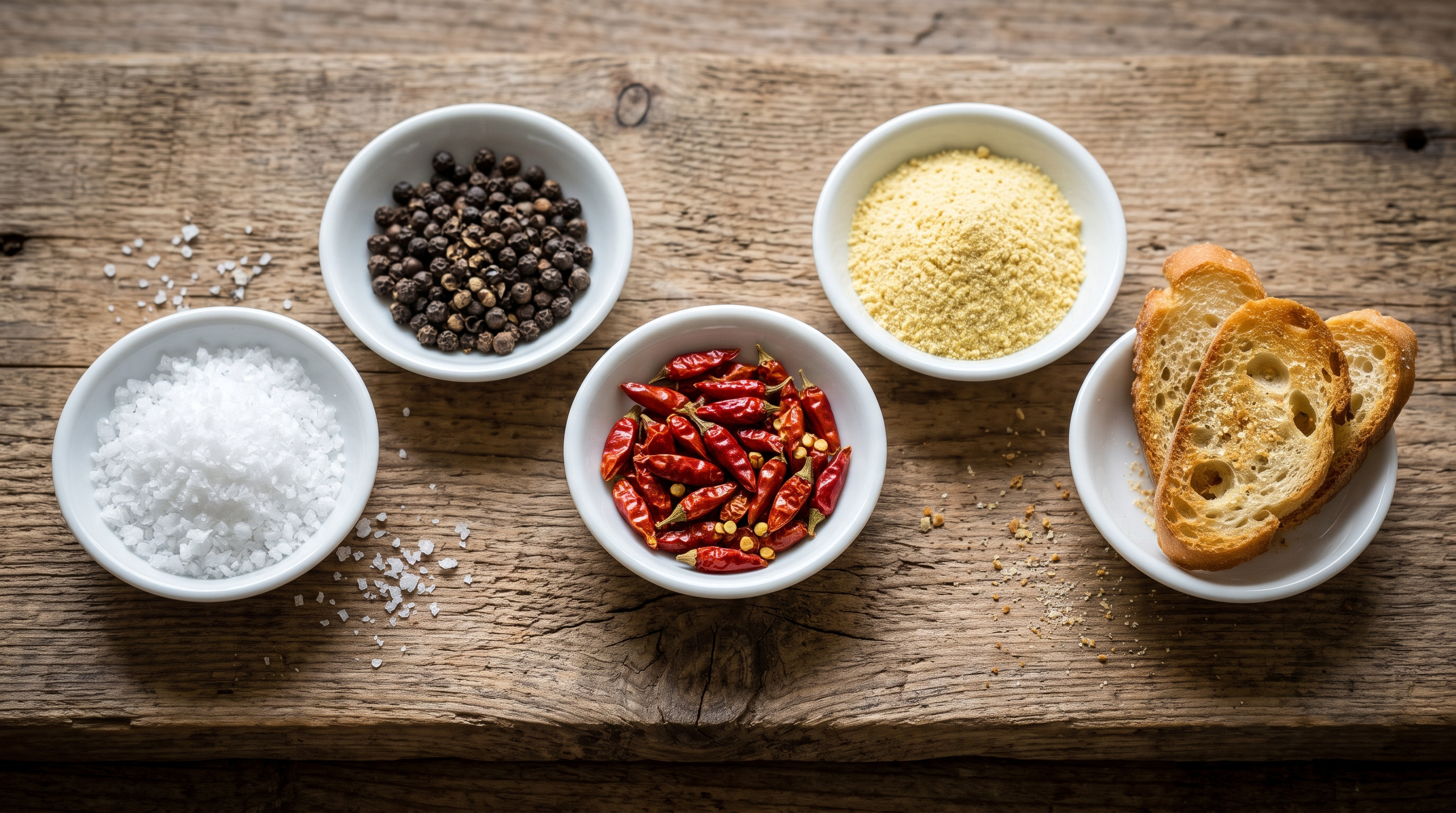
This recipe serves 2 to 3 adults generously as a tapas appetizer or light supper with crusty artisan bread. Accurate measurements and ingredient quality make all the difference.
| Category | Ingredients & Amounts (Metric & US) | Chef’s Notes & Substitutions |
|---|---|---|
| Primary Seafood | 250–300g (8.8–10.6 oz) Large Raw Shrimp (15–20 count, 21/25 size) | Choose large raw, tail-on shrimp. Thawed frozen shrimp work wonderfully; avoid pre-cooked cocktail shrimp which turn leathery. |
| Aromatic Base | 15–20 Whole Garlic Cloves (approx. 60g / 2.1 oz) | Slice into 2–3mm (0.1-inch) uniform chips. Avoid microplaning or mincing, which burn too rapidly in oil. |
| Oil Foundation | 1 cup (200ml / 6.8 fl oz) Extra Virgin Olive Oil | Use your best cold-pressed, fruity olive oil. High polyphenol levels create the dish’s signature luxurious mouthfeel. |
| Chili & Herbs | 6–8 Dried Red Chilies (Peperoncino or Arbol), 1 sprig Fresh Rosemary | Crush half the chilies between your fingers to release spicy capsaicin into the oil; leave the rest whole for visual contrast. |
| Seafood Marinade | 1 tbsp Dry White Wine (or Mirin), 1/4 tsp Sea Salt, 1/4 tsp Black Pepper | Marinating the shrimp for 5 minutes neutralizes fishiness and seasons the protein down to its core. |
| Vegetable Additions | 6–8 Cherry Tomatoes, 3–4 White Button or Cremini Mushrooms | Tomatoes add bright malic acidity that cuts through rich olive oil, while mushrooms absorb fragrant garlic flavors like sponges. |
| Umami Secret & Finish | 1/2 tsp Chicken Bouillon Powder, 1 tbsp Chopped Parsley, 1 Sliced Baguette | Chicken bouillon supplies concentrated glutamate that transforms simple oil into a rich, bistro-grade dipping sauce. |
3. Step-by-Step Cooking Instructions
Step 1. Clean, Snip the Water-Sac & Dry the Shrimp
Thaw frozen shrimp in cold water for 10 minutes, then peel and devein if necessary. Locate the sharp triangular water-sac (telson) at the tail fin and snip it off with kitchen scissors. Lay the shrimp flat across a double layer of paper towels, pressing firmly on top with another sheet until the exterior is thoroughly dry. Transfer the shrimp to a bowl, toss with 1 tbsp dry white wine (or mirin), 1/4 tsp fine sea salt, and 1/4 tsp cracked black pepper, and set aside for 5 minutes.
Step 2. Cold-Pan Low-Heat Garlic Oil Infusion
Slice the peeled garlic cloves into uniform 2–3mm chips. In an unheated cast iron skillet, stainless steel pan, or Spanish earthenware cazuela, combine 1 cup (200ml) of extra virgin olive oil, the sliced garlic, the fresh rosemary sprig, and the dried chilies (lightly crushing half into the oil). Turn the burner to medium-low. Watch as gentle, champagne-sized bubbles slowly emerge around the garlic slices. Let the oil simmer gently for 4 to 5 minutes until the garlic softens and turns a pale champagne-gold hue.
Step 3. Add Cherry Tomatoes and Mushrooms
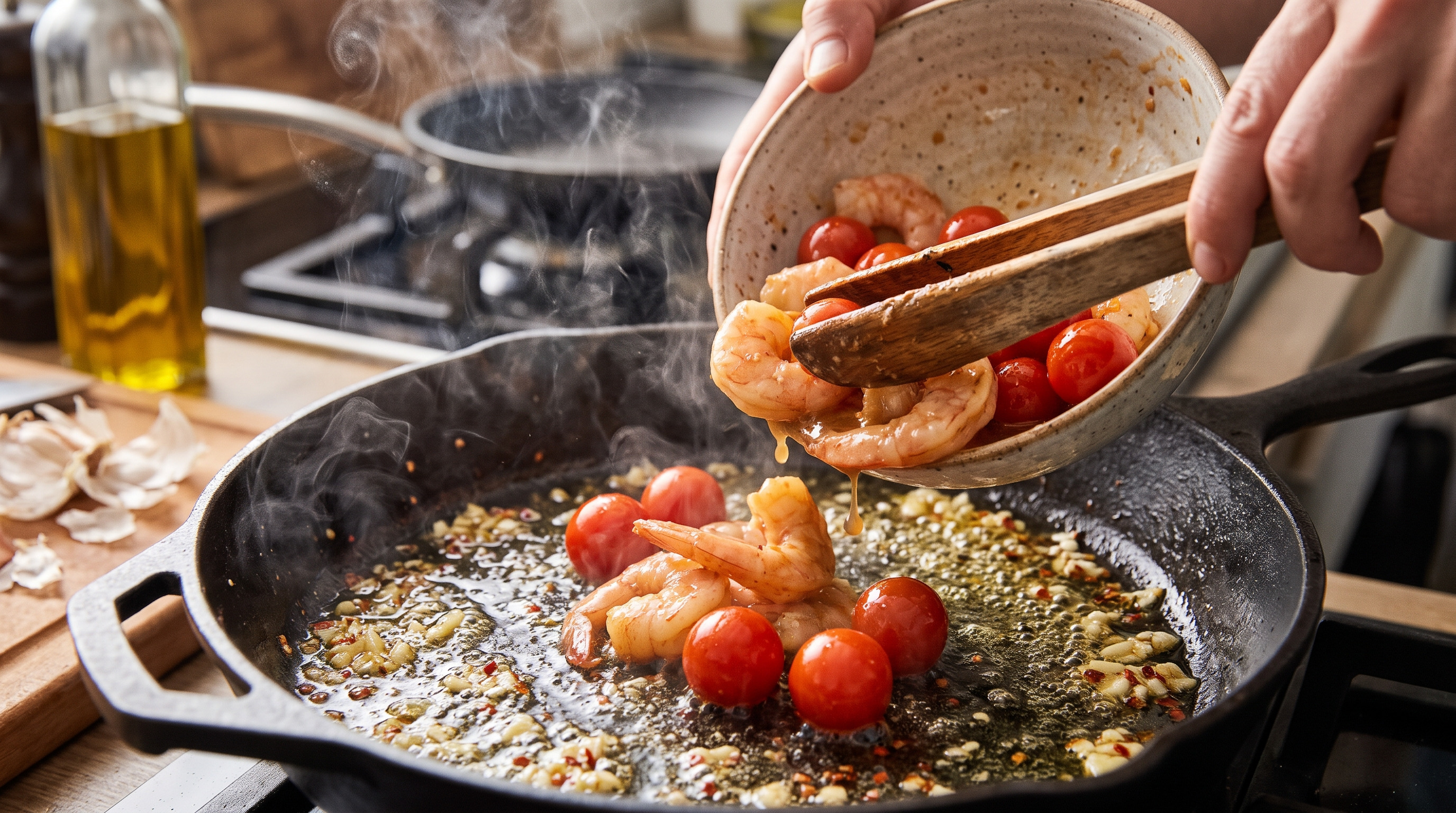
Increase the heat to medium. Add the halved cherry tomatoes and quartered mushrooms directly into the bubbling garlic oil. Cook for 1.5 to 2 minutes. The tomato skins will blister slightly, releasing sweet-tart fruit juices that gently emulsify into the surrounding oil, balancing its richness.
Step 4. Flash-Poach the Shrimp & Garnish
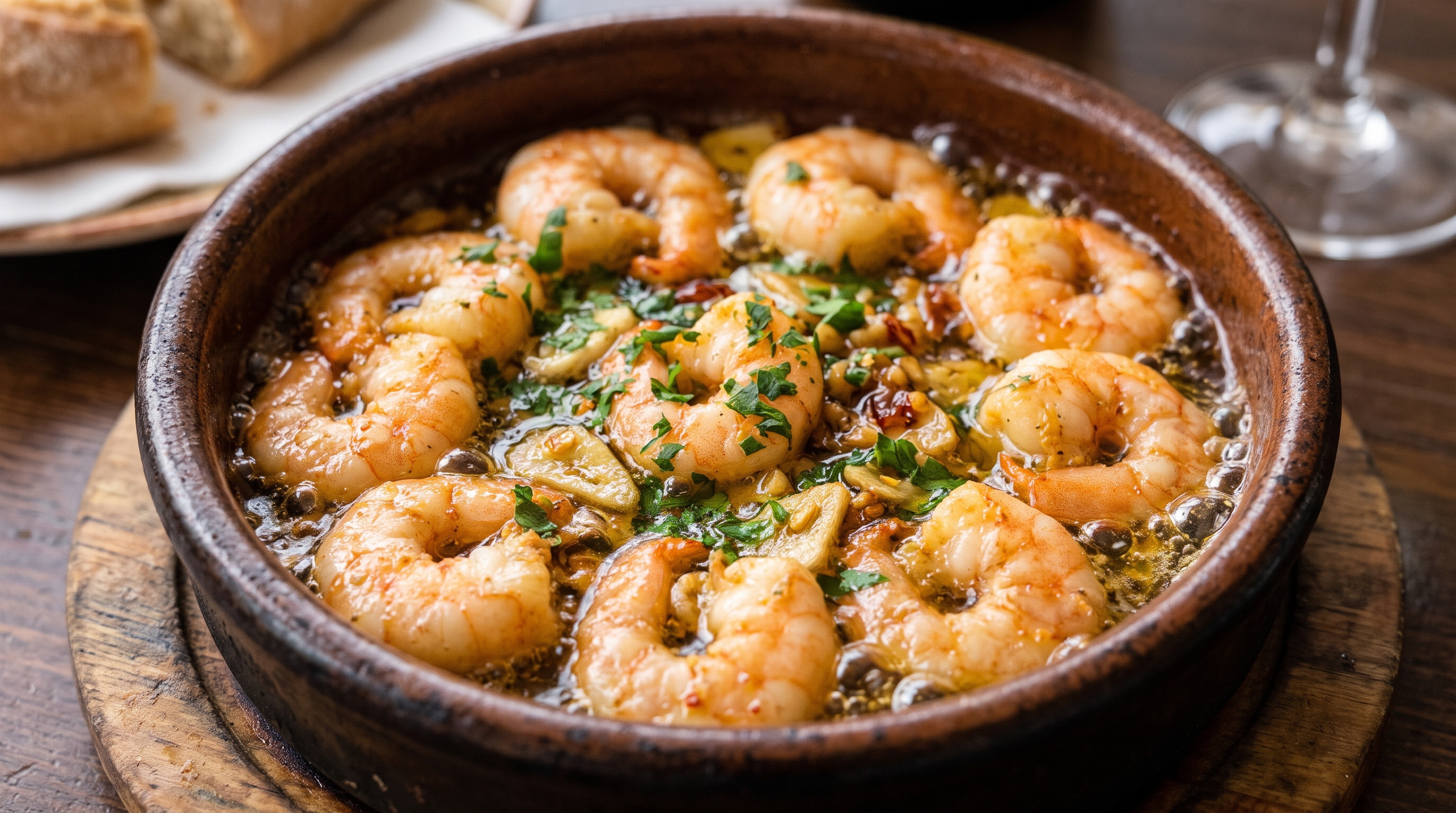
Gently slide the marinated shrimp into the pan in a single layer. Let them poach undisturbed for 90 seconds until the underside turns vibrant coral-pink. Turn the shrimp over with kitchen tongs and cook for another 60 to 90 seconds. As soon as the flesh turns opaque throughout, turn off the heat immediately. Stir in 1/2 tsp of chicken bouillon powder and sprinkle generously with fresh chopped flat-leaf parsley. Transfer the skillet directly to the dining table while it is still sizzling.
4. Pro Chef Tips to Elevate Your Dish
Elevate your home-cooked tapas to fine-dining standards with these three insider culinary techniques:
- The Chicken Bouillon Umami Multiplier:
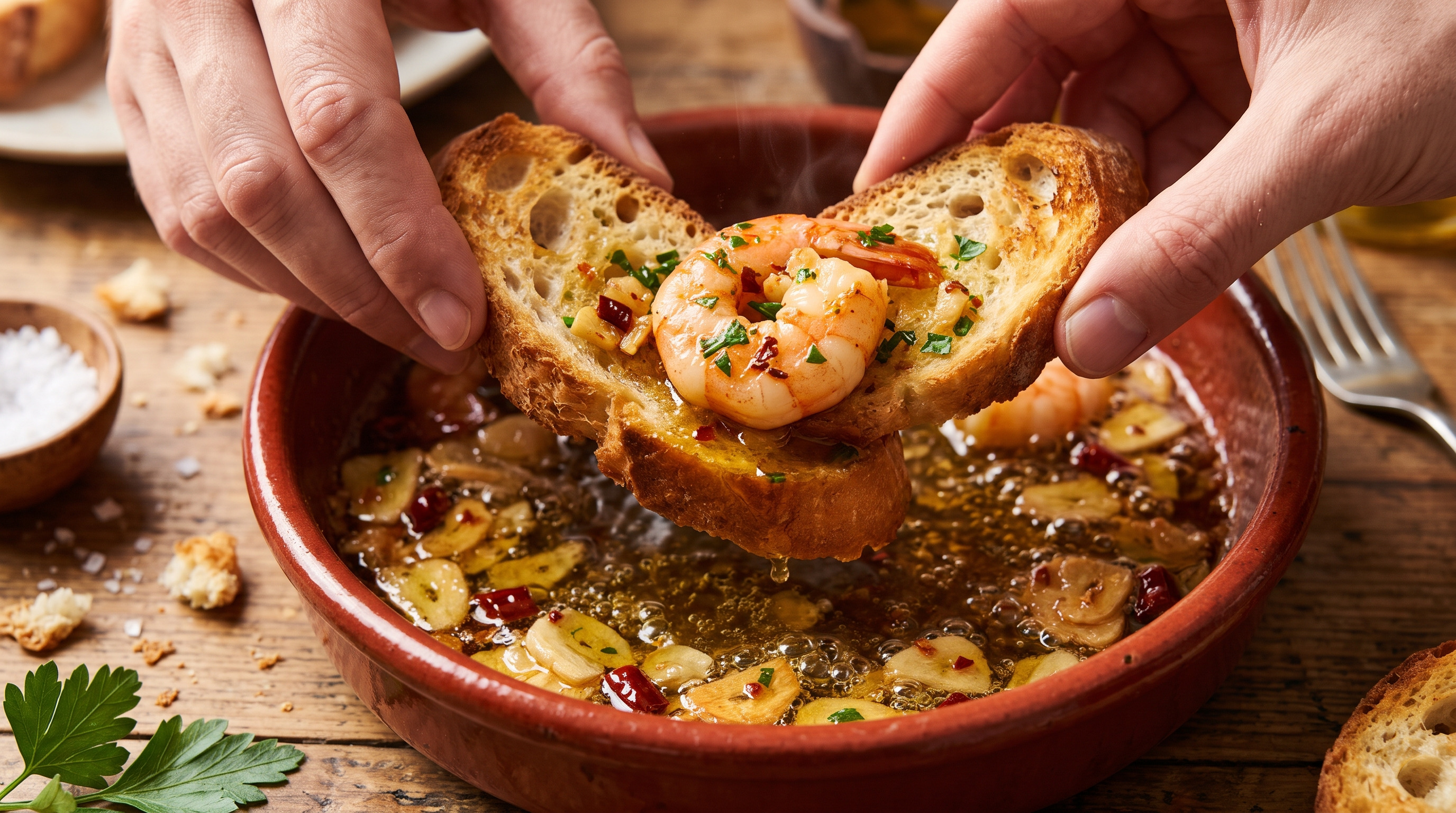
Seasoning garlic oil solely with table salt can leave the fat feeling one-dimensional and greasy. Adding half a teaspoon of concentrated chicken bouillon powder or liquid stock concentrate infuses inosinates and glutamates, creating an irresistible savory backbone that makes dipping crusty bread utterly addictive. - Harness Shrimp Shells for Homemade Bisque Oil:
If purchasing fresh whole, head-on prawns (such as spot prawns or black tiger shrimp), do not discard the heads! Press the heads into the warming oil with a wooden spatula during Step 2. The rich red astaxanthin pigment and concentrated head fat dissolve into the olive oil, producing an intense, restaurant-worthy coral-tinted seafood oil. - Transform Leftover Oil into 5-Minute Aglio e Olio:
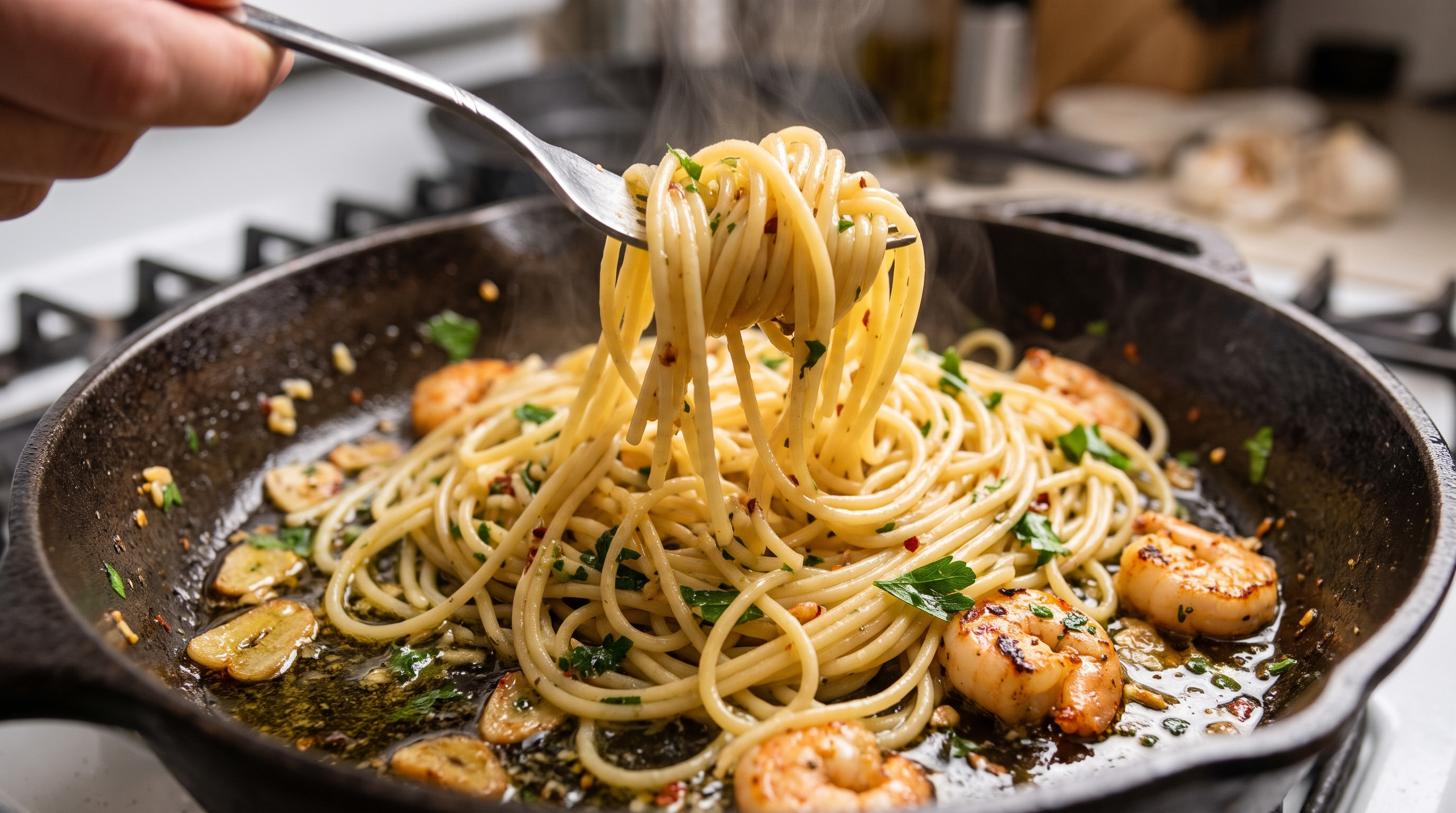
Never discard the fragrant garlic-shrimp oil remaining at the bottom of the skillet! Boil 100g (3.5 oz) of dried spaghetti to al dente, drain while saving 3 tablespoons of starchy pasta cooking water, and toss the pasta directly into the warm leftover gambas oil over medium-high heat. Swirl vigorously for 60 seconds to emulsify into an incredible Aglio e Olio Pasta.
5. Frequently Asked Questions (FAQ)
Q1. Can I use regular vegetable oil or canola oil instead of extra virgin olive oil?
Extra virgin olive oil is not merely a cooking medium in Gambas al Ajillo; it represents over 80% of the entire dish’s flavor identity. Neutral seed oils lack the peppery, fruity, and grassy aromas essential to Spanish cuisine, leaving behind an oily, flat mouthfeel. Always select a reputable, cold-pressed extra virgin olive oil for authentic results.
Q2. How do I prevent hot oil from popping and splattering everywhere?
Violent oil splatters occur when surface moisture hits hot oil and instantly vaporizes into steam bubbles. To prevent this, always snip off the sharp triangular water-sac at the shrimp’s tail, press the prawns completely dry with paper towels before marinating, and start the garlic and oil in a cold pan over medium-low heat.
Q3. How should I store and reheat leftover Gambas al Ajillo?
Allow leftovers to cool to room temperature, transfer to a sealed glass container, and refrigerate for up to 3 days. The cold temperature will cause high-quality olive oil to solidify into an opaque buttery paste. Reheat gently in a small saucepan over low heat until the oil becomes clear and warmed through, or simply repurpose it into pasta.
6. Serving Suggestions & Conclusion
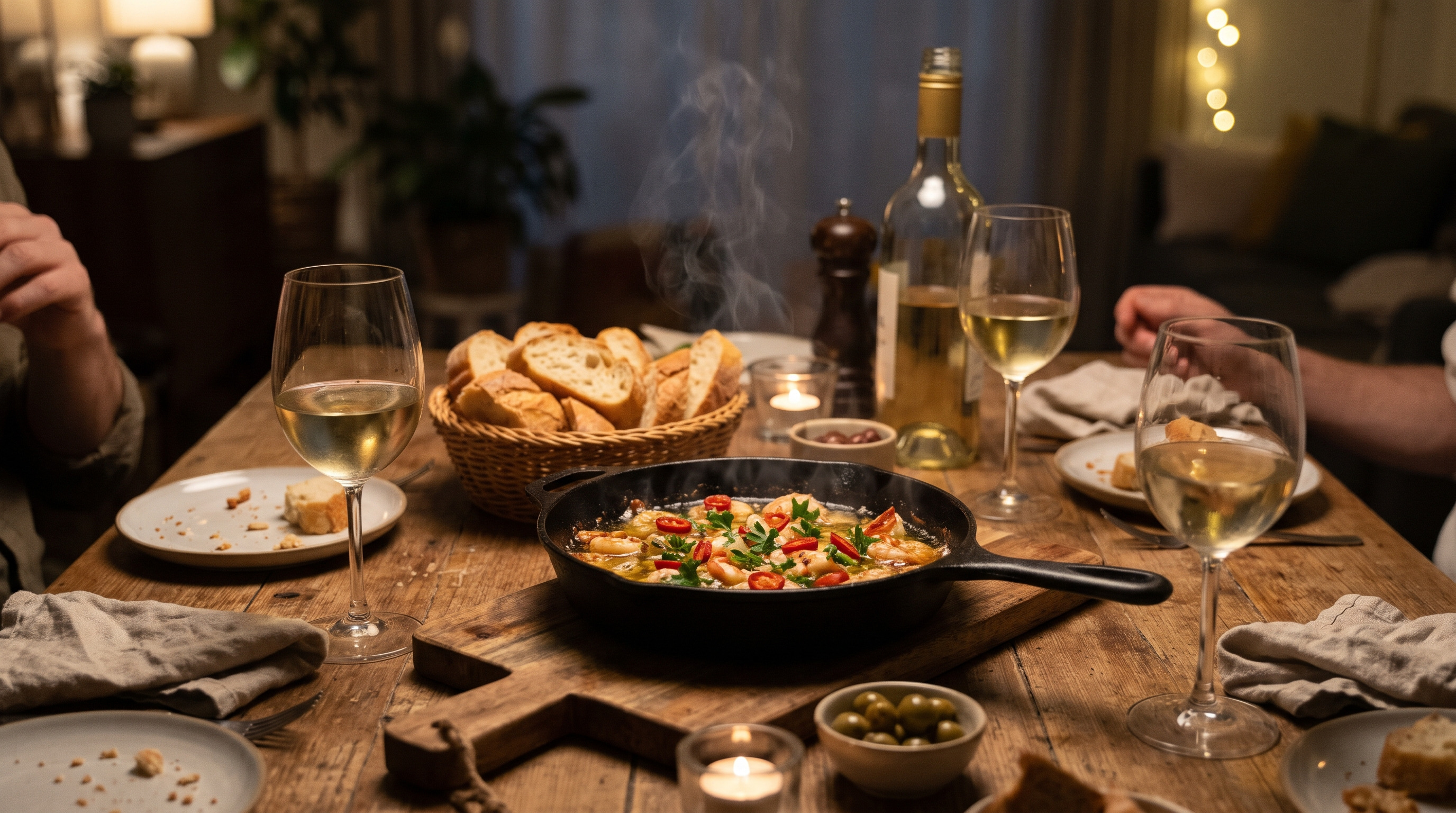
Gambas al Ajillo is best served bubbling hot in the center of the table. Pair it with a chilled, crisp Spanish white wine like Albariño or Verdejo, or an effervescent dry Cava. Serve with abundant slices of warm, toasted French baguette, sourdough, or ciabatta to mop up every drop of aromatic garlic-infused oil.
If you are planning an Italian-Spanish fusion tapas night or pasta dinner, this dish pairs wonderfully alongside our Homemade Tomato Spaghetti or quick Aglio e Olio.
By following the cold-pan oil infusion method and respecting shrimp cooking temperatures, you can bring the vibrant charm of a Spanish tapas bar directly to your home kitchen in under 15 minutes. Dust off your favorite skillet, pour a glass of wine, and enjoy this timeless Mediterranean culinary masterpiece!