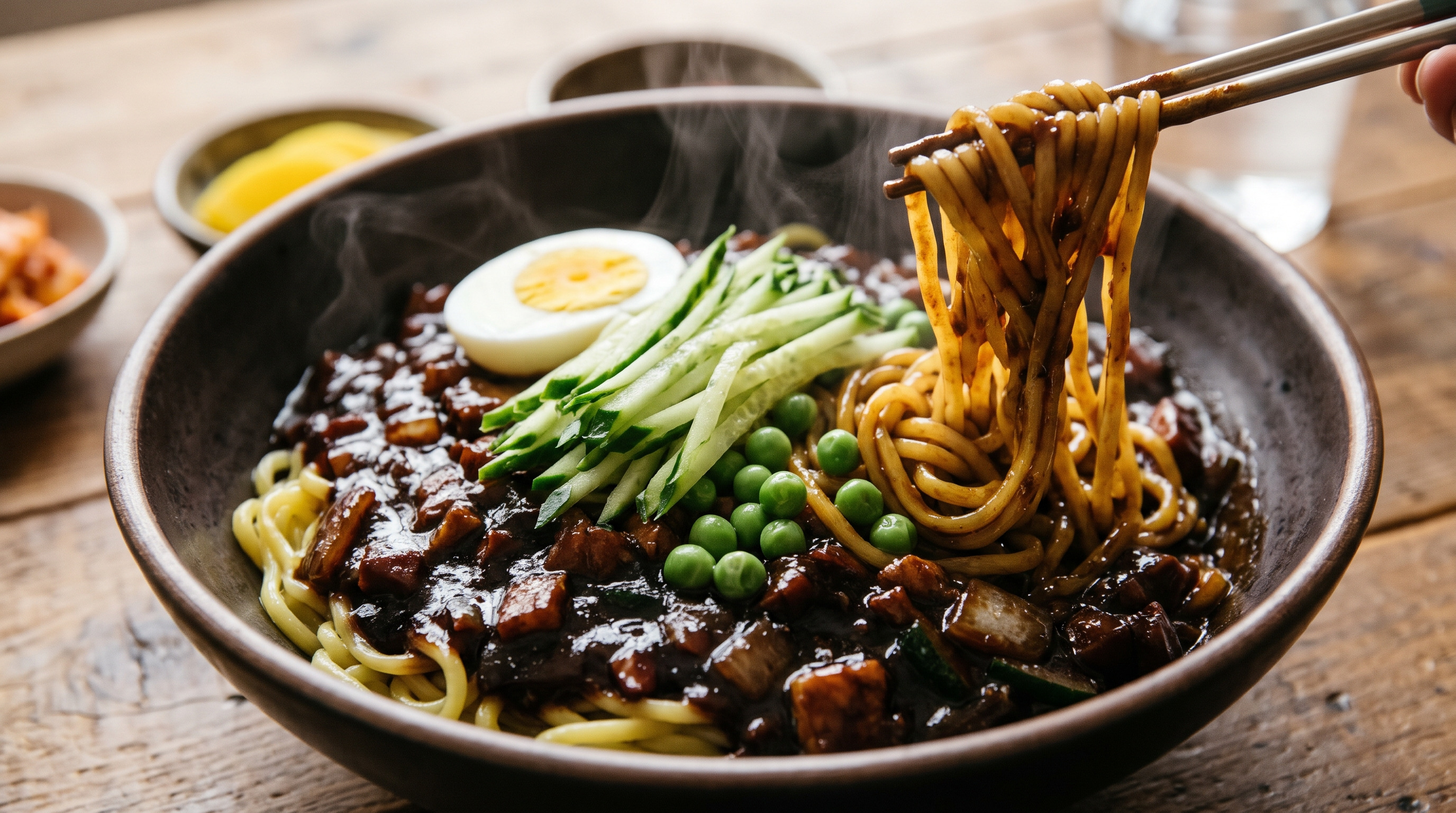
Quick Recipe Snapshot: ⏱️ Prep: 15 mins | 🔥 Cook: 15 mins | 🍽️ Servings: 2–3 | 💡 Key Secret: Fry raw chunjang in oil for 5 minutes to release roasted nutty aromas + scorch soy sauce against the wok rim + add onions in two separate stages for crunch.
With its inky, glossy black bean sauce clinging luxuriously to springy wheat noodles, Jajangmyeon (Korean-Chinese Black Bean Noodles) is arguably the supreme comfort food of Korea. Immortalized in Korean dramas and celebrated on Black Day (April 14th), this iconic dish delivers a mesmerizing symphony of savory, earthy, and subtly sweet flavors punctuated by tender pork and crisp vegetables.
However, home cooks trying to recreate takeout-style Jajangmyeon frequently hit common roadblocks. The sauce often tastes unpleasantly bitter or muddy straight out of the paste jar, lacks the coveted smoky “wok hei” aroma, turns out watery after a few minutes of sitting, or features limp, soggy vegetables with zero texture.
The difference between mediocre cafeteria sauce and the intoxicating bowls served at Seoul’s Chinatown restaurants lies in three culinary science principles: chunjang oil-frying emulsion, high-heat Maillard soy caramelization, and temperature-controlled starch retrogradation.
With a few simple techniques and readily accessible ingredients from your local Asian grocer (like H-Mart) or regular supermarket, you can prepare an unforgettable, restaurant-grade feast at home in just 30 minutes.
1. The Culinary Science Behind Restaurant Flavor
Unlocking authentic Korean-Chinese flavor requires understanding how fermented bean paste reacts with hot oil and how animal fats carry volatile aroma molecules.
💡 Culinary Science 1: Chunjang Oil-Frying & De-Bittering Emulsion
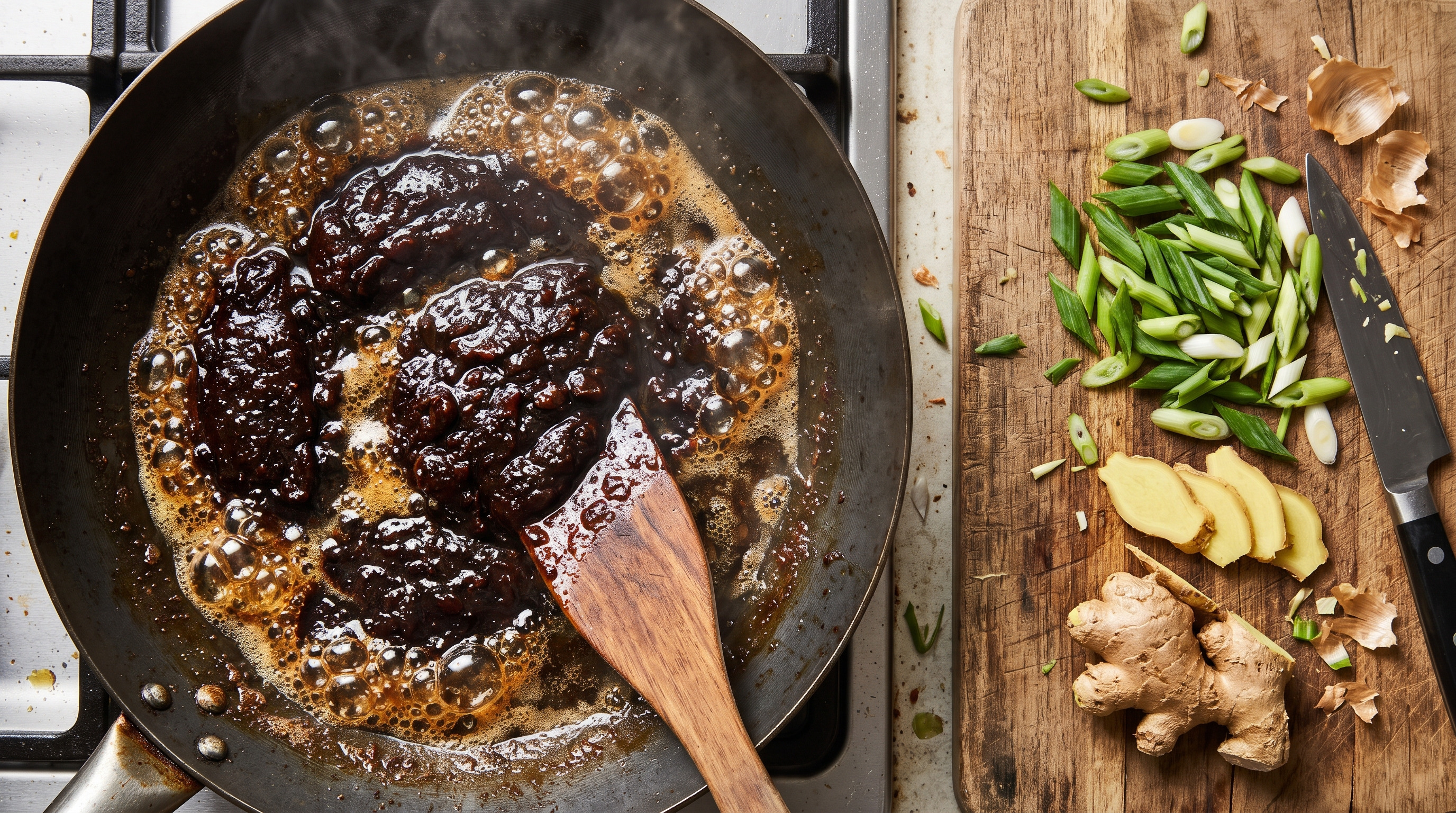
Raw Korean black bean paste (Chunjang) is crafted by fermenting roasted soybeans, wheat flour, and caramel colorant. In its raw, unheated form, it possesses sharp tannins, high sodium, and an astringent fermented odor. Frying the chunjang in a nearly 1:1 ratio of oil (4 tbsp oil to 100g paste) over medium-low heat for 5 to 6 minutes forces water out of the paste. As tiny steam bubbles perforate the paste, the soybean proteins and caramel sugars emulsify with the cooking oil. This thermal reaction evaporates volatile acids, completely neutralizing bitterness while synthesizing rich, nutty pyrazine and furan aroma compounds reminiscent of roasted coffee or dark cocoa.
💡 Culinary Science 2: High-Heat Scallion Lard Extraction & Soy Rim Caramelization
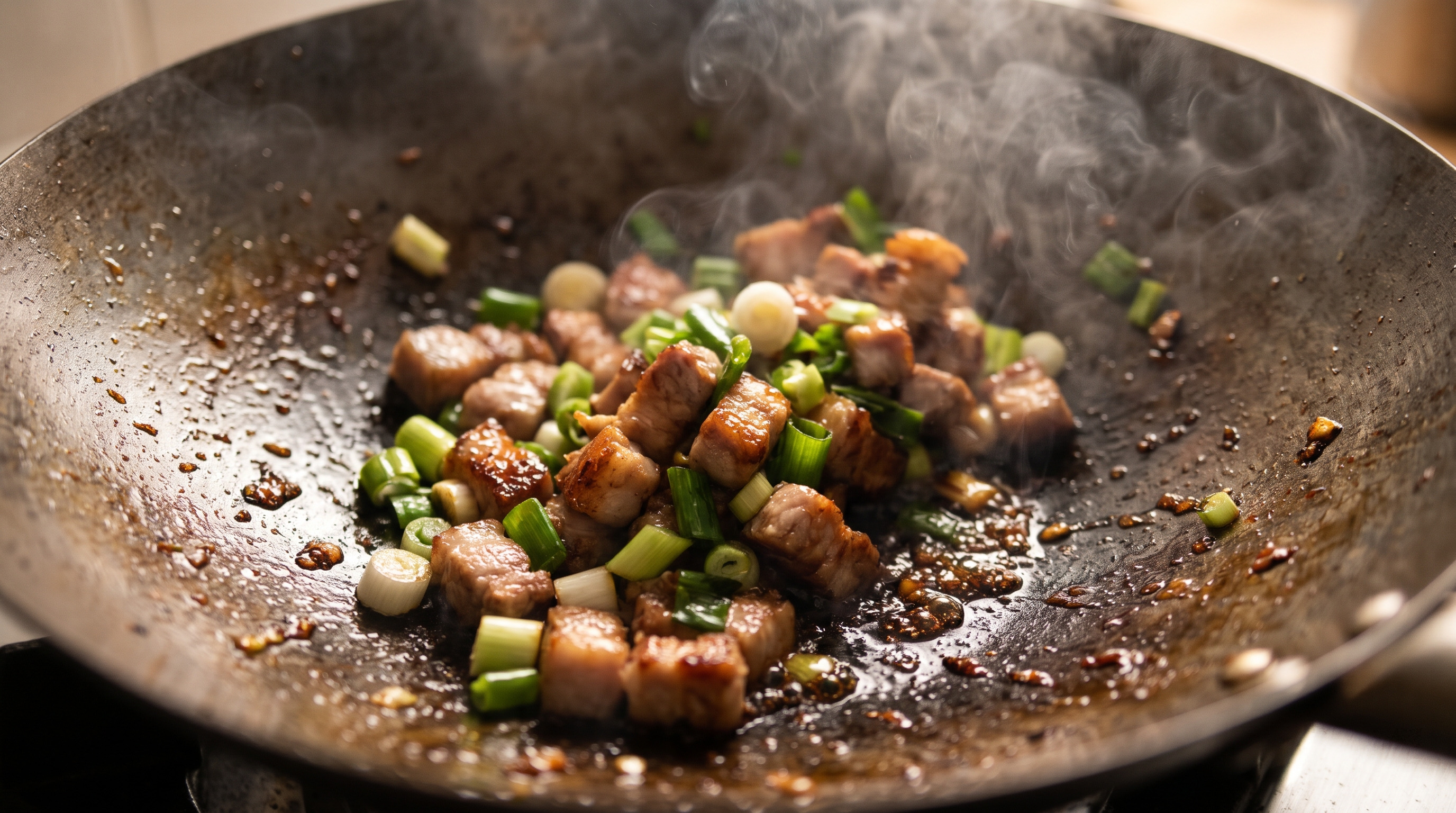
The elusive “wok flavor” (bulmat) is driven by the Maillard reaction and thermal pyrolysis occurring above 160°C (320°F). By rendering fatty pork shoulder or pork belly alongside minced scallions and ginger, rich pork lard extracts fat-soluble allium aroma molecules. Drizzling soy sauce around the searing metal rim of the pan—rather than pouring it cold into the center—causes instant flashes of steam and caramelizes the amino acids against the superheated metal. This generates hundreds of smoky aromatic esters that coat every morsel of meat before any broth is introduced.
2. Essential Ingredients & The Golden Ratio Sauce
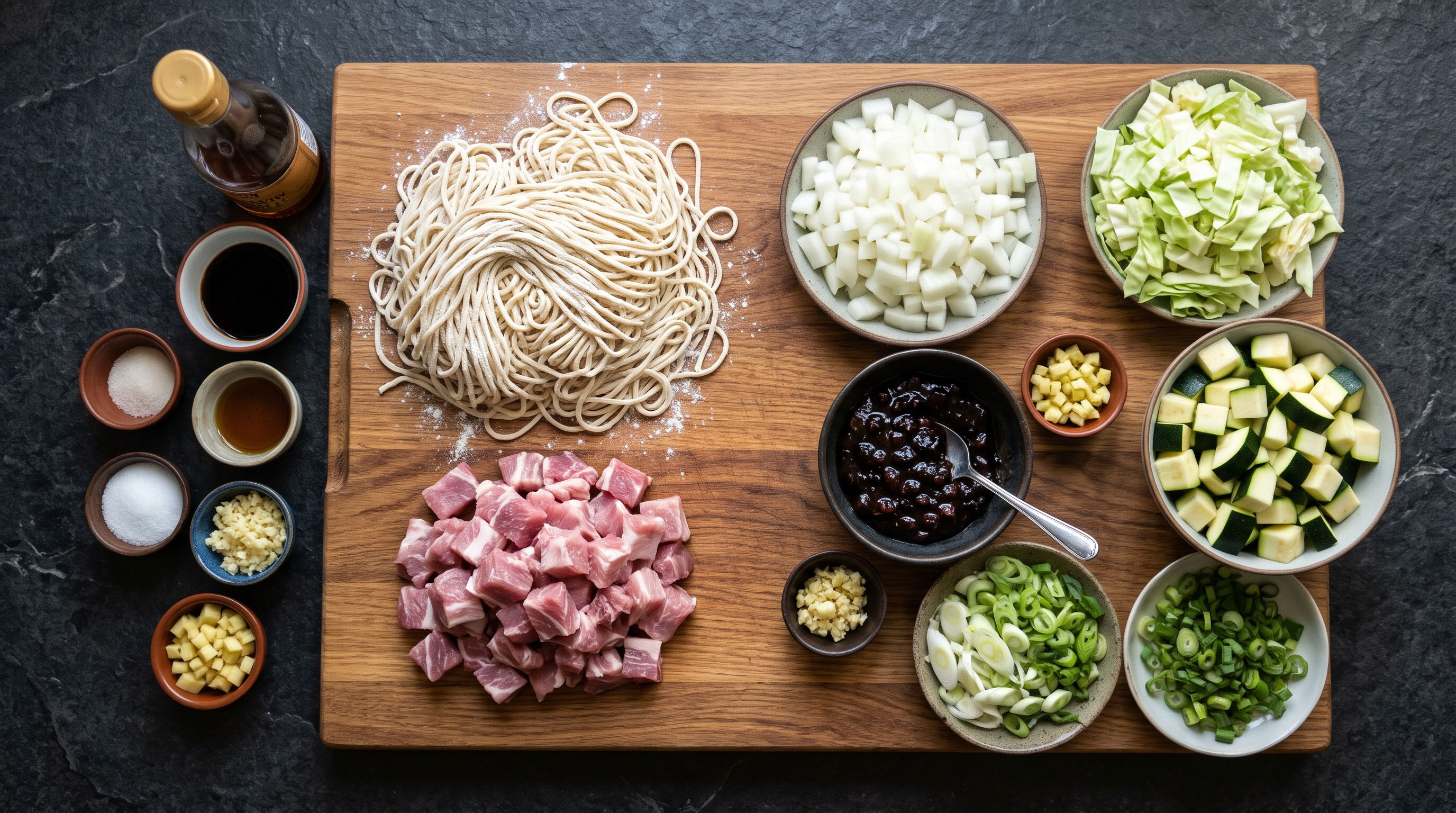
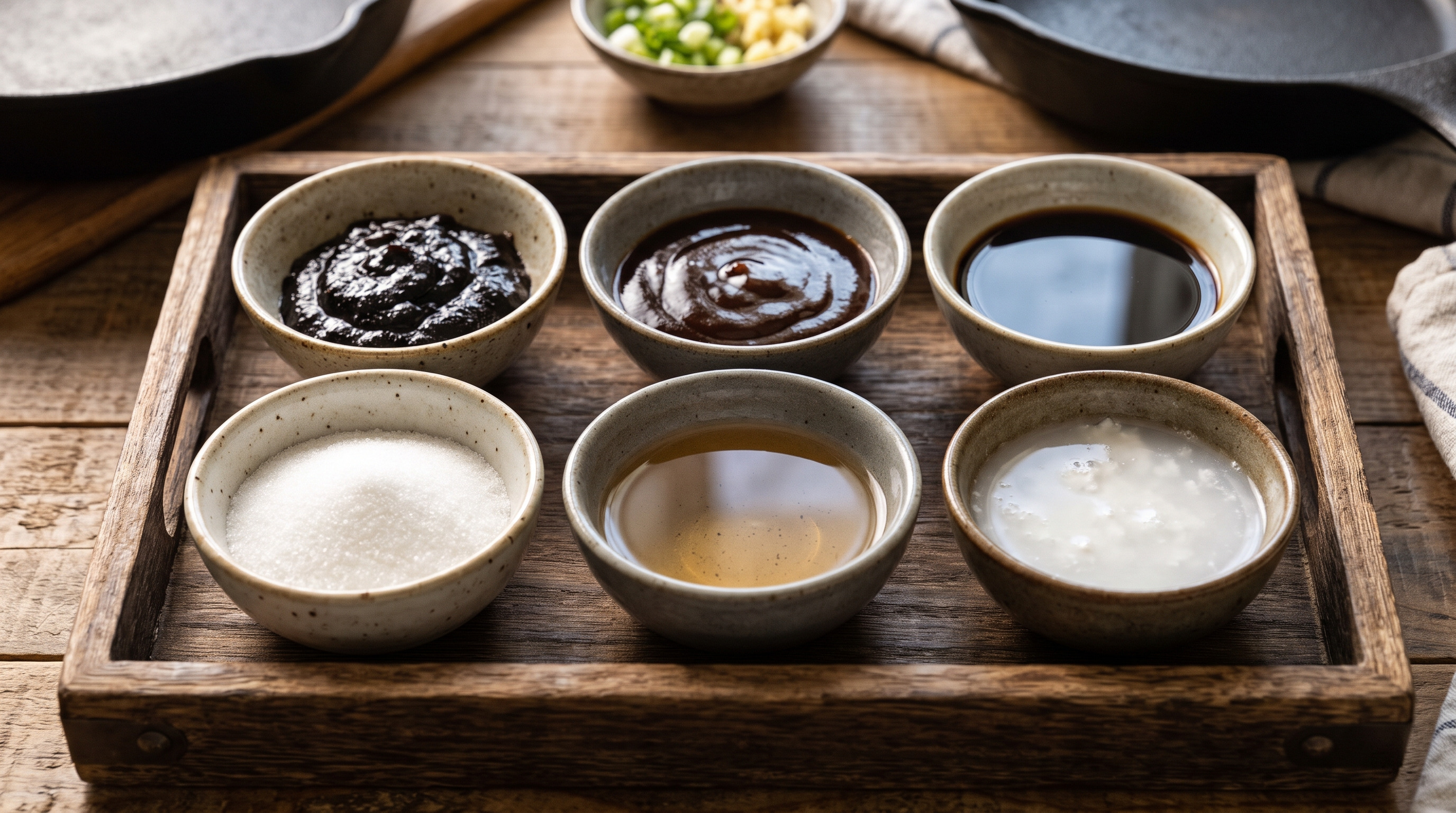
This recipe generously serves 2 to 3 hungry diners. For the noodles, fresh Chinese wheat noodles (often labeled Jajangmyeon noodles or Chuka Soba in refrigerated Asian market sections) yield the springiest bite.
| Category | Ingredients & Amounts (Metric & US) | Chef’s Notes & Substitutions |
|---|---|---|
| Noodle Base | 400g (14 oz) Fresh Chinese Wheat Noodles | Fresh refrigerated wheat noodles offer superior chew (chewy al dente). Fresh kalguksu or thick fresh udon noodles make excellent substitutes. |
| Pork Cut | 200g (7 oz) Pork Shoulder or Pork Belly, 1.5cm dice | A cut with 20–30% fat marbling is vital. Avoid extra-lean tenderloin, which turns chalky and lacks the flavorful lard essential to the sauce. |
| Aromatic Alliums | 2 Medium Onions (350g / 12.3 oz), 1 Scallion stalk, 1/3 tsp Minced Ginger | Yellow onions provide the sauce’s signature sweetness without needing cloying amounts of sugar. Ginger cuts pork grease cleanly. |
| Vegetable Medley | 1/2 Zucchini (150g / 5.3 oz), 2 Cabbage Leaves (150g / 5.3 oz) | Cut into uniform 1.5cm dice so they cook evenly with the pork and absorb the glossy black sauce. |
| Black Bean Paste | 3.5 tbsp (100g / 3.5 oz) Korean Chunjang + 4 tbsp Neutral Oil | Look for brands like Sajo, Chungjungone, or Wang at H-Mart. Do not substitute with Chinese sweet bean sauce (Tianmianjiang) directly without adjusting sugar. |
| Liquid & Umami Seasoning | 2 cups (400ml / 13.5 fl oz) Water or Stock, 1 tbsp Oyster Sauce, 1/2 tbsp Chicken Powder | Oyster sauce adds maritime umami depth; unsalted chicken broth provides body and mouthfeel. |
| Sweet-Savory Balancer | 1 tbsp Dark Soy Sauce, 1.5–2 tbsp Granulated Sugar, 1 tbsp Mirin | Sugar is essential to round off the earthy salinity of fermented chunjang. Adjust to taste. |
| Starch Slurry & Garnish | 2 tbsp Potato Starch + 3 tbsp Cold Water; Cucumber & Fried Eggs | Potato starch provides a glossy, clear sheen that holds up better to heat than cornstarch. |
3. Step-by-Step Cooking Instructions
Step 1. Dice Aromatics, Meat & Vegetables
Cut the pork shoulder, yellow onions, zucchini, and cabbage into uniform 1.5cm (0.6-inch) dice. Finely slice the white part of the scallion and mince the fresh ginger. In a small bowl, whisk 2 tablespoons of potato starch with 3 tablespoons of cold water until smooth, and set aside.
Step 2. Fry the Chunjang in Oil (Nutty Flavor Emulsion)
Pour 4 tablespoons of neutral cooking oil into a small skillet or wok over medium-low heat. Add 3.5 tablespoons (100g) of raw chunjang. Fry gently, constantly stirring and pushing the paste around for 5 to 6 minutes. The oil will bubble vigorously, and the paste will develop tiny, sponge-like air pockets while smelling deeply nutty and fragrant. Turn off the heat, tilt the pan to strain the paste, and reserve both the fried chunjang and the aromatic cooking oil.
Step 3. Sauté Pork with Scallion Oil & Caramelize Soy Sauce
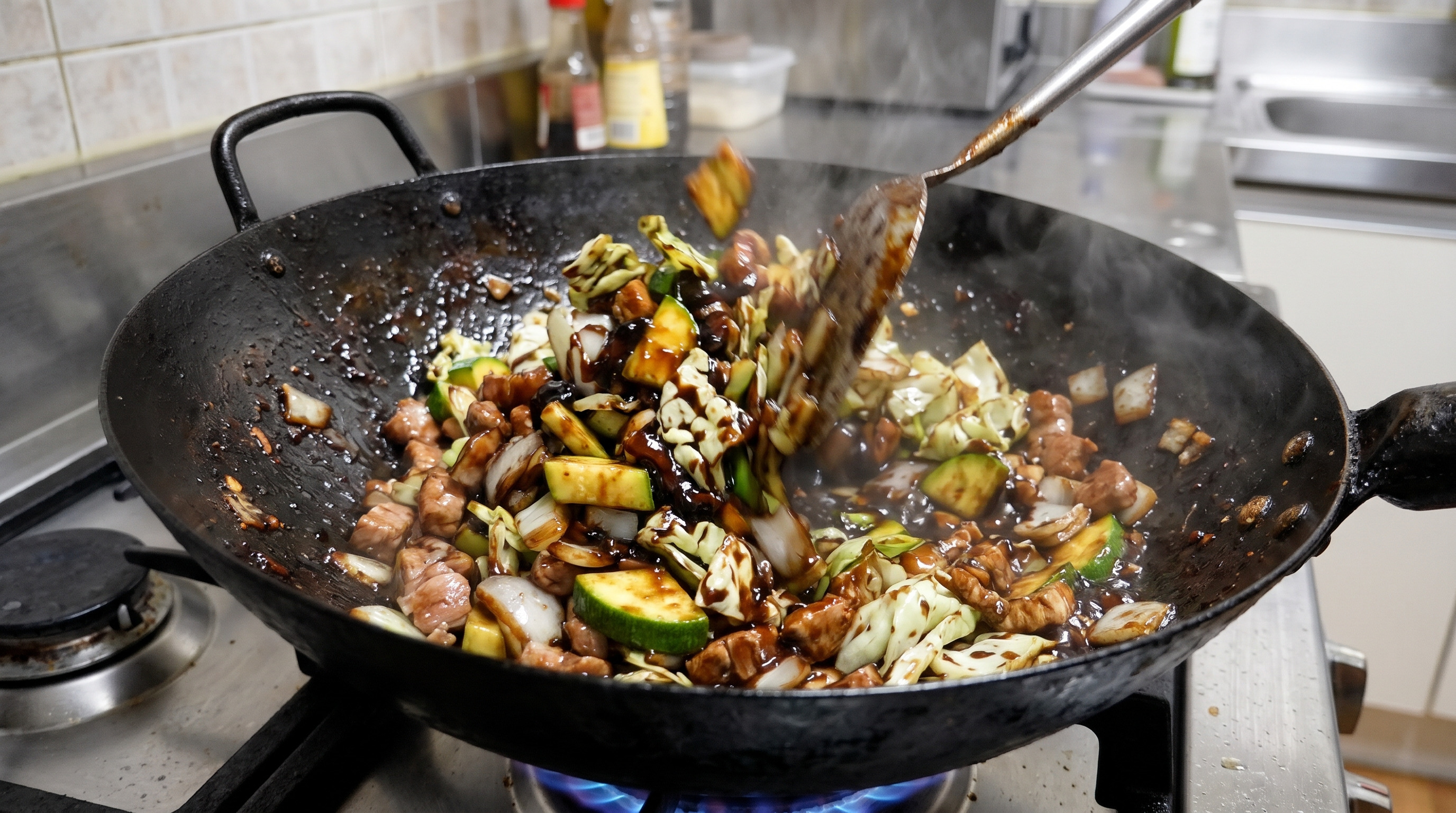
Place a large wok or deep sauté pan over high heat. Add 2 tablespoons of the reserved chunjang frying oil. Once shimmering, add the diced pork, chopped scallions, and minced ginger. Stir-fry for 2 minutes until the meat turns golden and its fat begins rendering into the oil. Push the meat to one side, drizzle 1 tablespoon of dark soy sauce directly along the scorching metal rim of the wok—letting it foam and blister instantly—then quickly toss with the pork to lock in smoky flavor.
Step 4. Simmer Sauce, Thicken with Starch Slurry & Assemble Noodles
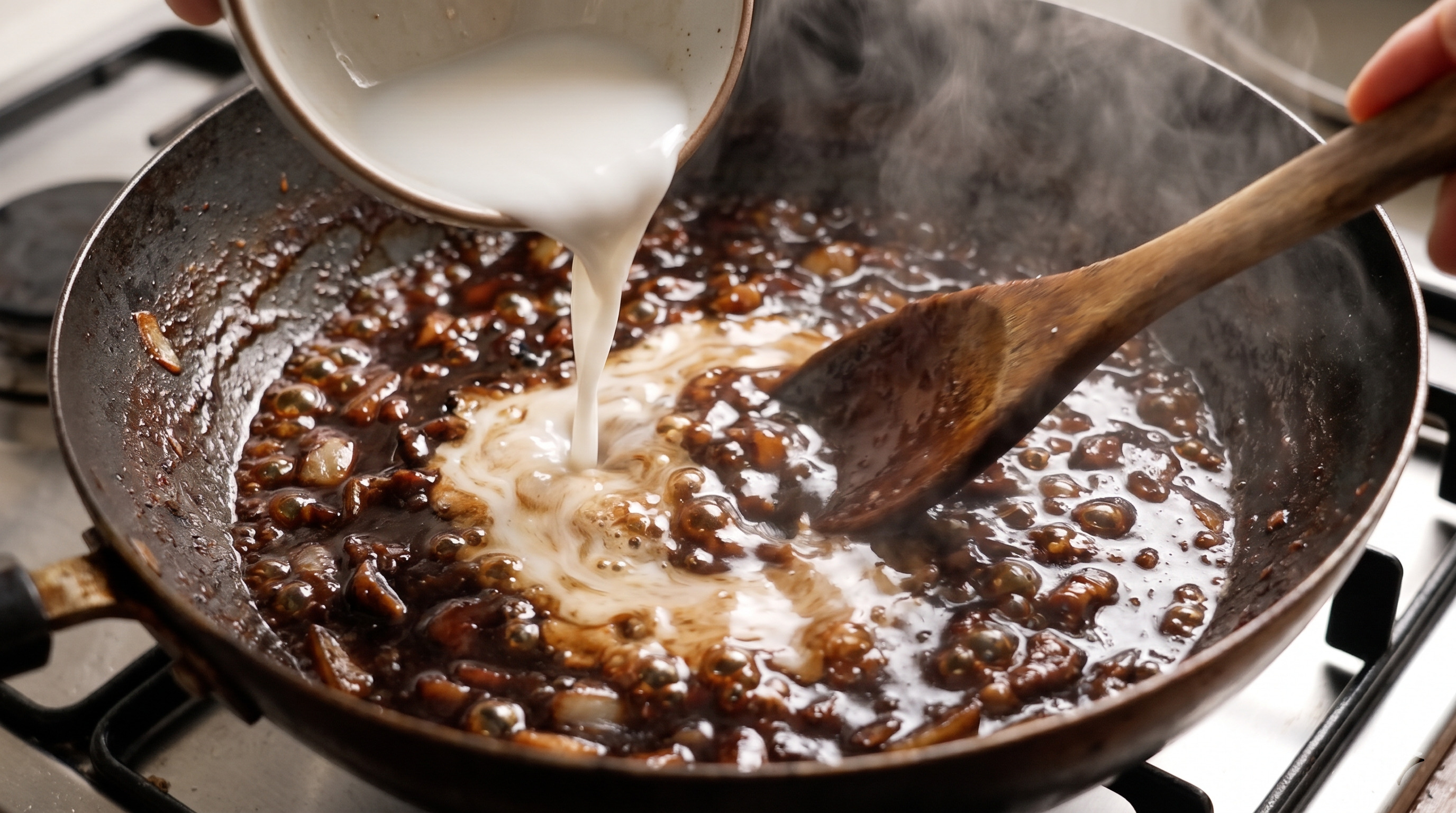
Add half of the diced onions, the cabbage, and the zucchini to the wok. Stir-fry over high heat for 2 minutes. Stir in the fried chunjang, oyster sauce, sugar, mirin, chicken bouillon powder, and 2 cups (400ml) of water or stock. Bring to a rapid rolling boil for 3 minutes. Add the remaining half of the diced onions (for fresh crispness). Lower heat to medium-low, re-whisk the starch slurry, and pour it in a slow circular stream while stirring the wok vigorously. Cook for 1 minute until the sauce transforms into a rich, glossy, velvet-black gravy.
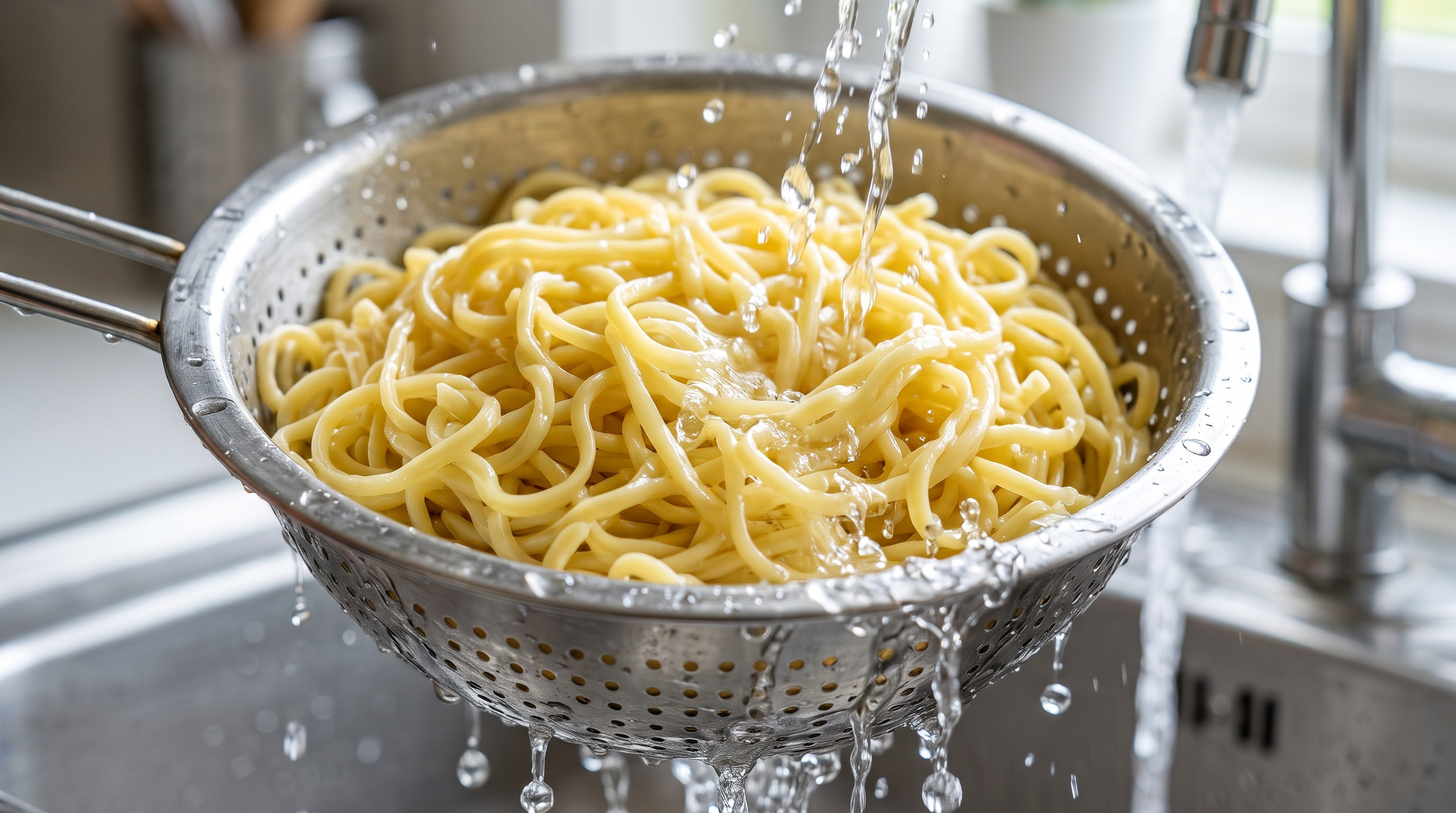
Meanwhile, boil the fresh noodles in a large pot of boiling water for 3 to 4 minutes according to package instructions. Drain, rinse briefly under warm water to wash away excess surface starch, and divide among serving bowls. Generously ladle the hot Jajang sauce over the noodles, then top with julienned cucumber and a crispy fried egg.
4. Pro Chef Tips to Elevate Your Dish
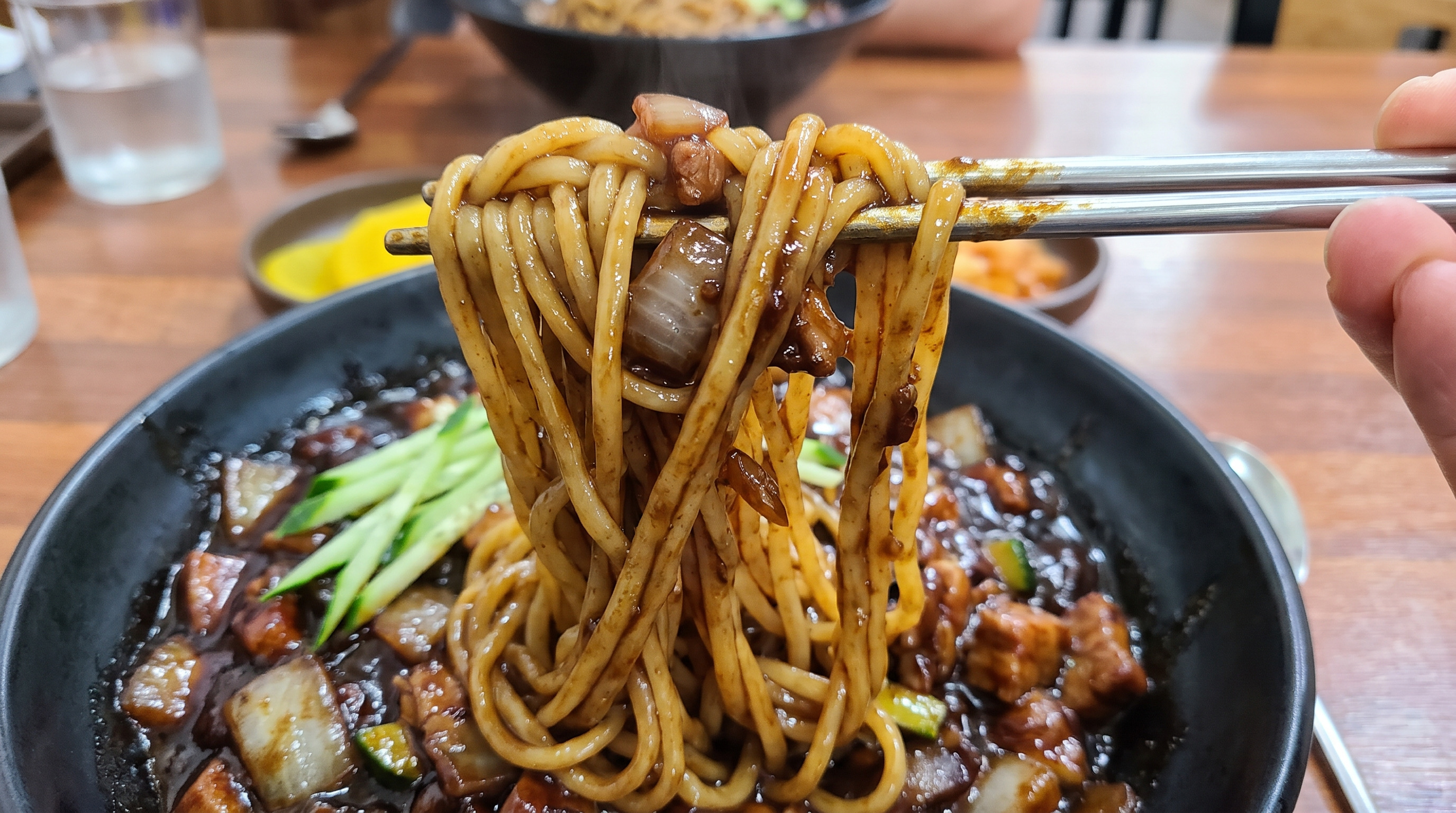
Master these three pro kitchen techniques to transform home-cooked Jajangmyeon into an extraordinary culinary triumph:
- The Two-Stage Onion Stagger (Ganjajang Crunch):
If you add all the onions at the beginning, they break down into a soft mush during the simmering step. Adding half the onions with the meat creates a sweet, dissolved vegetable foundation, while tossing the second half into the wok just 60 seconds before adding the starch slurry preserves the crisp, juicy bite typical of high-end Ganjajang (dry-fried black bean noodles). - Low-Heat Circular Starch Pour:
Never pour your starch slurry into a violently boiling wok all at once, or the starch molecules will instantly seize into gummy, gelatinous clumps. Turn the flame down to low, give your slurry a thorough re-stir to suspend settled starch granules, and drizzle it gradually in concentric circles while paddling the wok bottom continuously with a wooden spatula. - The Warm-Water Noodle Dip (Toryeom Technique):
After boiling fresh noodles, shock them briefly under water to wash away cloudy surface flour, then dunk them back into hot water for 5 seconds before draining thoroughly into the bowl. This “warm-up” step ensures the noodles do not chill the sauce on contact and prevents residual starch from absorbing all the liquid before you even sit down.
5. Frequently Asked Questions (FAQ)
Q1. Can I use instant Jajang curry powder instead of black bean paste (chunjang)?
Commercial Jajang powder is great for emergency camping meals, but it contains added wheat flour fillers, sugar, and artificial thickeners that produce a light brownish gravy lacking authentic depth. To achieve the deep, glossy ebony sauce and complex savory-sweet character of real Korean-Chinese cuisine, jarred fermented Chunjang is irreplaceable.
Q2. How do I serve this as Jajangbap (Black Bean Sauce over Rice)?
Simply ladle the finished sauce over a generous bowl of freshly steamed hot short-grain white rice instead of noodles. Top with a sunny-side-up egg fried in hot oil with crispy ruffled edges, and serve with yellow pickled radish (danmuji) and raw onion slices dipped in raw chunjang.
Q3. How should I store and reheat leftover Jajang sauce?
Allow the sauce to cool completely, transfer to an airtight glass container, and refrigerate for up to 4 days, or freeze in portions for up to 1 month. When reheating, do not use the microwave, which breaks the starch emulsion into water. Instead, reheat gently in a small saucepan with 2 tablespoons of water over medium-low heat, stirring until silky again.
6. Serving Suggestions & Conclusion
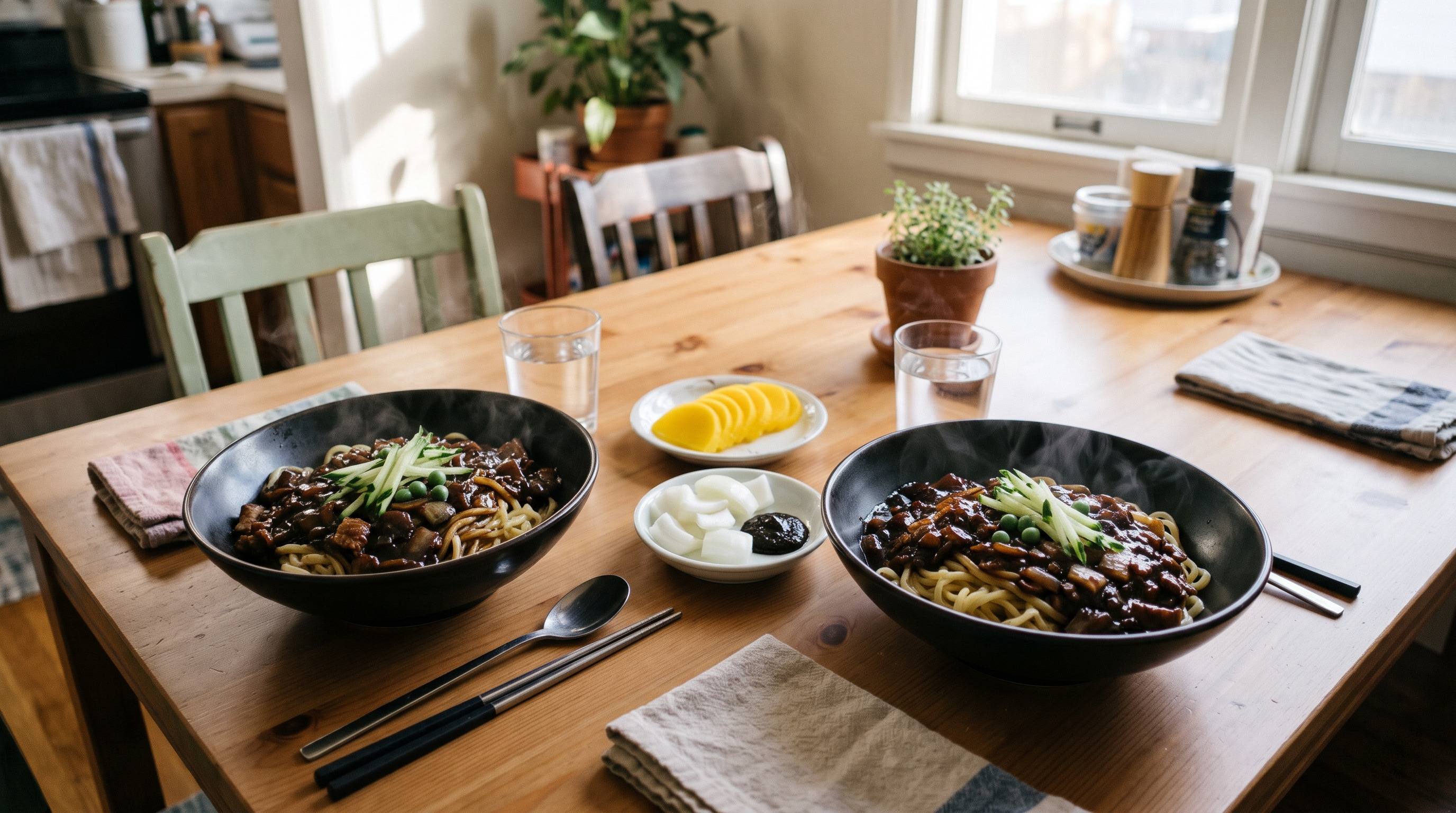
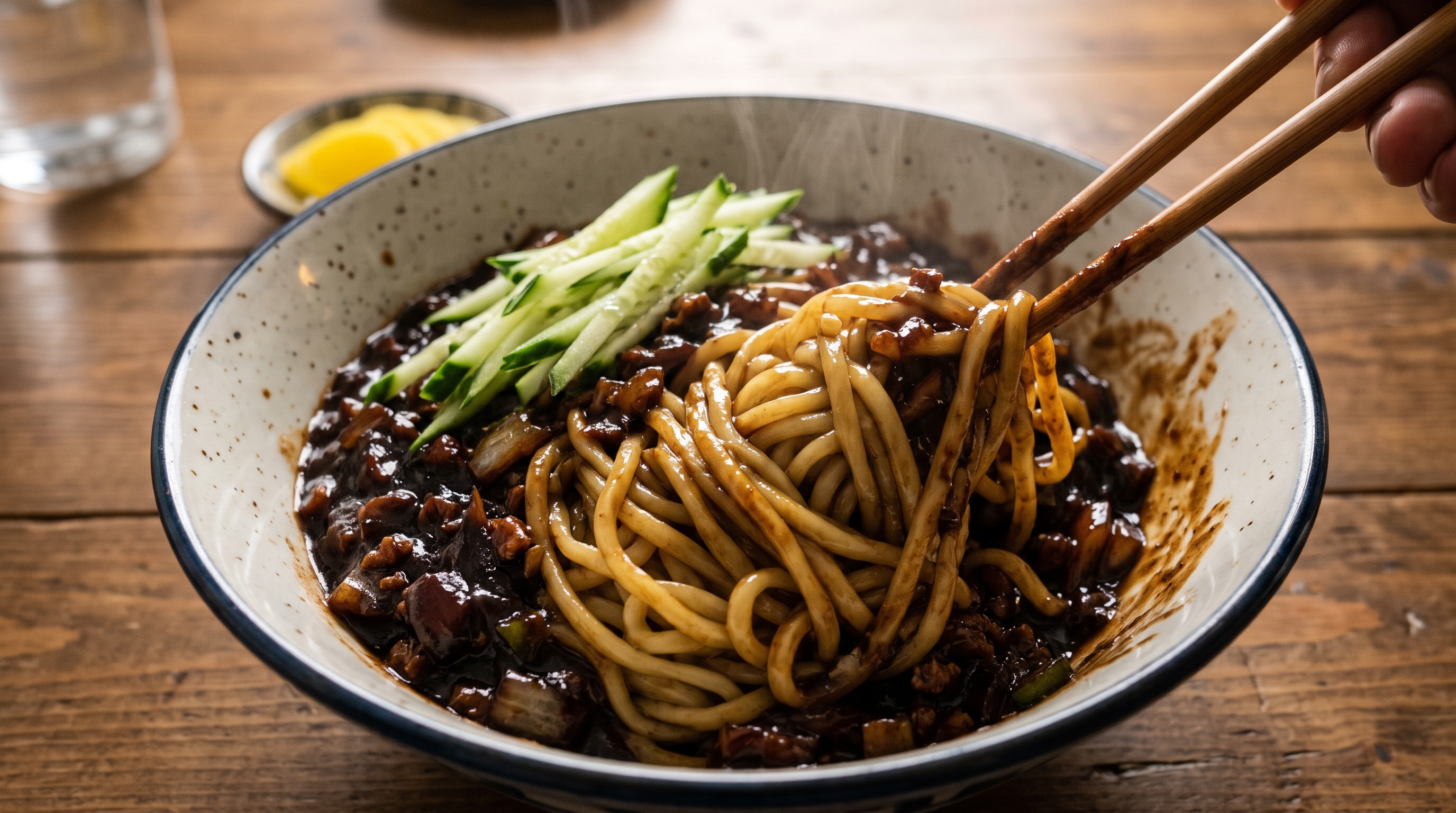
In Korean dining culture, Jajangmyeon is rarely eaten alone. The ultimate Korean-Chinese trinity pairs a bowl of savory black bean noodles with our crispy, golden Sweet and Sour Pork (Tangsuyuk) and a steaming, spicy bowl of Seafood Jjamppong.
Always serve this dish with plenty of chilled yellow pickled radish (danmuji), whose crunchy, sweet-tangy acidity cuts right through the rich umami of the fried black bean paste. If you enjoy spicy variations, stir in half a teaspoon of fine Korean red chili flakes (gochugaru) directly into your bowl before mixing.
With fried chunjang, wok-scorched soy sauce, and crunchy staggered onions, you no longer have to rely on delivery takeout to satisfy your black bean noodle cravings. Gather your ingredients, fire up your wok, and enjoy the ultimate bowl of homemade Jajangmyeon tonight!