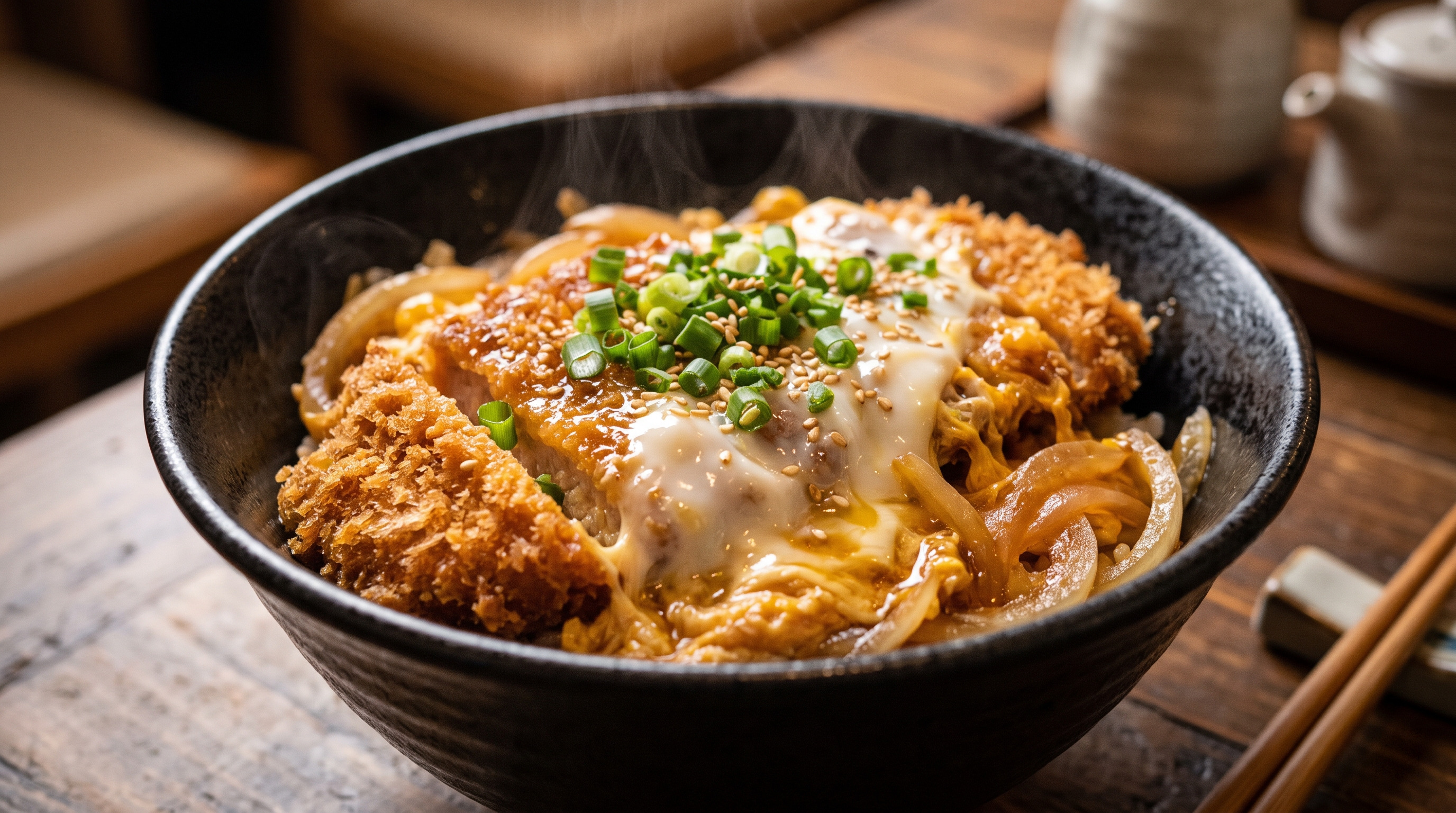
Quick Recipe Snapshot: ⏱️ Prep: 10 mins | 🔥 Cook: 10 mins | 🍽️ Servings: 1–2 | 💡 Key Secret: Rest tonkatsu atop a cushioned onion bed to keep panko crisp + pour egg in two separate stages (Nidan Tounyu) for silky cloud-like custard.
Few comfort foods in Japanese cuisine rival the heart-warming magic of Katsudon (Japanese Pork Cutlet Rice Bowl). Featuring crispy golden panko-breaded pork cutlet (Tonkatsu) gently poached over sweet translucent onions in rich bonito dashi broth, all draped in a luscious blanket of half-set, velvety egg, each bite is an intoxicating harmony of crisp, juicy, and savory-sweet sensations.
In Japan, Katsudon is celebrated as a good luck dish, famously eaten by students and athletes before exams or matches because the word “katsu” is a homophone for “to win” (勝つ). But at home, home cooks often end up with a soggy, waterlogged cutlet, dense scrambled eggs that feel dry and rubbery, or a watery sauce that leaves the rice bland and uninspired.
Mastering restaurant-worthy Katsudon comes down to two foundational principles of Japanese culinary thermodynamics: steam convection over an onion cushion and the two-stage egg pour technique (Nidan Tounyu, 二段投入).
With pre-made or leftover tonkatsu and pantry staples like dashi, mirin, and soy sauce, you can whip up an authentic Tokyo specialty diner experience in just 15 minutes.
1. The Culinary Science Behind Restaurant Flavor
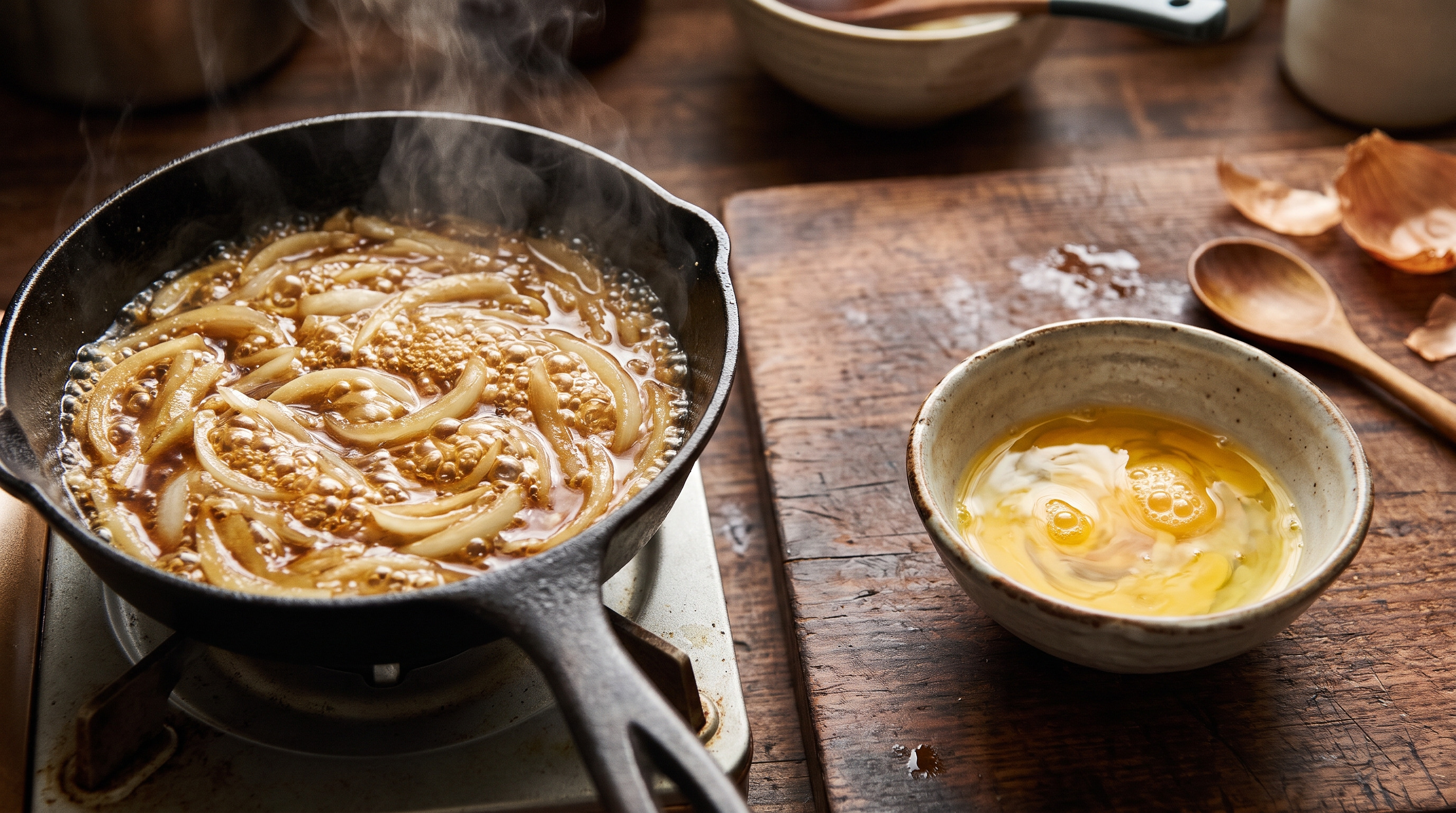
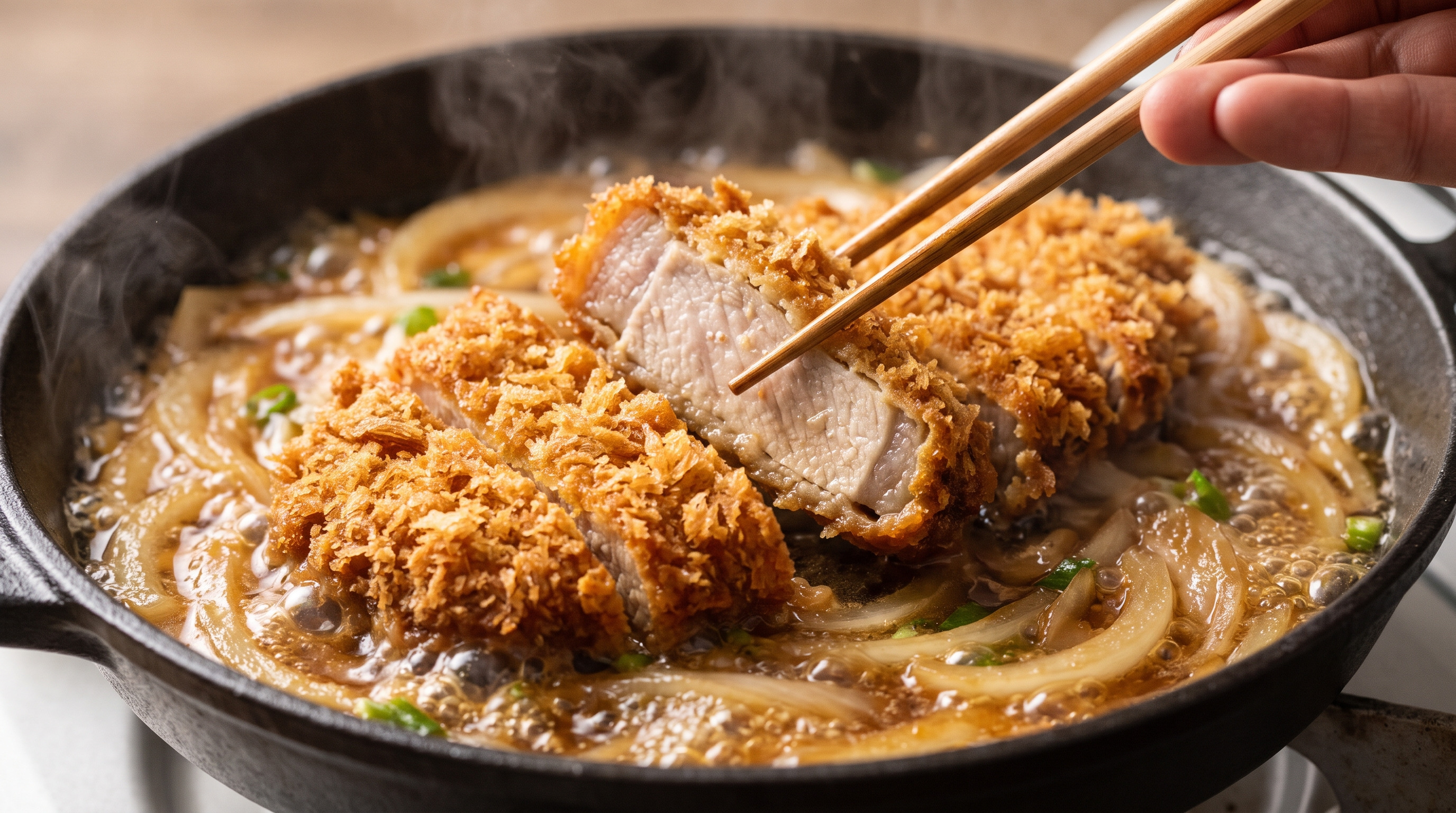
The secret to avoiding mushy breading while achieving cloud-soft egg texture lies in understanding moisture barriers and protein coagulation temperatures.
💡 Culinary Science 1: Onion-Bed Steam Convection (Crisp-Bottom Protection)
Submerging a freshly fried tonkatsu directly into boiling liquid causes the porous panko breadcrumbs to act like microscopic sponges, rapidly absorbing liquid and disintegrating into mush. By laying a dense layer of thinly sliced yellow onions along the bottom of the pan first and resting the sliced cutlet on top, the onions serve as a thermal cushion. The bottom panko absorbs just enough savory dashi broth to lock in flavor, while the rising steam convection from the simmering broth gently warms the upper cutlet crust without saturating it, preserving a delicate crispness.
💡 Culinary Science 2: The Two-Stage Egg Pour (Nidan Tounyu, 二段投入)
Egg white protein (ovalbumin) begins setting between 62–65°C (144–149°F), whereas egg yolk coagulates at 68–70°C (154–158°F). Whisking eggs vigorously into a homogenous blend causes the entire mixture to firm up into a solid, rubbery omelet under heat. In traditional Japanese donburi cookery, the eggs are broken loosely with chopsticks (swirled just 3 to 4 times). Pouring 70% of the egg around the cutlet and covering the pan for 30 seconds establishes a fluffy structural cushion. Swirling in the remaining 30% right before killing the flame lets residual heat cook the final layer into a glossy, pudding-like, semi-translucent glaze that melts over the cutlet.
2. Essential Ingredients & The Golden Ratio Sauce
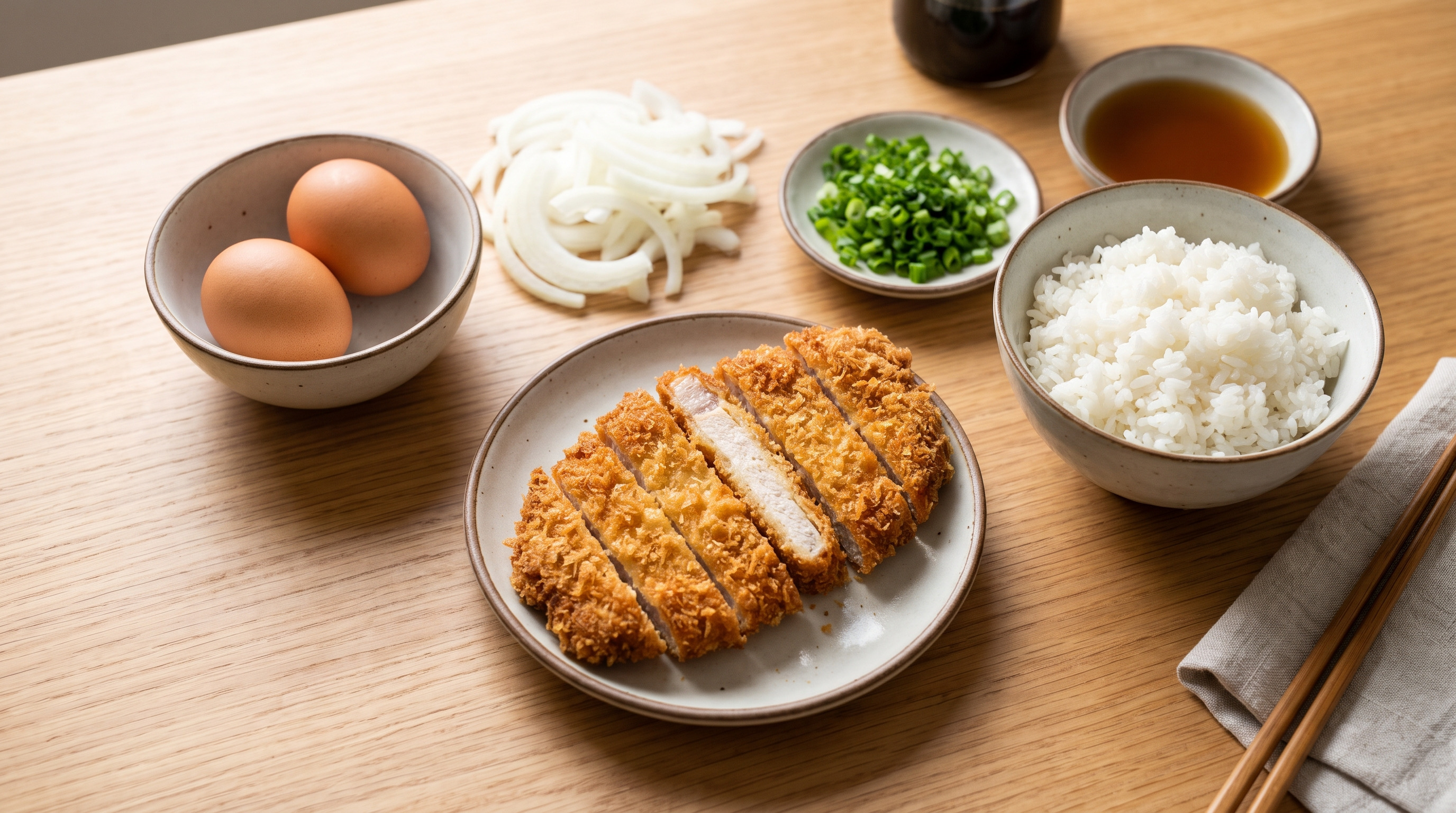
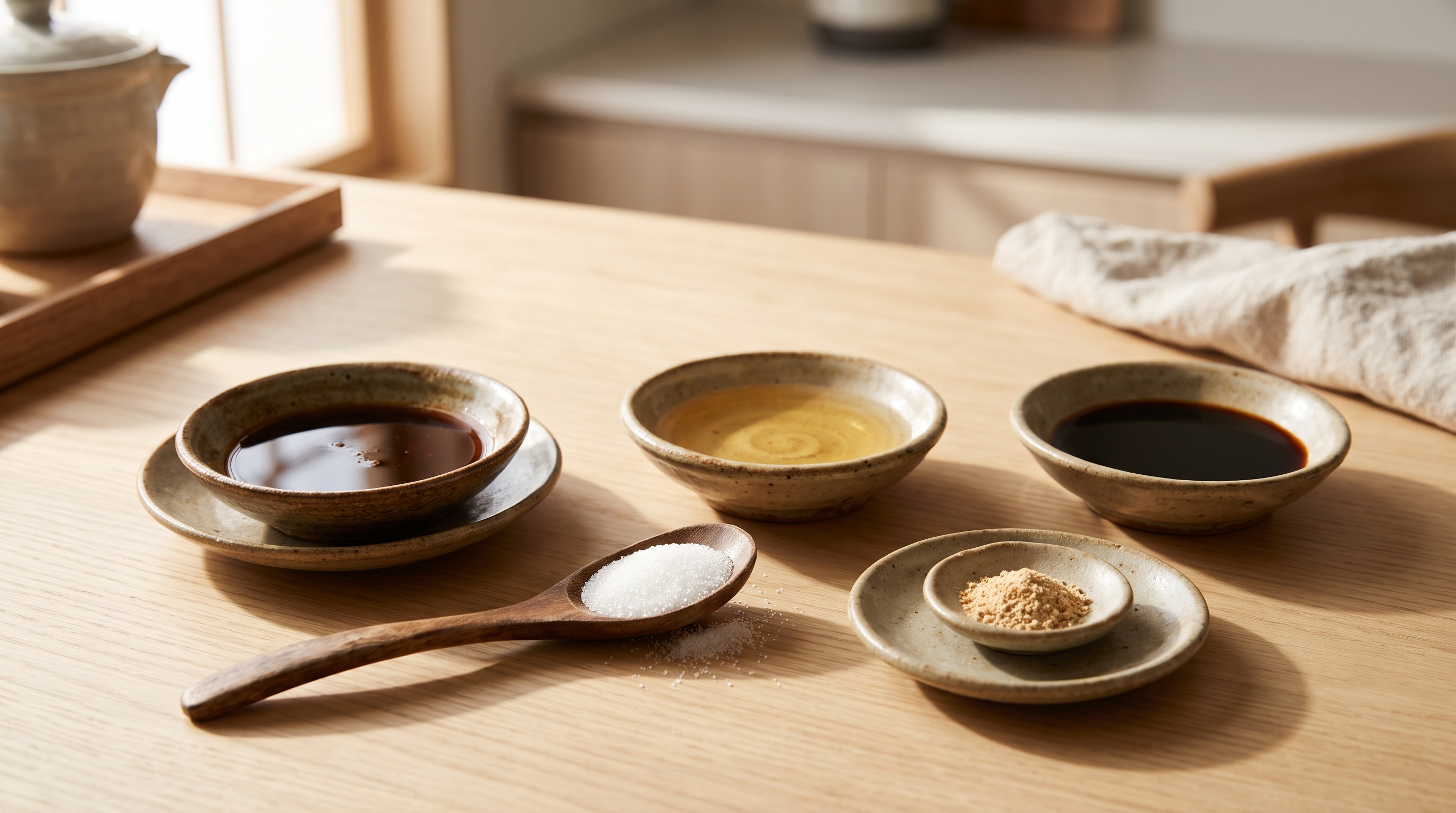
This recipe is scaled for 1 large hearty meal or 2 lighter servings. Using an 18–20cm (7–8 inch) single-handle skillet or authentic Japanese oyakodon nabe ensures the egg sets in a neat round shape that slides smoothly over your rice bowl.
| Category | Ingredients & Amounts (Metric & US) | Chef’s Notes & Substitutions |
|---|---|---|
| Crispy Cutlet | 1–2 Crispy Pork Cutlets (Tonkatsu, 150–180g / 5.3–6.3 oz each) | Use freshly fried, leftover takeout, or frozen supermarket tonkatsu reheated in an air fryer at 180°C (350°F) for 6 mins. |
| Egg Binding | 2 Large Grade-A Eggs, very lightly beaten | Do not overwhisk; keep distinct ribbons of yellow yolk and clear albumen for professional marbled texture. |
| Alliums | 1/2 Yellow Onion (100g / 3.5 oz), 1 stalk Scallion | Slice onions thinly (0.5cm) so they cook through rapidly and release natural sweet juices into the broth. |
| Dashi Base | 1/2 cup (120ml / 4 fl oz) Dashi Stock | Use freshly simmered kombu-katsuobushi dashi, or dissolve 1/3 tsp Hon-dashi granules in 120ml warm water. |
| Golden Umami Sauce | 2.5 tbsp Japanese Soy Sauce, 2 tbsp Mirin, 1 tbsp Sake, 1 tsp Sugar | Kikkoman or Yamasa koikuchi shoyu provides rich color and umami without overwhelming salinity. |
| Quick Store Tsuyu Alternative | 3 tbsp 3x Concentrated Tsuyu + 6 tbsp Water + 1/2 tsp Sugar | A reliable 1:2 ratio with water mimics traditional broth effortlessly on busy weeknights. |
| Rice Foundation | 2 bowls Warm Steamed Short-Grain Rice (350–400g / 12.3–14 oz) | Premium Japanese sushi rice or Korean short-grain rice absorbs broth while keeping its chewy toothsome texture. |
| Finishing Touches | Chopped Scallions, Shredded Nori, Shichimi Togarashi | A sprinkle of Japanese seven-spice blend cuts through the richness with subtle chili heat and citrus notes. |
3. Step-by-Step Cooking Instructions
Step 1. Reheat Tonkatsu & Prep Aromatics
If your breaded pork cutlet is cold or frozen, reheat it in an air fryer or toaster oven at 180°C (350°F) for 5 to 7 minutes until the exterior panko sizzles and regains its crackling crunch. Transfer to a cutting board and slice into 2cm (0.8-inch) thick bite-sized pieces. Thinly slice the onion and chop the scallion. In a small bowl, crack the 2 eggs and pierce the yolks with chopsticks, dragging the tines in an “X” motion 3 to 4 times—leave visible ribbons of yolk and white unblended.
Step 2. Simmer Onion Bed in Golden Tsuyu Broth
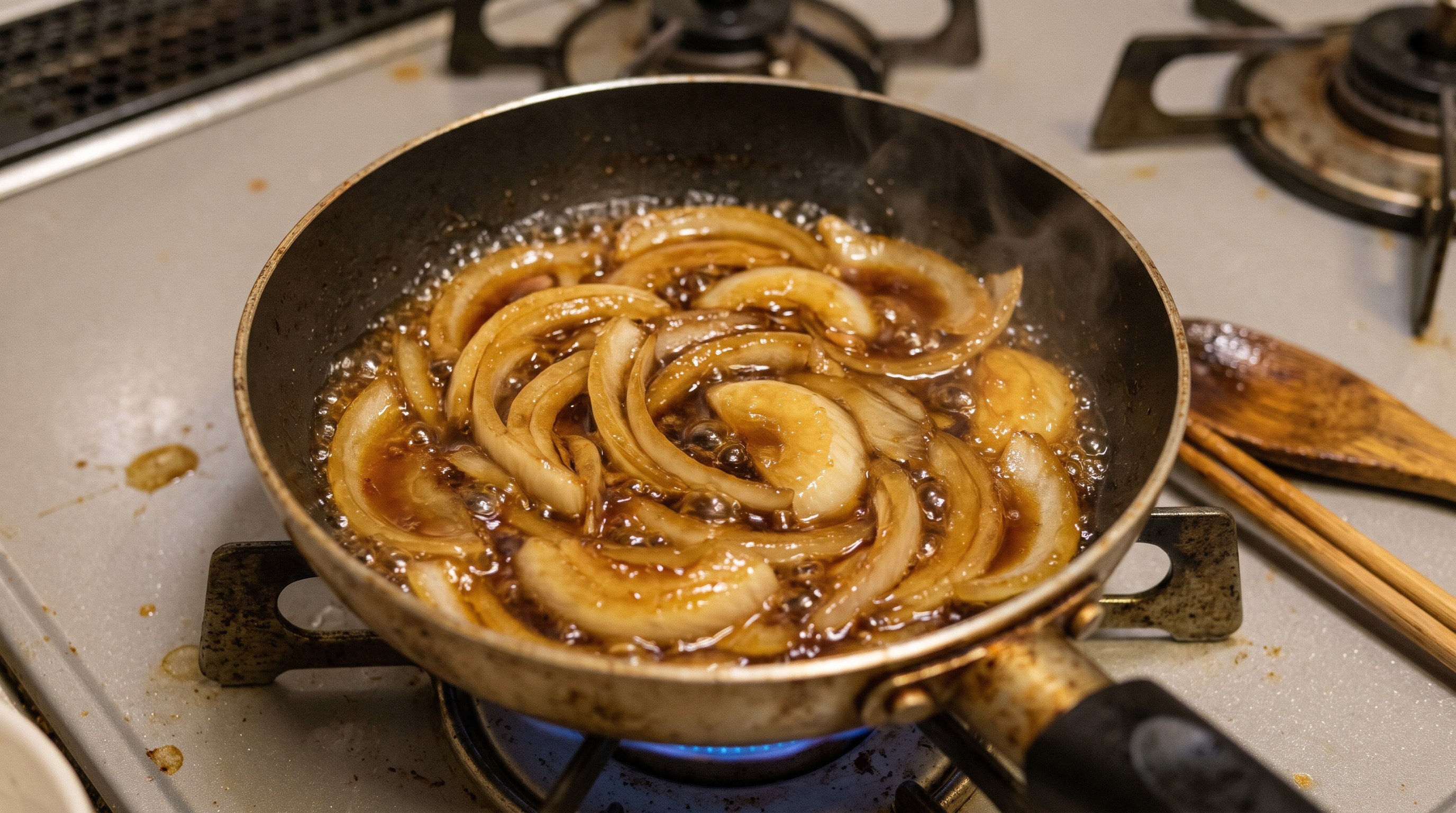
In a small 18–20cm (7–8 inch) non-stick skillet, combine 1/2 cup (120ml) dashi stock, 2.5 tbsp soy sauce, 2 tbsp mirin, 1 tbsp sake, and 1 tsp sugar. Spread the sliced onions evenly across the bottom of the pan to create a level protective base. Bring the liquid to a gentle boil over medium heat and simmer for 2 to 3 minutes until the onions soften, become translucent, and sweeten the broth.
Step 3. Place Tonkatsu & Apply Two-Stage Egg Pour (二段投入)
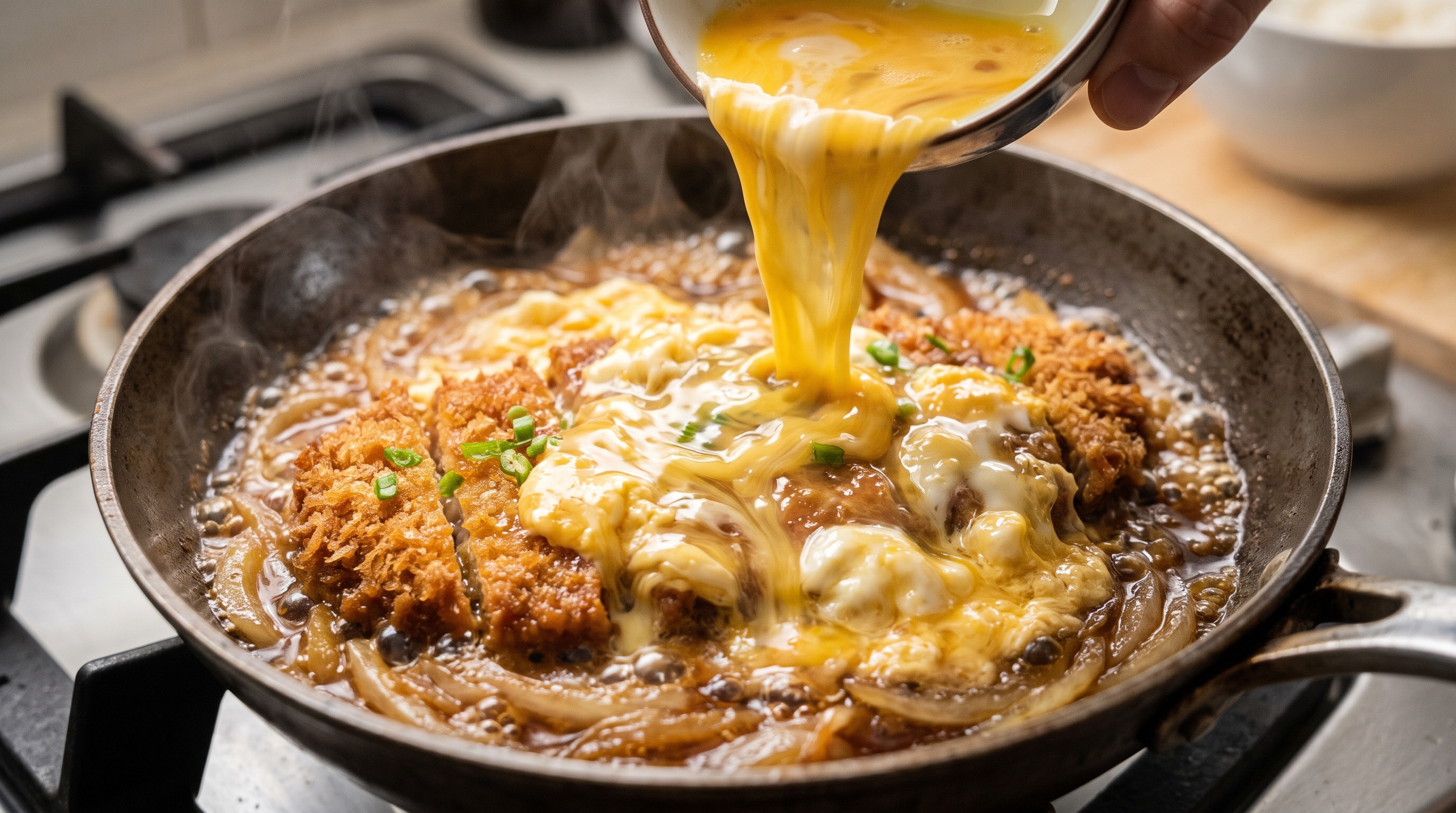
Carefully lift the sliced pork cutlet using a wide spatula or your hands, keeping the slices arranged together, and place it directly on top of the softened onion bed. Drizzle roughly 70% of the lightly beaten egg in a circle around the outer perimeter of the skillet and across the cutlet. Immediately place a tight-fitting lid on the pan, lower the flame to medium-low, and steam for 30 to 45 seconds until the whites firm up into soft white clouds. Remove the lid, pour the remaining 30% of raw egg over the center of the cutlet, and immediately turn off the heat.
Step 4. Slide Over Steamed Rice & Garnish
Fill a wide, deep donburi bowl with warm freshly steamed short-grain rice. Using a spoon, ladle 1 to 2 tablespoons of hot broth from the pan over the center of the rice so it seasons the core. Tilt the skillet at a 45-degree angle toward the bowl and gently shake it, sliding the entire disk of simmered onions, tonkatsu, and silky golden eggs cleanly over the rice. Garnish with chopped scallions, shredded nori seaweed strips, and a light dusting of shichimi togarashi. Serve piping hot.
4. Pro Chef Tips to Elevate Your Dish
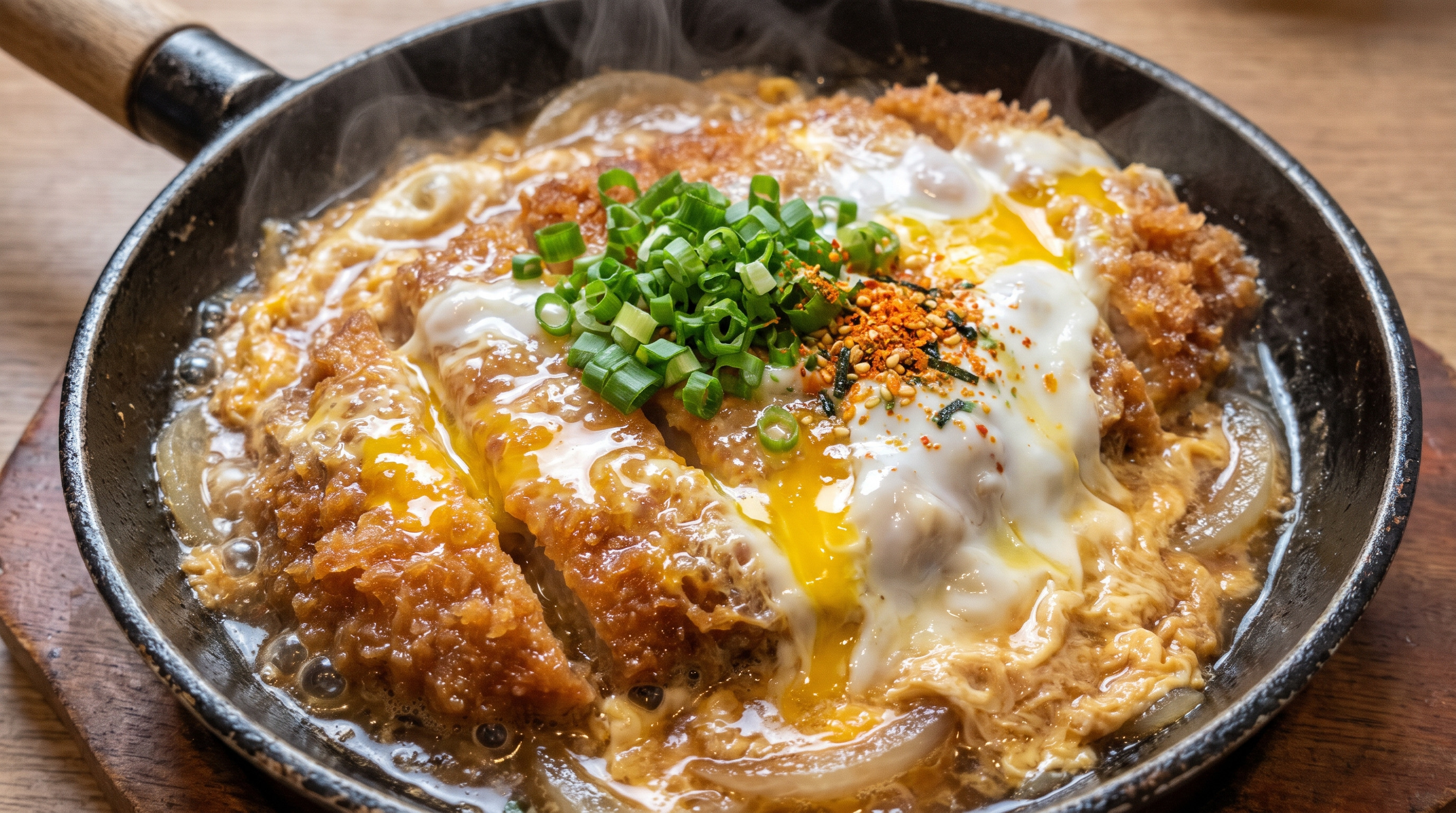
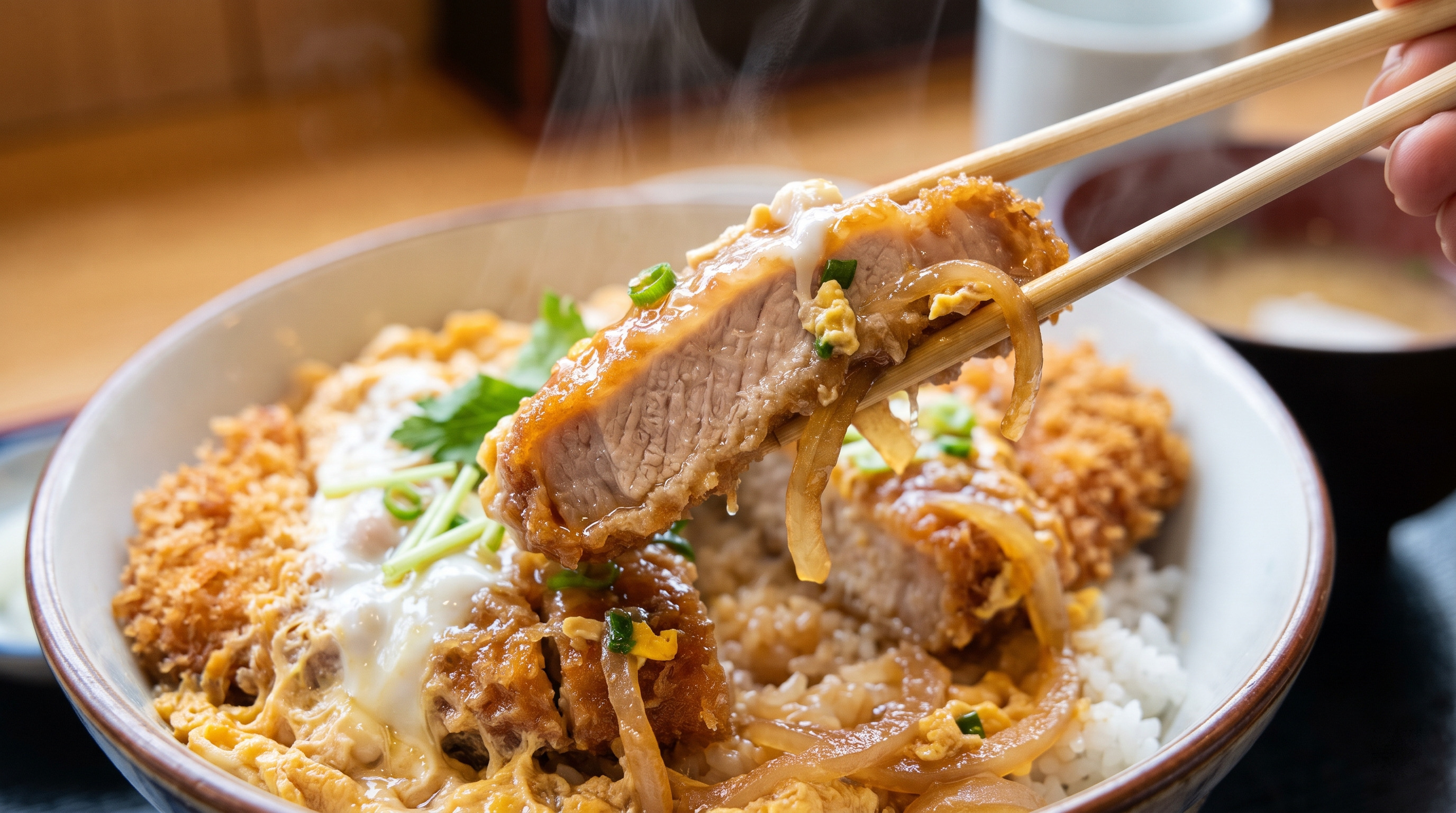
Follow these three chef secrets from Tokyo’s master donburi chefs to achieve a truly elevated dining experience:
- The Chopstick Marble Rule:
Never reach for a whisk when making Katsudon! Whisking incorporates micro air bubbles that puff up under heat like a Western omelet, creating a dry sponge that absorbs moisture unevenly. Swirling chopsticks through the egg just three or four times maintains distinct pockets of rich lipid-dense yolk and airy albumen, producing the signature glistening texture of authentic Japanese dining. - Pre-Seasoning the Rice Bed:
Before sliding your finished cutlet onto the rice, always ladle 2 spoons of hot broth directly over the bare steamed rice. This prevents the rice at the bottom of the bowl from remaining dry and bland, ensuring every single grain is infused with savory dashi and sweet mirin down to the very last bite. - Pan Size Dictates Shape and Flow:
Cook your Katsudon in a pan whose diameter closely matches your donburi bowl (ideally 18–20cm / 7–8 inches). Using an oversized 30cm skillet forces the egg to spread into a paper-thin sheet that overcooks in seconds and makes sliding the cutlet over the rice messy and uneven.
5. Frequently Asked Questions (FAQ)
Q1. What is the golden ratio if I use concentrated store-bought tsuyu or soba sauce?
Commercial 3x concentrated tsuyu (such as Kikkoman Hon Tsuyu) makes making Katsudon effortless. Combine 3 tbsp concentrated tsuyu with 6 tbsp (approx. 90ml) water and 1/2 tsp sugar. This matches the exact salinity, bonito smokiness, and subtle sweetness of custom scratch-made dashi.
Q2. Can I use cold leftover takeout tonkatsu or frozen pre-made cutlets?
Yes! In fact, Katsudon was originally popularized in Japanese eateries as the ultimate way to serve day-old pork cutlets. Reheat cold or frozen cutlets in an air fryer at 180°C (350°F) for 5 to 7 minutes before slicing. This crisps up the outer panko coating and melts away any stale refrigerator oils.
Q3. What should I do if the sauce reduces too quickly or tastes too salty?
If high burner heat causes the broth to evaporate before the eggs are added, immediately splash in 2 to 3 tablespoons of warm water and 1 teaspoon of mirin. Swirl the pan gently to restore the liquid level and balance the saltiness before pouring in the eggs.
6. Serving Suggestions & Conclusion
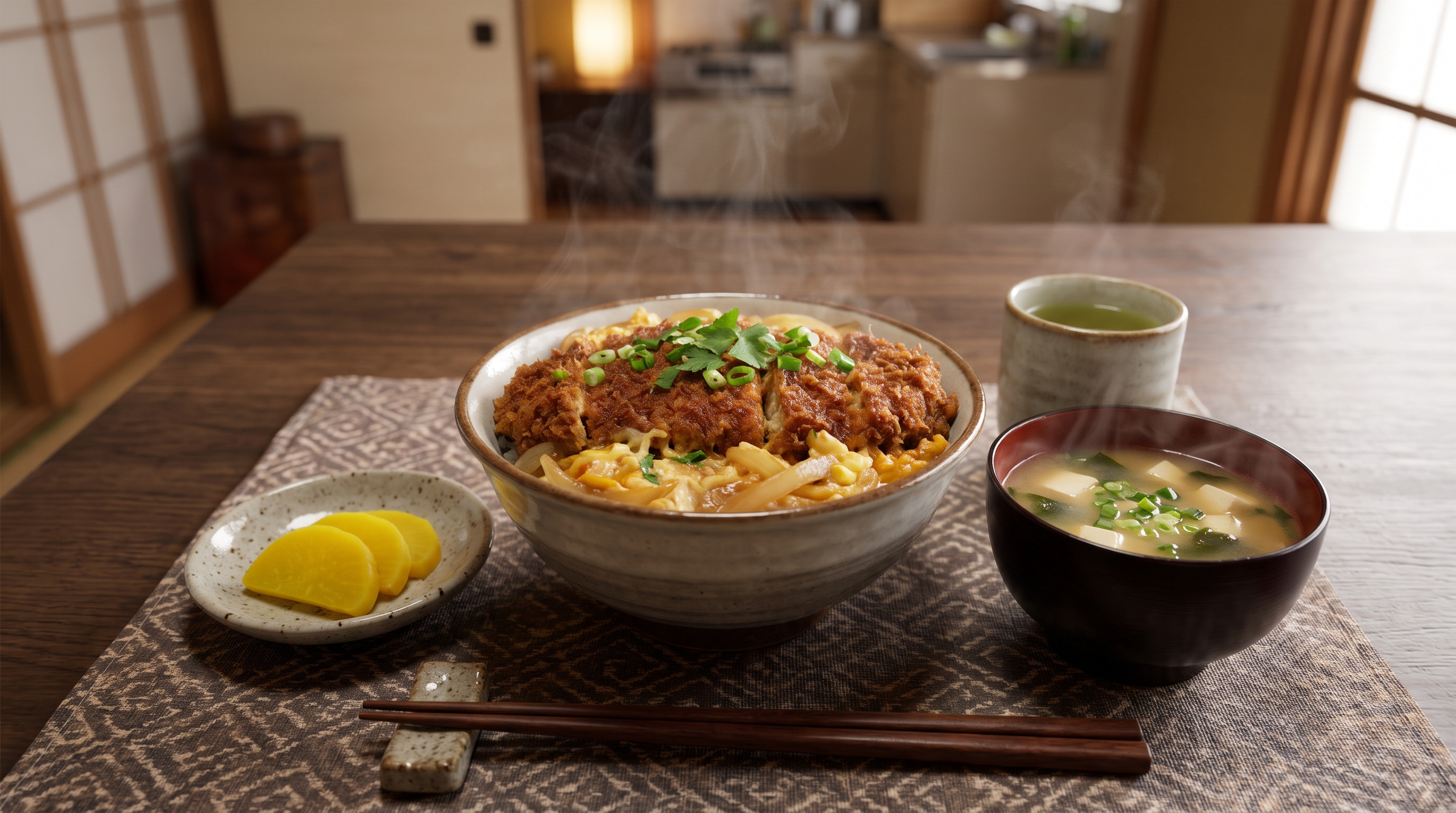
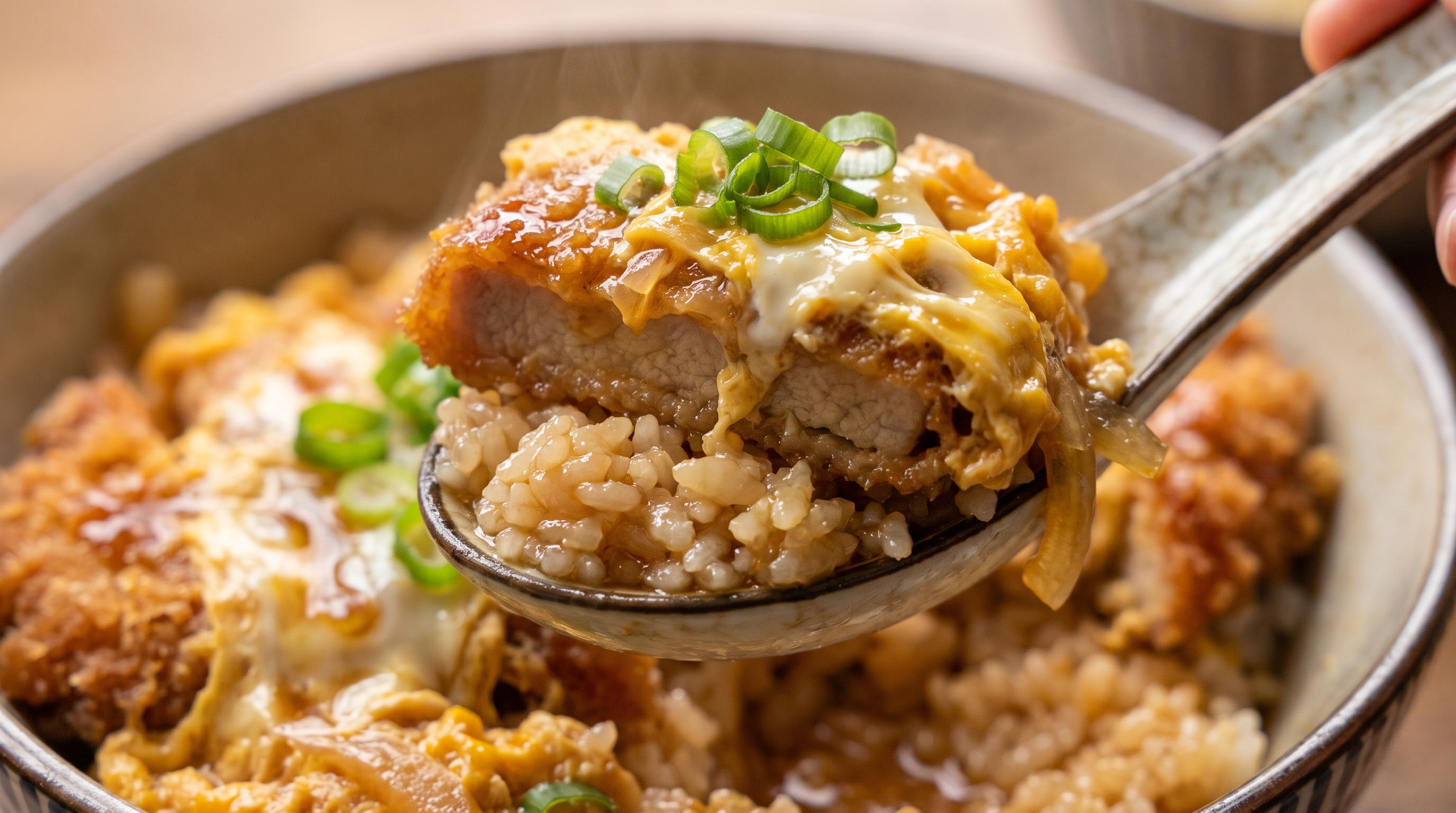
Katsudon is a hearty, self-contained one-bowl wonder that pairs magnificently with a bowl of warm tofu-seaweed miso soup and Japanese pickled cucumbers (kyuri asazuke) or yellow radish (takuan). A cup of hot roasted green tea (Hojicha) or cold Japanese draft beer creates the quintessential Japanese diner vibe.
If you are exploring other iconic Japanese rice bowl masterpieces, explore our velvety Japanese Beef Gyudon or fresh Salmon Donburi (Sake Don). On chilly evenings, pair it with a simmering pot of Mille-Feuille Nabe.
With a hot air fryer, a few pantry condiments, and the two-stage egg pour technique, you can enjoy the sublime comfort of Tokyo-style Katsudon anytime right at your dining table!