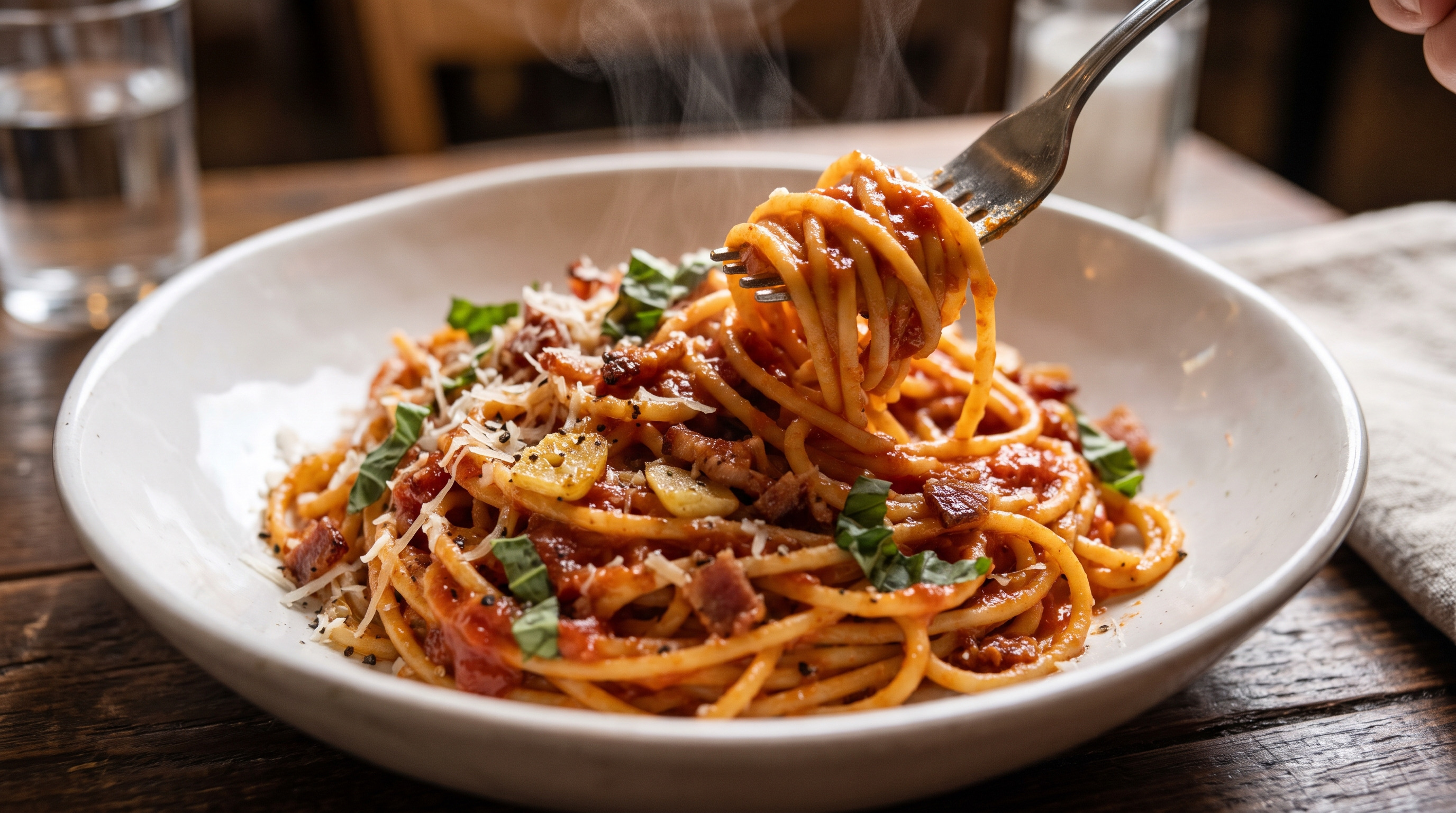
Quick Recipe Snapshot: ⏱️ Prep: 10 mins | 🔥 Cook: 15 mins | 🍽️ Servings: 2–3 | 💡 Key Secret: Boil in 1% salted water to al dente + emulsify vigorously with 1/2 cup starchy pasta water (Mantecatura) + finish off heat with cold butter and a whisper of soy sauce.
A steaming bowl of Homemade Tomato Spaghetti (Spaghetti al Pomodoro) represents the quintessential heart of home-style Italian cooking. With sweet-tart tomatoes, fragrant garlic, aromatic olive oil, and savory bacon clinging tightly to perfectly springy pasta strands, it is universally adored by children and fine-dining connoisseurs alike.
However, home cooks frequently encounter the common “watery plate” syndrome: watery, sour sauce pools at the bottom of the bowl while naked, slippery noodles sit dry on top. Other times, the sauce turns pasty and gluey, or canned tomatoes taste unpleasantly acidic and metallic.
In authentic Italian trattorias, pasta is never simply boiled and topped with a ladle of cold jarred sauce. It is united through a crucial mechanical and thermodynamic process known as Mantecatura (pasta water emulsion).
By applying simple kitchen physics—precisely measured 1% salinity water, amylose starch binding, and a cold butter lipid glaze—you can produce bistro-worthy tomato pasta in just 20 minutes.
1. The Culinary Science Behind Restaurant Flavor
The magic of restaurant-grade Italian pasta relies on molecular starch extraction and liquid-fat emulsification.
💡 Culinary Science 1: Starch Water Emulsification (Mantecatura)
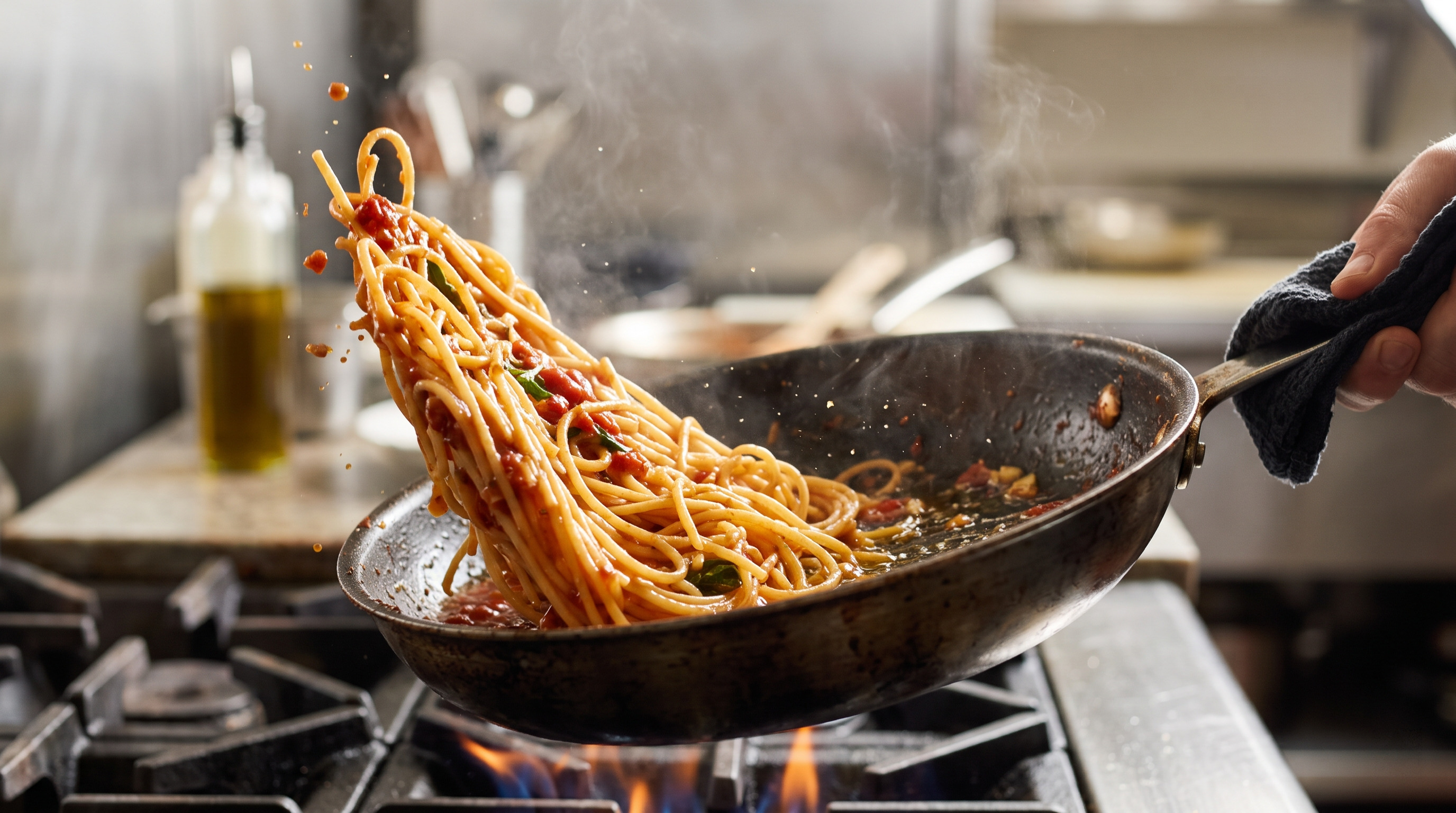
Olive oil and animal fats are hydrophobic (repelling water), while tomato juice is primarily aqueous. If tossed together without an emulsifier, they inevitably separate into greasy slicks and watery puddles. As dried semolina pasta boils, its outer gluten mesh softens, releasing microscopic amylose and amylopectin starch polymers directly into the cooking water. When you ladle this cloudy pasta cooking water into the hot skillet and toss vigorously (mantecatura) over high heat, the gelatinized starch particles act as powerful natural surfactants. They permanently bridge oil molecules and tomato juices together, forming a velvety, homogenous sauce that adheres tenaciously to every strand of spaghetti.
💡 Culinary Science 2: The 1% Salinity Rule & Al Dente Osmosis
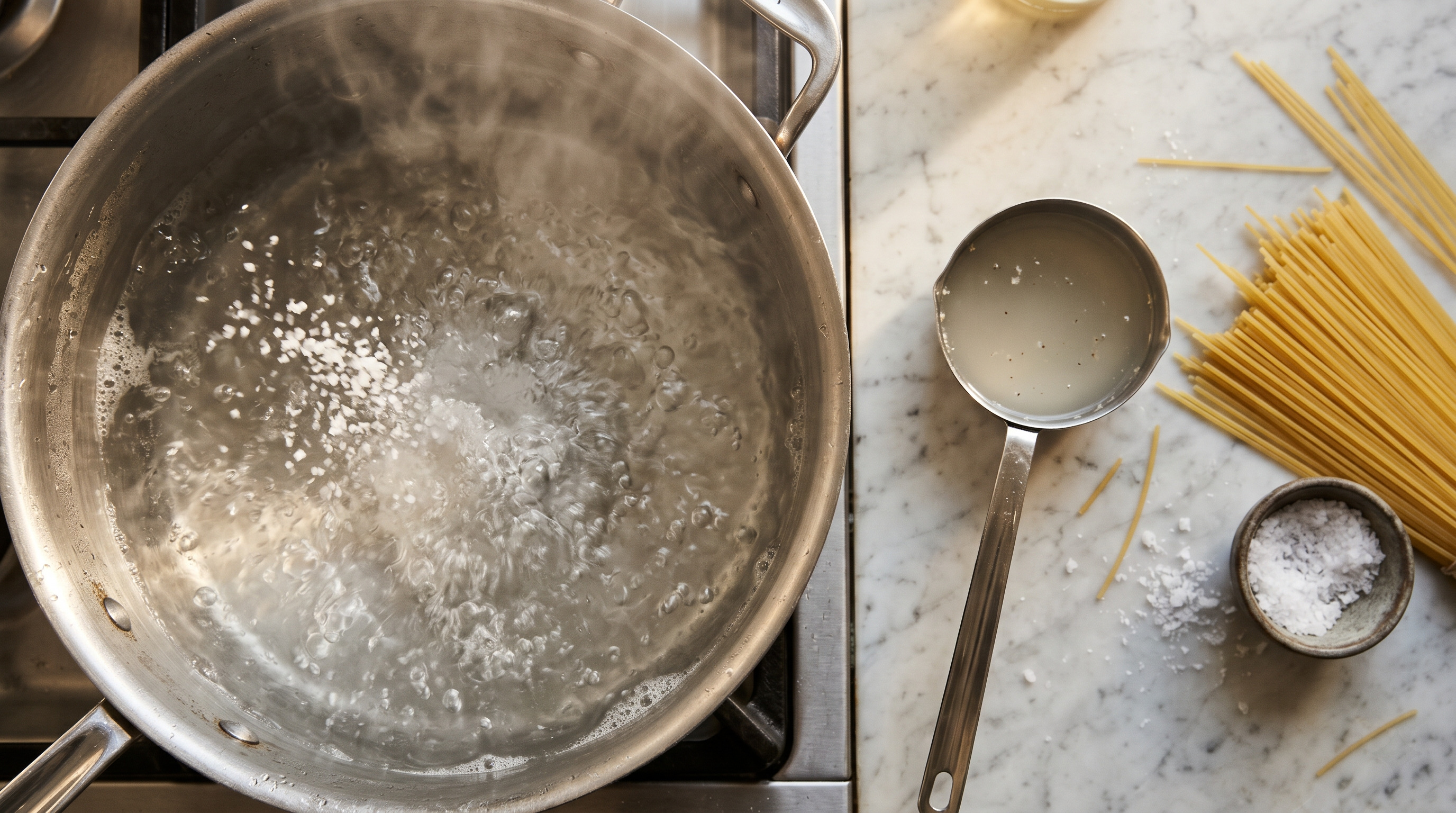
Dried durum wheat pasta contains no salt. Boiling it in plain, unseasoned water results in a bland noodle where salt sprinkled on top only seasons the exterior. Adding 10g of coarse salt per liter of water (approx. 1% salinity) matches the natural salinity of human palate preference and creates osmotic equilibrium. Salt ions penetrate deep into the pasta core, strengthening the gluten matrix and preventing mushiness. Crucially, pulling the pasta 1 to 2 minutes before the package timer (al dente, with a tiny chalky center pinprick) allows the noodle to finish cooking inside the hot tomato sauce, drinking in flavorful pan juices rather than bland water.
2. Essential Ingredients & The Golden Ratio Sauce
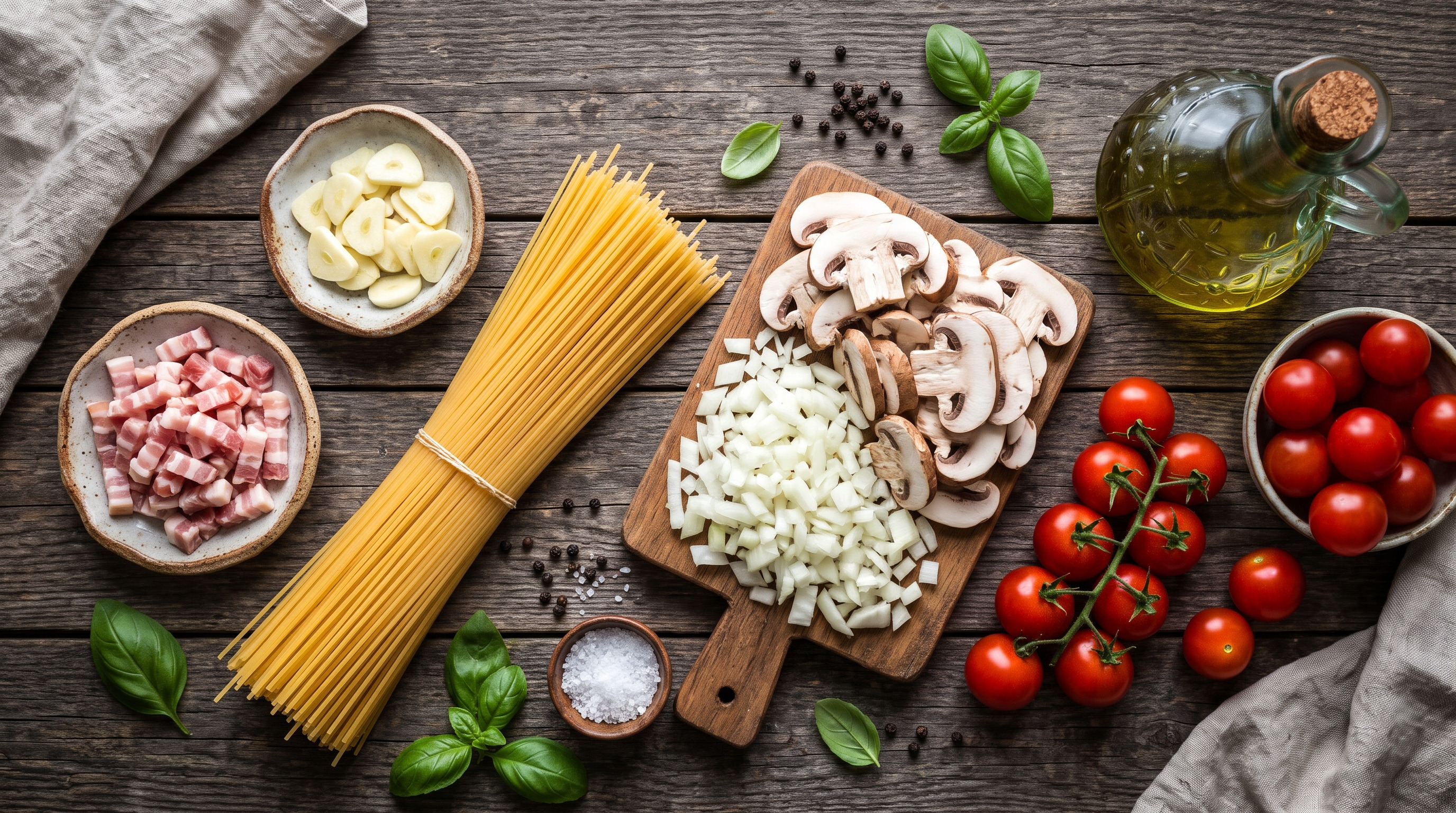
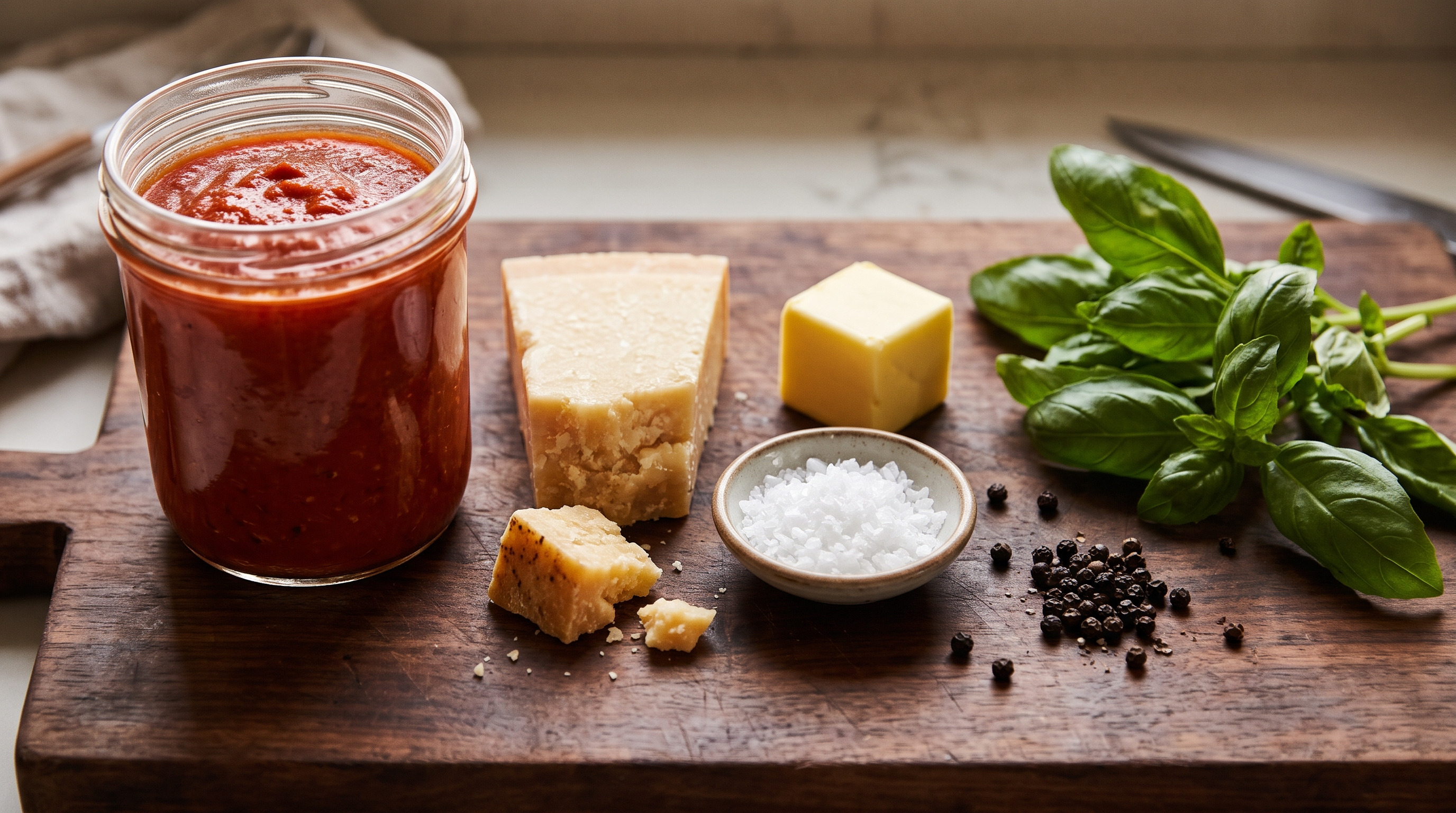
This recipe serves 2 to 3 adults generously. Look for dried pasta labeled “trafilata al bronzo” (bronze-die extruded), which features a rough, chalky white surface that captures sauce three times better than slick teflon-extruded noodles.
| Category | Ingredients & Amounts (Metric & US) | Chef’s Notes & Substitutions |
|---|---|---|
| Pasta | 200g (7 oz) Dried Spaghetti (Durum Wheat Semolina) | Bronze-die spaghetti holds onto sauce exceptionally well. Linguine, bucatini, or penne also work nicely. |
| Boiling Water | 2 Liters (8.5 cups) Water + 20g (2 tbsp) Coarse Sea Salt | Strict 1% salinity: 10g salt per 1000ml water ensures deep flavor and resilient noodle texture. |
| Tomato Base | 400g (14 oz / 1 can) Whole Peeled Plum Tomatoes | Italian San Marzano or plum tomatoes crushed by hand provide superior aroma compared to pre-diced cans. |
| Savory Cured Meat | 80g (2.8 oz / 3–4 slices) Thick-Cut Bacon or Pancetta | Renders rich animal fat that blends with olive oil. Pancetta or guanciale adds traditional Italian authenticity. |
| Aromatic Alliums | 5–6 cloves Garlic (sliced), 1/2 Yellow Onion (100g, minced) | Garlic chips provide nutty aroma; finely minced onions caramelize into natural fructose sweetness. |
| Vegetables & Herbs | 4–5 Button Mushrooms (sliced), 1/4 tsp Oregano, Fresh Basil | Mushrooms add meaty texture; fresh basil torn at the end infuses sweet floral brightness. |
| Oil & Emulsifier | 3 tbsp Extra Virgin Olive Oil + 1/2 cup (120ml) Pasta Cooking Water | The starchy cooking water is the irreplaceable binder that creates a rich emulsion without heavy cream. |
| Umami & Acidity Balancer | 1/2 tbsp Soy Sauce, 1/2 tsp Sugar, 1 tbsp Cold Butter | Soy sauce provides secret glutamate depth; cold butter coats the palate and rounds off sharp citric acidity. |
3. Step-by-Step Cooking Instructions
Step 1. Boil Pasta Al Dente & Save Starchy Pasta Water
Fill a large pot with 2 liters of fresh water and 20g of coarse sea salt. Bring to a rolling boil over high heat. Drop in 200g of dried spaghetti, stirring gently during the first 60 seconds to prevent sticking. Cook for 7 to 8 minutes—timing it 1 to 2 minutes less than the package recommendation so the pasta remains firm (al dente). Right before draining, carefully scoop out 1/2 cup (100–120ml) of the cloudy, bubbling pasta water and set it aside. Drain the pasta immediately; do not rinse under water.
Step 2. Render Bacon & Sauté Garlic, Onions, and Mushrooms
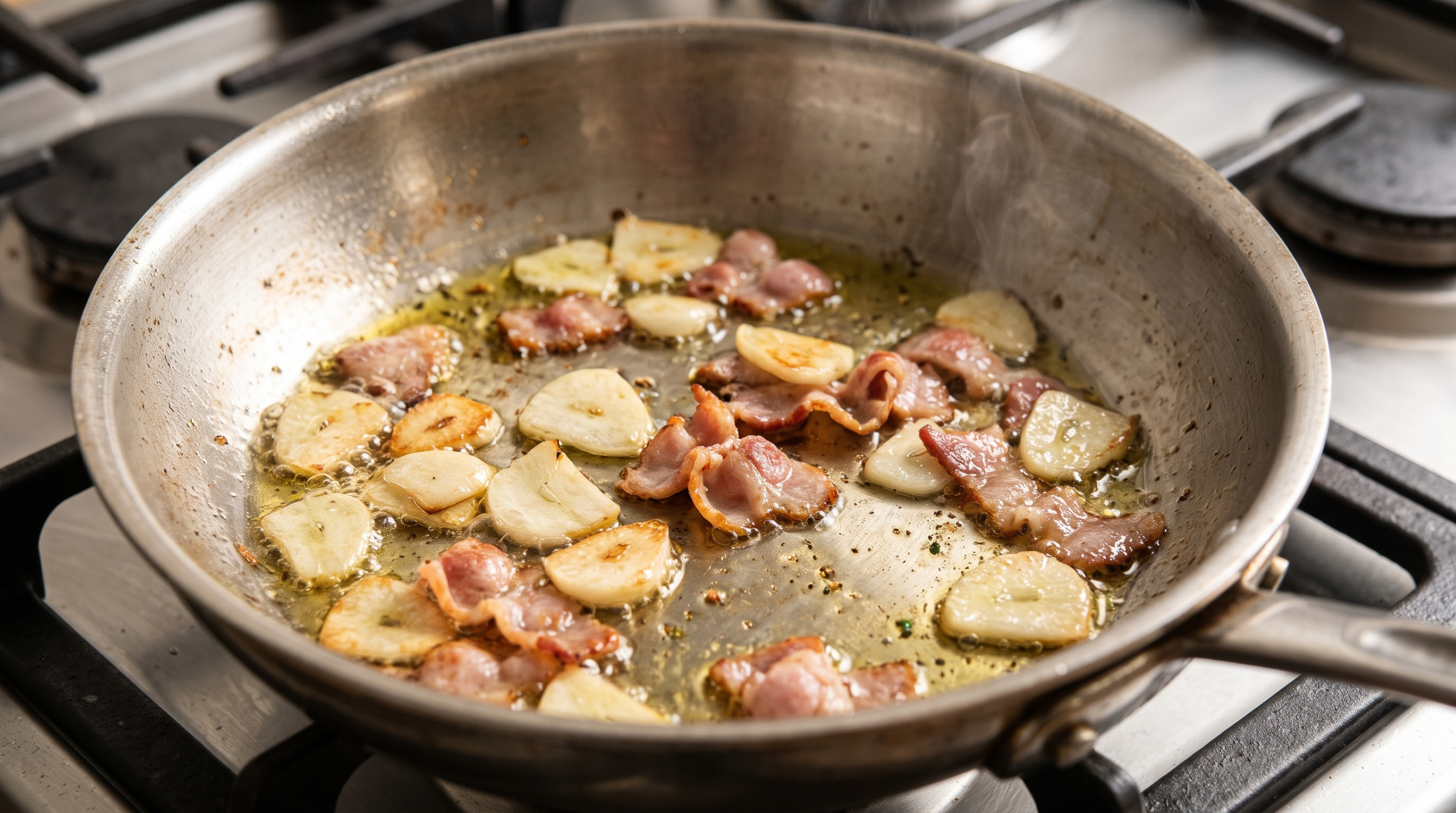
While the pasta is boiling, place a large deep skillet or sauté pan over medium heat. Add 2 tablespoons of extra virgin olive oil and the sliced bacon. Sauté for 2 to 3 minutes until the bacon edges brown and crisp, releasing aromatic pork fat. Add the sliced garlic and minced yellow onion, cooking for 2 minutes until translucent. Add the sliced mushrooms and cook for another minute until they soften and take on color.
Step 3. Simmer Tomato Sauce with Umami Seasoning
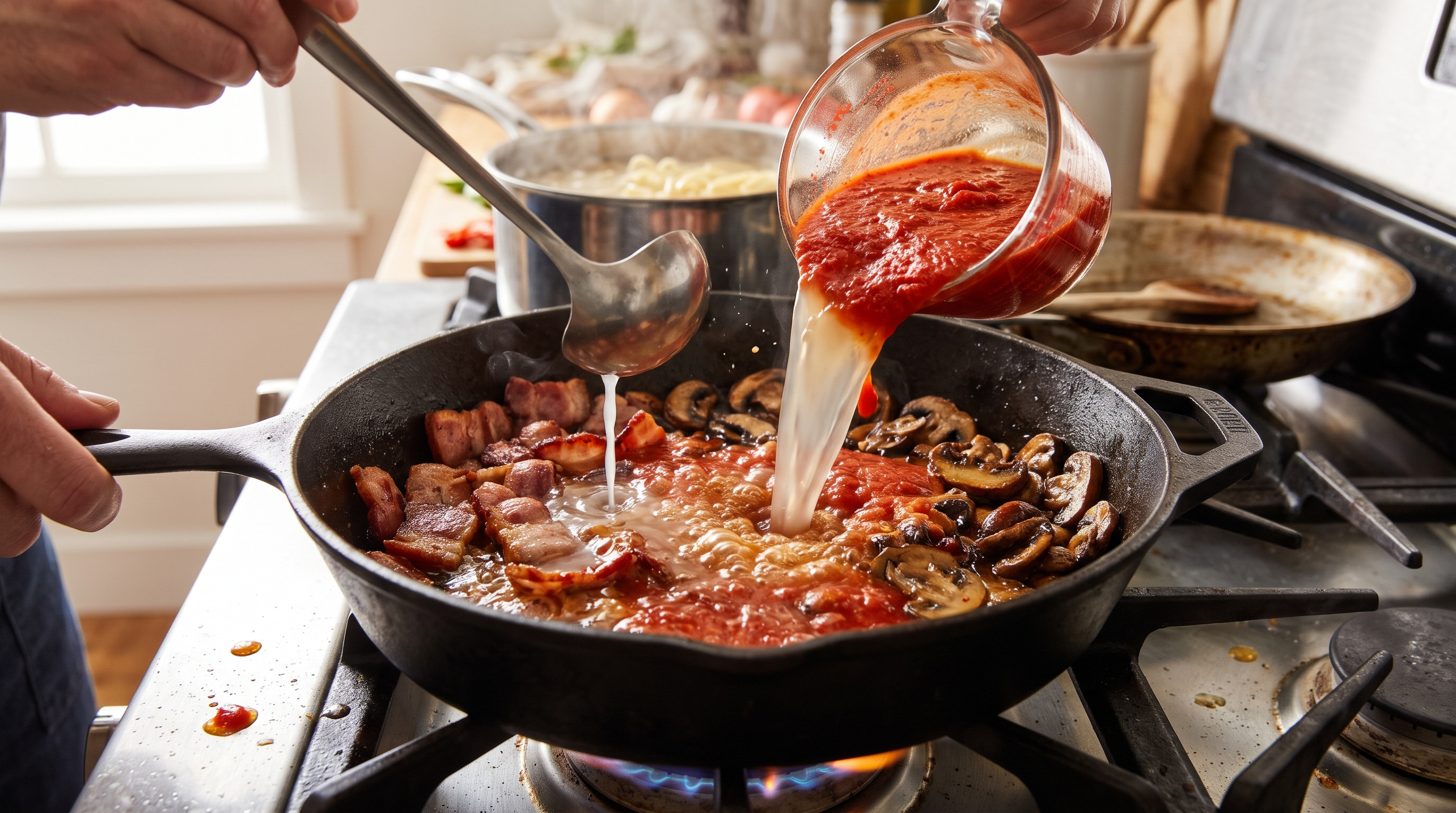
Pour the hand-crushed whole peeled tomatoes (with their rich juice) into the pan. Stir in 1/2 tablespoon of regular soy sauce, 1/2 teaspoon of sugar, 1/4 teaspoon of dried oregano, and freshly cracked black pepper. Reduce heat to medium-low and simmer gently for 3 to 4 minutes, allowing the tomato pulp to break down and blend with the rendered bacon fat and garlic oil.
Step 4. Emulsify (Mantecatura) with Pasta Water & Cold Butter Finish
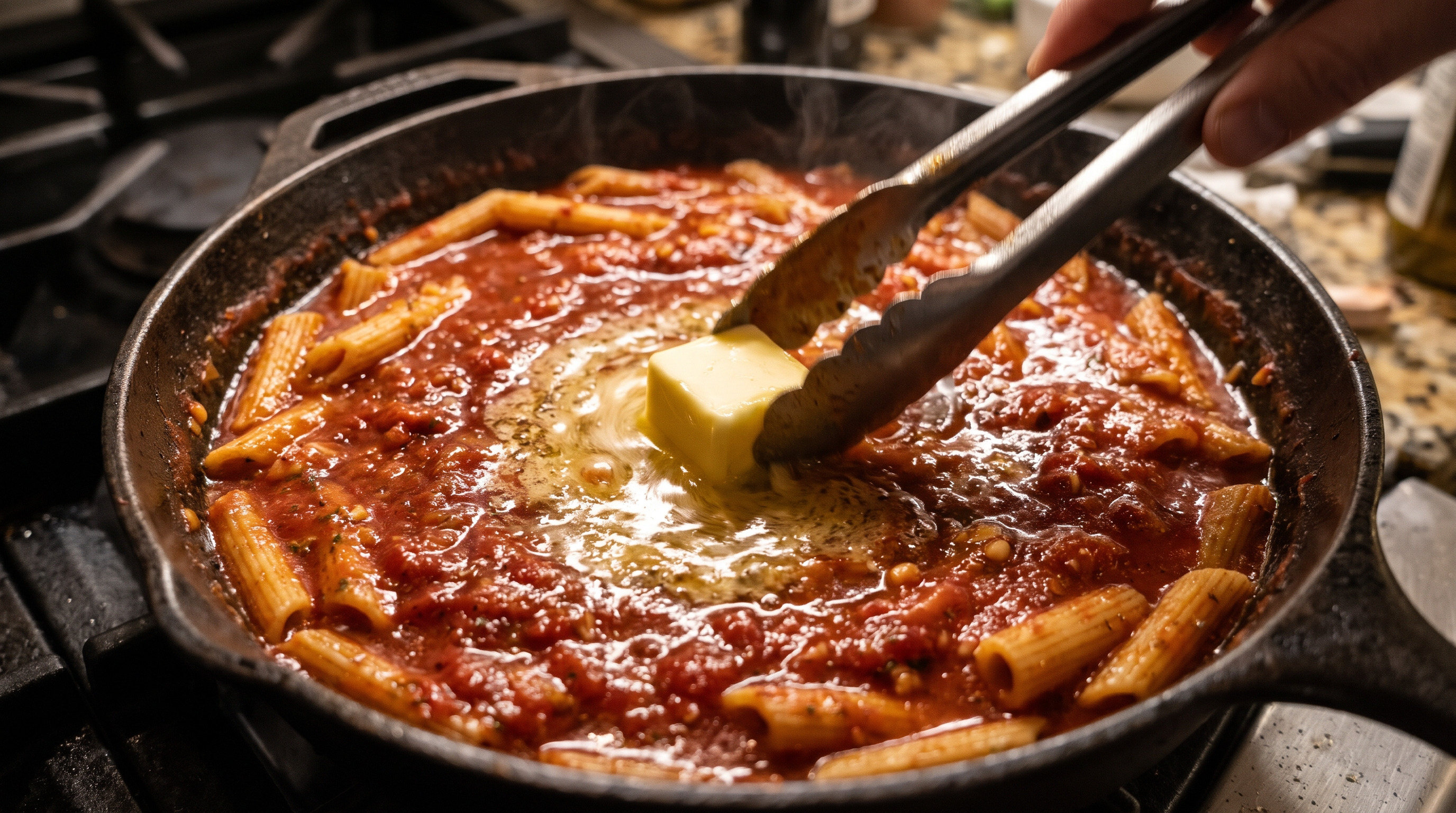
Add the drained al dente spaghetti directly into the bubbling tomato sauce. Pour in the reserved 1/2 cup (100–120ml) of starchy pasta water. Turn the heat to high. Toss and stir the pasta continuously with tongs or flip the skillet vigorously for 60 to 90 seconds. As the starch water evaporates and combines with the olive oil, the liquid will magically transform into a glossy, velvety glaze that hugs every noodle. Turn off the heat. Immediately drop in 1 tablespoon (14g) of cold unsalted butter and 1 tablespoon of fresh extra virgin olive oil. Toss rapidly for 20 seconds to melt the butter. Twirl into deep bowls, garnish with freshly grated Parmigiano-Reggiano and fresh basil leaves, and serve immediately.
4. Pro Chef Tips to Elevate Your Dish
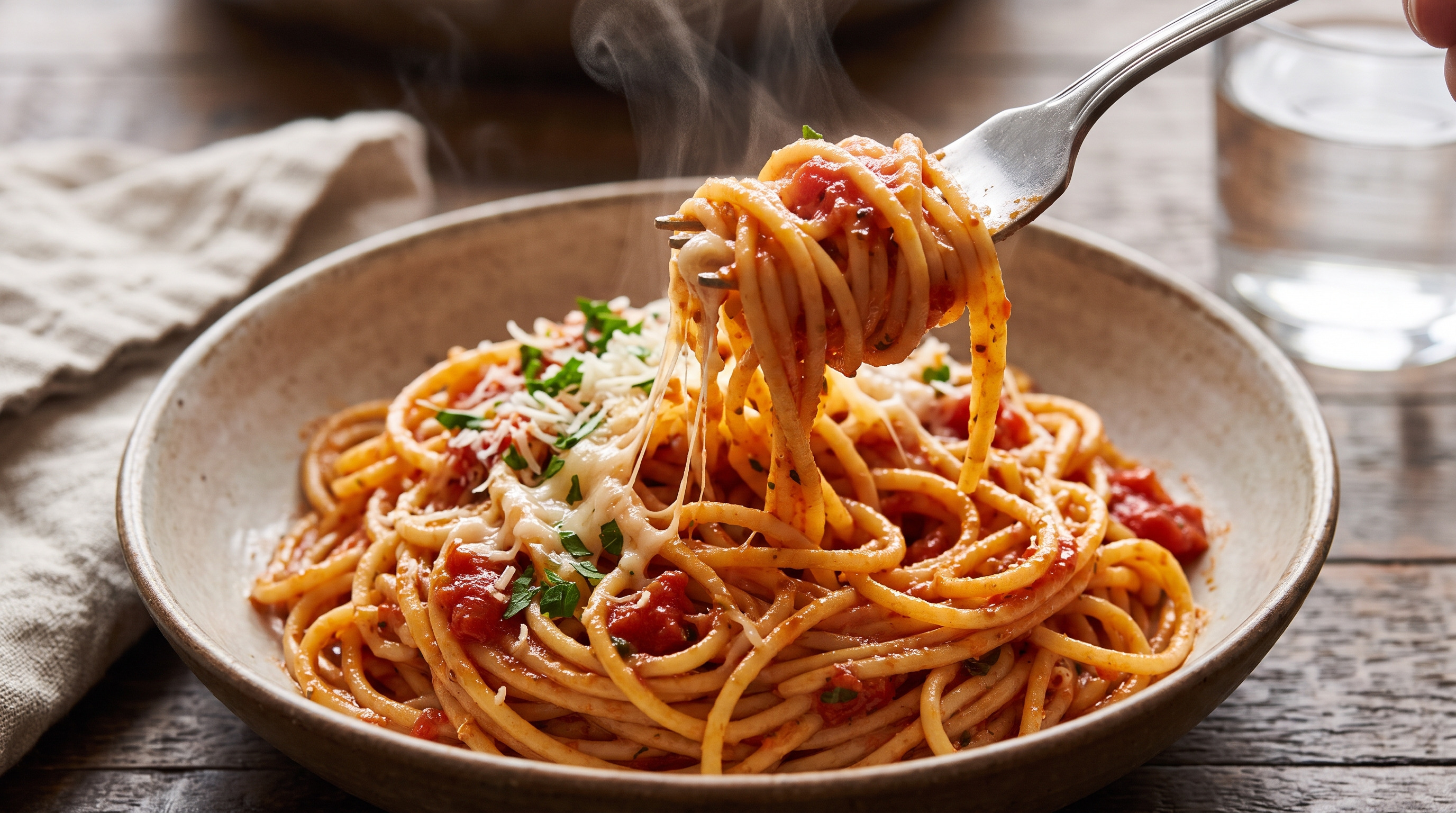
Incorporate these three professional Italian kitchen secrets to ensure your homemade spaghetti rival the best Italian trattorias:
- Never Rinse the Pasta with Cold Water:
Rinsing boiled spaghetti under cold tap water washes away the exterior layer of swollen starch granules and cools the pasta core. Without that microscopic starch coat, hot tomato sauce cannot adhere and will slide off like water on glass. Simply drain well, and let the hot pasta hit the skillet immediately. - The Secret Soy Sauce & Sugar Acidity Fix:
Canned tomatoes often carry a sharp, tinny citric bite. Adding half a tablespoon of dark or regular soy sauce introduces natural fermented glutamates that deepen umami without imparting any soy flavor. A tiny half-teaspoon of sugar rounds off the sharp acid peaks, creating the mellow, sun-ripened flavor of slow-cooked Italian grandma gravy. - Finish with Cold Butter Off the Burner:
In Northern Italian cooking, finishing pasta with a knob of cold butter (burro freddo) off the heat is a standard technique. Cold butter contains suspended milk solids and water-in-fat emulsions that stabilize the sauce, creating a lustrous, silky sheen that stays creamy down to the last bite.
5. Frequently Asked Questions (FAQ)
Q1. My canned tomato sauce tastes overly acidic and sharp. How do I balance it?
Canned tomatoes rely on added citric acid for stability. To neutralize sharpness, thoroughly caramelize your minced yellow onions in olive oil to release natural sugars, add 1/2 tsp of granulated sugar, and always finish off the heat with 1 tablespoon of cold unsalted butter. The dairy fat physically coats taste receptors, toning down perceived acidity.
Q2. Why does my pasta sauce dry up and turn sticky after a few minutes on the plate?
Pasta continues to drink in moisture for several minutes after tossing. If the sauce is already tight and dry in the pan, it will turn sticky and gummy once plated. Always ensure you add 1/2 cup of starchy pasta water during Step 4 so the sauce is slightly loose and glossy in the skillet; it will reach ideal coating consistency as it lands on the plate.
Q3. If I want to add seafood like shrimp or squid, when should I add them so they stay tender?
Seafood toughens and releases excess water if simmered in tomato sauce for several minutes. Flash-sauté shrimp or squid rings in olive oil and garlic in a separate pan for 60 to 90 seconds until 80% cooked, set aside on a plate, and fold them into the pasta during the final 30 seconds of high-heat mantecatura tossing.
6. Serving Suggestions & Conclusion
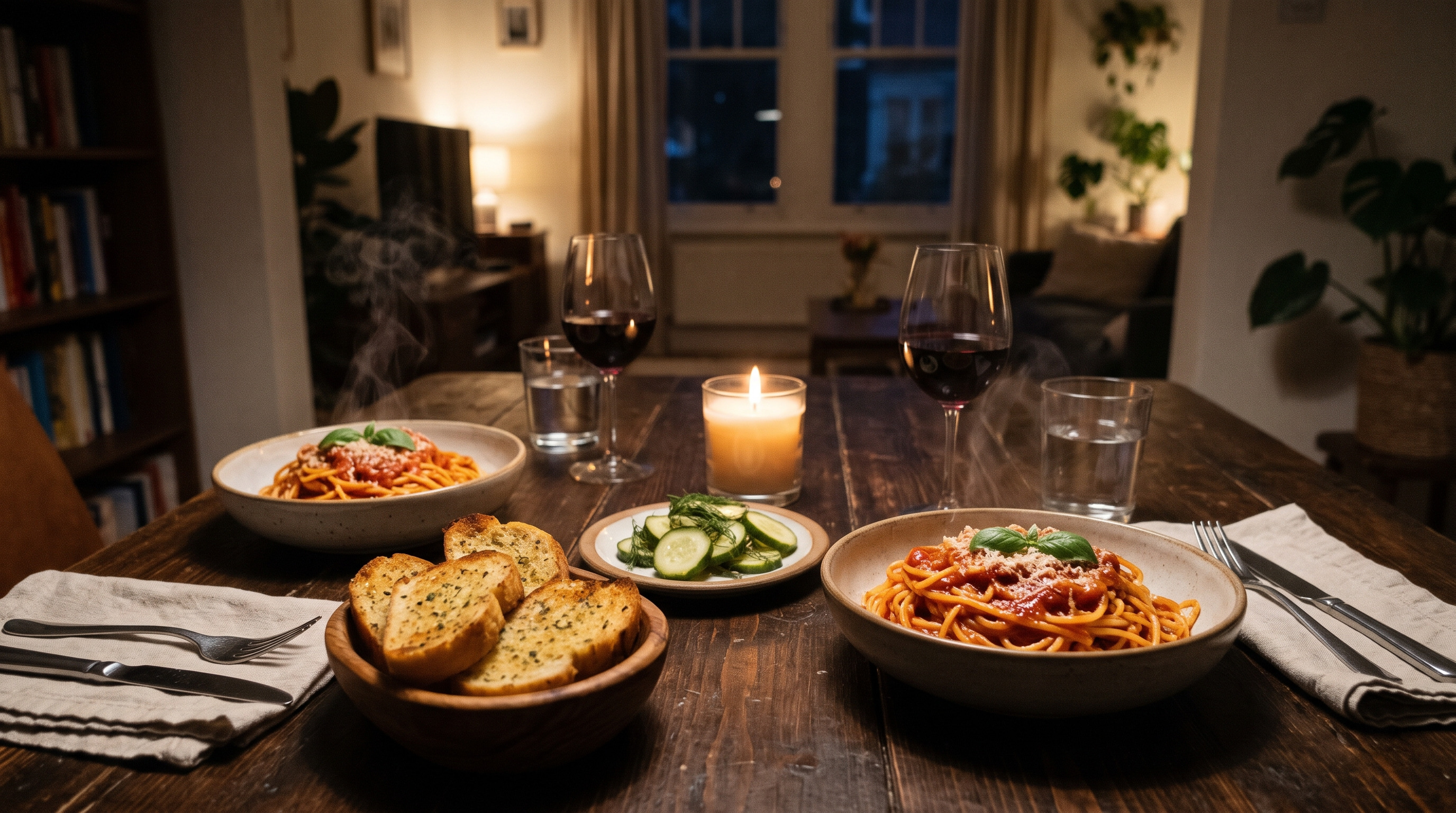
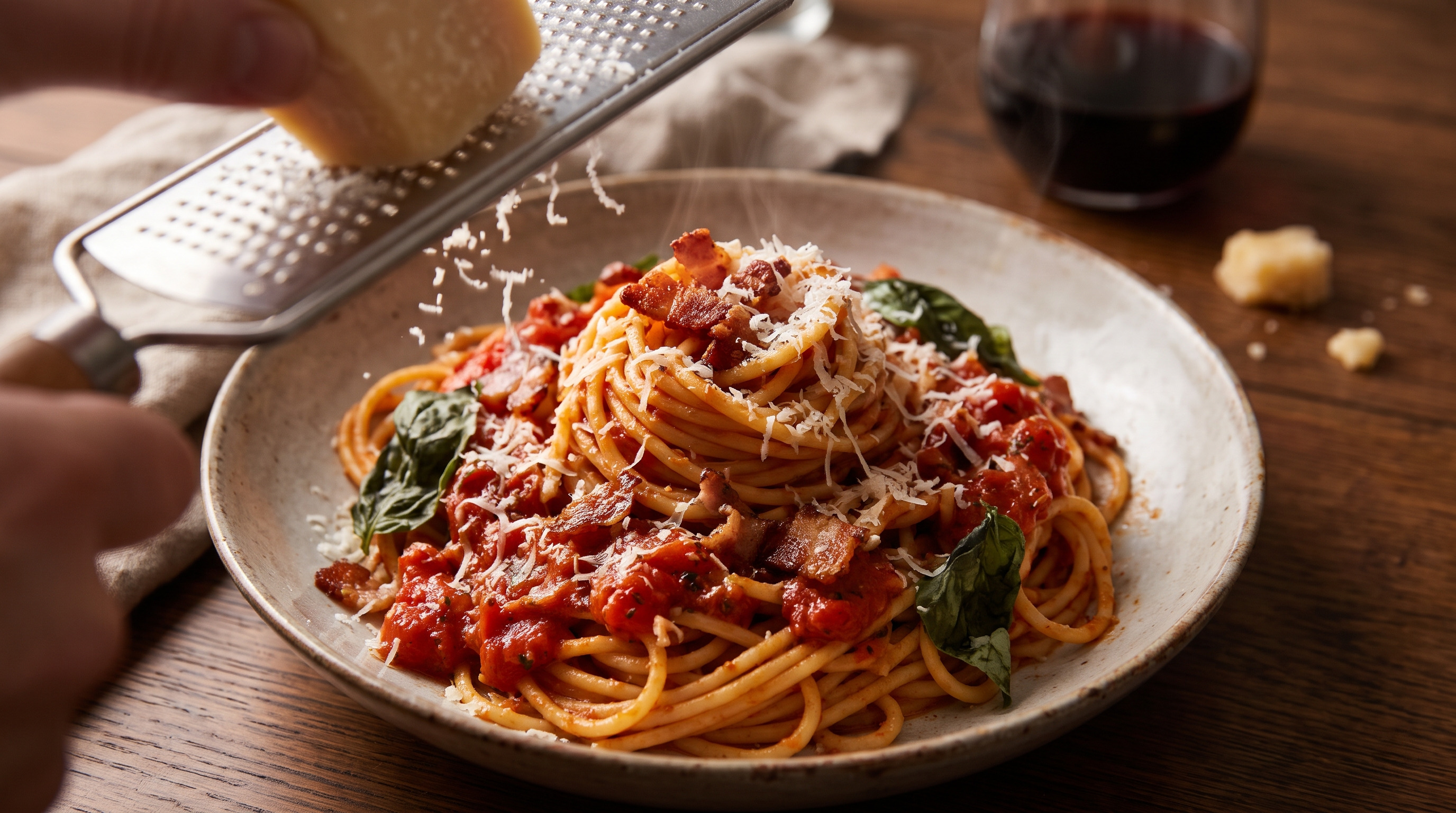
Serve this classic tomato spaghetti piping hot in warm shallow pasta bowls. Accompany with warm, crusty garlic bread or focaccia to mop up the velvety sauce, a crisp arugula and shaved parmesan salad dressed with lemon and olive oil, and a glass of medium-bodied Italian red wine such as Chianti Classico, Barbera, or Sangiovese.
If you enjoy exploring varied European and Asian pasta styles, check out our fragrant Aglio e Olio or pair this with our sizzling Spanish Gambas al Ajillo for a vibrant Mediterranean feast.
By salting your cooking water to 1%, cooking strictly to al dente, and vigorously emulsifying with starchy pasta water and butter, you can transform simple pantry staples into an extraordinary restaurant meal in just 20 minutes. Put a pot of water on to boil and enjoy the timeless delight of authentic homemade pasta tonight!