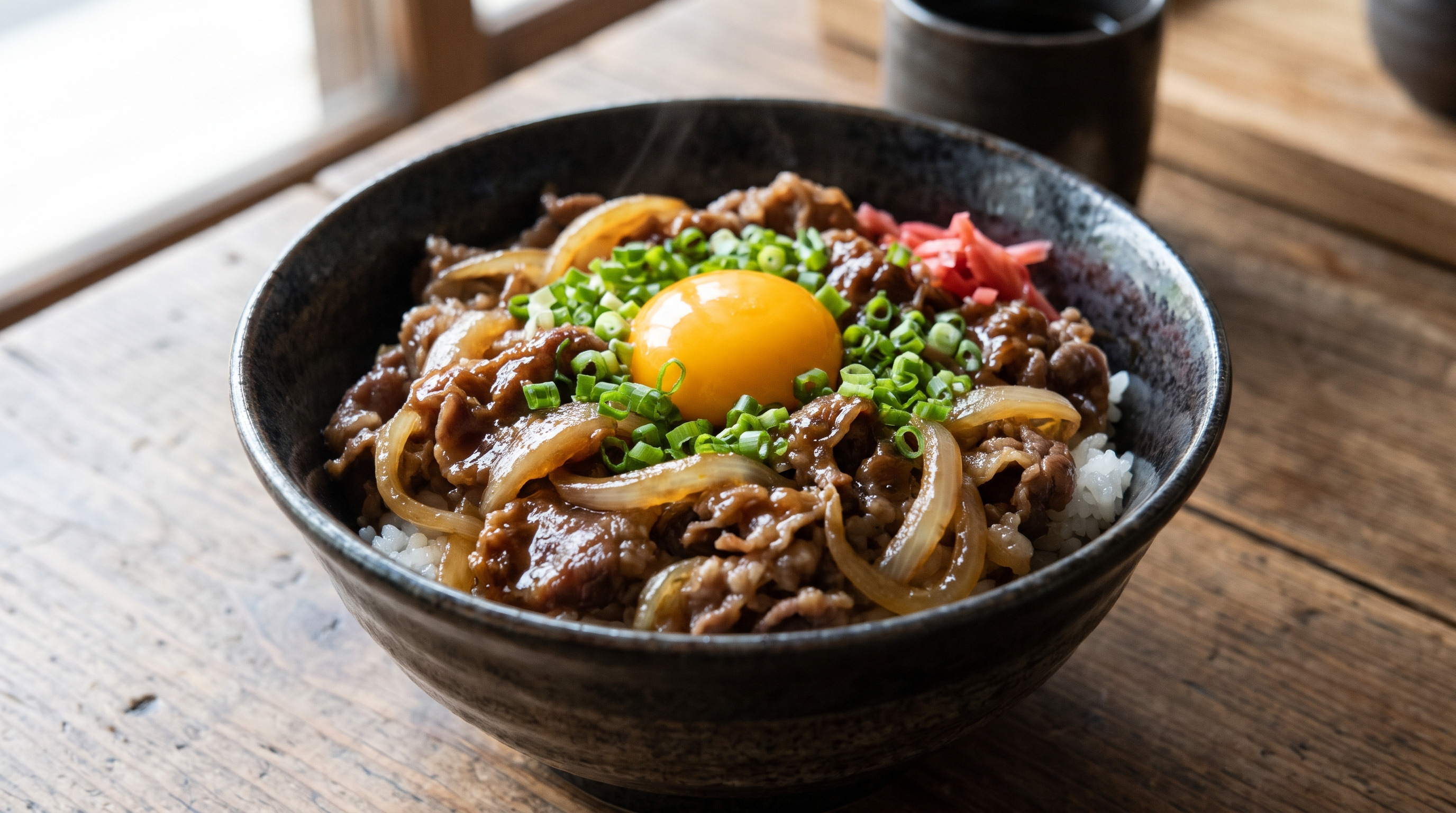
Quick Recipe Snapshot: ⏱️ Prep: 10 mins | 🔥 Cook: 10 mins | 🍽️ Servings: 2 | 💡 Key Secret: Simmer thin beef gently at 80–85°C (shabu-shabu style) for under 2 minutes to prevent toughness + balance tsuyu with dark soy sauce for savory depth + top with fresh egg yolk and beni shoga.
If you have ever wandered through the bustling streets of Tokyo, Kyoto, or Osaka, the comforting savory-sweet aroma of simmering dashi, onions, and succulent beef wafting from neighborhood Yoshinoya, Matsuya, or Sukiya shops is unforgettable. Gyudon (Japanese Beef Rice Bowl) is the ultimate Japanese fast-casual comfort food: tender ribbons of marbled beef and caramelized onions simmered in sweet soy-dashi broth, served atop a steaming mound of pristine short-grain rice.
Yet home versions often fall short of the tender, melt-in-your-mouth magic found in Japan. The beef frequently turns gray, dry, and chewy like boiled rubber, the sauce ends up cloyingly sweet like syrup, or an unappealing greasy film floats over the rice.
Achieving true specialty restaurant-caliber Gyudon requires understanding two core food chemistry mechanisms: low-temperature protein relaxation (shabu-shabu poaching) and alcohol vapor deglazing.
Using pre-shaved beef cuts from your local Asian market (such as H-Mart or Mitsuwa) and basic Japanese pantry seasonings, you can assemble this iconic meal in just 15 minutes.
1. The Culinary Science Behind Restaurant Flavor
The difference between dry, stringy boiled beef and silky, melt-in-your-mouth Gyudon is governed by thermal protein physics and sugar caramelization.
💡 Culinary Science 1: Low-Temperature Protein Relaxation (80–85°C Shabu-Shabu Poaching)
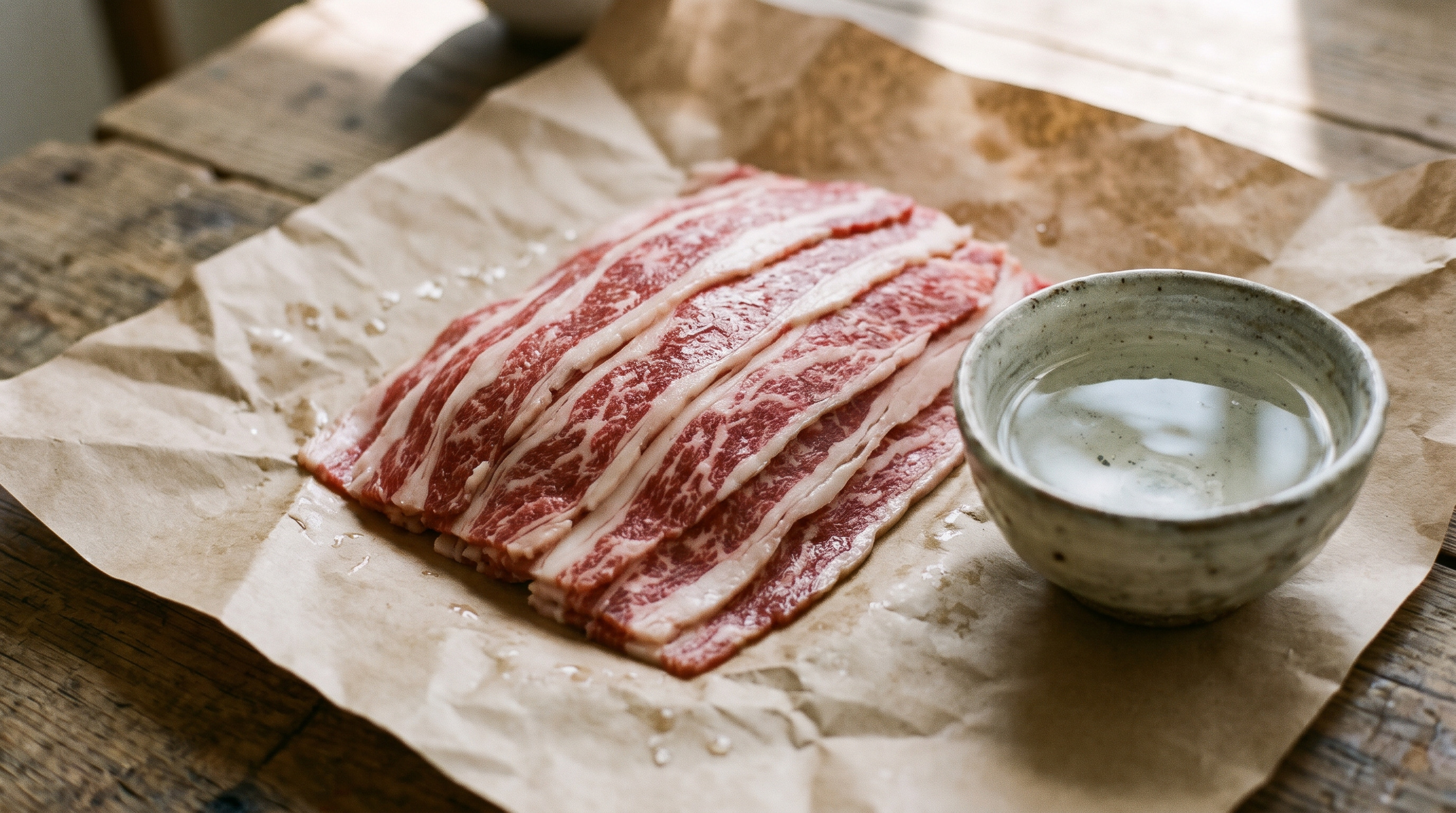
Ultra-thinly sliced beef (approx. 1–1.5mm thick) has a massive surface-area-to-volume ratio. When plunged into violently boiling broth at 100°C (212°F), the myofibrillar proteins (myosin and actin) instantly contract and expel intracellular moisture, leaving the meat dry, dense, and tough. In contrast, by simmering the onions first to establish rich natural sweetness and then reducing heat to medium-low (approx. 80–85°C / 176–185°F), the meat gently poaches in a shabu-shabu motion. The beef relaxes, the delicate intramuscular fat softens into succulent gelatin, and cooking finishes in just 90 to 120 seconds while retaining maximum juiciness.
💡 Culinary Science 2: Alcohol Vapor Deglazing & Allium Sweetness
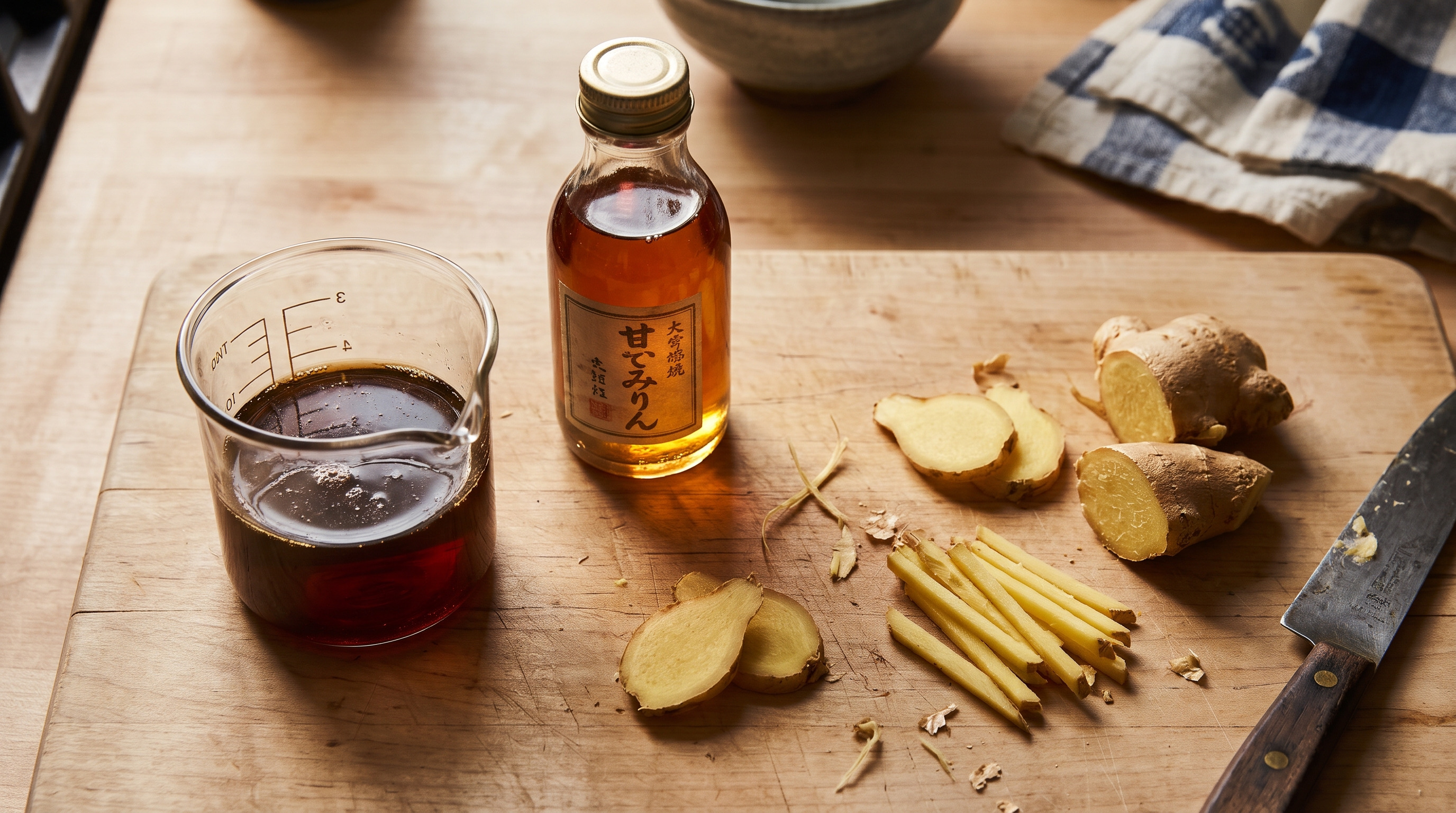
Simmering sake and mirin before adding the beef performs a crucial aromatic function: as ethanol boils at 78°C (172°F), the rising alcohol vapors carry away volatile trimethylamine and gamey lipid odors naturally present in beef fat. Simultaneously, mirin’s complex fermented glucose blends with the natural sulfur compounds in the simmering yellow onions (propyl mercaptan), converting them into mellow, rounded fructose sugars. This natural caramelization provides a clean, elegant sweetness that balances savory soy sauce without cloying heaviness.
2. Essential Ingredients & The Golden Ratio Sauce
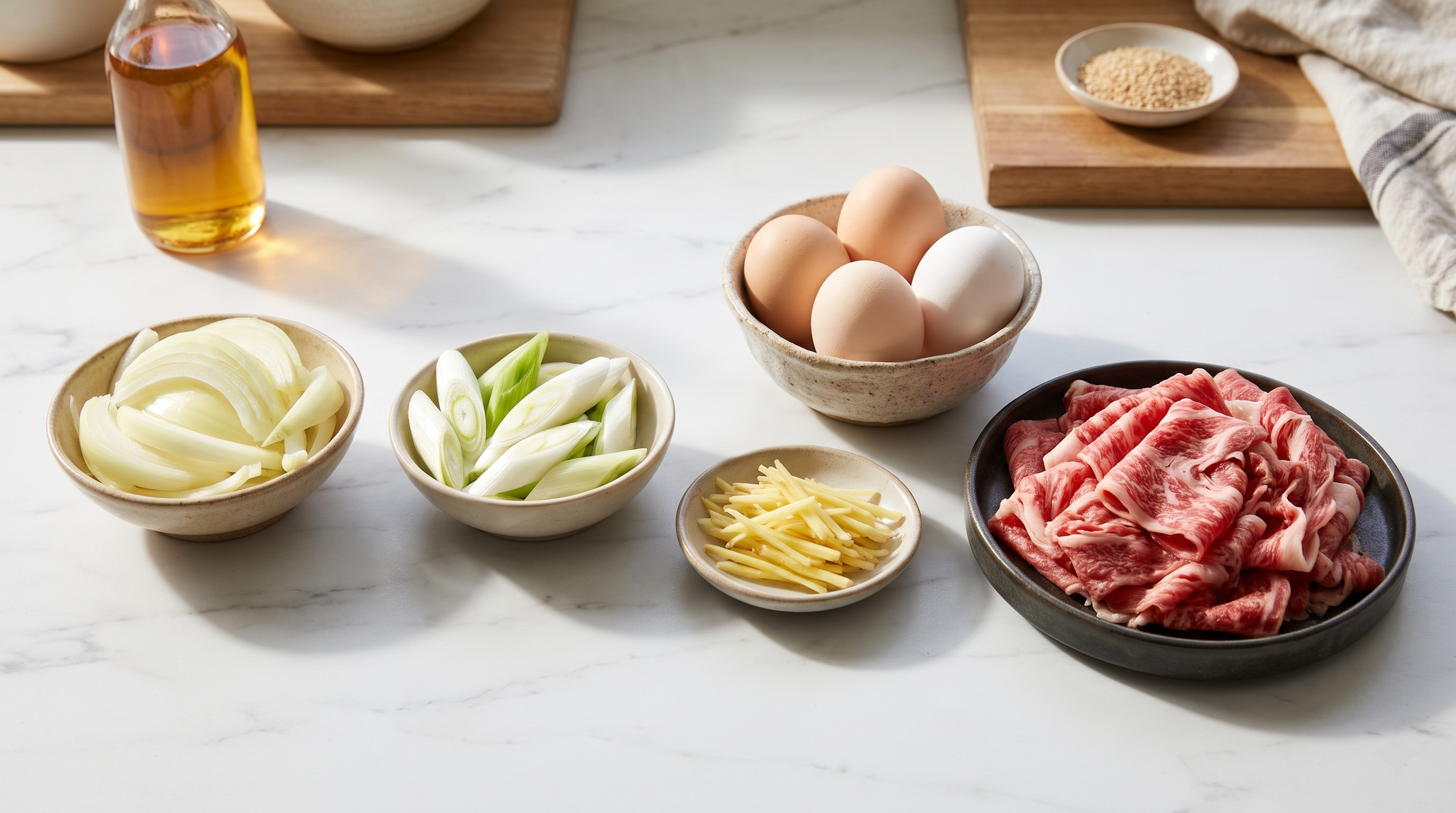
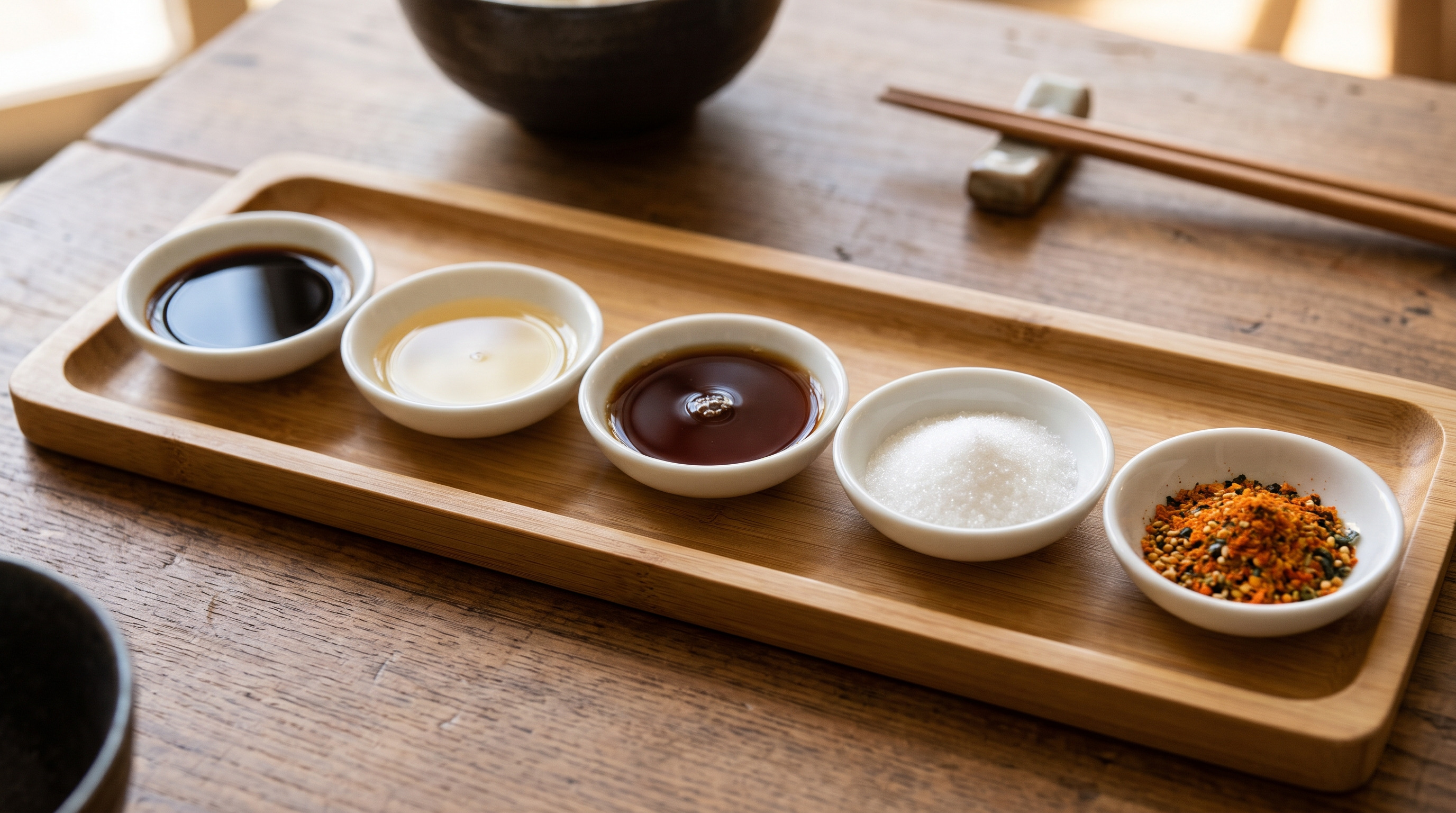
This recipe prepares 2 hearty restaurant-sized bowls. For the meat, look for thinly shaved beef short plate (usamgyeop), brisket (chadolbagi), or shaved ribeye in the refrigerated or frozen Korean/Japanese hot-pot section of Asian grocery stores like H-Mart or Mitsuwa.
| Category | Ingredients & Amounts (Metric & US) | Chef’s Notes & Substitutions |
|---|---|---|
| Thin Beef | 250–300g (8.8–10.6 oz) Thinly Sliced Beef Short Plate or Brisket | Thinly shaved (1–1.5mm) beef with 25–30% fat marbling yields the juiciest bite. Lean beef round or sirloin can be used for a lighter bowl. |
| Sweet Onion | 1 Medium Yellow Onion (approx. 200g / 7 oz) | Slice into 0.5cm (0.2-inch) crescents. Thicker cuts prevent the onion from melting into mush during the simmer. |
| Aromatic Zing | 1/2 Scallion stalk, 3 thin slices Fresh Ginger (10g / 0.35 oz) | Ginger slices remove gamey notes and impart the signature clean, refreshing finish of Tokyo beef bowls. |
| Savory Dashi Base | 3/4 cup (150ml / 5 fl oz) Water or Dashi Stock | Dashi provides umami inosinate nucleotides from smoked bonito flakes that harmonize with beef glutamates. |
| Commercial Tsuyu | 4 tbsp 3x Concentrated Tsuyu (e.g., Kikkoman or Mizkan) | Tsuyu delivers an instant infusion of bonito dashi, mirin, and soy sauce. |
| Soy Umami Booster | 1.5 tbsp Japanese Dark Soy Sauce (Koikuchi Shoyu) | Adding pure dark soy sauce balances the sweetness of tsuyu, giving the broth a rich reddish-brown hue and savory depth. |
| Sweet-Savory Balancers | 3 tbsp Mirin, 2 tbsp Sake, 1 tbsp Granulated Sugar | Mirin adds glaze and gloss, sake neutralizes meat odor, and sugar balances the salinity. |
| Garnish & Topping | 2 Fresh Egg Yolks, 2 tbsp Beni Shoga, Scallions, Shichimi | Beni shoga (red pickled ginger) provides a sharp ginger-vinegar acidity that cuts through rich beef fat. |
3. Step-by-Step Cooking Instructions
Step 1. Slice Aromatics & Prep Beef
Peel the yellow onion and slice it into 0.5cm (0.2-inch) thick wedges. Cut 3 thin coins from a knob of fresh ginger. Finely slice the green top of the scallion for garnish, and cut the white base into 3cm lengths for the broth. Lay the thinly shaved beef slices on a plate lined with paper towels, gently dabbing the surface to remove any excess blood.
Step 2. Simmer Golden Tsuyu Broth & Soften Onions
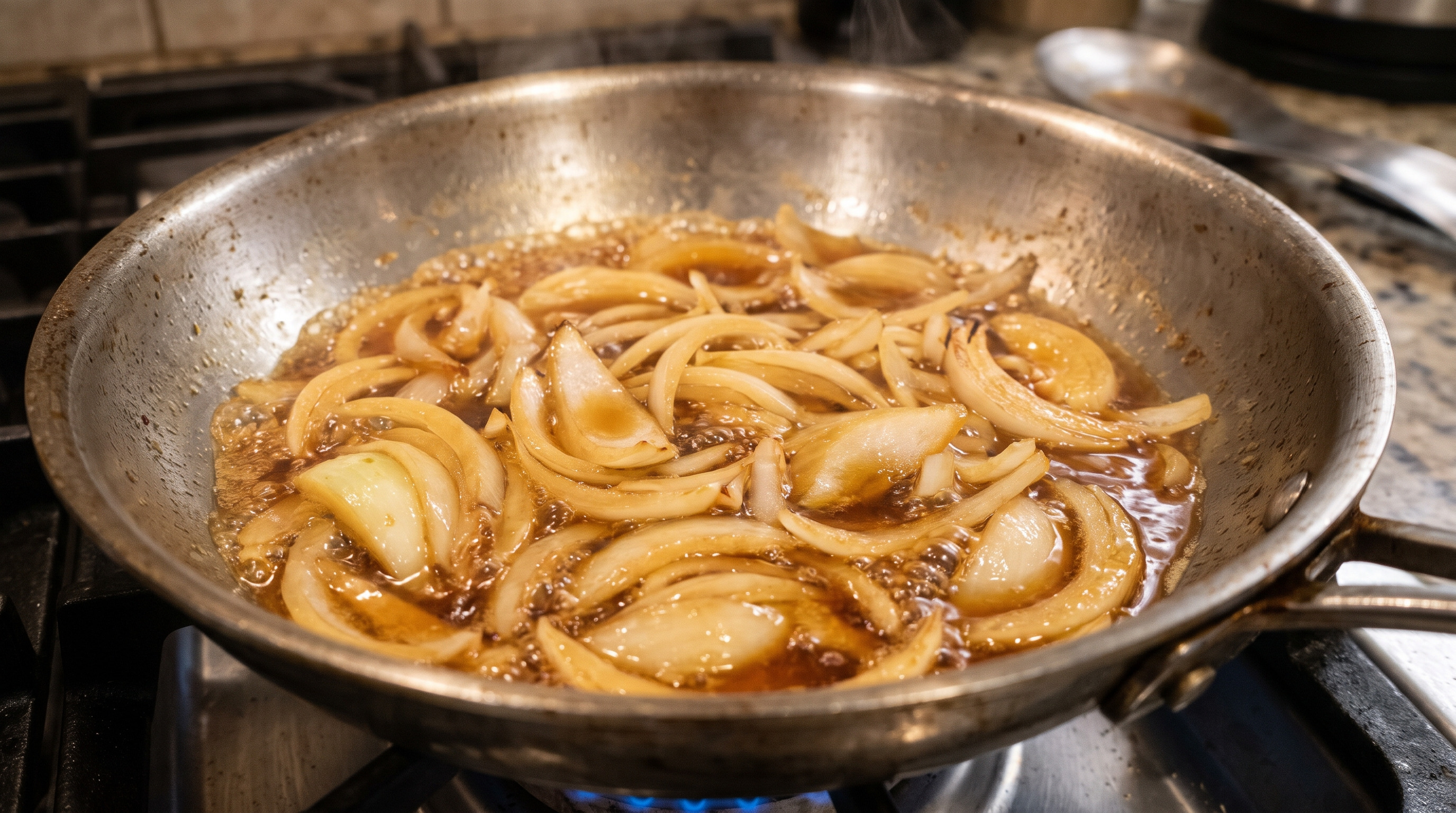
In a wide, shallow skillet or sauté pan, combine 3/4 cup (150ml) water or dashi, 4 tbsp tsuyu, 1.5 tbsp dark soy sauce, 3 tbsp mirin, 2 tbsp sake, 1 tbsp sugar, the ginger coins, and the scallion white pieces. Place over medium-high heat and bring to a rolling boil. Add the sliced yellow onions, spreading them evenly. Reduce heat to medium, cover with a lid, and simmer for 3 to 4 minutes until the onions become translucent, soft, and sweet.
Step 3. Shabu-Shabu Poach Beef & Skim Broth
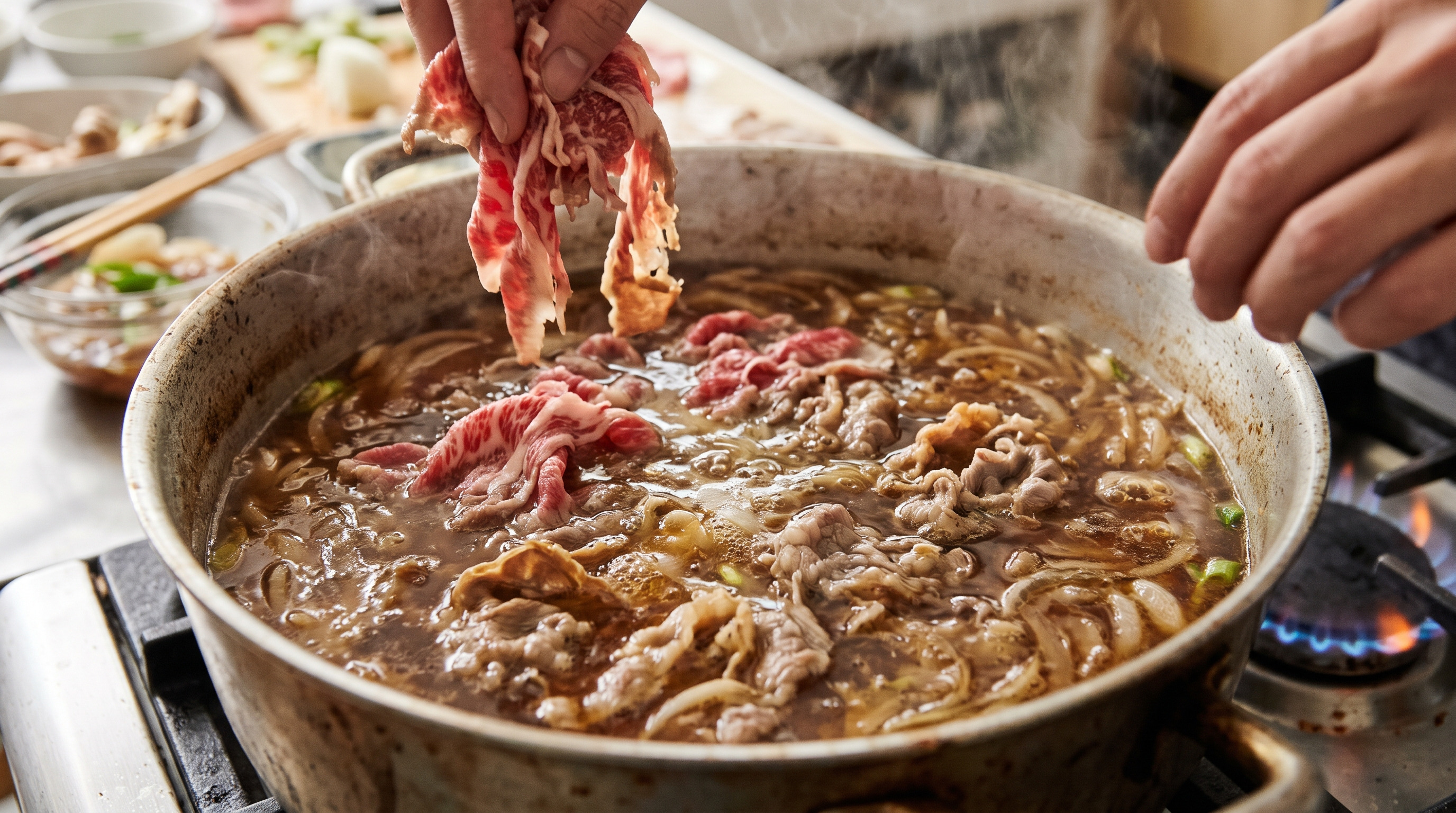
Remove the lid and turn the heat down to medium-low. Add the thinly sliced beef into the simmering liquid piece by piece, gently using chopsticks to unfold and separate the ribbons so they cook evenly. Allow the beef to gently poach for 1.5 to 2 minutes. As soon as the red meat color transitions to a warm cooked taupe, immediately turn the heat to low. Use a fine-mesh skimmer or spoon to remove any grayish protein foam and excess floating oil from the surface. Remove and discard the ginger coins.
Step 4. Assemble Over Steamed Rice & Crown with Toppings
Scoop hot, freshly steamed short-grain white rice into two deep donburi bowls. Spoon 2 to 3 tablespoons of hot, seasoned onion broth directly over the rice bed to infuse each grain with flavor. Using tongs or chopsticks, mound generous portions of the tender beef and sweet caramelized onions over the rice. Make a small indentation in the center of the meat and nestle a rich raw egg yolk (or warm onsen egg). Garnish with a vibrant cluster of red pickled ginger (beni shoga), finely sliced green scallions, and a dusting of shichimi togarashi. Serve piping hot.
4. Pro Chef Tips to Elevate Your Dish
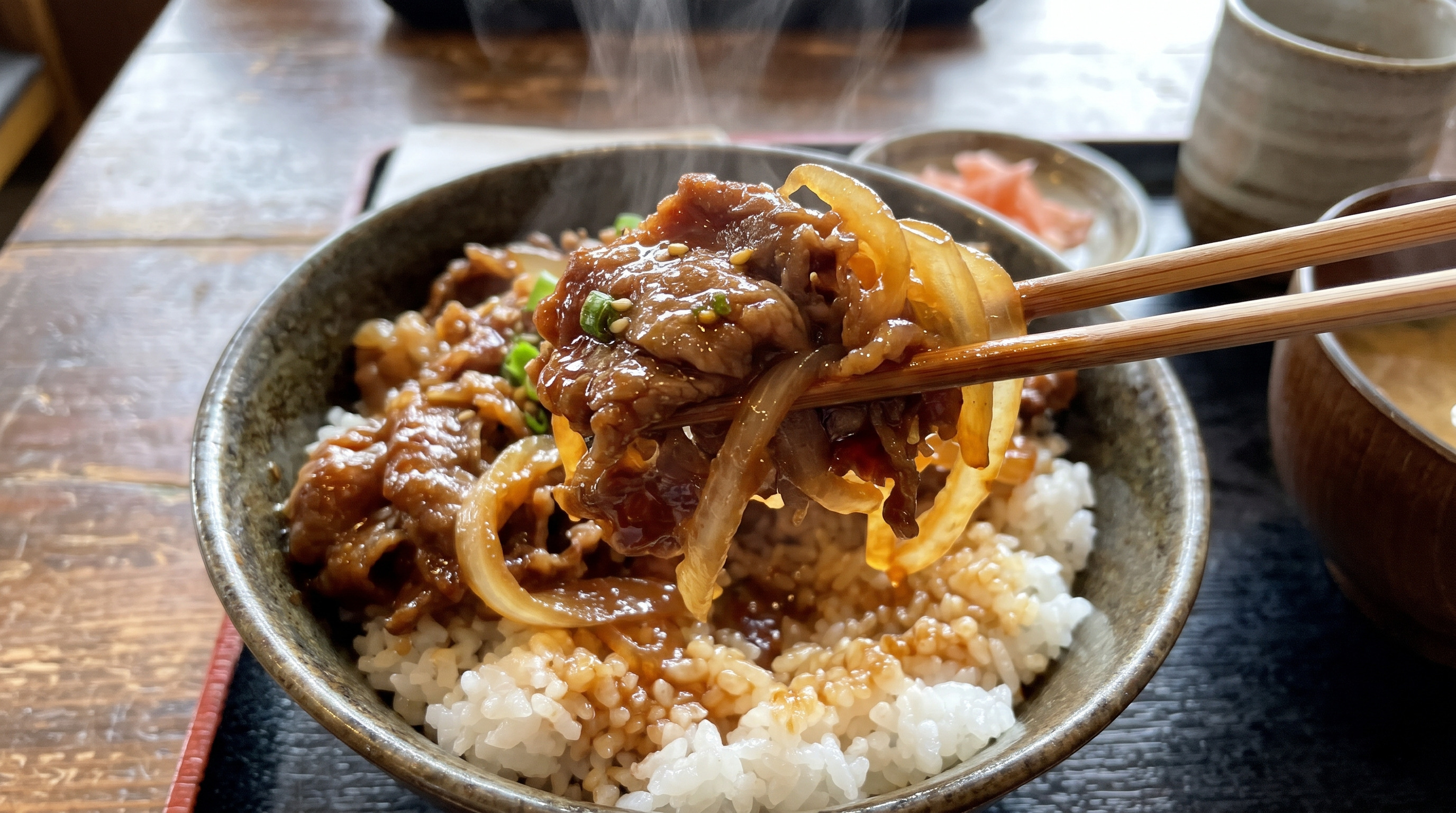
Incorporate these three expert techniques from Tokyo donburi masters to take your homemade Gyudon to the next level:
- The Fresh Ginger Coin Secret:
While many home recipes use minced ginger or powder, tossing in 2 to 3 whole, thin coins of fresh ginger during the onion simmer is far superior. It gently infuses essential zingy gingerols into the broth to cleanse beef fat without muddying the sauce with spicy fibrous bits. Simply fish the coins out before plating. - Mastering Homemade Onsen Tamago (Hot Spring Egg):
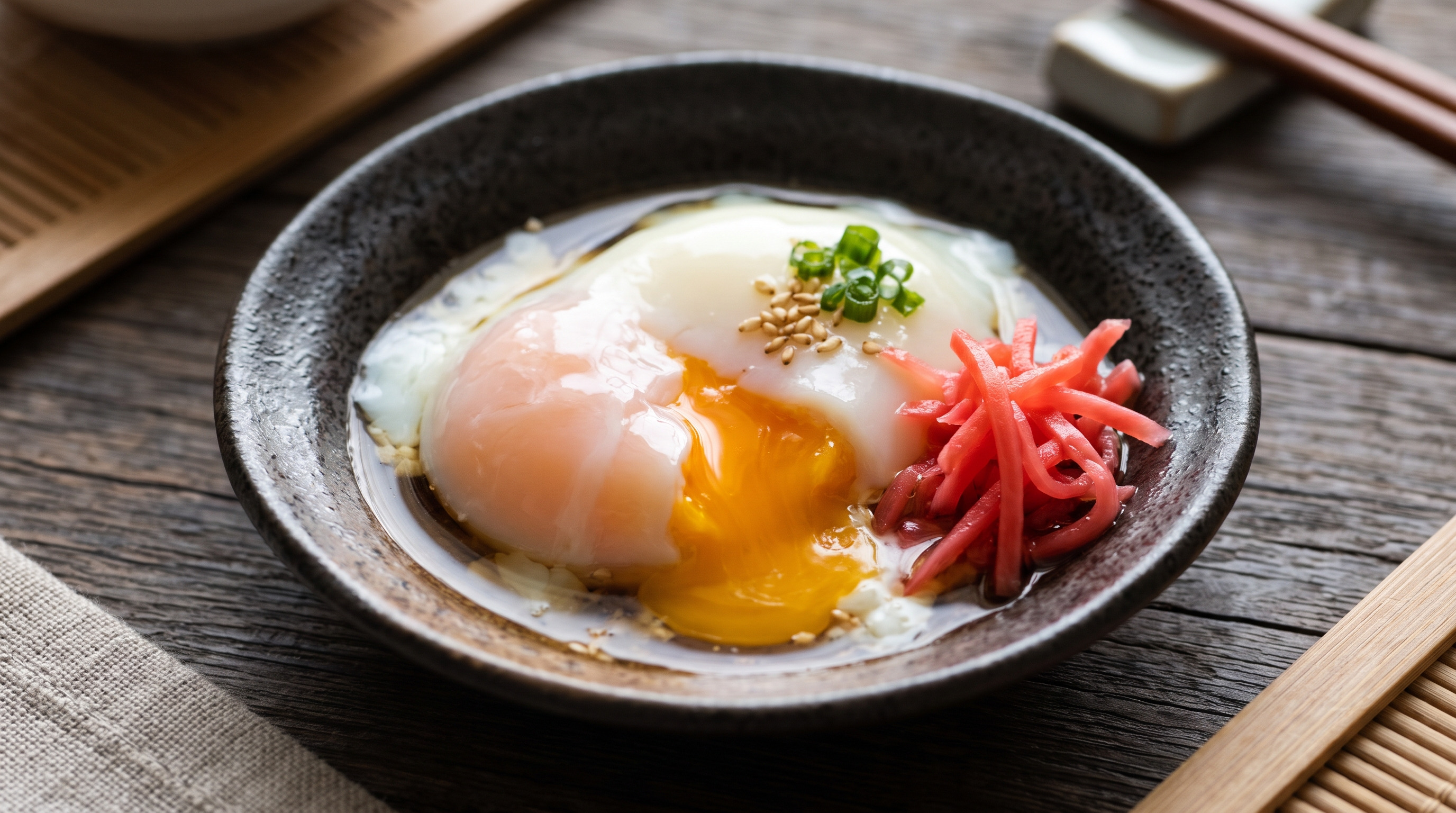
If raw egg yolk isn’t your preference, top your Gyudon with a silky onsen egg. Bring 1,000ml (4 cups) of water to a boil in a small pot, turn off the heat, stir in 200ml (approx. 3/4 cup) of cold tap water to drop temperature to 75°C (167°F), gently lower in 2 cold eggs, cover with a lid, and let sit for 13 to 14 minutes. Crack open to reveal pudding-soft whites and a jammy, custard-like yolk! - Beef Cut Selection (Short Plate vs. Ribeye):
For authentic Yoshinoya-style indulgence, thinly sliced beef short plate (usamgyeop / plate beef) provides the exact 70/30 meat-to-fat balance required for melt-in-your-mouth tenderness. For a leaner weeknight meal, thinly sliced chuck roll, ribeye, or top sirloin (shabu-shabu cut) delivers rich beefiness with less calories.
5. Frequently Asked Questions (FAQ)
Q1. Can I make this if I do not have bottled tsuyu sauce?
Yes! Combine 3 tbsp Japanese dark soy sauce, 3/4 cup (150ml) water, 3 tbsp mirin, 1.5 tbsp sugar, and 1/2 tsp Hondashi (instant bonito dashi powder). This scratch-made blend delivers the exact umami depth and sweetness found in commercial concentrated tsuyu.
Q2. Shouldn’t I boil the beef longer so it absorbs more seasoning?
Never boil thinly sliced beef for an extended time. Thin ribbons of beef will rapidly lose all intracellular juices, shrinking into rubbery, chewy meat within minutes. Gently poaching the meat for just 1.5 to 2 minutes at 80–85°C keeps the muscle fibers tender, while the savory broth coats the surface generously.
Q3. Should Gyudon be mixed thoroughly like Korean bibimbap, or eaten scooped?
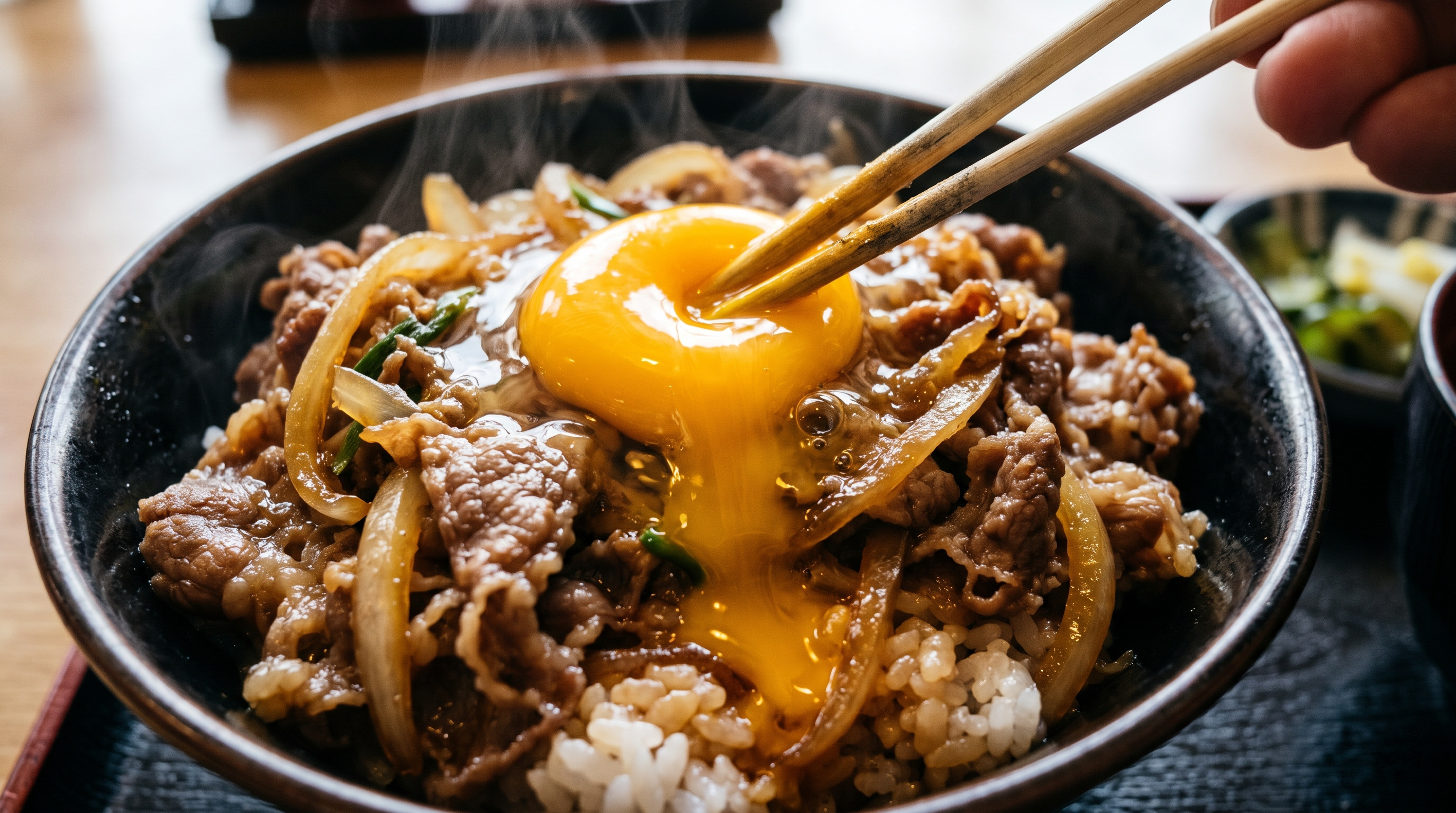
Gyudon is traditionally eaten by scooping rather than mixing. Pierce the egg yolk so it cascades over the beef, and use your chopsticks or spoon to take a scoop of rice together with beef, onion, and a sliver of red ginger. This preserves the fluffy texture of the rice grains and allows you to enjoy the contrasting savory, sweet, and tangy elements in every bite.
6. Serving Suggestions & Conclusion
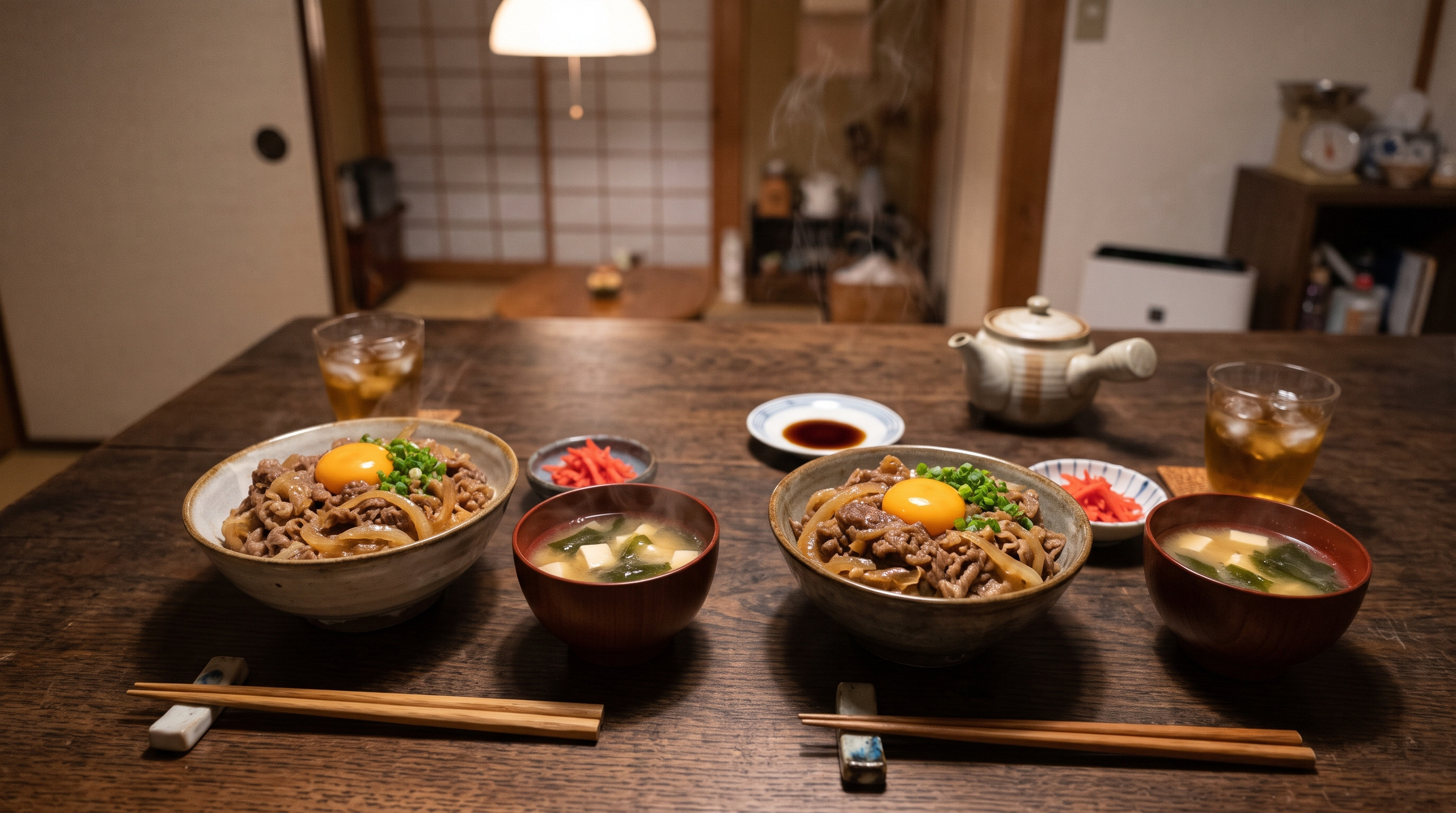
Gyudon is an all-in-one comfort meal that needs very little accompaniment. Pair it with a steaming bowl of classic wakame and tofu miso soup, Japanese pickled cucumber (kyuri asazuke), and a cup of warm green tea or cold Asahi beer.
If you love exploring Japanese and Asian comfort bowls, be sure to try our crispy Homemade Katsudon (Pork Cutlet Bowl) or fresh Sake Don (Salmon Rice Bowl). For Korean beef lovers, our sweet-savory Korean Beef Bulgogi offers a delightful complementary flavor profile.
With a 15-minute cooking time, accessible ingredients, and foolproof shabu-shabu poaching science, this authentic Japanese Beef Gyudon recipe will quickly become your go-to weeknight dinner hero. Grab your skillet, steam some rice, and enjoy a piping hot taste of Tokyo tonight!