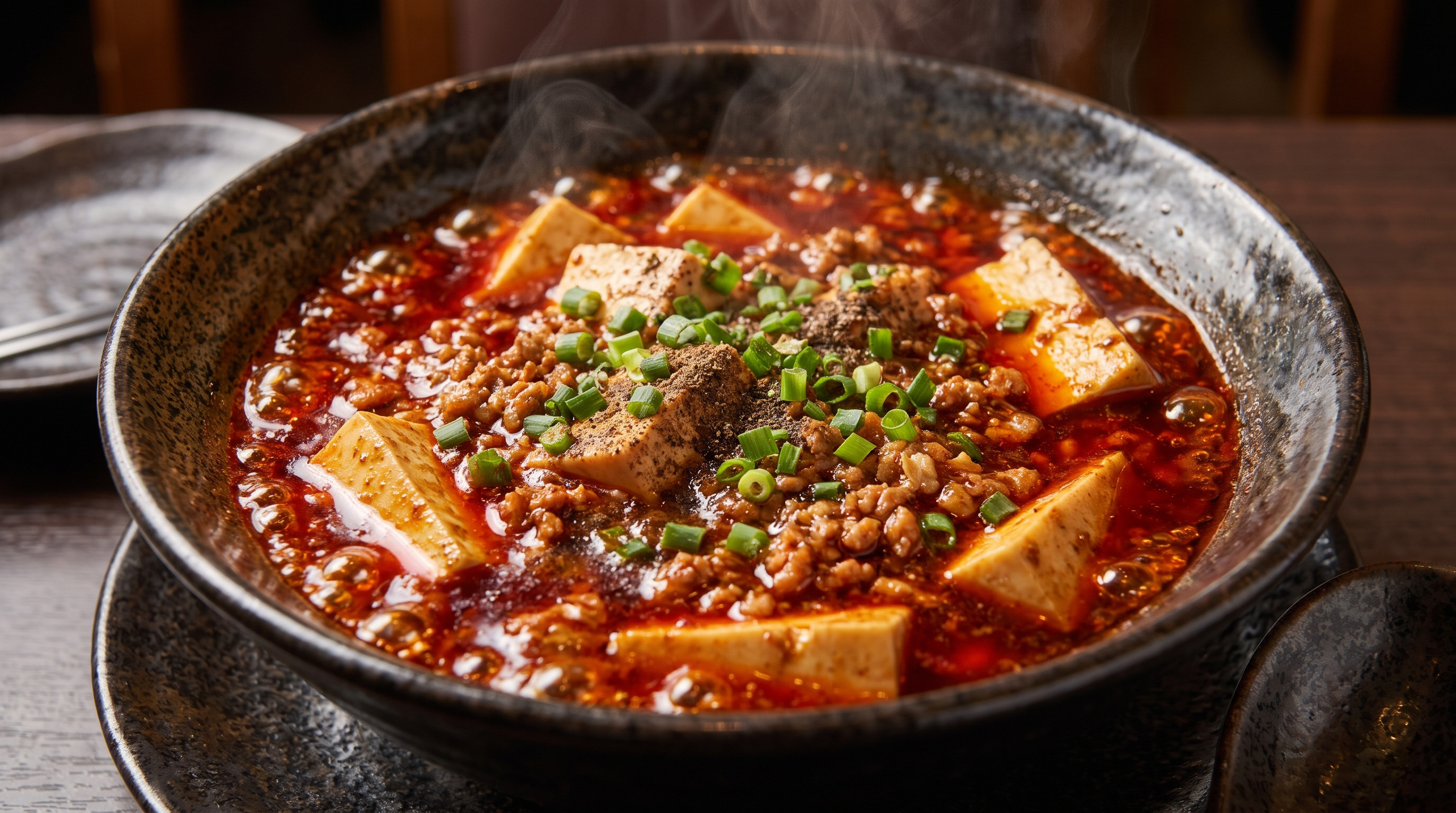
Quick Recipe Snapshot: ⏱️ Prep: 10 mins | 🔥 Cook: 15 mins | 🍽️ Servings: 2–3 | 💡 Key Secret: 1-minute salt blanching tightens tofu proteins + blooming Doubanjiang in rendered pork fat + 3-stage starch slurry thickening.
Silky, tender cubes of tofu coated in a fiery, glossy red chili sauce with savory minced pork—Mapo Tofu (麻婆豆腐) is arguably the most famous dish to ever emerge from China’s Sichuan province. Ladled generously over a steaming bowl of fluffy white jasmine rice, each bite melts effortlessly on the tongue, unleashing a wave of deep umami, fermented bean sweetness, and tingling chili warmth.
Yet, cooking Mapo Tofu at home often leads to frustrating culinary mishaps. Many home cooks find that their delicate tofu breaks into an unsightly, scrambled mush inside the pan. Others end up with a greasy, separated sauce that tastes flat and salty, or a cornstarch slurry that turns into rubbery clumps rather than a velvety, restaurant-grade sheen.
The secret behind Chinatown restaurant excellence has little to do with commercial blowtorch burners. It rests upon three foundational food science principles: osmotic salt-blanching that firms the bean curd’s exterior without sacrificing internal moisture, lipid-soluble flavor extraction that blooms spicy capsaicin in rendered animal fats, and controlled starch gelatinization that preserves a silk-smooth glaze from the first spoonful to the last.
Master these three simple techniques, and you will produce a stunning, restaurant-worthy Mapo Tofu on your home stovetop in just 15 minutes. Here is the foolproof science and golden-ratio recipe.
1. The Culinary Science Behind Restaurant-Grade Mapo Tofu
To prevent your tofu from disintegrating into baby food while locking in intense Sichuan flavors, professional Chinese chefs rely on two indispensable culinary science steps:
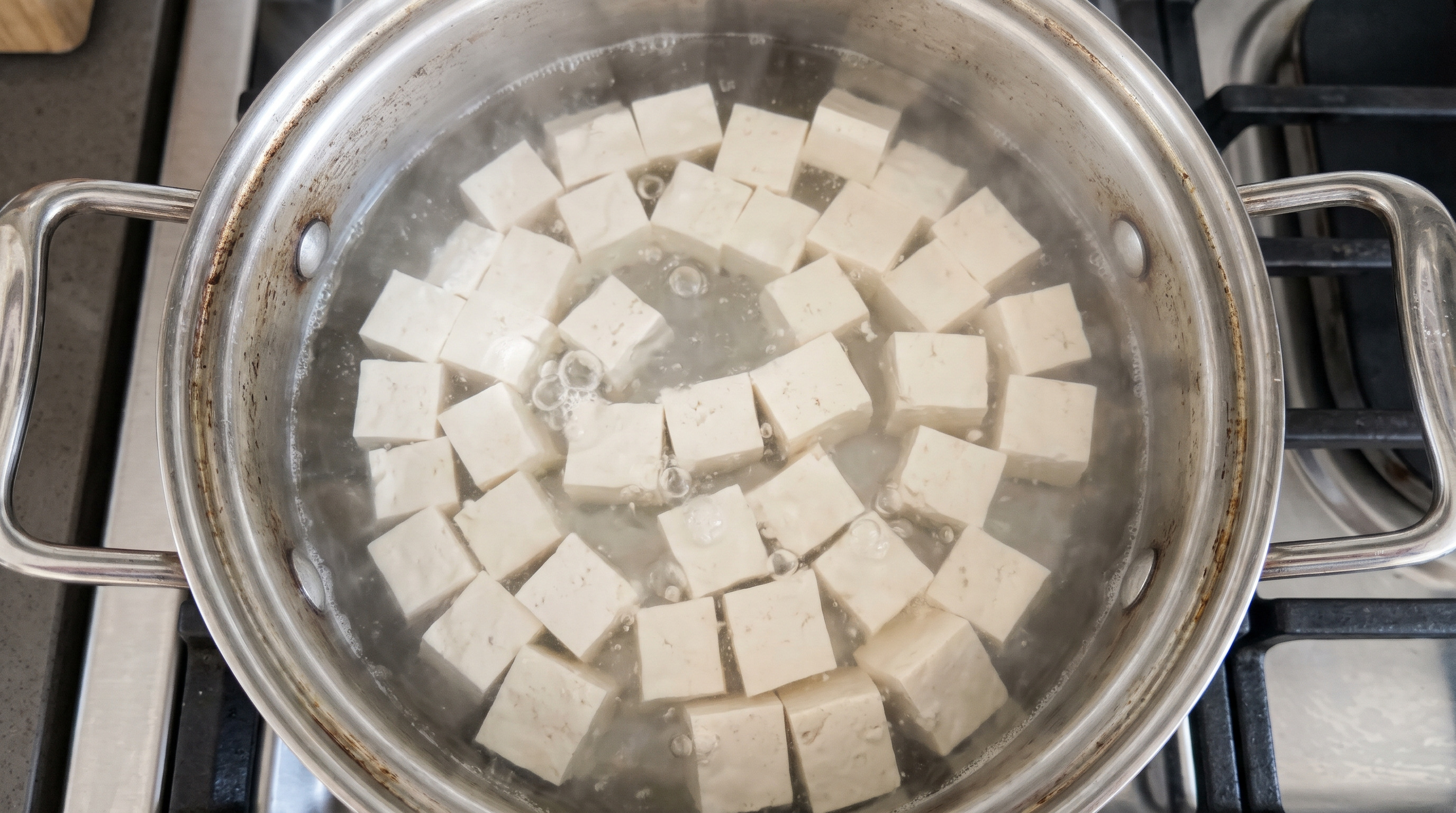
💡 Culinary Science 1: Osmotic Protein Tightening via 1-Minute Salt Blanching Fresh tofu is roughly 85% water trapped inside a delicate network of soy protein curds. When raw tofu hits a hot stir-fry pan, that internal water rapidly expands and leaks, causing the protein structure to fracture under the weight of your spatula. By simmering diced tofu in salted boiling water for exactly 60 seconds, osmotic pressure draws out excess free moisture while thermal heat gently coagulates the surface proteins. The result is a resilient outer skin that withstands vigorous wok tossing while locking in a velvety, custard-like core.
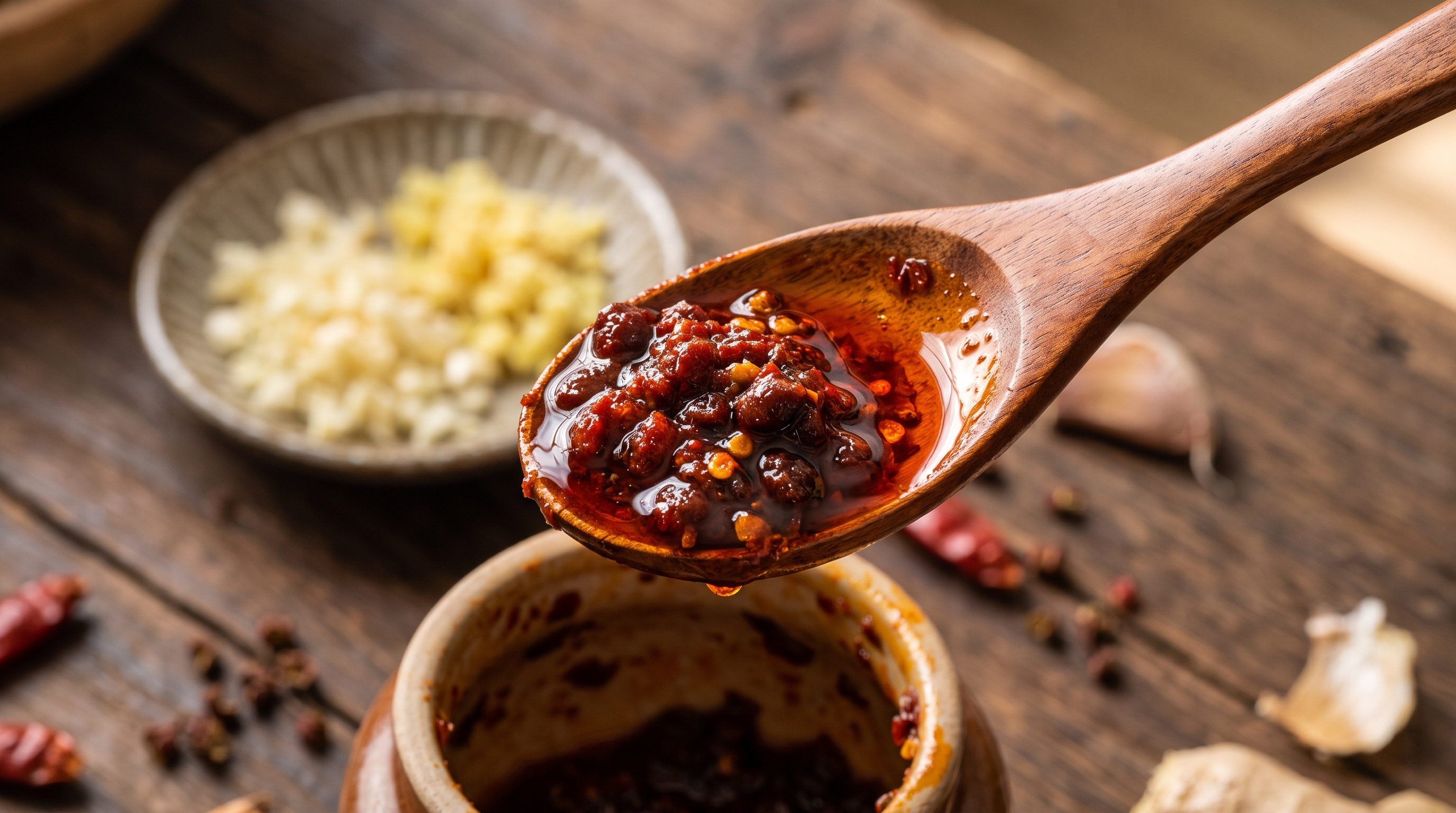
💡 Culinary Science 2: Lipid-Soluble Flavor Bloom in Rendered Pork Fat Capsaicin (the spicy compound in chilies) and the complex fermented esters in Doubanjiang are strictly fat-soluble (lipophilic). If you simply dissolve Doubanjiang into water or stock, the flavors remain harsh, sharp, and disjointed. Searing the minced pork first renders out savory pork lard; blooming the fermented bean paste and chili flakes directly in this hot fat dissolves the flavor compounds into the oil, producing that radiant crimson luster and rich restaurant aroma.
2. Essential Ingredients & The Golden Ratio Sauce
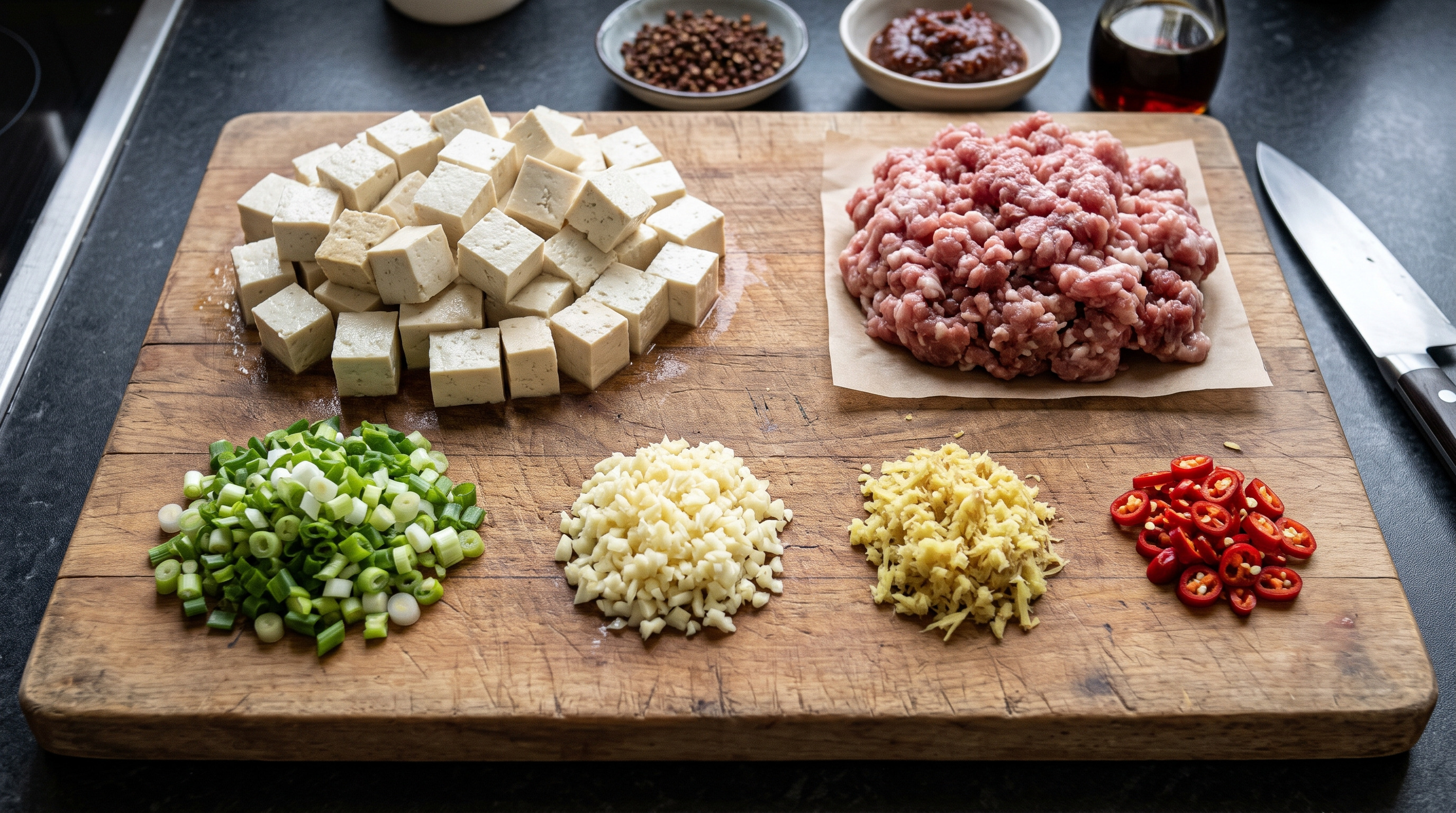
The magic of Mapo Tofu lies in the synergy between fermented chili broad bean paste (Doubanjiang), savory oyster sauce, and sweet aromatic garlic-ginger oil.
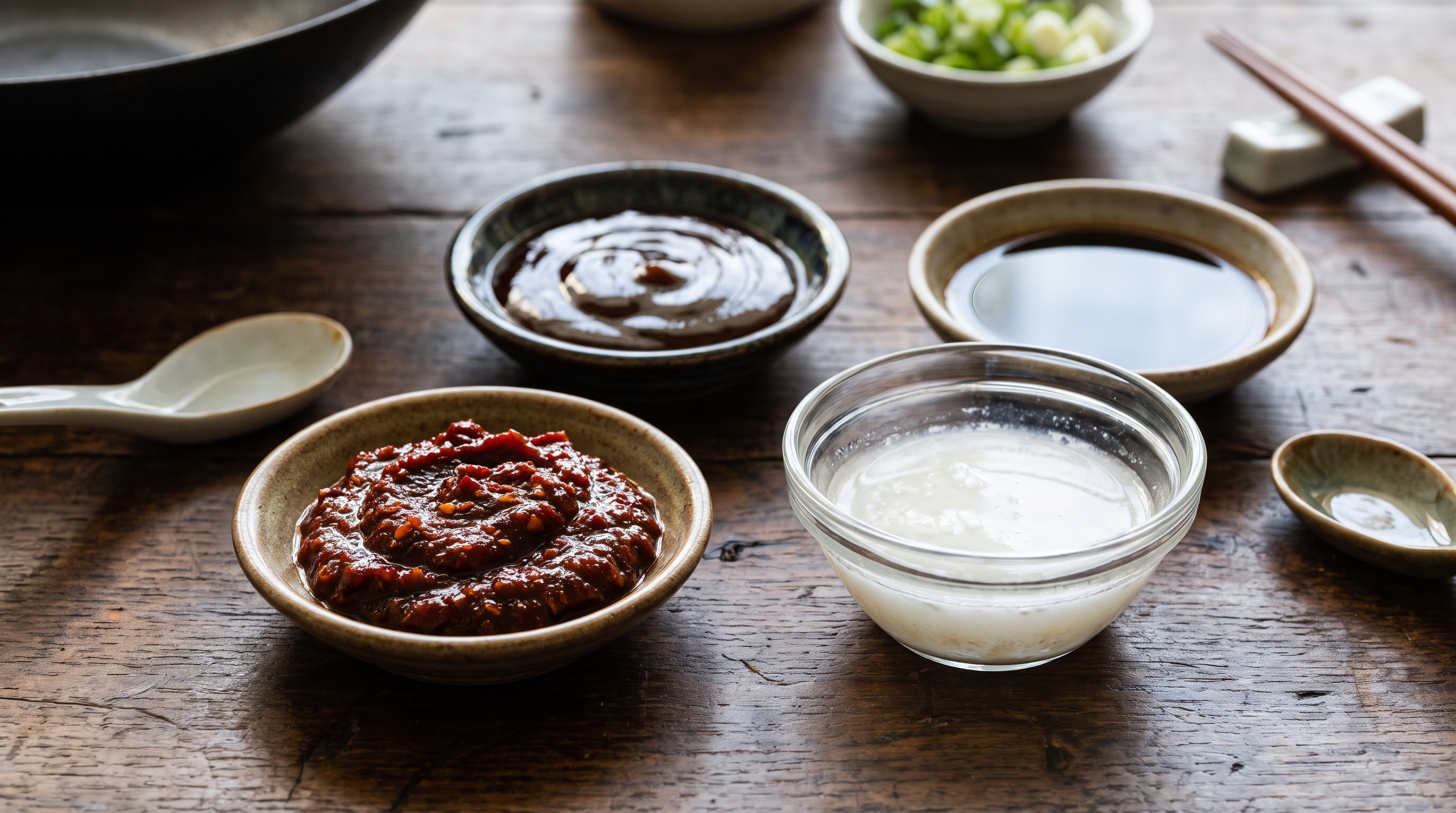
| Category | Ingredients & Amounts (Metric & US) | Chef’s Notes & Substitutions |
|---|---|---|
| Primary Protein | • Tofu (Medium-Firm or Soft): 350g–400g / 12–14 oz • Ground Pork: 150g / 5.3 oz | Opt for Korean stew tofu or Chinese medium-firm tofu. Ground pork shoulder (80/20 lean-to-fat) renders rich, flavorful lard. |
| Aromatic Base | • Scallion (Green Onion): 1 large stalk • Minced Garlic: 1 tbsp (3–4 cloves) • Minced Ginger: 1/3 tbsp / 1 tsp | Use the white bottom parts of the scallion for frying the aromatic oil; reserve the green tops for a fresh garnish. Fresh ginger cuts pork gaminess. |
| Spicy & Color | • Korean Gochugaru or Sichuan Chili Flakes: 1 tbsp • Fresh Red & Green Chilies: 1 each, sliced | Fine chili flakes infuse the oil with rich red color. Fresh chilies add bright visual contrast and crisp crunch. |
| Searing & Deglazing | • Neutral Cooking Oil: 3 tbsp • Shaoxing Wine (or Mirin): 1 tbsp • Black Pepper: 1/4 tsp | Peanut, canola, or soybean oil works best. Deglazing the browned pork with Shaoxing wine dissolves delicious caramelized fond. |
| Broth Base | • Water or Chicken Stock: 250ml–300ml / 1 to 1 1/4 cups • Chicken Bouillon Powder (optional): 1/2 tbsp | Low-sodium chicken stock or chicken powder replicates the slow-simmered poultry broth used in professional banquet kitchens. |
| Golden Ratio Sauce | • Pixian Doubanjiang: 2 tbsp • Oyster Sauce: 1 tbsp • Soy Sauce: 1/2 tbsp • Sugar: 0.8 tbsp (2.5 tsp) | Pixian Doubanjiang is the irreplaceable soul of Sichuan cooking (available at H-Mart or Asian grocers). Sugar rounds out sharp fermentation. |
| Slurry & Finishing | • Potato Starch or Cornstarch: 1.5 tbsp + Cold Water: 3 tbsp • Toasted Sesame Oil: 1 tbsp • Sichuan Peppercorn Powder (Huajiao): 1/2 tsp | Whisk slurry immediately before pouring. Sichuan peppercorn powder provides the classic tongue-numbing mala sensation. |
3. Step-by-Step Cooking Instructions
Follow these 4 straightforward steps for a flawless Mapo Tofu that rivals your favorite Chinatown restaurant.
Step 1. Cube and Salt-Blanch the Tofu
Slice your block of tofu into uniform 1.5cm to 2cm (approx. 0.8-inch) dice. In a medium saucepan, bring 500ml (2 cups) of water and 1 teaspoon of coarse salt to a rapid boil. Gently slide in the cubed tofu using a slotted spoon.
Allow the tofu to simmer for exactly 60 seconds. Turn off the heat and gently pour the tofu into a colander or wire strainer to drain. The salt tightens the soy protein matrix and keeps the cubes pleasantly warm and intact.
Step 2. Extract Aromatic Oil and Brown the Pork
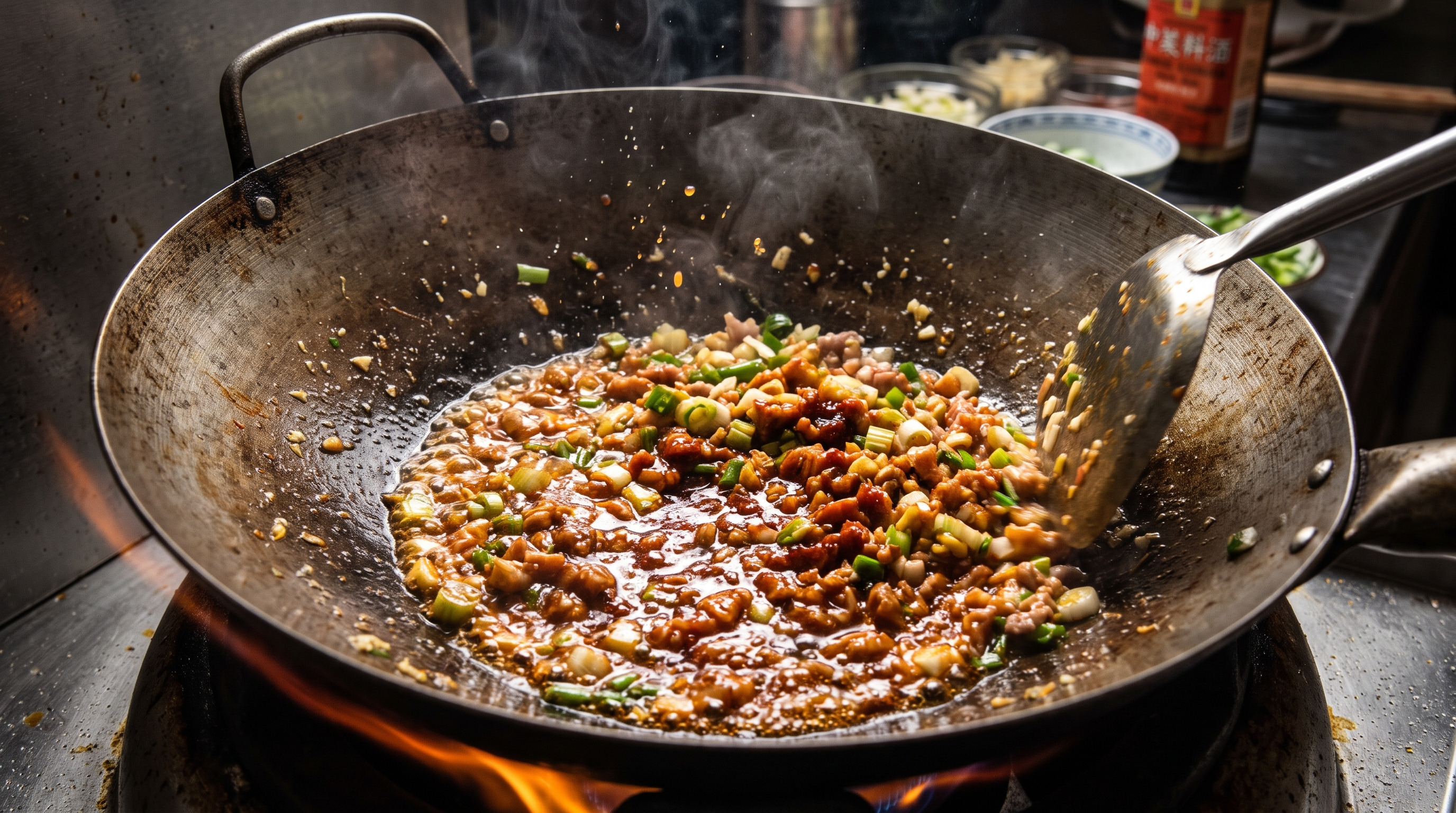
Place a deep wok or heavy skillet over medium-low heat and add 3 tablespoons of neutral cooking oil. Add the finely chopped scallion whites, 1 tablespoon of minced garlic, and 1/3 tablespoon of minced ginger. Stir-fry gently for 40 seconds until the oil turns fragrant and aromatic.
Turn the heat up to medium-high. Add 150g (5.3 oz) of ground pork, 1 tablespoon of Shaoxing cooking wine, and 1/4 teaspoon of black pepper. Break up the pork mince with your wooden spatula, searing for 2 to 3 minutes until the meat is lightly browned and has released its clear, savory rendered fat.
Step 3. Bloom Doubanjiang and Simmer the Tofu
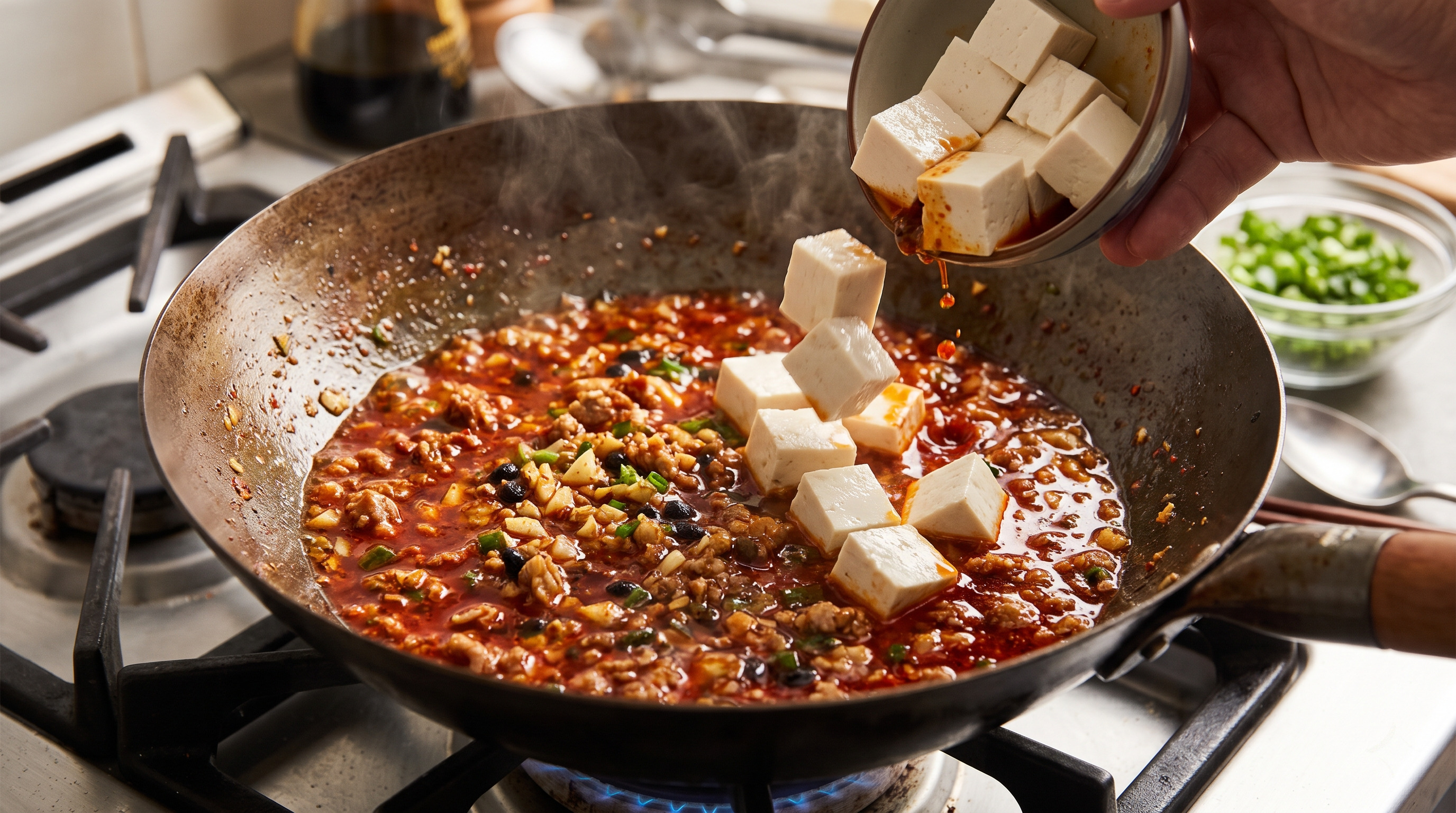
Lower the heat to medium-low. Push the browned pork slightly to the side and drop in 2 tablespoons of Doubanjiang and 1 tablespoon of chili flakes. Stir-fry the paste directly into the rendered oil for 60 seconds until the oil takes on a radiant ruby-red hue.
Pour in 250ml (1 cup) of chicken stock, followed by 1 tablespoon of oyster sauce, 1/2 tablespoon of soy sauce, and 0.8 tablespoon of sugar. Stir gently to dissolve the seasonings and bring the liquid to a rolling boil. Carefully slide in the drained tofu cubes and sliced fresh chilies. Reduce heat to medium-low, cover loosely, and simmer for 3 to 4 minutes so the tofu absorbs the rich, savory broth.
Step 4. Thicken in Three Stages & Finish with Fragrant Oil
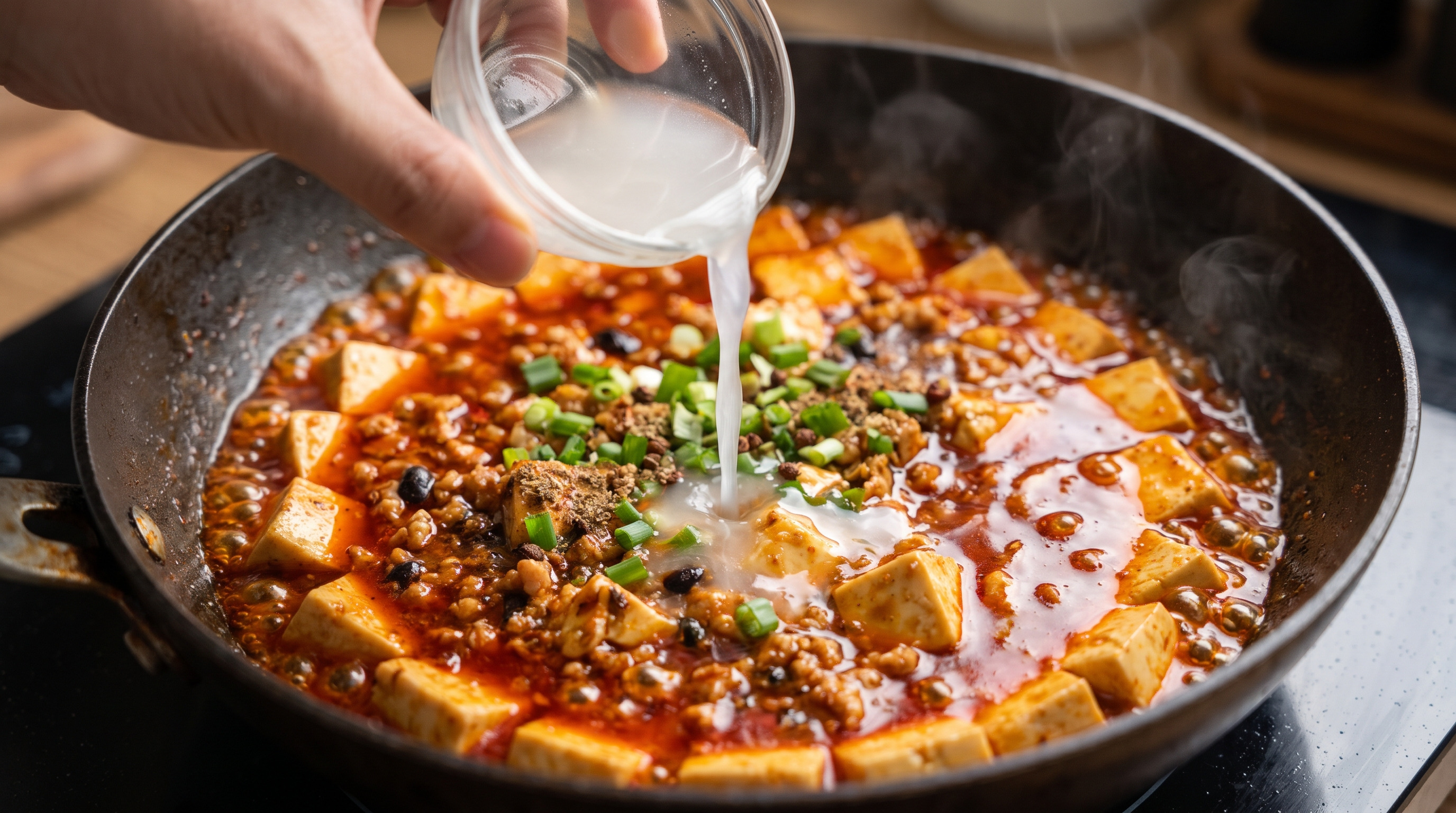
In a small ramekin, vigorously re-whisk your starch slurry (1.5 tbsp potato starch + 3 tbsp cold water) because starch settles quickly at the bottom.
Turn the heat down to low. Drizzle one-third of the slurry around the perimeter of the wok. Using the back of your spatula, gently push the sauce forward—never chop into the tofu cubes—or gently swirl the wok by its handle. Wait 20 seconds, drizzle in the second third, and repeat. Add the final third until the sauce transforms into a glossy, cohesive gravy that coats the back of a spoon.
Turn off the heat. Drizzle 1 tablespoon of toasted sesame oil and dust 1/2 teaspoon of freshly ground Sichuan peppercorn powder over the top. Gently slide the Mapo Tofu onto a wide rimmed serving dish.
4. Pro Chef Tips to Elevate Your Dish
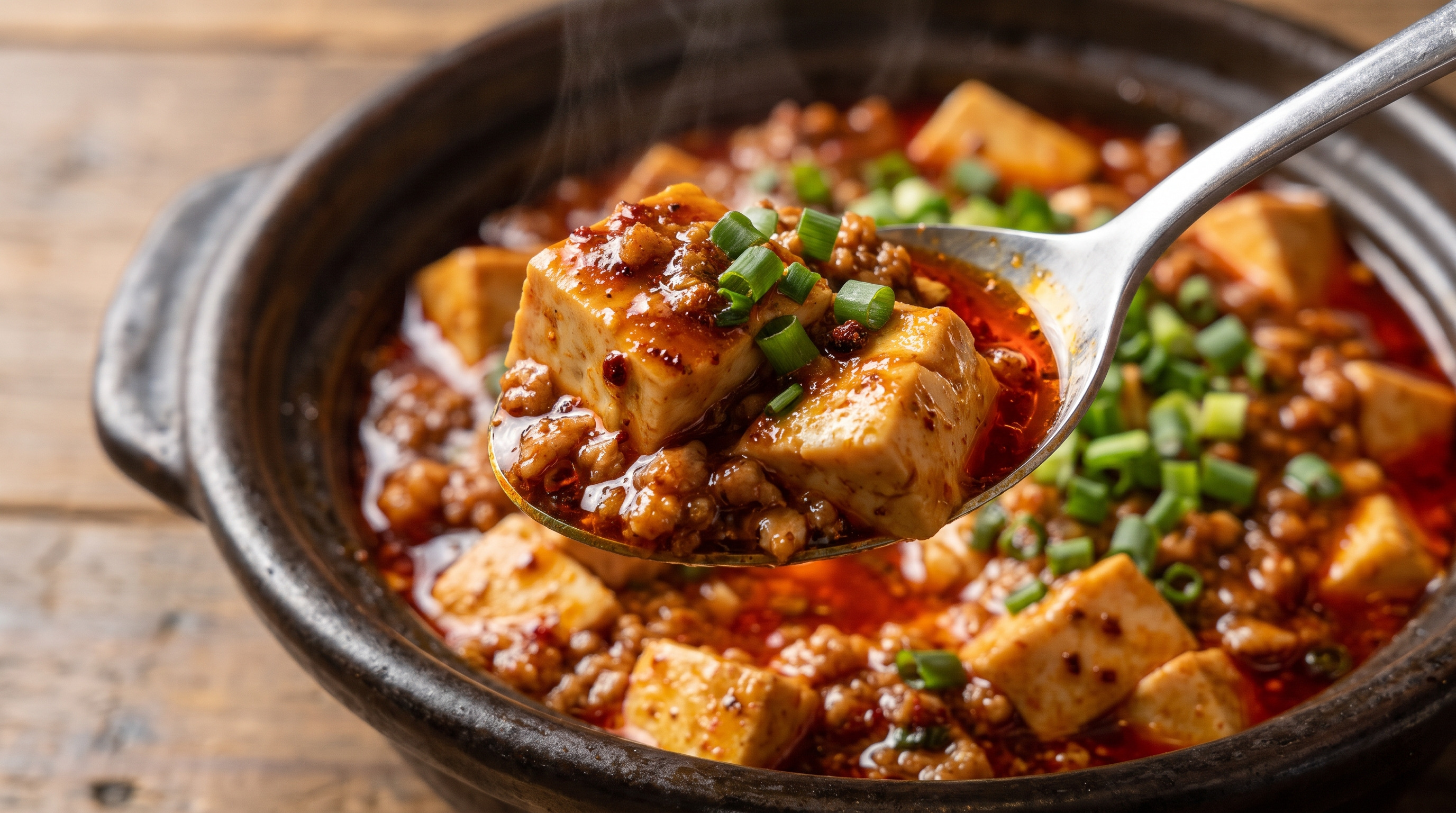
Take your home cooking to master-chef level with these three insider techniques:
- Unlock Authentic Sichuan “Ma-La” with Toasted Huajiao: The defining hallmark of authentic Sichuan cuisine is Ma (麻, tongue-tingling numbness) alongside La (辣, chili heat). To achieve this, toast whole red Sichuan peppercorns in a dry skillet for 1 minute until fragrant, then grind them in a mortar and pestle right before sprinkling. If you are sensitive to numbing heat, start with a 1/4 teaspoon pinch.
- The Korean Pantry Substitute Ratio When Doubanjiang is Missing: If you don’t have access to an Asian supermarket stocking authentic Pixian Doubanjiang, you can create a remarkably close flavor profile using Korean pantry staples: mix 1 tbsp Gochujang (Korean chili paste) + 0.5 tbsp Doenjang (fermented soybean paste) + 1.5 tbsp Gochugaru + 0.5 tbsp Oyster Sauce. It replicates the spicy, savory fermented depth beautifully.
- Nudge, Don’t Stir (The “Pushing” Spatula Technique): When thickening and simmering, never use the sharp edge of your cooking utensil like a paddle. Instead, face the rounded curve of your ladle or the flat back of your silicone spatula against the bottom of the wok and push gently in broad, circular waves. This keeps every single tofu cube razor-sharp and intact.
5. Frequently Asked Questions (FAQ)
Q1. What type of tofu works best for Mapo Tofu?
For beginners, medium-firm tofu (often sold in water tubs labeled “Stew Tofu” at Korean and Chinese grocers) offers the perfect balance between sturdy structural integrity and creamy tenderness. If you crave the luxurious, slippery texture of authentic Chengdu banquets, soft silken tofu can be used; just ensure you master the pan-swirling technique rather than spatula stirring.
Q2. What should I do if my sauce turns clumpy or watery later?
Starch clumping occurs when cold slurry hits boiling broth too fast, cooking unevenly into gelatinous knots. Always turn heat to low before adding slurry, and add it in three progressive additions. Conversely, if your sauce turns watery after 10 minutes of sitting, your starch was undercooked; potato starch requires at least 30 seconds of gentle simmering after thickening to fully stabilize its amylose bonds.
Q3. Can I substitute ground pork with ground beef or chicken?
Minced beef is actually the historical protein used in original Qing Dynasty Chengdu Mapo Tofu! Lean ground beef provides a deeper, iron-rich savory foundation. Ground turkey or chicken breast mince can also be used for a lighter weeknight meal, while finely minced fresh shiitake mushrooms make an outstanding umami-rich vegetarian substitution.
6. Serving Suggestions & Conclusion
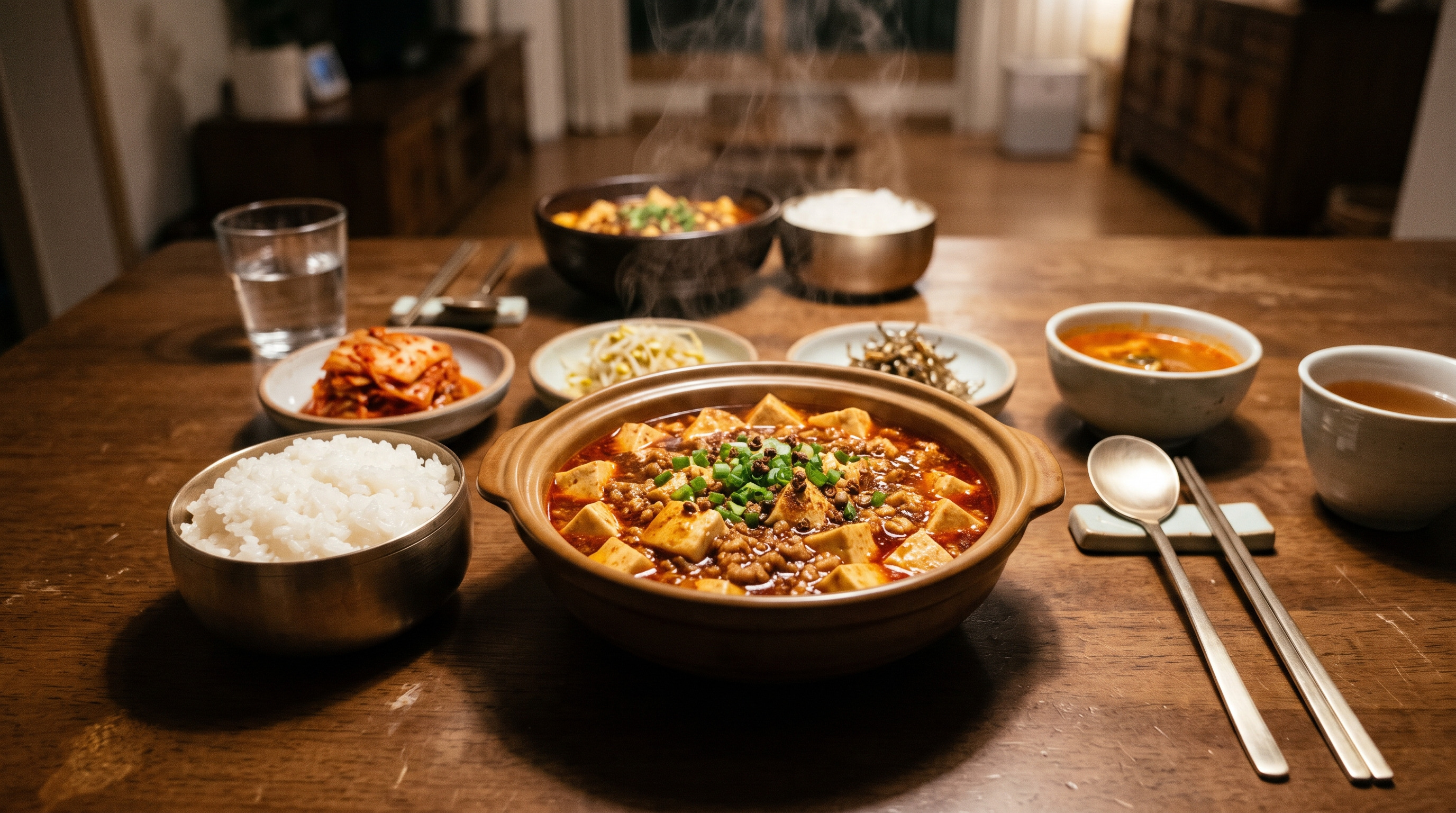
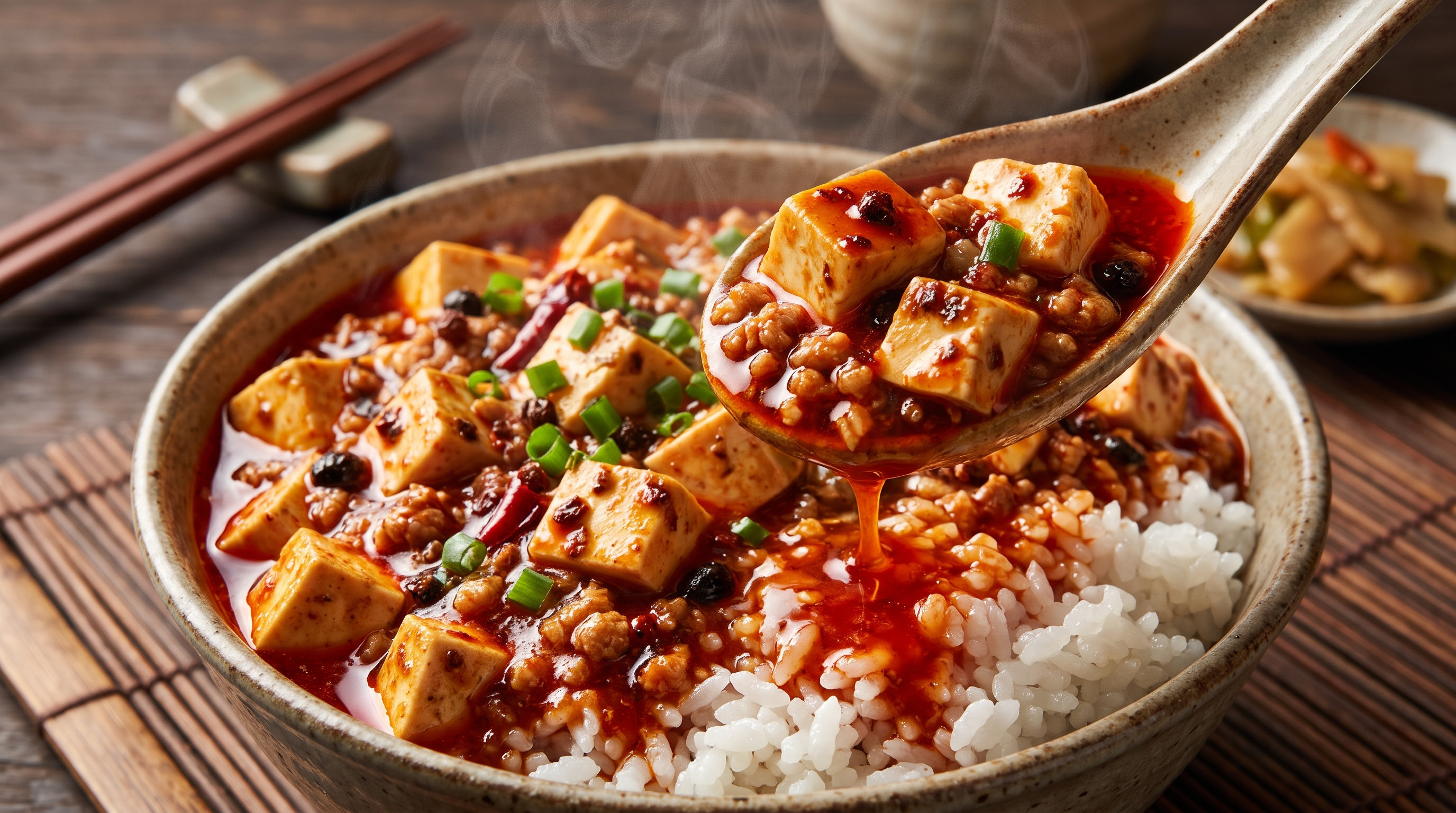
Mapo Tofu is the ultimate Asian comfort food. Serve it piping hot alongside a large bowl of freshly steamed short-grain or jasmine rice. The fragrant, spicy sauce seeps down into every grain of rice, creating an addictive, hearty meal that requires no complicated side dishes. For a refreshing palate cleanser, pair it with crisp pickled cucumbers, chilled edamame, or a light egg drop soup.
If you are planning an authentic banquet feast at home, pair your Mapo Tofu with classic Chinese-Korean favorites like Crispy Sweet and Sour Pork (Tangsuyuk) or a rich bowl of Homemade Jajangmyeon. If you crave more comforting Asian tofu creations, be sure to explore our deeply soothing Korean Spicy Soft Tofu Stew (Sundubu Jjigae) and savory Spicy Braised Tofu (Dubu Jorim). For another fiery noodle companion, don’t miss our authentic Seafood Jjamppong.
With the simple science of salt blanching and the golden Doubanjiang ratio in your cooking repertoire, you can whip up this legendary Sichuan classic any night of the week. Grab your wok, steam some rice, and enjoy!