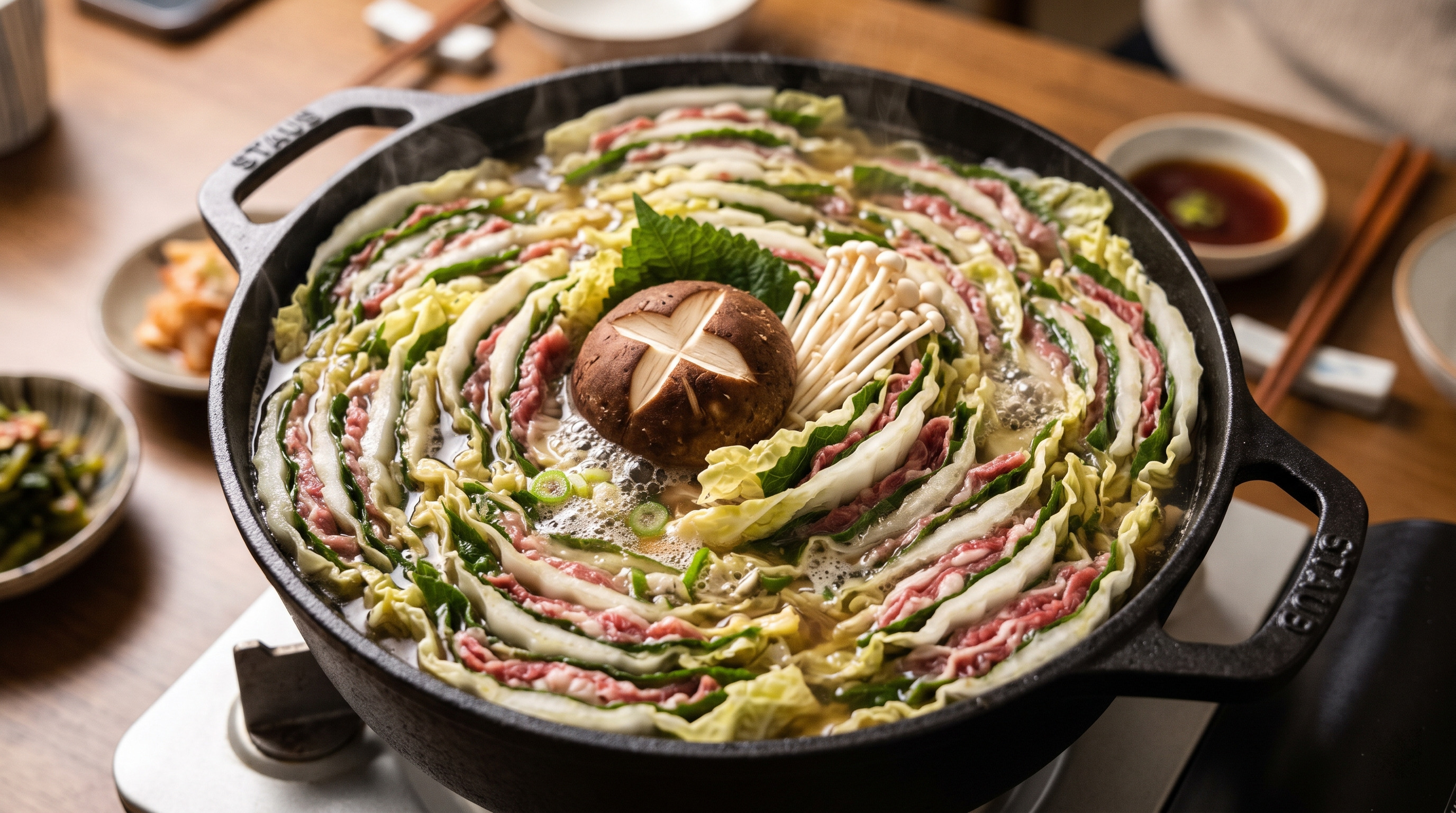
Quick Recipe Snapshot: ⏱️ Prep: 15 mins | 🔥 Cook: 15 mins | 🍽️ Servings: 3–4 | 💡 Key Secret: Stack beef, cabbage, and perilla leaves in alternating directions + pad the pot with bean sprouts + simmer with an 8x umami synergy dashi broth.
Visually breathtaking, nutritious, and deeply comforting, Mille-Feuille Nabe (ミルフィーユ鍋)—literally translating to the “Thousand-Layer Hot Pot”—is one of Japan’s most beloved winter centerpieces. Slices of tender beef, sweet Napa cabbage, and aromatic perilla leaves are layered, sliced, and tightly packed into a hot pot like the petals of a blooming rose.
As the pot simmers gently at your dining table, the cabbage wilts into buttery sweetness, releasing its pure botanical nectar directly into a fragrant, golden dashi broth while the delicate beef cooks to melt-in-your-mouth tenderness.
Despite its elaborate, high-end restaurant appearance, Mille-Feuille Nabe is surprisingly easy to make at home. However, beginner cooks often face a few common hurdles: the stacked layers fall apart and float chaotically in the pot, the beef turns dry and creates unappealing gray foam, or the broth tastes watery and unremarkable.
The secret behind a truly unforgettable Nabe is rooted in two culinary science keystones: molecular umami synergy, which multiplies the savory perception of the broth up to eightfold, and myoglobin and moisture management, which keeps the beef juicy while perfuming the layers with fresh herb oils.
Here is everything you need to know to create this show-stopping Japanese hot pot from scratch.
1. The Culinary Science Behind Japanese Hot Pot Umami
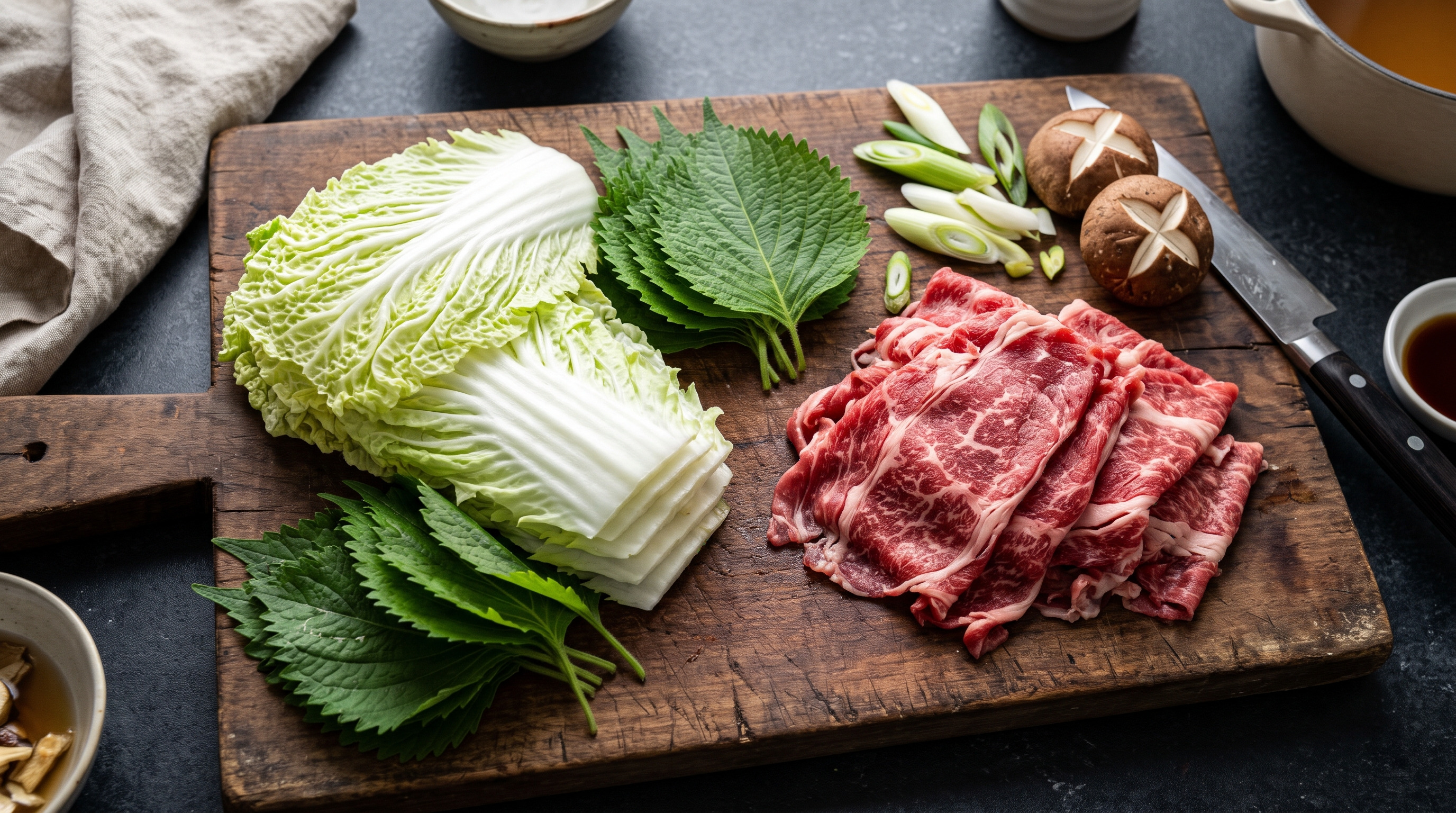
What transforms this seemingly simple combination of beef and greens into a savory powerhouse? Professional Japanese chefs rely on two culinary science principles:
💡 Culinary Science 1: The 8-Fold Umami Synergy (Glutamic Acid + Inosinic Acid) Napa cabbage and dried kombu kelp are loaded with free glutamic acid, an amino acid responsible for savory depth. Sliced beef and bonito flakes (katsuobushi), on the other hand, are packed with inosinic acid, a purine nucleotide. Food science research confirms that when glutamic acid and inosinic acid bind simultaneously to human T1R1/T1R3 umami taste receptors, the perceived savoriness is magnified up to eight times compared to either ingredient tasted alone. This explains why a light dashi broth tastes so remarkably deep without heavy creams or artificial additives.
💡 Culinary Science 2: Perillaketone Volatilization & Myoglobin Control Raw, thinly sliced beef contains surface moisture and red myoglobin protein. If layered wet, this fluid turns into cloudy gray foam when boiled. Thoroughly blotting the meat dry with paper towels eliminates surface protein scum. Furthermore, tucking fresh perilla leaves (kkaennip or shiso) between each layer acts as a natural botanical shield: their volatile essential oils (perillaketone and limonene) evaporate into the beef fat during cooking, completely neutralizing gamy aromas while infusing the broth with a clean, citrusy herbal finish.
2. Essential Ingredients & The Golden Ratio Broth
Here is the exact measurement ratio for 3 to 4 generous servings, measured in both metric and standard US kitchen units.
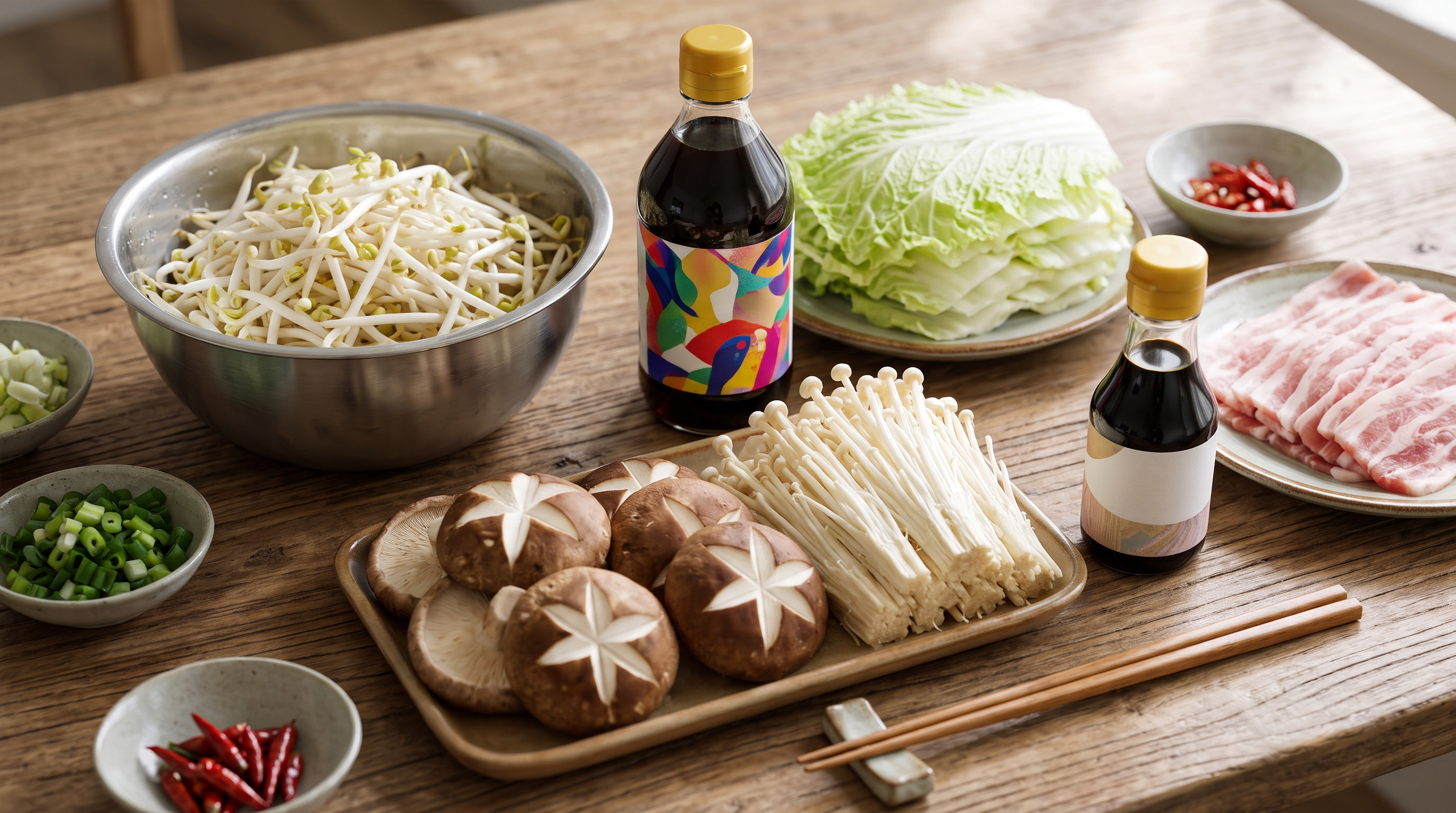
| Category | Ingredients & Amounts (Metric & US) | Chef’s Notes & Substitutions |
|---|---|---|
| Primary Protein | • Thinly Sliced Beef (Shabu-shabu cut): 300g–400g / 10.5–14 oz | Choose thinly shaved chuck eye roll, brisket, or top blade (found at H-Mart or Japanese markets like Mitsuwa). Thinly sliced pork belly is an equally authentic substitute. |
| Fresh Layer Greens | • Napa Cabbage: 1 medium head (12–14 leaves) • Korean Perilla Leaves (or Shiso): 20–25 leaves | Pick cabbage with crisp white ribs and tender yellow hearts. Perilla leaves provide the signature refreshing herbal contrast. |
| Pot Cushion & Garnish | • Fresh Bean Sprouts: 200g–250g / 7–9 oz • Fresh Shiitake Mushrooms: 2 pcs • Enoki Mushrooms: 1/2 pack (100g / 3.5 oz) • Baby Bok Choy (optional): 2 heads | Padded on the pot bottom, bean sprouts prevent cabbage from scorching while elevating the layers for presentation and releasing sweet broth. |
| Golden Umami Broth | • Water: 1 Liter / 4 cups / 34 fl oz • Dashi Pack (or 2 Kombu sheets + Bonito): 1 pack • Japanese Tsuyu (3x): 3 tbsp • Soy Sauce (Usukuchi/Light): 1 tbsp • Mirin: 1 tbsp • Fine Sea Salt: 1/2 tsp | 3 tablespoons of 3x concentrated tsuyu combined with light soy sauce strikes the perfect balance of smokiness, sweetness, and salinity. |
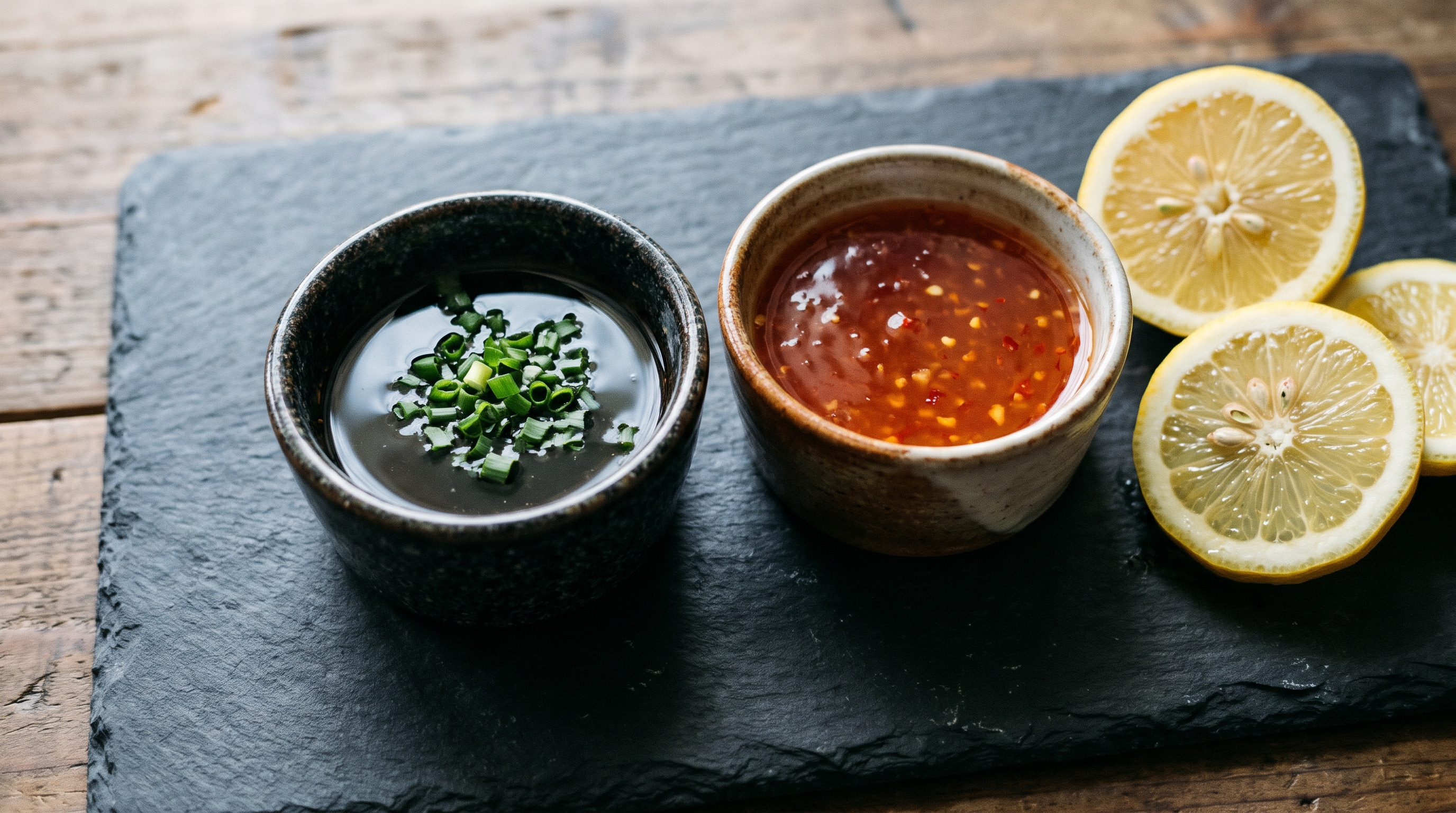
| Handmade Yuzu Ponzu Dip | • Soy Sauce: 2 tbsp • Rice Vinegar: 1.5 tbsp • Yuzu Marmalade (or Lemon Juice): 1 tbsp • Mirin: 1 tbsp • Simmered Nabe Broth: 2 tbsp • Sugar: 1/2 tbsp | Yuzu tea marmalade (the Korean Yujacha base found in jars) delivers irresistible sweet citrus brightness that cuts through rich beef. |
| Optional Side Sauce | • Sweet Chili Sauce (store-bought): 2–3 tbsp | A popular companion dip for family dinners, especially loved by children and spice enthusiasts. |
3. Step-by-Step Cooking Instructions
Follow these 4 simple steps to assemble a camera-ready Japanese hot pot.
Step 1. Simmer the Dashi Broth and Whisk the Ponzu Dip
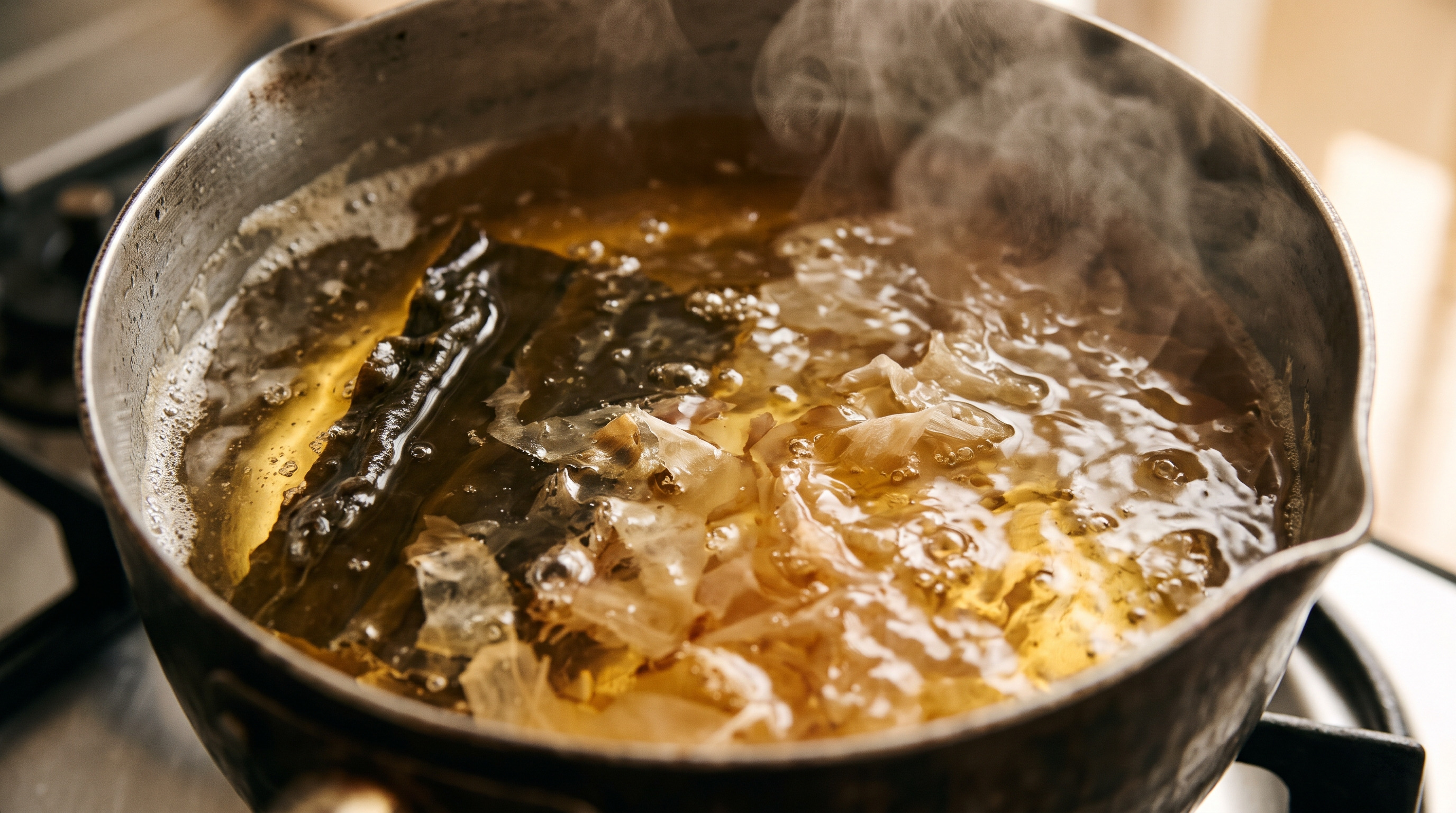
In a medium saucepan, combine 1 Liter (4 cups) of cold water with your dashi pouch (or two 5x5cm pieces of dried kombu kelp). Bring to a rolling boil over high heat. If using raw kombu, remove the kelp after 5 minutes of boiling to prevent bitter alginic acid from releasing. Simmer the broth for another 5 to 10 minutes.
Stir in 3 tbsp tsuyu, 1 tbsp light soy sauce, 1 tbsp mirin, and 1/2 tsp fine salt. Taste the broth—it should taste mildly savory, as the cabbage will release plenty of natural sweetness later.
In a small dipping bowl, whisk together the soy sauce, rice vinegar, yuzu marmalade, mirin, 2 tablespoons of hot broth, and sugar until dissolved. Set aside.
Step 2. Stack Cabbage, Perilla, and Sliced Beef Layers
Thoroughly pat the sliced beef with paper towels to absorb any surface moisture.
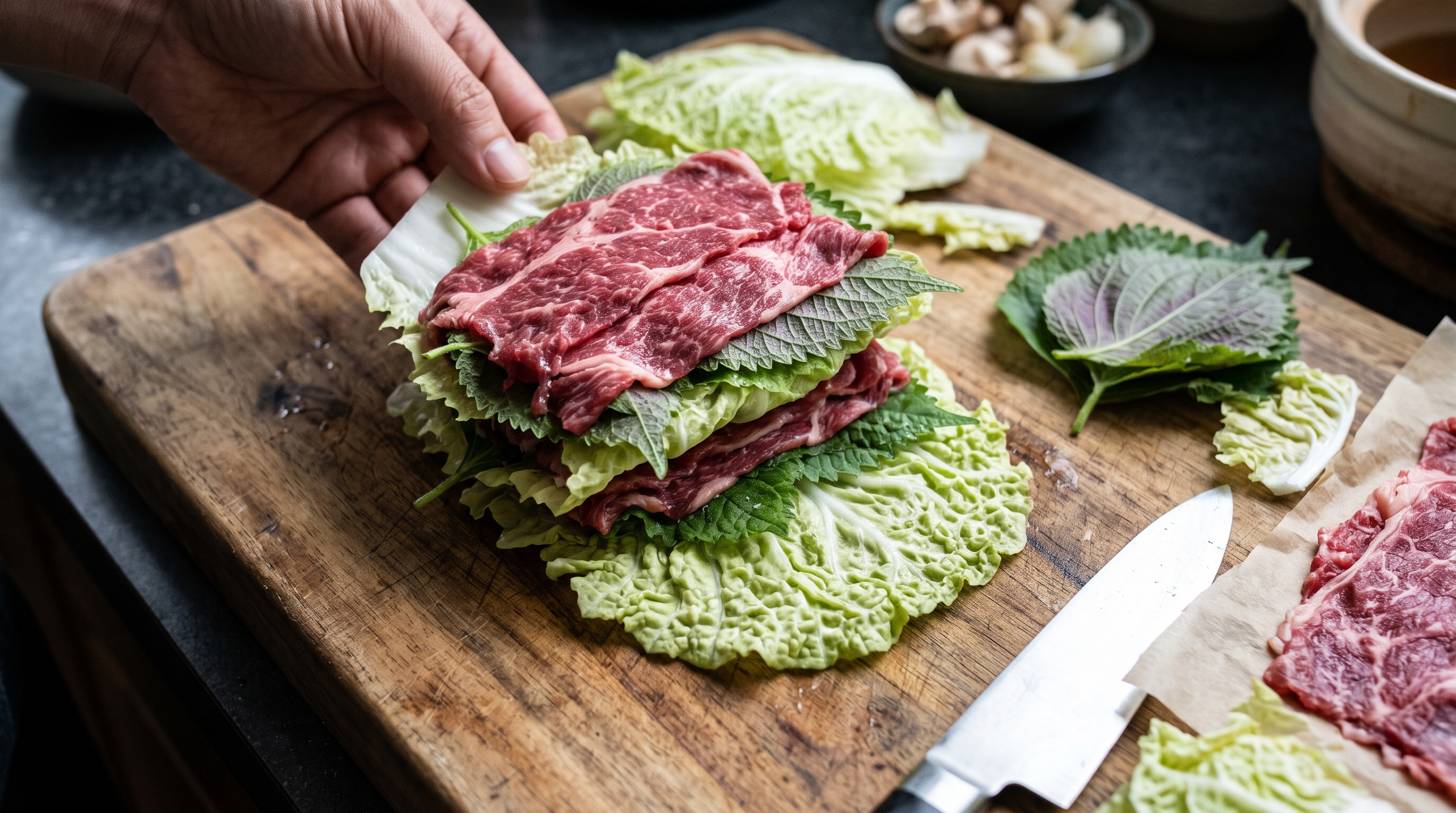
Place a large leaf of Napa cabbage flat on your cutting board with the stem facing toward you. Lay two perilla leaves side-by-side across the cabbage leaf. Lay 2 to 3 thin slices of beef over the perilla leaves in a single, even layer.
Place another cabbage leaf on top—this time with the stem pointing in the opposite direction (away from you). Repeat the process (cabbage → perilla → beef) for 3 to 4 tiers, finishing with a final cabbage leaf on top to seal the stack. Press down gently with your palms to compact the layers into a firm block.
Step 3. Slice Uniform Blocks and Pack the Pot
Using a sharp chef’s knife, measure the depth of your cooking pot. Slice the layered mille-feuille block into even segments, typically 3cm to 4cm (about 1.5 inches) wide.
Rinse and drain 200g of fresh bean sprouts. Spread them evenly across the bottom of a wide, shallow pot (a traditional clay donabe, enameled Dutch oven, or wide skillet) to create an airy 2cm foundation cushion.
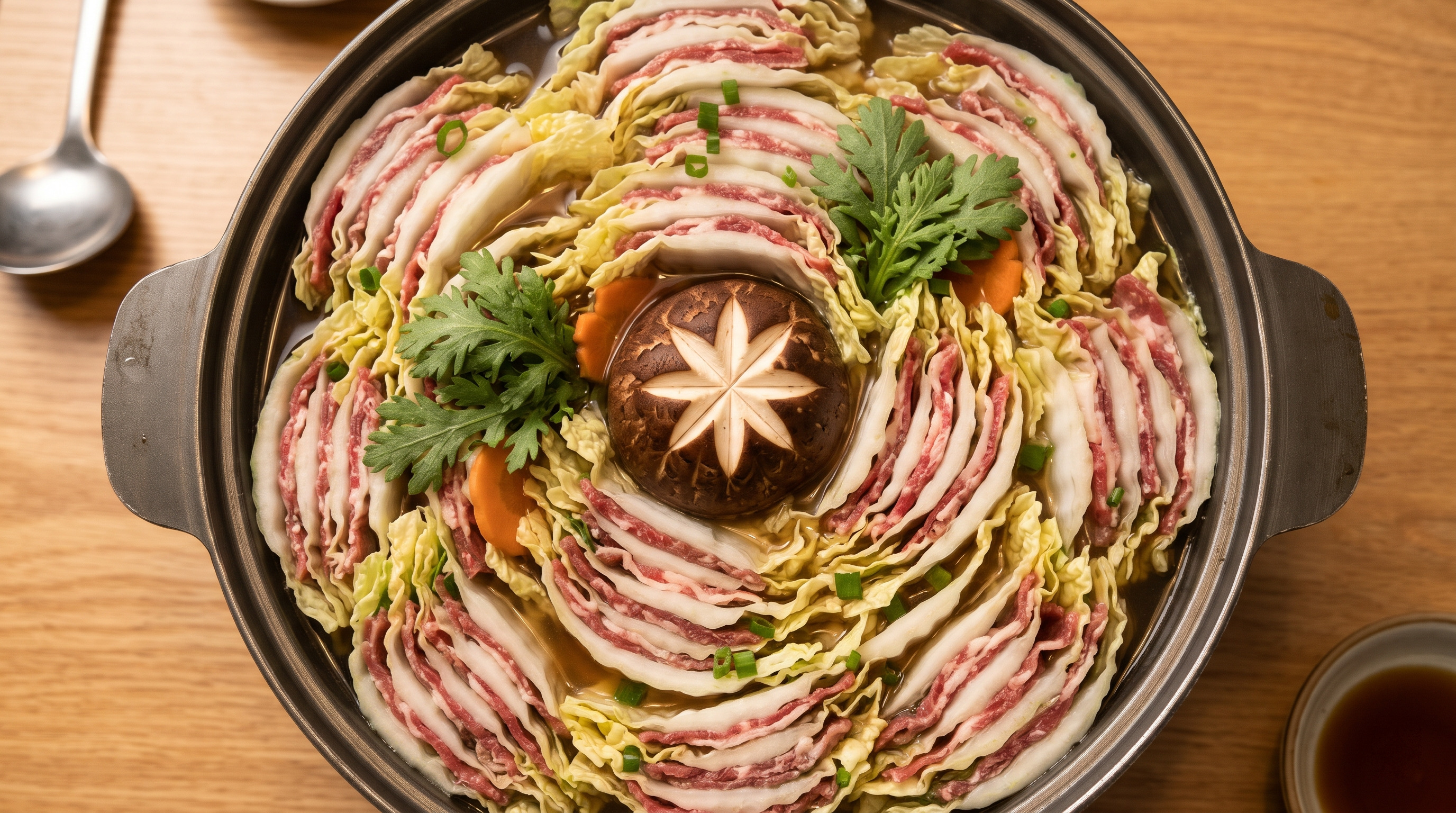
Beginning along the outer edge of the pot, pack the sliced mille-feuille blocks tightly against the pot rim, cut-side facing upward. Continue working inward in concentric circles. In the center cavity, arrange the scored fresh shiitake mushrooms, enoki mushrooms, and baby bok choy for a dramatic floral presentation.
Step 4. Pour Warm Broth and Simmer
Gently pour the warm seasoned dashi broth into the pot until it reaches 70% to 80% of the vegetables’ height.
Chef’s Tip: Do not submerge the vegetables completely! Napa cabbage and bean sprouts release substantial liquid as they collapse, which will quickly fill the pot to the brim.
Cover with a lid and place over medium heat on your stovetop or portable induction burner at the dining table. Bring to a gentle boil for 7 to 10 minutes. Once the beef turns from pink to pale taupe and the cabbage ribs become translucent and tender, reduce the heat to low and begin enjoying immediately with the chilled Yuzu Ponzu dip.
4. Pro Chef Tips to Elevate Your Dish
Enhance your hot pot experience with these insider restaurant techniques:
- The Japanese “Shime” (Finishing Course) Tradition: Never discard the golden nectar remaining in your pot after eating the beef and vegetables! Japanese dining culture treasures the Shime finale. First, toss in fresh udon noodles or ramen into the bubbling broth for a soothing noodle round. When only a cup of broth remains, stir in a bowl of warm cooked white rice, a beaten fresh egg, chopped scallions, and toasted seaweed flakes. Simmer on low for 2 minutes to create a velvety, comforting egg porridge (Zousui).
- The Alternating Stem-to-Leaf Stacking Secret: Napa cabbage leaves are naturally thick and rigid at the white base, but paper-thin and leafy at the green tips. If you stack them all in the same direction, your mille-feuille block will form an uneven wedge that falls apart when sliced. Always alternate the orientation of each cabbage leaf (stem left, stem right) so the resulting stack is uniform and flat.
- Selecting the Ideal Beef Cut (Marbling vs. Broth Clarity): If you prefer a richer, buttery hot pot, thinly sliced beef brisket (chadolbagi) or short plate (usamgyeop) is magnificent. However, if you prefer an exceptionally clean, crystal-clear broth that lets the natural sweetness of the cabbage shine, select thinly shaved chuck eye roll (moksim) or top blade shabu-shabu cuts.
5. Frequently Asked Questions (FAQ)
Q1. Can I use pork or chicken instead of beef?
Thinly sliced pork belly (butabara) is wildly popular across Japan for making Butabara Nabe. The unctuous pork fat renders into the broth while cabbage enzymes break down the meat fibers, resulting in incredible tenderness. For an ultra-healthy weeknight dinner, paper-thin shaved chicken breast or rolled tenders can also be substituted.
Q2. What should I do if I cannot find perilla leaves (kkaennip) or shiso?
Perilla leaves provide a subtle anise-mint aroma that freshens up the beef fat. If you cannot find them at your local Asian grocer, you can substitute fresh sweet Italian basil, or simply omit the herb layer altogether and toss 2-3 thin slices of fresh ginger and a bundle of chopped green scallions into the dashi broth to maintain clean aromatics.
Q3. How should I finish the leftover broth at the end of the meal?
The accumulated cooking juices from the beef, cabbage, mushrooms, and dashi create an extraordinary culinary stock. Reheat the broth to a rolling boil and drop in fresh chewy sanuki udon noodles. Alternatively, pour in a bowl of cooked short-grain rice, drizzle a beaten egg over the top, cover for 1 minute, and enjoy the ultimate Japanese breakfast or late-night comfort porridge.
6. Serving Suggestions & Conclusion
Mille-Feuille Nabe is best enjoyed hot off the burner, plucked directly from the bubbling pot with chopsticks and dunked into tangy citrus Yuzu Ponzu or sweet chili sauce. The contrast between crisp-tender cabbage, succulent beef, and refreshing citrus sauce creates an endlessly satisfying dining experience.
To round out a complete Japanese comfort meal, serve alongside bowls of fluffy white rice and popular Japanese pub classics like savory Japanese Beef Gyudon or crispy panko-crusted Homemade Katsudon. If you are hosting a hot pot party with noodle lovers, pair this light dashi broth with an aromatic bowl of Vietnamese Beef Pho or our comforting Korean counterpart, Beef Brisket Doenjang Jjigae.
Simple, elegant, and packed with wholesome nutrition, Mille-Feuille Nabe proves that extraordinary home cooking doesn’t require hours of tedious kitchen prep. Layer your greens, slice your blocks, and let the magic of Japanese umami science transform your dinner table tonight!