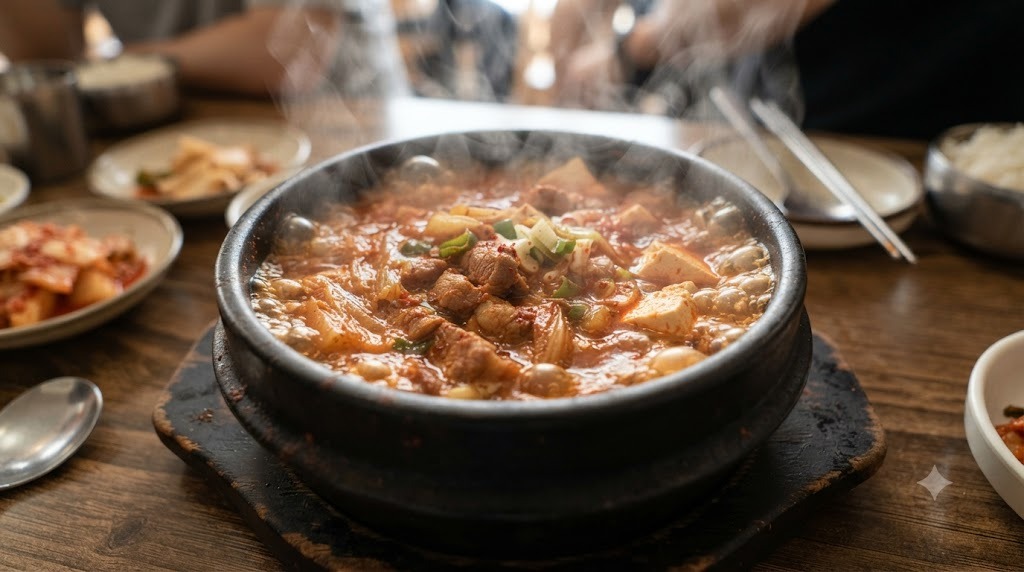
Quick Recipe Snapshot: ⏱️ Prep: 10 mins | 🔥 Cook: 20 mins | 🍽️ Servings: 2–3 | 💡 Key Secret: Sear pork to render lard + sauté sour kimchi with sugar + emulsify broth with starchy rice water (ssaltteumul) and salted shrimp (saeujeot).
Piping hot, crimson red, and bubbling enthusiastically in a traditional Korean earthenware pot (ttukbaegi), Pork Kimchi Jjigae (돼지고기 김치찌개) is the undisputed national soul food of South Korea. Combining meltingly tender pork, tangy fermented cabbage, silky tofu, and an intensely savory, spicy broth, it is the meal that every Korean craves after a long day.
Yet, despite having just a handful of ingredients, home cooks frequently end up with a disappointing stew: the broth tastes thin and watery like diluted spicy tea, the pork feels tough and rubbery, or the acidity from the kimchi is so harsh it overpowers everything else.
In Korean food culture, the most legendary Kimchi Jjigae is found not in white-tablecloth restaurants, but in bustling roadside diners called Gisa Sikdang (taxi driver diners). Their secret lies in three fundamental culinary science pillars: Maillard browning to render rich pork lard, starchy rice water emulsion to give the soup a luscious velvety body, and fermented salted shrimp enzymes that naturally tenderize pork while delivering explosive savory depth.
Follow this authentic culinary guide to master the golden ratio and bring authentic Korean driver-diner flavor right to your kitchen.
1. The Culinary Science Behind Deep, Rich Kimchi Jjigae
To elevate a simple stew into a deeply layered masterpiece, professional Korean cooks rely on two chemical transformations during the first five minutes of cooking:
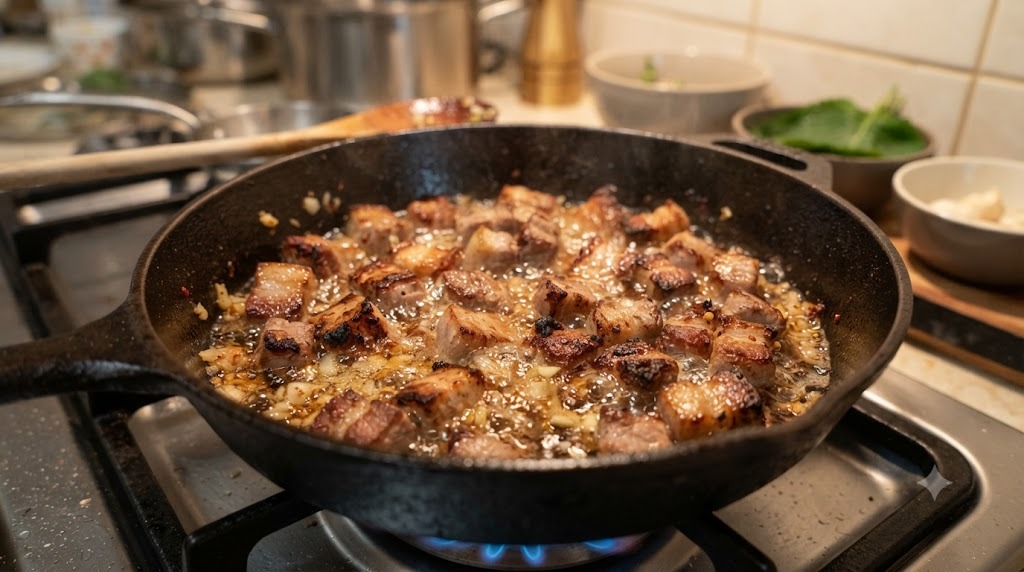
💡 Culinary Science 1: Pork Lard Rendering & The Maillard Searing Instead of dumping raw pork into boiling water, searing diced pork shoulder or belly in a dry or lightly oiled pot triggers the Maillard reaction, creating hundreds of complex savory flavor compounds (pyrazines and furans). More importantly, this process renders out liquid pork lard (animal tallow). When aged sour kimchi is sautéed in this hot rendered lard, the fat molecules coat the cabbage leaves, neutralizing sharp, aggressive lactic acid and transforming the vegetable fibers into buttery, melt-in-your-mouth ribbons.
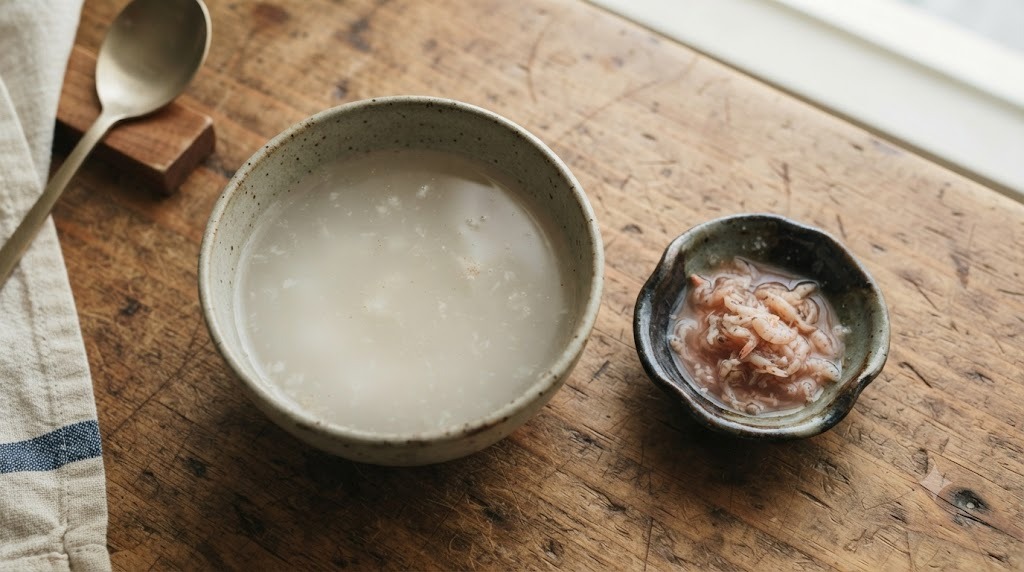
💡 Culinary Science 2: Starchy Rice Water (Ssaltteumul) Emulsion & Saeujeot Protease Plain tap water results in a separated soup where floating orange grease sits atop a thin, watery base. Using milky rice water—the water collected from the 2nd and 3rd rinse of uncooked white rice—introduces suspended amylose and amylopectin starch molecules. These starches act as natural surfactants that bond water molecules to pork fat droplets, creating a creamy, stable colloidal emulsion. Furthermore, seasoning with fermented salted shrimp (saeujeot) introduces active proteolytic enzymes that break down tough pork proteins during the simmer while flooding the broth with free amino acids.
2. Essential Ingredients & The Driver-Diner Golden Ratio
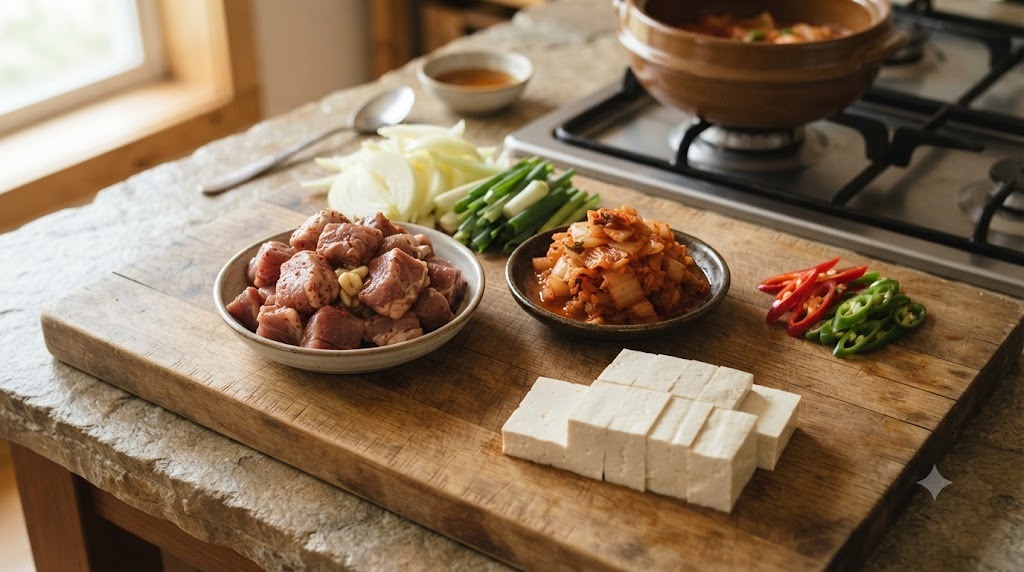
Here are the exact proportions for 2 to 3 hearty servings, with dual metric and US kitchen measurements.
| Category | Ingredients & Amounts (Metric & US) | Chef’s Notes & Substitutions |
|---|---|---|
| Primary Protein | • Pork Shoulder (or Collar / Belly): 300g / 10.5 oz | A 3:7 fat-to-lean ratio yields the juiciest stew. Pork shoulder (apdarissal) or pork collar (moksal) stays tender through long simmering. |
| Aged Kimchi | • Well-fermented Sour Kimchi (Mukeunji): 300g / approx. 2 cups • Kimchi Brine: 1/2 cup / 100ml / 3.4 fl oz | Use pungent, sour kimchi that has fermented in your fridge for at least 3–4 weeks. Do not discard the flavorful liquid brine! |
| Fresh Tofu & Vegetables | • Medium-Firm Tofu: 1/2 block (150g / 5.3 oz) • Yellow Onion: 1/2 medium • Scallion: 1 stalk • Korean Cheongyang Chili (or Jalapeño): 1–2 pcs | Tofu absorbs the spicy broth like a sponge. Sliced yellow onion melts during simmering, providing natural sweetness to balance sourness. |
| Emulsion Broth | • Milky Rice Water (Ssaltteumul): 3 cups / 550ml–600ml / 20 fl oz | Save the 2nd rinse water when washing rice. If unavailable, whisk 1 tsp of all-purpose flour into 3 cups of water or use anchovy-kelp stock. |
| Searing & Deglazing | • Toasted Perilla Oil (or Sesame Oil): 1 tbsp • Mirin (or Soju/Cooking Wine): 1 tbsp • Black Pepper: 1/4 tsp | Perilla oil (deulgireum) provides a distinctly nutty, earthy aroma traditional to Korean countryside stews. |
| Sweet Acid Balancer | • Granulated Sugar: 1/2 tbsp (1.5 tsp) | Essential secret! Sautéing sugar with sour kimchi caramelizes sharp vinegar edges and softens tough cabbage stems. |
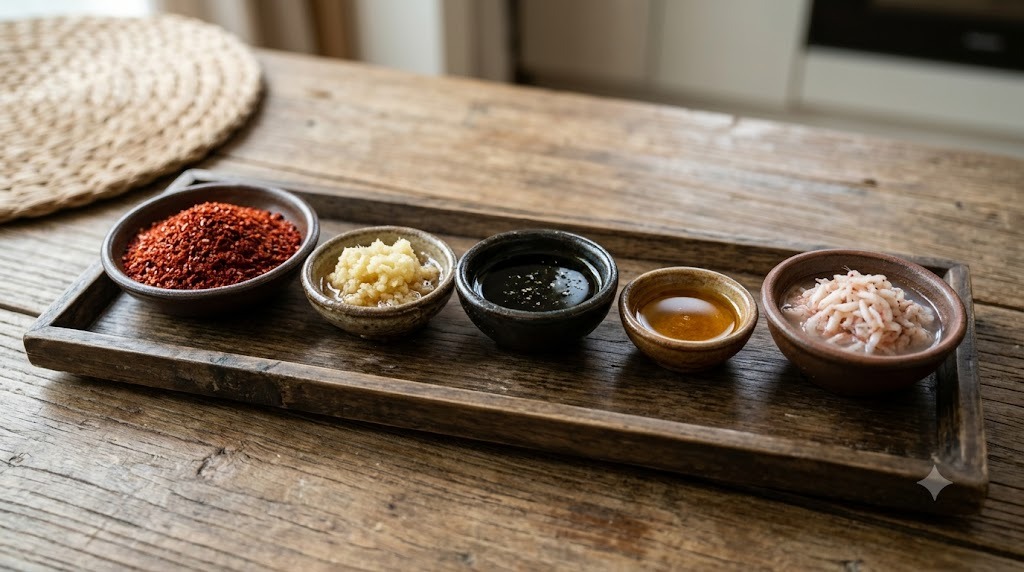
| Golden Ratio Seasoning | • Korean Chili Flakes (Gochugaru): 2 tbsp • Minced Garlic: 1 tbsp • Soup Soy Sauce (Guk-ganjang): 1 tbsp • Salted Shrimp (Saeujeot): 1/2 tbsp | Salted fermented shrimp (saeujeot) is the soul of restaurant-style jjigae (available in jars in H-Mart’s refrigerated seafood aisle). |
3. Step-by-Step Cooking Instructions
Follow these 4 simple steps to achieve authentic K-diner depth and velvety broth.
Step 1. Prep Pork, Kimchi, and Vegetables
Pat the pork dry with paper towels to eliminate excess blood moisture and cut into 2.5cm (1-inch) bite-sized chunks.
Slice the aged kimchi into comfortable 3cm to 4cm (1.5-inch) strips using kitchen shears or a knife. Thinly slice the yellow onion. Cut the tofu into 1cm thick rectangular slabs. Diagonally slice the scallion and green chili peppers.
Step 2. Sear Pork and Sauté Kimchi in Pork Lard
Place a heavy-bottomed pot or earthenware pot over medium-high heat and add 1 tablespoon of toasted perilla oil (or sesame oil).
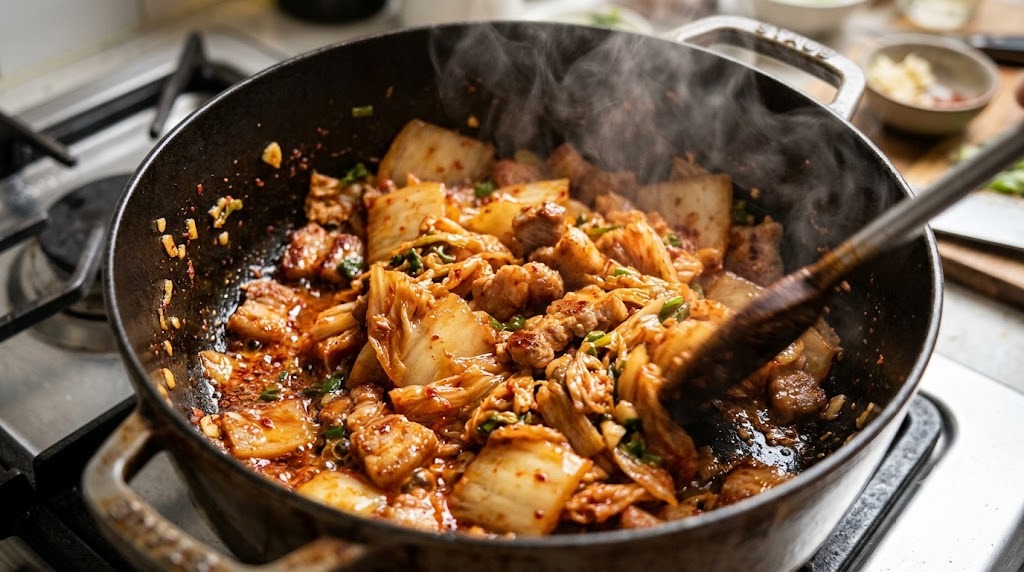
Add the pork chunks, 1 tablespoon of mirin, and 1/4 teaspoon of black pepper. Stir-fry for 2 to 3 minutes until the pork begins to brown lightly around the edges and its savory natural lard renders into the base of the pot.
Add the sliced aged kimchi and 1/2 tablespoon of sugar. Sauté the kimchi in the pork fat over medium heat for 3 to 4 minutes. You will notice the kimchi leaves transforming from stiff and opaque to limp, glossy, and translucent.
Step 3. Bloom Gochugaru and Pour Milky Rice Water
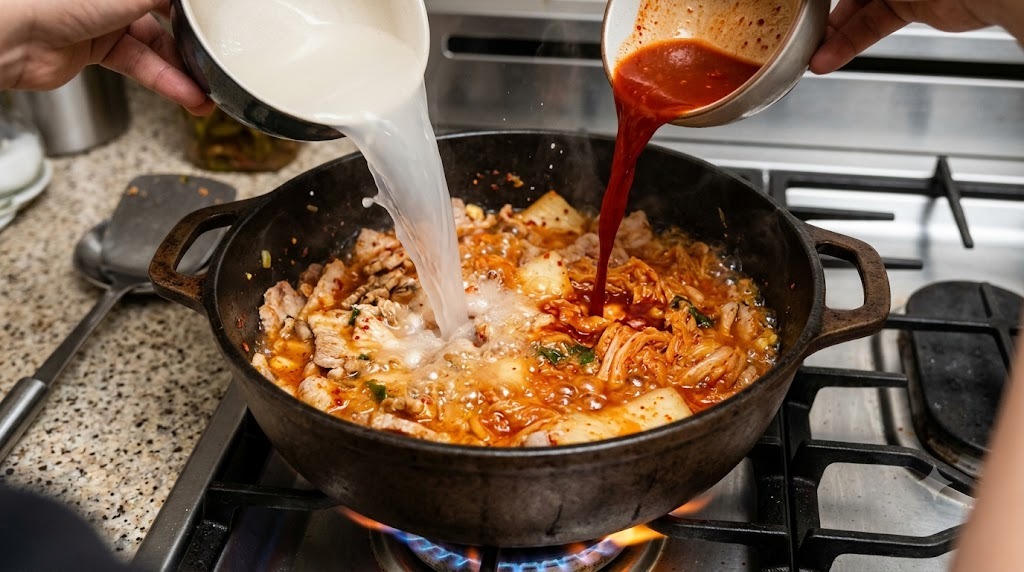
Turn the heat down to low. Sprinkle 2 tablespoons of gochugaru and 1 tablespoon of minced garlic over the cabbage and pork. Stir-fry gently for 30 seconds. The chili flakes will absorb the pork lard and form a fragrant, deep-red seasoning paste without scorching.
Immediately pour in 3 cups (550ml–600ml) of milky rice water and 1/2 cup (100ml) of kimchi brine. Stir in 1 tablespoon of Korean soup soy sauce (guk-ganjang) and 1/2 tablespoon of salted fermented shrimp (saeujeot). Bring the pot to a rapid, rolling boil over high heat.
Step 4. Simmer on Low, Add Tofu, and Garnish
Once the stew is boiling vigorously, reduce the heat to medium-low. Cover the pot partially with a lid and let it simmer gently for 12 to 15 minutes. This slow braise extracts deep collagen and marrow umami from the pork while allowing the kimchi fibers to fully soften.
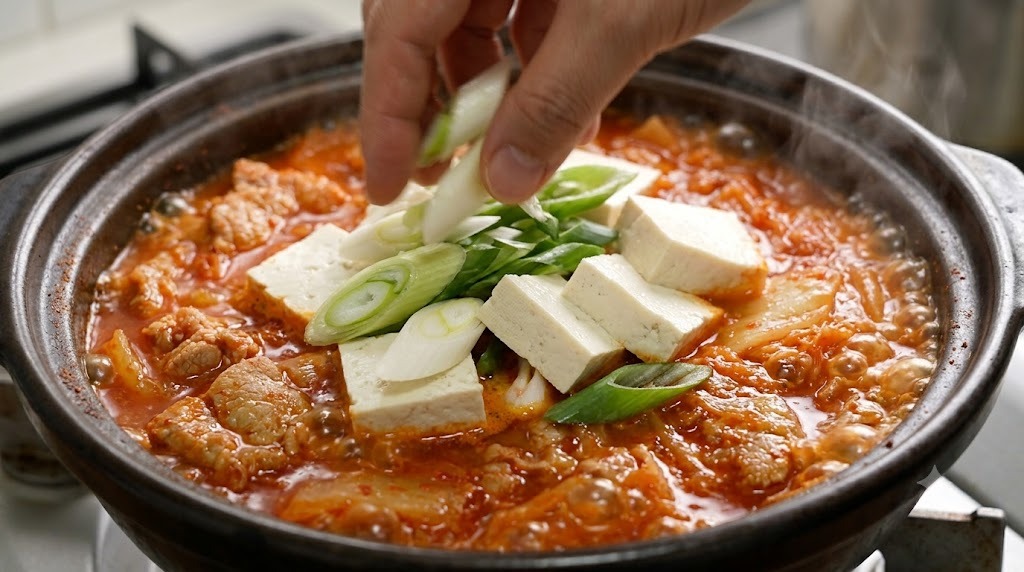
Uncover the pot. Arrange the sliced tofu, sliced scallions, and green chili peppers across the top. Simmer for 3 final minutes to allow the tofu to soak in the red broth and become piping hot. Turn off the heat and bring the bubbling pot directly to the table.
4. Pro Chef Tips to Elevate Your Dish
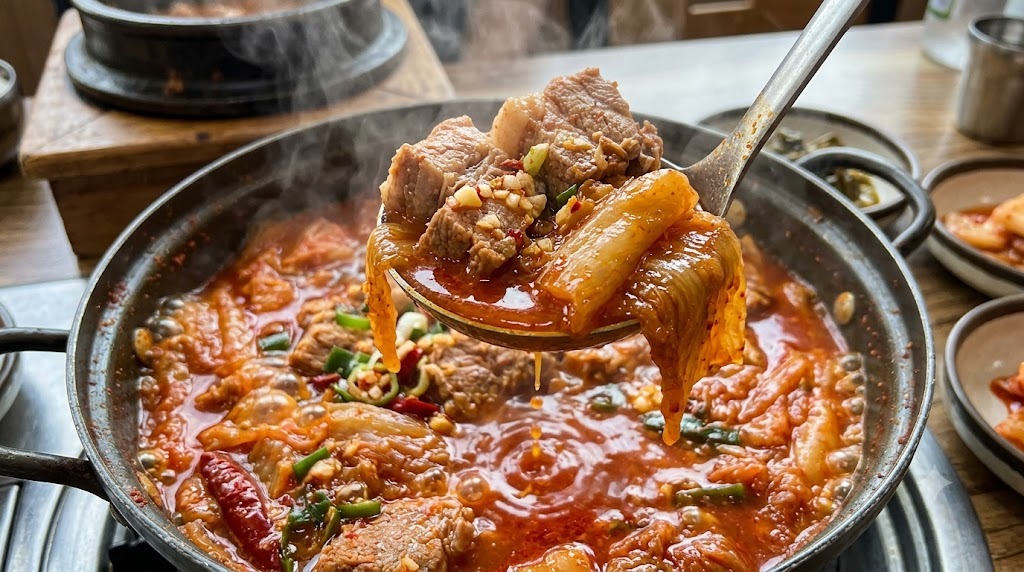
Apply these three veteran kitchen secrets to guarantee a five-star result every single time:
- The Emergency Vinegar CPR Trick for Fresh Kimchi: If you only have freshly made, crunchy kimchi that has not fermented into sour mukeunji, do not despair! While pouring in the broth, add 1 to 1.5 tablespoons of regular brewed white vinegar or apple cider vinegar. As the stew bubbles, the sharp acetic sting evaporates completely, leaving behind a mellow, aged tang that tastes remarkably like 6-month-old fermented kimchi.
- Adjusting Fats for Pork Belly vs. Pork Shoulder: If you choose to cook with ultra-fatty pork belly (samgyeopsal), skip the perilla oil in Step 2 entirely! Sear the pork belly directly in the dry pot until it releases its own abundant natural lard. Conversely, if using lean pork loin or tenderloin, increase perilla oil to 1.5 tablespoons to provide essential richness.
- The Magic of “Day-Two” Overnight Aging: Like French boeuf bourguignon or Texas chili, Kimchi Jjigae tastes even better the next day. Cooling the stew overnight allows the pork gelatin, lactic acid, and garlic allicin to fully integrate into an impossibly silky, cohesive broth. Reheat it the next evening for 5 minutes, and prepare for culinary bliss!
5. Frequently Asked Questions (FAQ)
Q1. What if my kimchi is fresh or not sour enough?
Kimchi Jjigae requires well-fermented, sour kimchi because lactic acid breaks down pork proteins while cutting through rich animal fat. If your kimchi is young and sweet, stir in 1 to 1.5 tablespoons of white vinegar when you pour in the broth. The boiling heat burns off the harsh acidic odor, perfectly mimicking naturally aged mukeunji.
Q2. Why is milky rice water (ssaltteumul) so important?
Plain water often leaves oil slicking across the surface of the stew. Rice water from washing your rice contains fine suspended starches. When heated, these starches undergo gelatinization, acting as an emulsion bridge that binds pork fat with water molecules to produce a thick, velvety restaurant-quality mouthfeel.
Q3. Can I use canned tuna or beef instead of pork?
Absolutely! Canned Tuna Kimchi Jjigae (Chamchi Kimchi Jjigae) is a beloved Korean pantry staple. Sauté the kimchi in the oil drained from the tuna can, simmer with rice water as directed, and gently slide the tuna chunks in during the final 5 minutes so they remain intact. Thinly sliced beef brisket (chadolbagi) also makes a fantastic, luxurious alternative.
6. Serving Suggestions & Conclusion
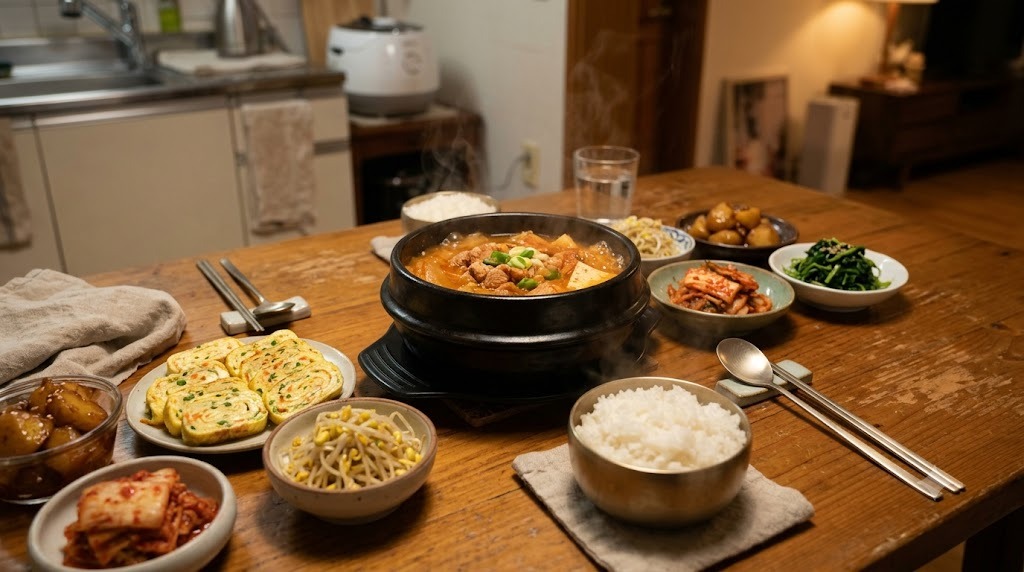
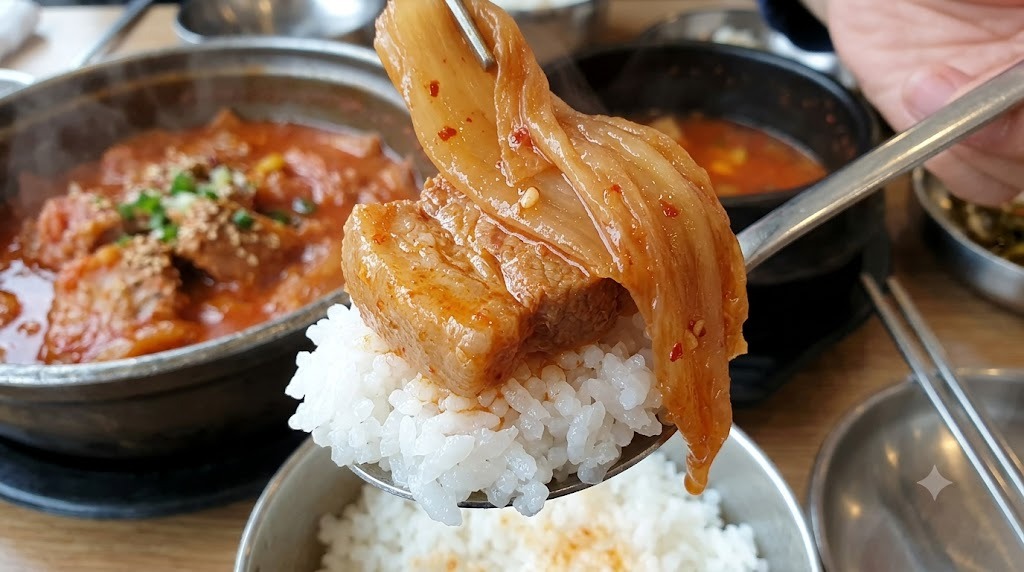
In Korea, Kimchi Jjigae is traditionally served center-stage alongside a piping hot bowl of freshly steamed white short-grain rice, crispy roasted seaweed sheets (gim), and a golden rolled egg omelet (gyeran-mari). Take a spoonful of the piping-hot stew, press a piece of tender pork and softened kimchi against your rice, and savor the unforgettable explosion of flavors.
If you are putting together an authentic Korean dinner party, Kimchi Jjigae pairs wonderfully with sizzling BBQ meats like Korean Spicy Pork Bulgogi (Jeyuk Bokkeum) or sweet and savory Classic Beef Bulgogi.
To explore other legendary Korean soups and comfort stews, delve into our restaurant-secret Korean Beef Brisket Doenjang Jjigae, velvety Spicy Soft Tofu Stew (Sundubu Jjigae), and soul-cleansing Beef Seaweed Soup (Miyeokguk).
With the magic of rendered pork lard, starchy rice water emulsion, and salted shrimp seasoning in your culinary arsenal, you will never need takeout to enjoy authentic Korean comfort food again. Fire up your stove and enjoy!