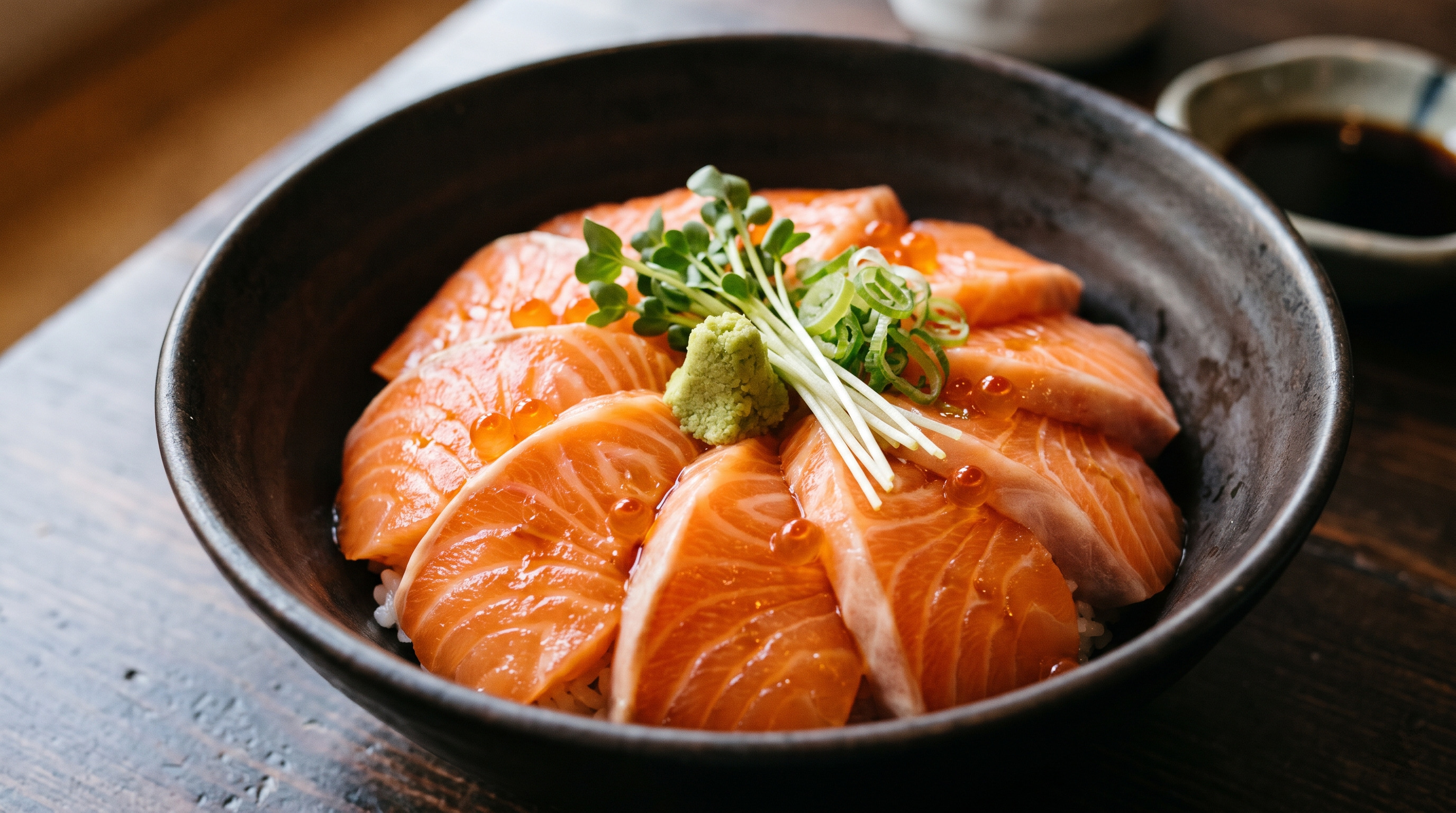
Quick Recipe Snapshot: ⏱️ Prep: 20 mins | 🔥 Cook: 10 mins | 🍽️ Servings: 2 | 💡 Key Secret: 15-minute Shiojime salt-cure tightens salmon flesh + ice-water onion sulfur wash + simmering artisanal kombu tsuyu sauce.
With its gleaming coral-pink slices of fresh salmon fanned out like a blooming flower over seasoned Japanese rice, Sake Don (鮭丼 / 생연어덮밥) is a feast for both the eyes and the palate. Placed alongside sweet crisp onions, peppery radish sprouts, a dollop of zesty wasabi, and a drizzle of rich, sweet-savory tsuyu sauce, every spoonful delivers an unctuous, buttery luxury that melts seamlessly into fragrant seasoned rice.
Yet, making Sake Don at home often falls short of high-end Tokyo sushi bar standards. Many home cooks place plain, supermarket raw salmon directly over hot rice, only to find the salmon turning unpleasantly warm, oily, and fishy, while the rice turns mushy and the onions bite with eye-watering sharpness.
The difference between mediocre homemade salmon bowls and Michelin-recognized Japanese craftsmanship lies in three classical culinary science techniques: Shiojime (塩締め) osmotic curing, which removes watery impurities while concentrating rich omega-3 oils, ice-water allicin leaching for sweet and crispy onions, and properly seasoned sushi rice (shari) maintained at exact human body temperature.
Follow this step-by-step masterclass to craft stunning, silky, restaurant-grade Sake Don in your own kitchen.
1. The Culinary Science Behind Japanese Salmon Curing
To achieve the luscious, jelly-firm texture prized by sushi masters, raw salmon must undergo two essential culinary science preparations:
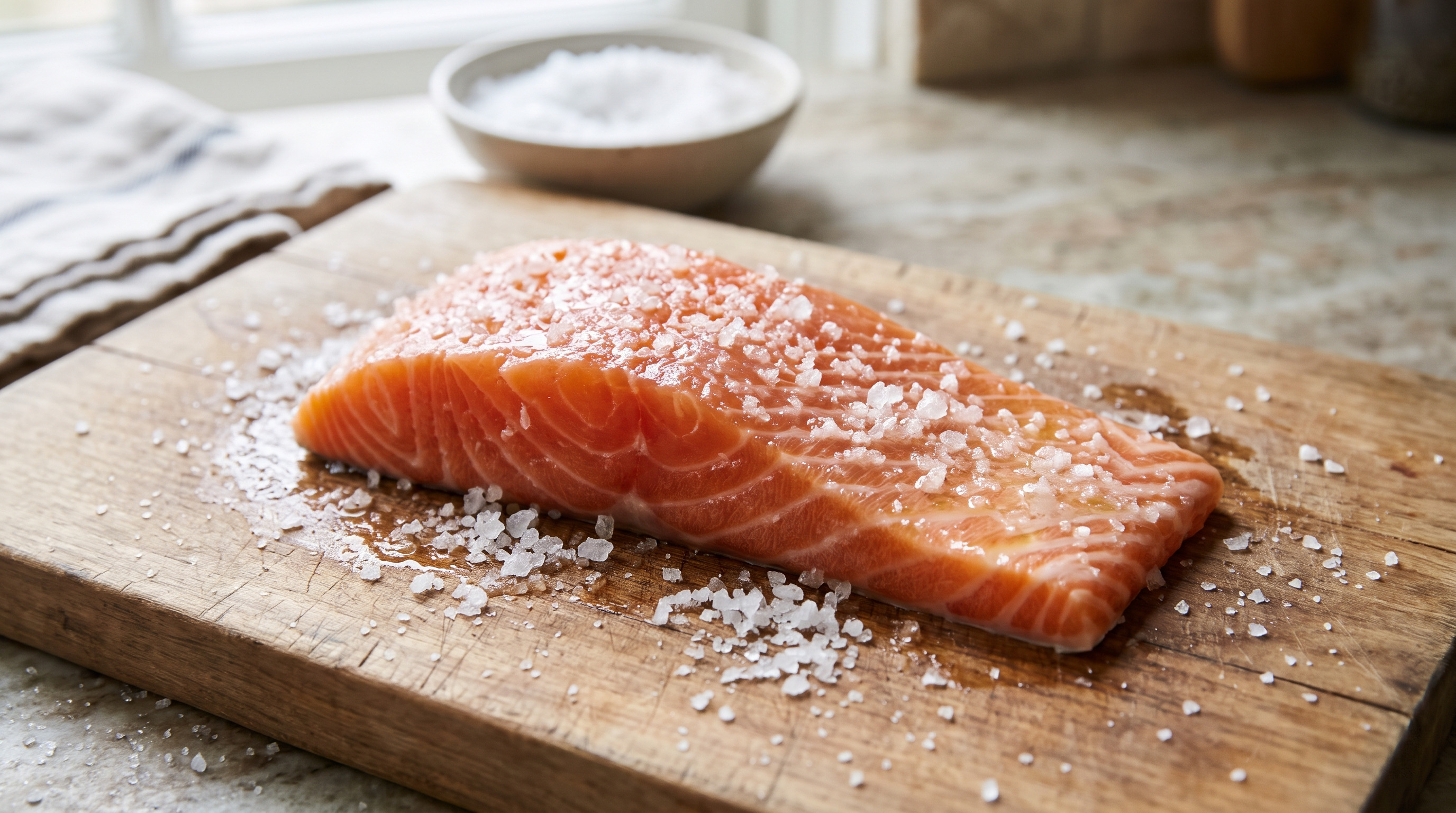
💡 Culinary Science 1: Shiojime Osmotic Dehydration & Protein Tightening Fresh raw salmon contains roughly 68% water along with trace amounts of trimethylamine oxide (TMAO) precursors. If served completely untreated, surface water dilutes the seasoning and creates a flabby, oily mouthfeel with lingering fishiness. By coating the fillet in coarse sea salt for 15 minutes (Shiojime), an osmotic pressure gradient draws free water and fishy odors outward into droplets. At the same time, the salt tightens the actomyosin protein fibers in the salmon flesh, converting a soft fillet into a decadent, firm, sashimi-grade texture.
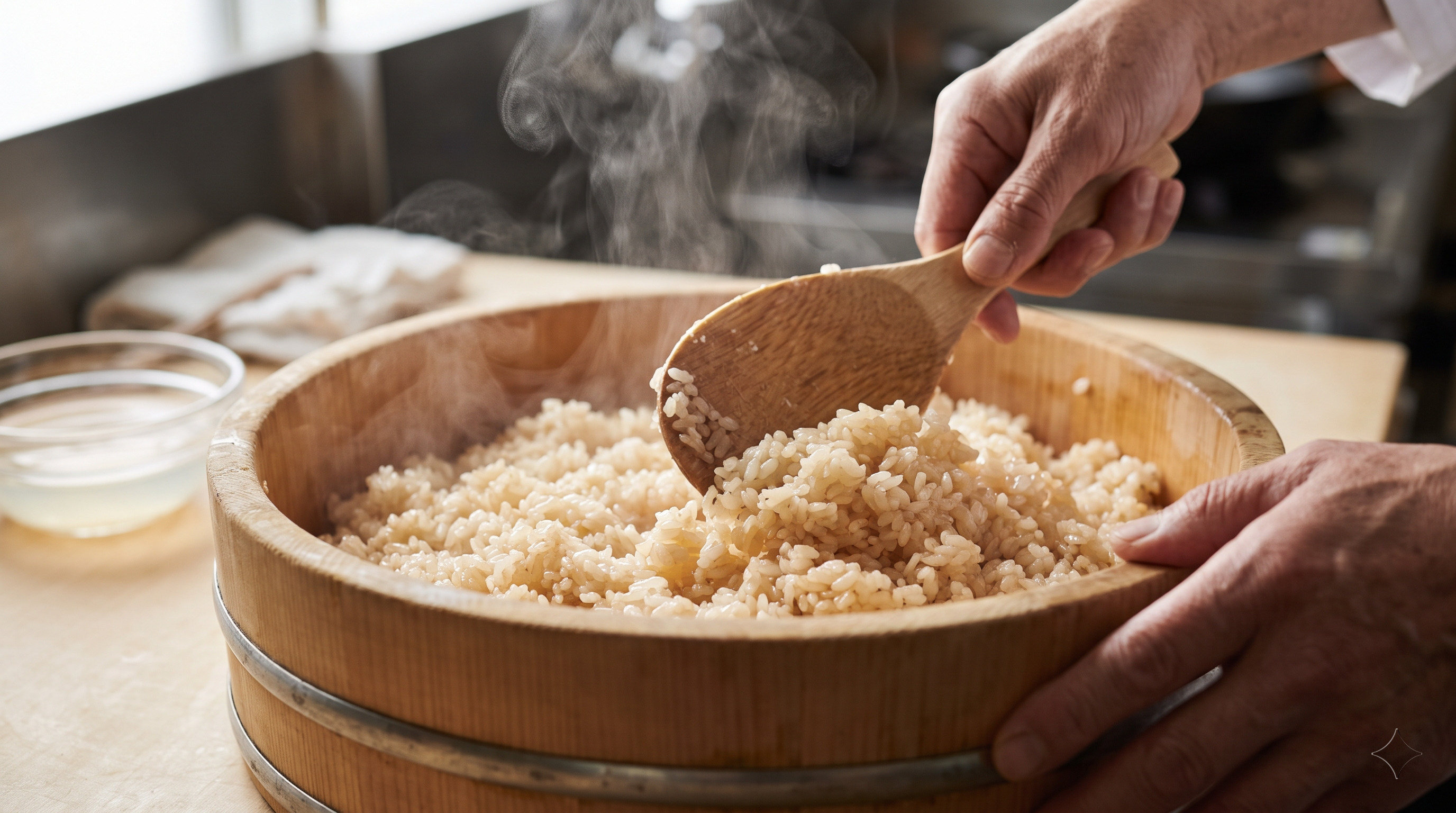
💡 Culinary Science 2: The Chemistry of Shari (Body Temperature Sushi-zu Seasoning) Warm, freshly steamed short-grain rice contains open, swollen starch granules. Folding warm seasoned vinegar (sushi-zu—a balance of acetic acid, sucrose, and sodium chloride) into hot rice allows the vinegar molecules to penetrate deep into the starch core. Rapidly fanning the rice while cutting it at a 45-degree angle evaporates surface steam, sealing the exterior amylose coating and preventing the rice from turning mushy. Serving shari at warm body temperature (36°C / 97°F) prevents the chilled salmon fat from congealing on your palate.
2. Essential Ingredients & The Artisanal Tsuyu Glaze
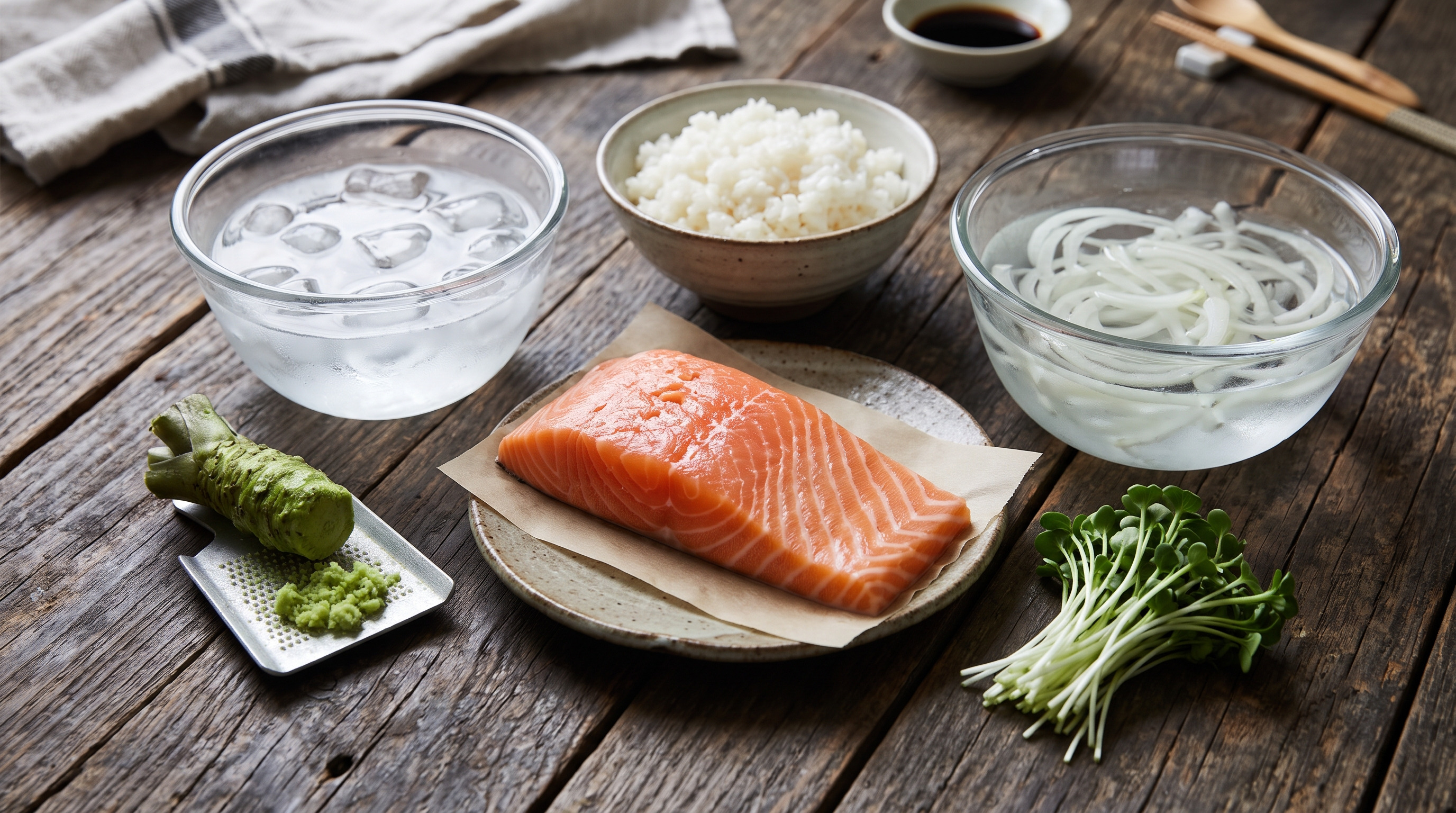
Here are the precise ingredients for 2 generous restaurant-style servings, provided in both metric and US units.
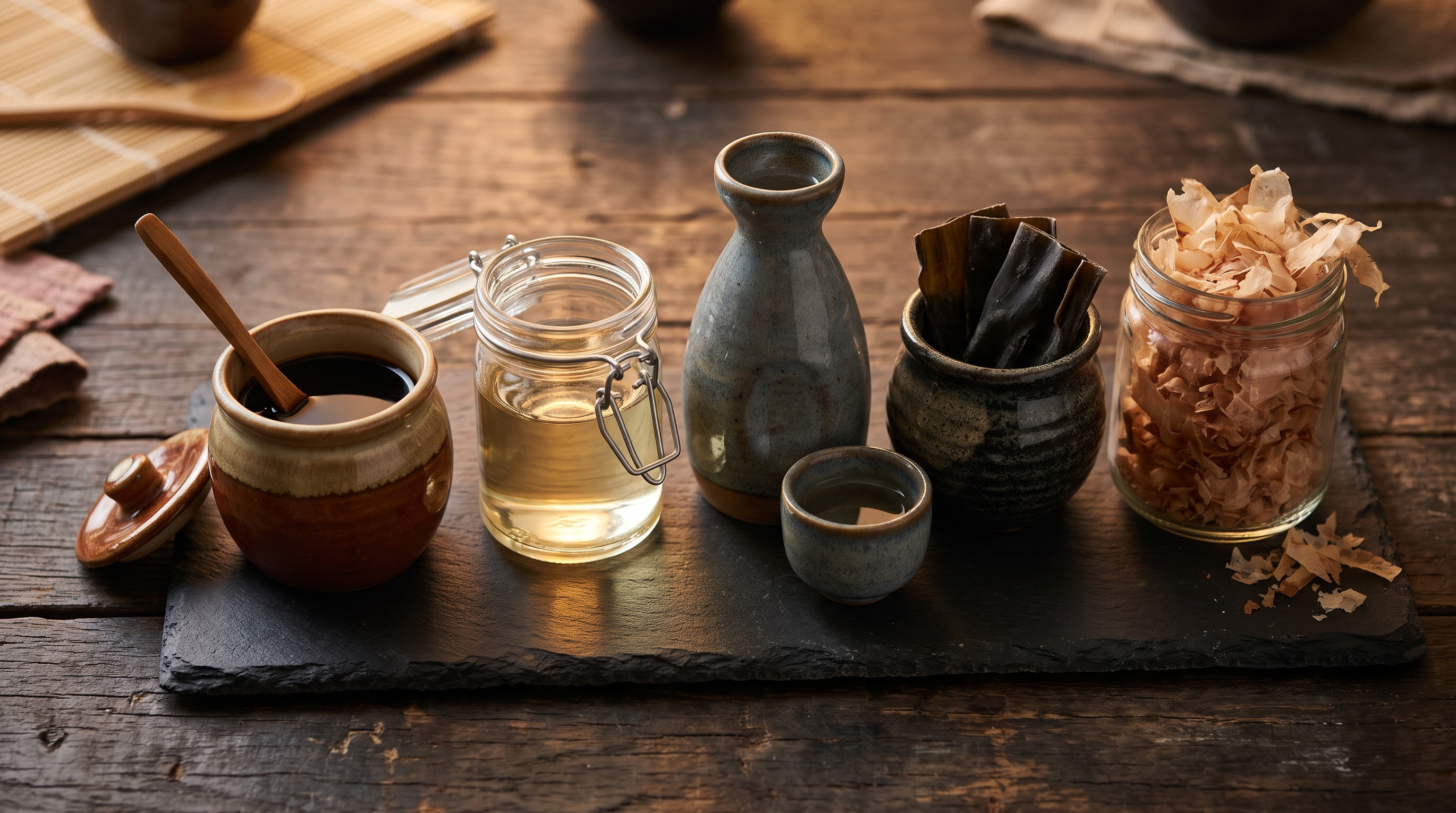
| Category | Ingredients & Amounts (Metric & US) | Chef’s Notes & Substitutions |
|---|---|---|
| Primary Seafood | • Sashimi-Grade Fresh Salmon: 300g–350g / 10.5–12.3 oz • Coarse Sea Salt: 1 tbsp • Sake or Mirin (for rinsing): 2 tbsp | Crucial: Purchase salmon strictly labeled “Sashimi Grade” or “Sushi Grade” from reputable Japanese or Korean markets (H-Mart, Mitsuwa). A mix of rich belly and tender loin is ideal. |
| Sushi Rice (Shari) | • Fresh Cooked Japanese Short-Grain Rice: 2 bowls (approx. 400g / 14 oz) • Rice Vinegar: 3 tbsp • Granulated Sugar: 2 tbsp • Fine Sea Salt: 1/2 tbsp | Cook rice with 10% less water than usual to keep grains plump and distinct. Microwave the vinegar mixture for 25 seconds to dissolve completely. |
| Artisanal Tsuyu Sauce | • Japanese Soy Sauce (Koikuchi): 4 tbsp • Mirin: 3 tbsp • Sake: 2 tbsp • Sugar: 1.5 tbsp • Water: 4 tbsp • Dried Kombu Kelp: 1 piece (5x5cm) • Bonito Flakes (Katsuobushi, optional): 1 handful | Simmering soy sauce, mirin, sake, and kelp eliminates sharp alcohol while infusing deep smoky umami. Chill thoroughly before drizzling. |
| Crisp Toppings & Aromatics | • Yellow Onion: 1/2 medium (paper-thinly sliced) • Fresh Radish Sprouts (Kaiware): 1 pack • Fresh Wasabi Paste: 2 tsp • Toasted White Sesame Seeds: 1 tsp | Soaking onions in ice water eliminates pungent sulfur heat while creating an ultra-crisp foundation cushion. |
| Gourmet Garnish (Optional) | • Fresh Egg Yolks (Pasteurized): 2 yolks • Capers: 1 tsp • Ripe Avocado: 1/2 fruit, sliced | A rich raw egg yolk placed in the center creates an unctuously decadent sauce when stirred into the salmon and warm rice. |
3. Step-by-Step Cooking Instructions
Follow these 4 simple steps to assemble a camera-ready Japanese salmon rice bowl.
Step 1. Shiojime Salt-Cure the Salmon and Slice Sashimi
Gently pat the fresh salmon fillet with paper towels to remove surface moisture. Sprinkle 1 tablespoon of coarse sea salt evenly over all sides of the fillet.
Place the salted salmon on a wire rack set inside a tray and refrigerate for 15 minutes. As osmosis works, you will see beads of cloudy moisture pooling on the salmon surface.
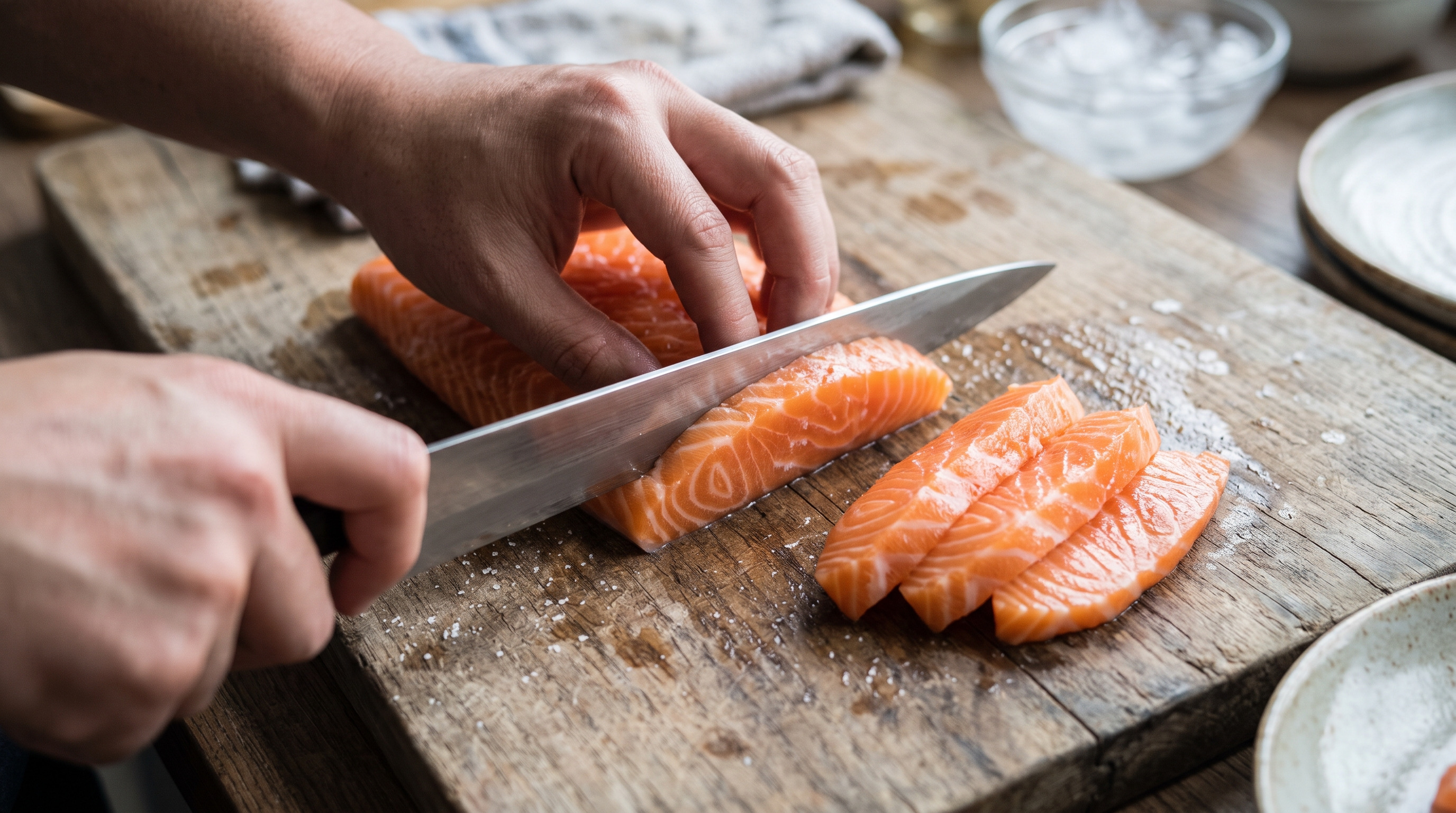
Remove from the fridge, rinse the fillet quickly under cold running water mixed with 2 tablespoons of sake or mirin to wash away excess salt, and thoroughly pat dry with fresh paper towels. Using a sharp knife held at a 45-degree angle, slice the salmon into 0.7cm (approx. 1/3-inch) thick diagonal slices.
Step 2. Ice-Bath Onions and Simmer Artisanal Tsuyu Sauce
Slice half a yellow onion paper-thin across the grain. Immediately submerge the sliced onion into a bowl of ice cold water for 10 minutes. Drain thoroughly in a colander and spin dry with paper towels to ensure zero excess water remains.
In a small saucepan, combine 4 tbsp soy sauce, 3 tbsp mirin, 2 tbsp sake, 1.5 tbsp sugar, 4 tbsp water, and 1 sheet of dried kombu kelp. Bring to a gentle simmer over medium heat for 3 to 4 minutes until the alcohol evaporates and the sugar dissolves. If desired, drop in a handful of bonito flakes, remove from heat, steep for 1 minute, and strain. Allow the tsuyu to cool to room temperature.
Step 3. Season and Fan the Sushi Rice (Shari)
In a small glass cup, stir together 3 tablespoons of rice vinegar, 2 tablespoons of sugar, and 1/2 tablespoon of salt. Microwave for 20 to 30 seconds until completely dissolved.
Place 2 bowls of freshly cooked, steaming hot Japanese short-grain rice into a wide wooden or ceramic bowl. Drizzle the warm sushi vinegar mixture evenly across the rice.
Using a silicone or wooden rice paddle, cut through the rice in slicing, horizontal motions rather than smashing downward. Simultaneously fan the rice with a hand fan or small plate for 2 minutes. The rice will transform into glossy, distinct grains at comfortable body temperature.
Step 4. Assemble the Bowl and Plate the Salmon Rose
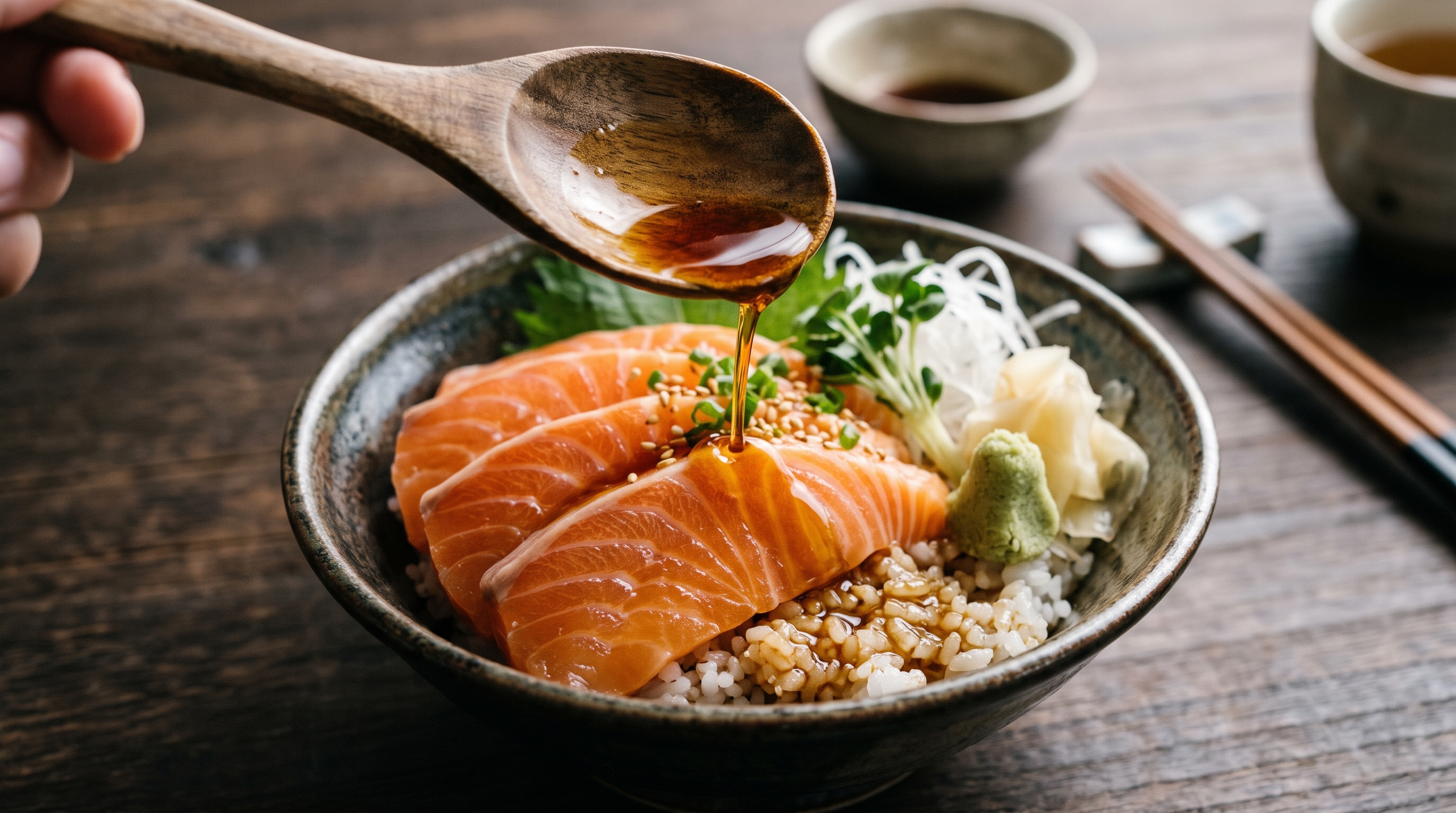
Divide the seasoned sushi rice evenly between two wide donburi bowls. Drizzle 1.5 to 2 tablespoons of cooled tsuyu glaze evenly over the rice.
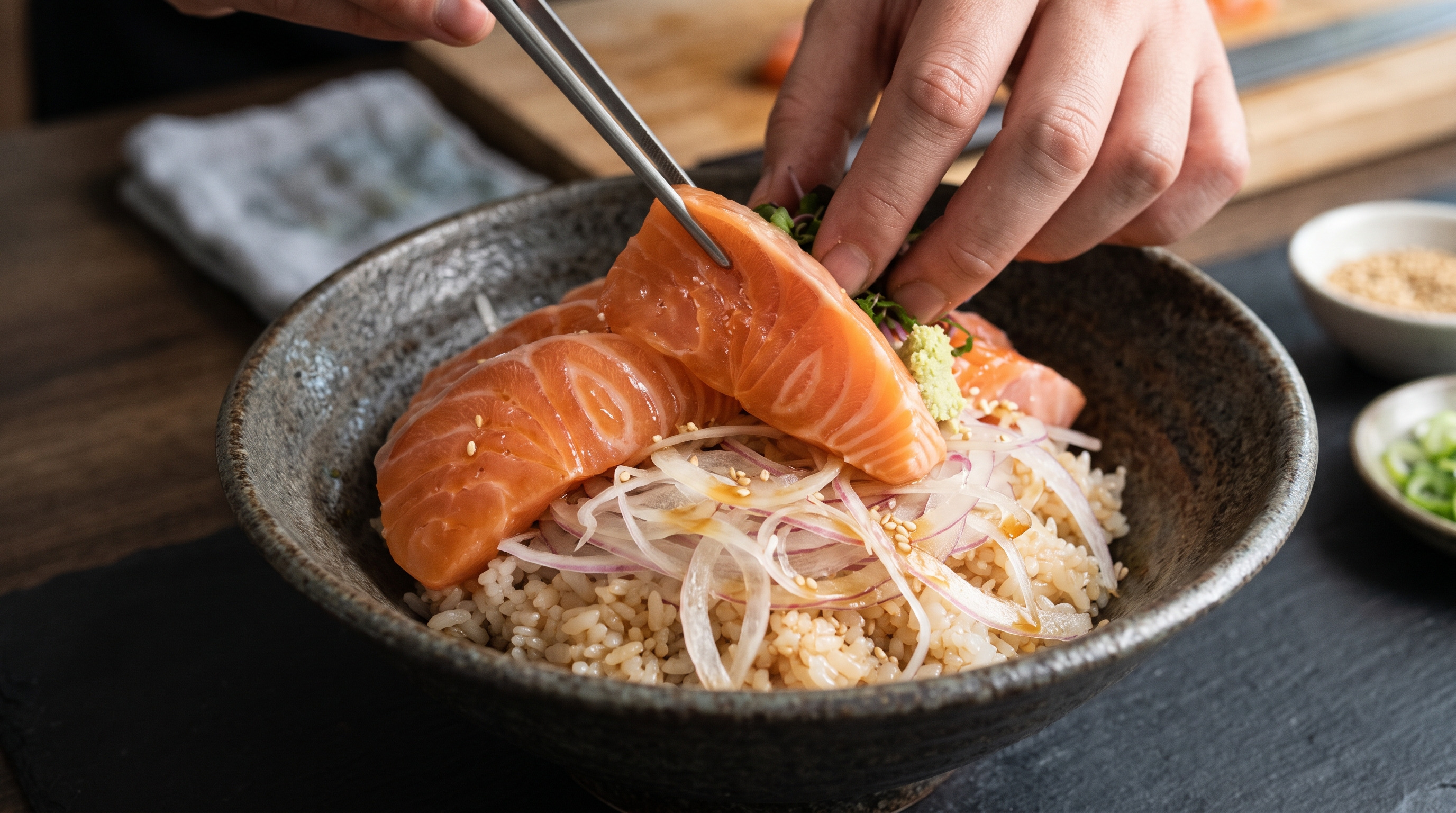
Mound half of the drained, crunchy onions in the center of each bowl to serve as an elevated pillow. Beginning at the outer circumference of the bowl, arrange the sliced salmon in an overlapping, circular flower petal pattern, working your way inward.
Crown the center of each bowl with a bundle of fresh radish sprouts (kaiware), a dollop of fresh wasabi, and an optional fresh egg yolk. Sprinkle toasted white sesame seeds over the salmon, and serve immediately with extra tsuyu on the side.
4. Pro Chef Tips to Elevate Your Dish
Take your Japanese culinary repertoire to the master level with these three essential chef secrets:
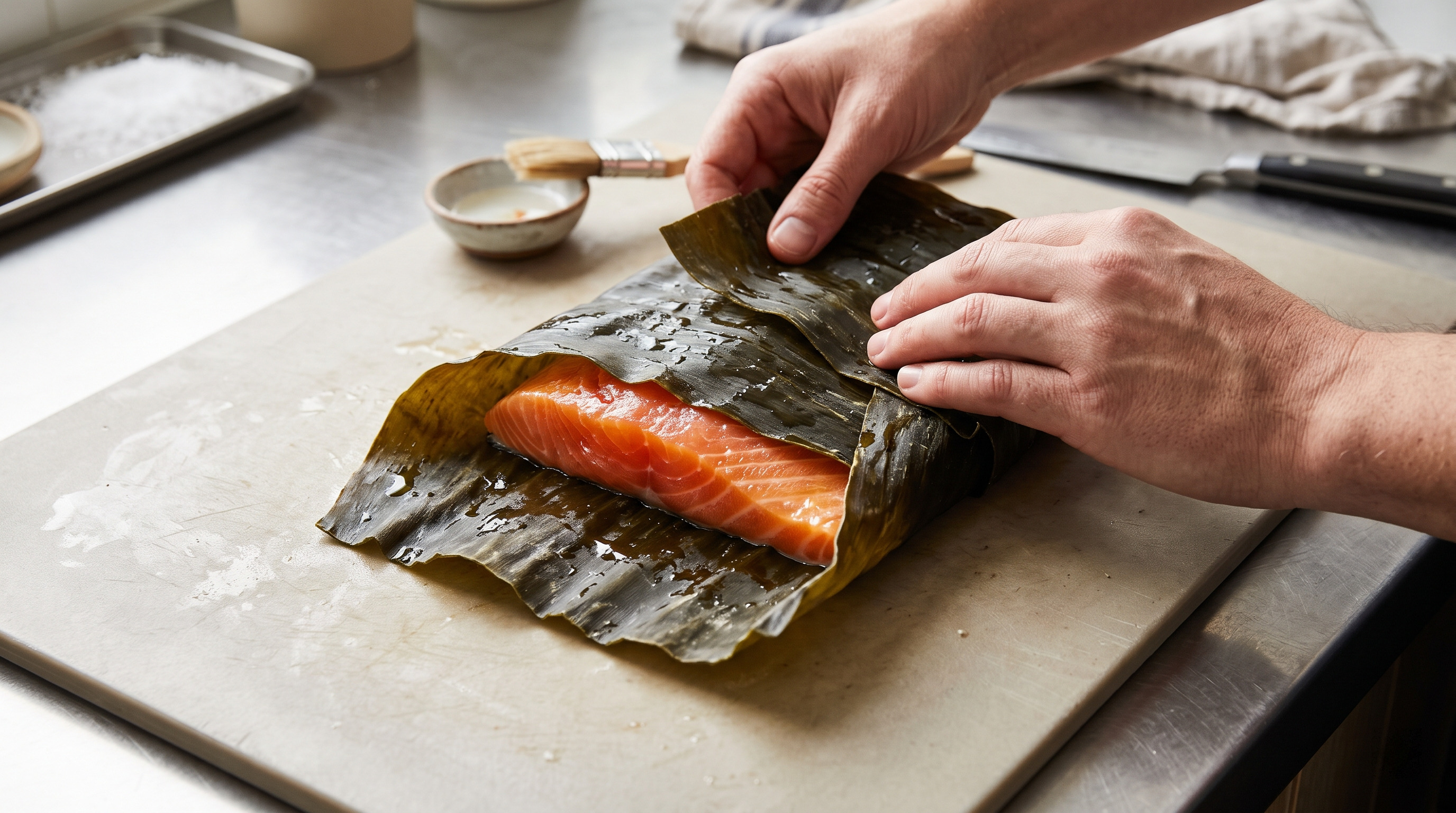
- The Ultimate Umami Upgrade: Kombujime (Kelp Curing): If you have 2 to 3 hours of extra time, follow your salt-curing step with Kombujime. Wipe two sheets of dried kombu kelp with sake-dampened paper towels to soften them. Sandwich your cured salmon fillet between the kelp sheets, wrap tightly in plastic wrap, and refrigerate for 2 to 3 hours. The natural free glutamic acid in the kombu penetrates deep into the salmon fat, yielding a firmer, translucent, jelly-like delicacy with concentrated ocean umami.
- Ice-Water Allicin Leaching for Crisp, Sweet Onions: The compound responsible for the eye-watering pungency and burning aftertaste in raw onions is allicin, an organic sulfur chemical. Allicin is completely water-soluble! Soaking thinly shaved onions in ice-cold water leaches the allicin out while cold thermal shock tightens cell-wall pectin, giving you onions that are refreshingly sweet and shatteringly crisp.
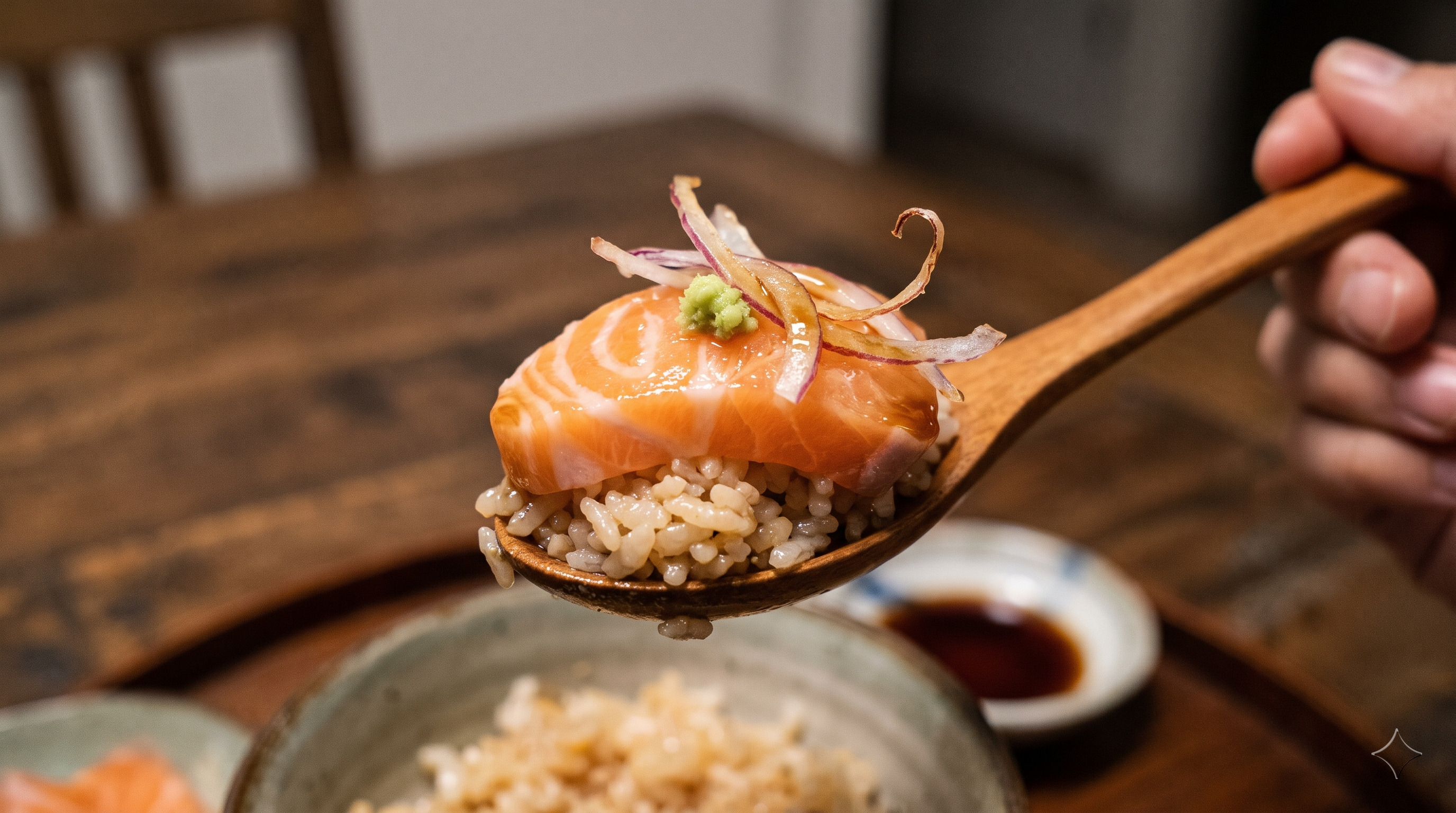
- Authentic Japanese Dining Etiquette: Scoop, Never Mix! In Japan, donburi is never stirred like Korean bibimbap. Mixing the bowl bruises the delicate salmon flesh and turns the glossy rice grains into an unsightly paste. Instead, use your spoon or chopsticks to pick up a spoonful of seasoned rice, top it with a crisp strand of onion, a slice of cured salmon, a dab of wasabi, and a drizzle of tsuyu, eating each bite intact.
5. Frequently Asked Questions (FAQ)
Q1. Can I use smoked salmon or regular supermarket raw salmon?
You must strictly use salmon that is labeled “Sashimi Grade” or “Sushi Grade”. Regular raw salmon sold in typical supermarket display cases is meant for cooking; it may harbor marine parasites (Anisakis) and has not undergone the deep-freezing protocols required for raw consumption. Smoked salmon, on the other hand, is heavily salted and smoked, which clashes with the gentle sweetness of sushi vinegar and homemade tsuyu.
Q2. What is the secret to getting crisp onions without any pungent bite?
Shave the onions as thinly as humanly possible, ideally using a Japanese mandoline slicer. Submerge them immediately into ice water for 10 minutes. The cold water extracts sulfur compounds while preserving the crisp cellular turgor of the onion, giving you sweet, restaurant-quality ribbons.
Q3. What is the best quick shortcut if I don’t have time to simmer homemade tsuyu?
If you’re pressed for time, take 3 tablespoons of commercially bottled concentrated Japanese tsuyu (3x concentrate). Whisk in 3 tablespoons of cold water, 1 tablespoon of mirin, and 1/2 tablespoon of sugar. Microwave for 20 seconds to dissolve the sugar, then chill in the freezer for 5 minutes before drizzling.
6. Serving Suggestions & Conclusion
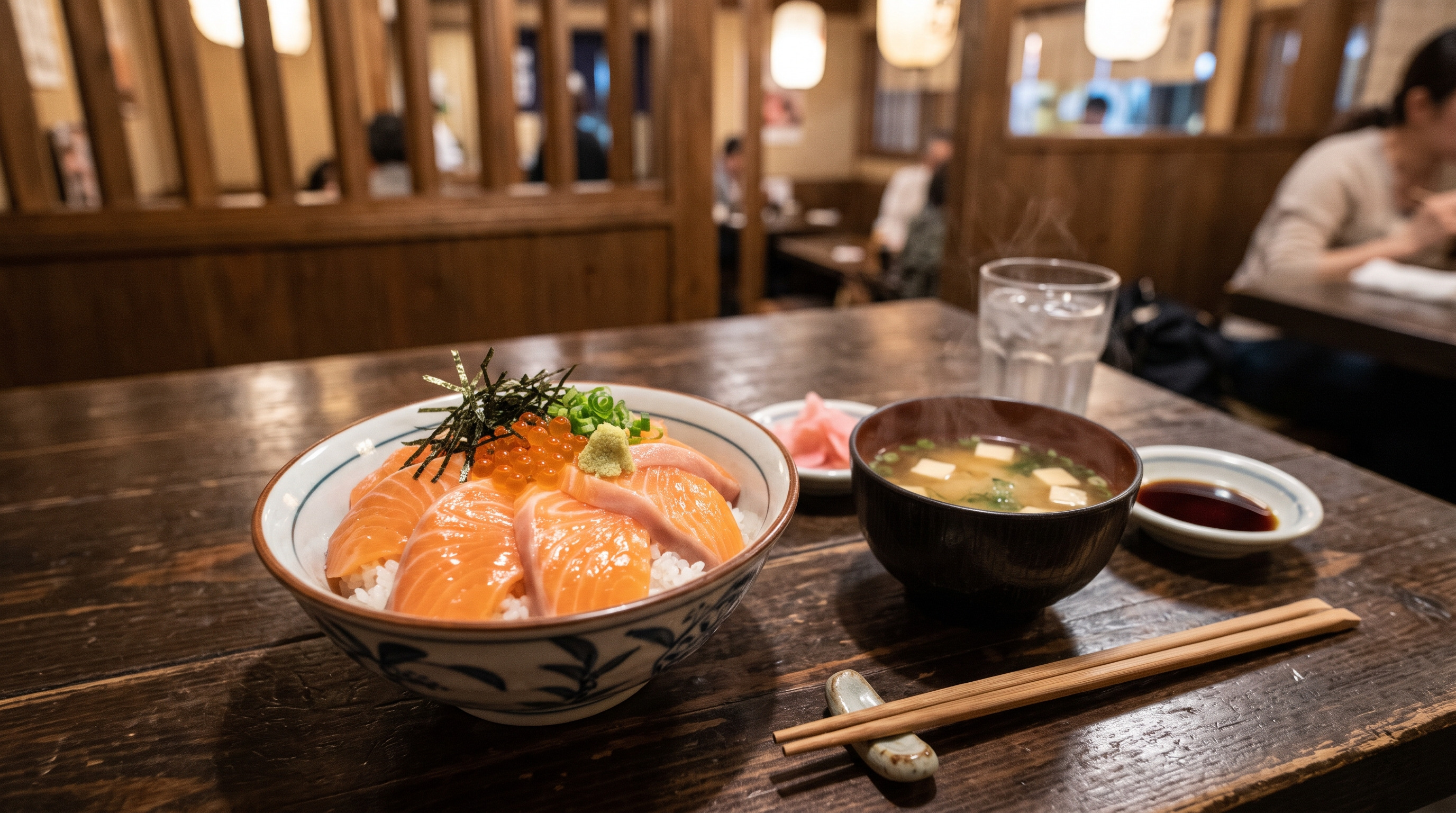
Sake Don is an effortlessly sophisticated meal that transforms a casual weeknight into a luxury dining experience. Serve it with a piping-hot bowl of classic Japanese red miso soup, sweet pickled sushi ginger (gari), and a cup of roasted green tea (hojicha).
If you are a lover of Japanese comfort cuisine, expand your table by pairing this fresh salmon bowl with our communal winter hot pot, Mille-Feuille Nabe, a comforting bowl of Japanese Beef Gyudon, or a golden-crusted Homemade Katsudon. For seafood lovers seeking a spicy contrast, pair this delicate bowl with fiery Korean Spicy Squid Stir-Fry (Ojingeo Bokkeum) or deep, smoky Seafood Jjamppong.
With the traditional science of Shiojime salt-curing and homemade tsuyu in your culinary toolkit, you can enjoy sushi-bar luxury in the comfort of your own home anytime. Enjoy every silky, savory bite!