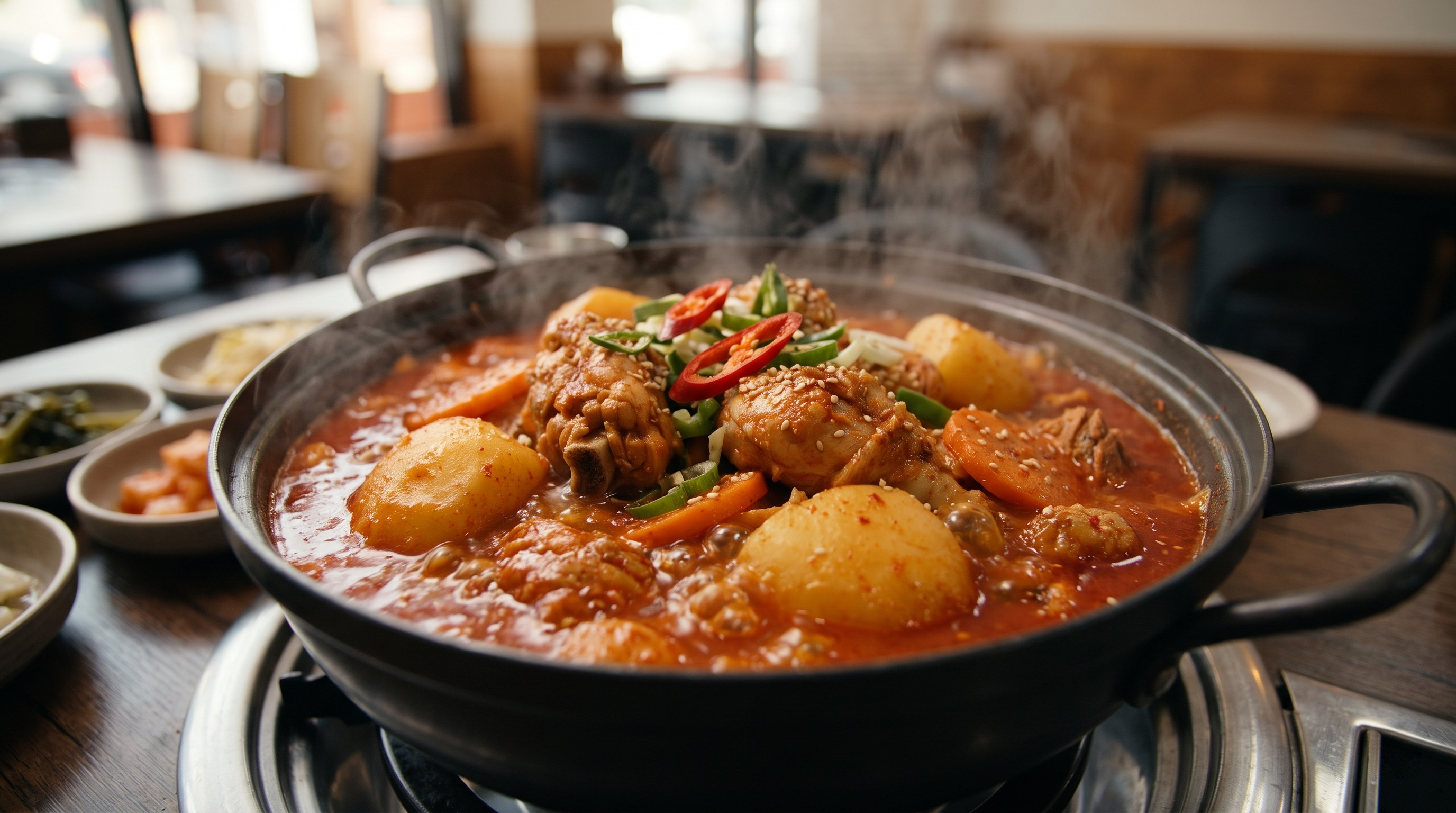
Quick Recipe Snapshot: ⏱️ Prep: 15 mins | 🔥 Cook: 30 mins | 🍽️ Servings: 3–4 | 💡 Key Secret: Blanch chicken for 3 minutes to lock out bone odors + coat with sugar first for tender meat + chamfer potato corners for silky broth.
Few dishes embody the comforting soul of Korean home cooking quite like Dakbokkeumtang (닭볶음탕), also lovingly known across Seoul night markets as Dakdoritang. Picture succulent bone-in chicken thighs and drumsticks braised to fall-apart tenderness in a fiery, ruby-red sauce, nested beside creamy potatoes that drink up savory chicken juices. Spooned generously over steaming hot white rice, it is an irresistible culinary masterpiece that warms you from the inside out.
Yet home cooks frequently encounter disappointing pitfalls: chicken that carries an unpleasant gamy aroma from marrow blood, thick chicken breast meat that tastes bland on the inside while the outside is oversalted, or potatoes that disintegrate during the simmer, transforming the stew into a cloudy, sludge-like gravy.
The secret behind famous Seoul braised chicken alleyways lies not in artificial seasonings, but in three distinct culinary science techniques: thermal coagulation blanching, the sugar-first osmotic penetration principle, and mechanical potato chamfering.
By mastering this foolproof restaurant formula, you will produce restaurant-quality Korean braised chicken in your own kitchen in under 45 minutes, complete with a balanced sweet-spicy glaze and succulent, juicy meat.
1. The Culinary Science Behind Restaurant Flavor
Understanding meat protein biochemistry transforms an ordinary stew into an exceptional culinary experience. Here are the two foundational scientific rules that elevate this recipe:
💡 Culinary Science 1: Hemoglobin Thermal Coagulation via 3-Minute Parboiling
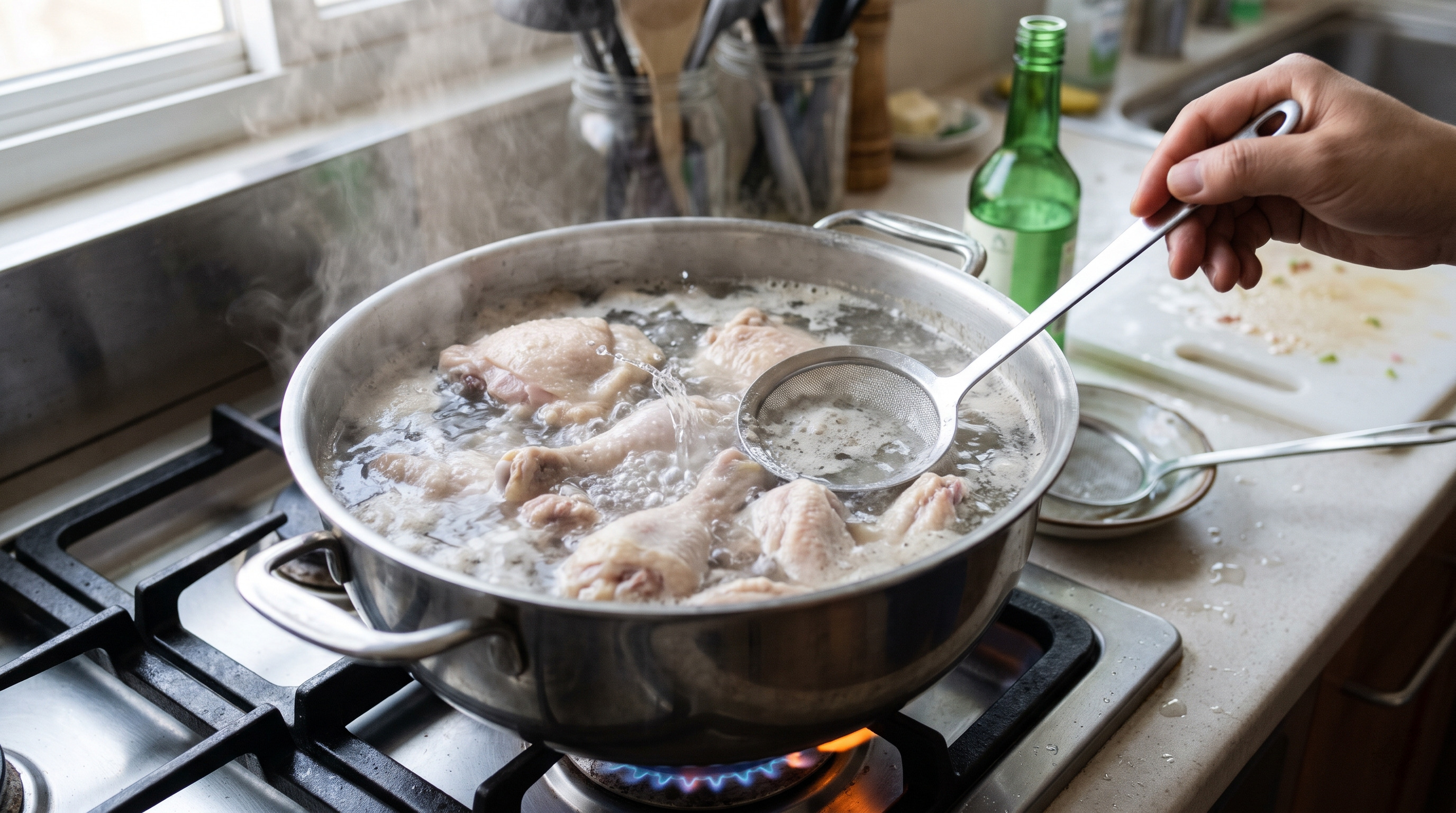
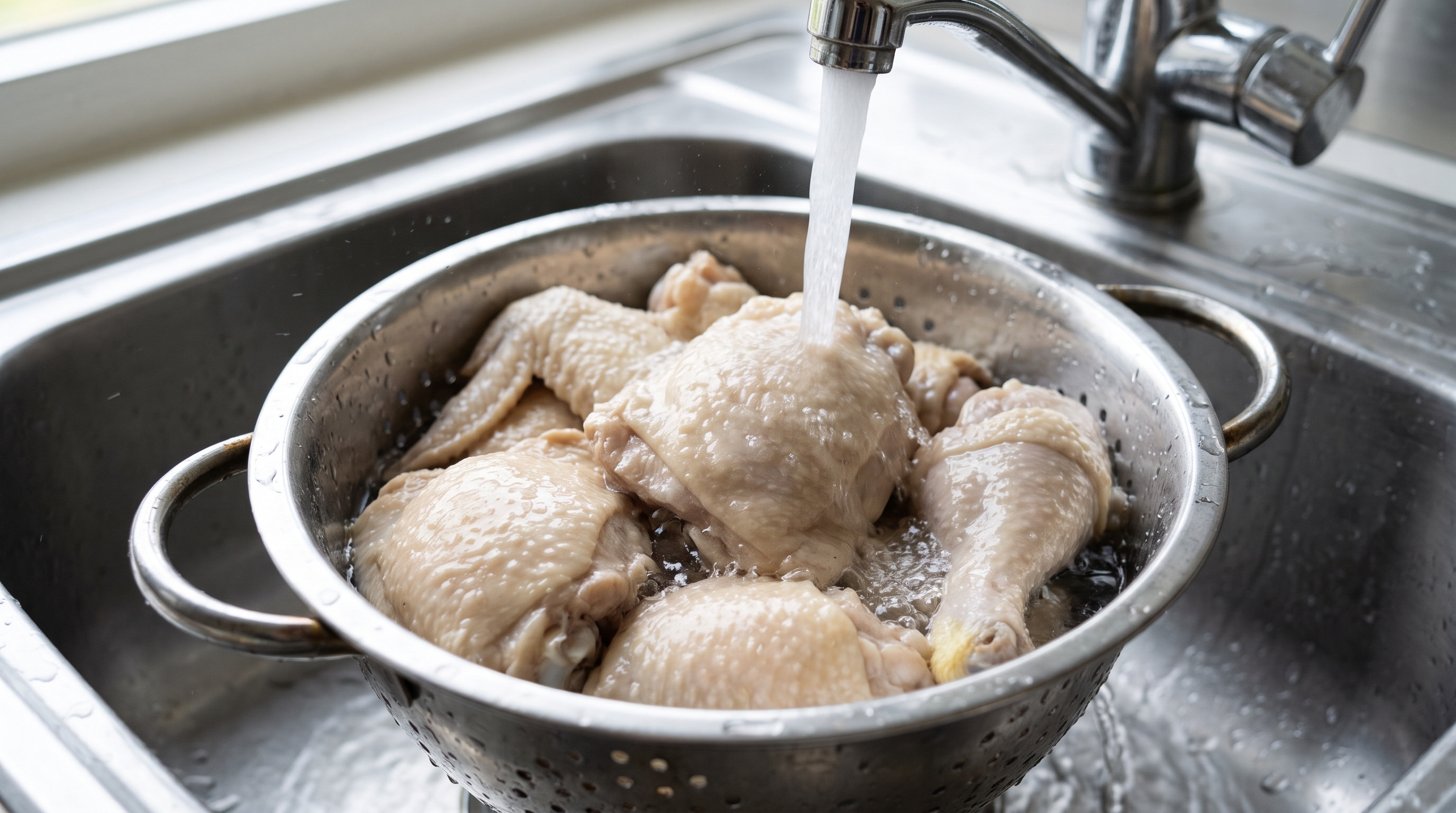
Bone-in chicken releases iron-rich bone marrow fluid and volatile oxidized skin lipids when heated. Tossing raw cut chicken directly into a braising sauce traps these foul-smelling compounds in the broth. By boiling the chicken in water with 3 tablespoons of high-proof alcohol (soju or cooking wine) for exactly 3 minutes, the unstable surface hemoglobin undergoes rapid thermal coagulation, solidifying into a grey foam. Rinsing the blanched chicken under cold running water washes away over 90% of gamey odor molecules without losing any internal chicken flavor.
💡 Culinary Science 2: The ‘Sugar-First’ (Sa-Yeom-Cho-Jang) Osmotic Penetration Law
In classic Asian culinary chemistry, the sequence of seasonings dictates deep flavor infusion. Sucrose (sugar) has a molecular weight of approximately 342 g/mol, which is nearly six times larger than sodium chloride (salt, 58 g/mol). If salt or soy sauce is introduced first, the sodium immediately draws moisture out of the muscle fibers, causing protein actin and myosin to contract tightly. This shrinkage seals the cellular gates, preventing larger sugar molecules from ever entering. By stir-frying the blanched chicken with sugar before introducing soy sauce or water, the sucrose gently hydrates the meat fibers, relaxes the tissue, and creates an open capillary network that draws the fiery braising sauce deep into the bone.
Furthermore, simmering the chicken bone-in releases natural gelatin and glutamic acid, producing an intensely satisfying mouthfeel when emulsified with the braising aromatics.
2. Essential Ingredients & The Golden Ratio Sauce
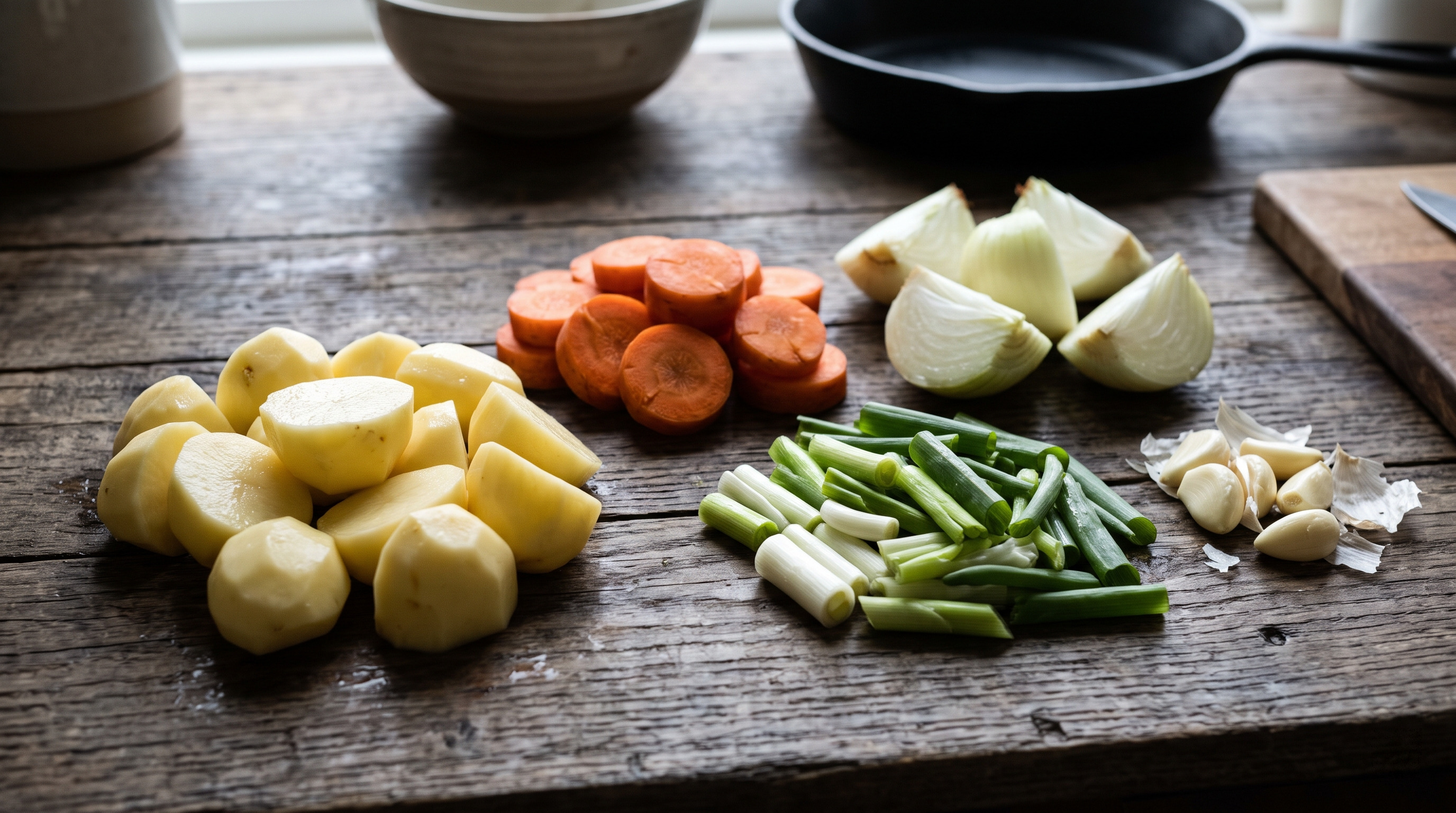
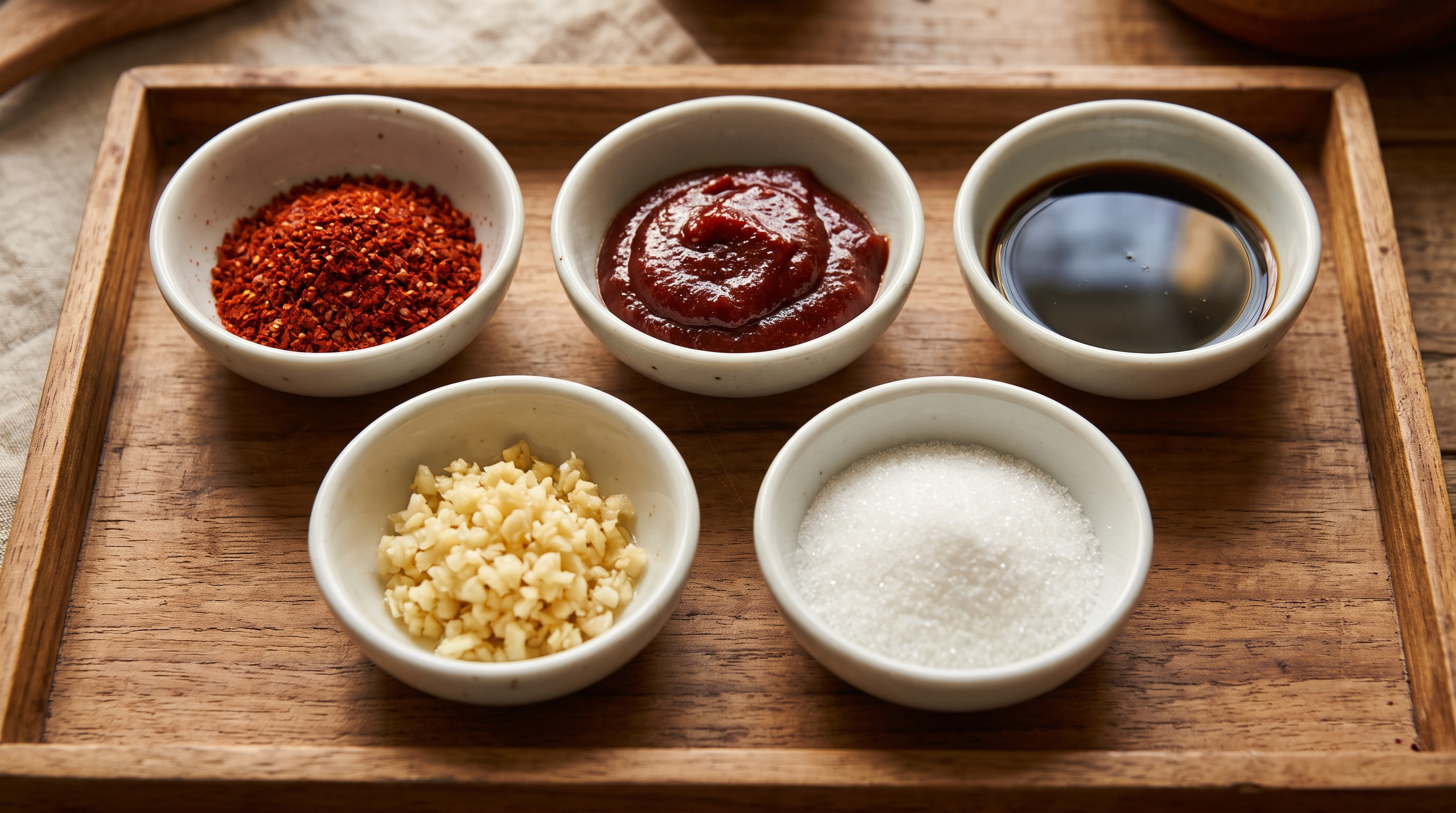
Below is the complete ingredient checklist with exact metric and US imperial measurements for 3 to 4 generous servings.
| Category | Ingredients & Amounts (Metric & US) | Chef’s Notes & Substitutions |
|---|---|---|
| Main Protein | 1 kg (2.2 lbs) whole chicken, cut into braising pieces | Bone-in, skin-on thighs, drumsticks, and wings provide the best gelatin and flavor. Boneless chicken thighs can be substituted (cook 10 mins less). |
| Hard Vegetables | 2 medium russet or Yukon Gold potatoes (350g / 12 oz) 1/2 medium carrot (100g / 3.5 oz) | Yukon Golds hold shape better; russets offer a fluffier bite. Peel and chamfer the sharp edges with a paring knife. |
| Aromatics & Greens | 1 medium yellow onion (180g / 6.3 oz) 1 large scallion stalk (60g / 2.1 oz) 2 Korean green chilies (cheongyang) or jalapeños 1 red chili pepper | Cheongyang chili peppers deliver crisp heat. Substitute with serrano or jalapeño peppers. Korean red chili adds bright color contrast. |
| Parboiling Agent | 1L (4.2 cups) water 3 tbsp Korean soju (or dry white wine / mirin) 10g (0.35 oz) fresh ginger sliced | Alcohol vaporizes and carries away volatile sulfur and amine compounds during the initial 3-minute boil. |
| Meat Tenderizer | 2 tbsp brown sugar (or granulated raw sugar) | Added directly to the chicken during the initial saute step to tenderize muscle fibers before liquid is added. |
| Liquid Broth | 600ml (2.5 cups) water or dashi kelp stock | Avoid flooding the pot with too much liquid. A shallow braise concentrates chicken collagen for a glossy coating. |
| Golden Ratio Sauce | 4 tbsp Korean red pepper flakes (gochugaru) 5 tbsp regular soy sauce (jin-ganjang) 1 tbsp Korean soup soy sauce (guk-ganjang) 1.5 tbsp Korean red pepper paste (gochujang) 2 tbsp minced garlic 2 tbsp mirin 1 tbsp corn syrup or oligodang 1/2 tsp ground black pepper 1 tbsp toasted sesame oil | Gochugaru provides clean heat, while a small touch of gochujang adds rich body. Soup soy sauce (guk-ganjang) boosts natural savory depth. |
3. Step-by-Step Cooking Instructions
Step 1. 3-Minute Parboil & Cold Water Cleansing
Fill a large pot with 1 liter (4.2 cups) of water, add 3 tablespoons of soju (or white wine), and throw in the sliced ginger. Bring the water to a rolling boil over high heat. Add the cut chicken pieces and boil vigorously for exactly 3 minutes.
You will notice grey foam and floating impurities rising to the surface. Immediately dump the chicken into a colander in the sink. Under cold running water, wash each chicken piece, gently rubbing away any dark coagulated marrow blood trapped around cut bone joints. Drain thoroughly.
Step 2. Sugar Pre-Coating & Sear
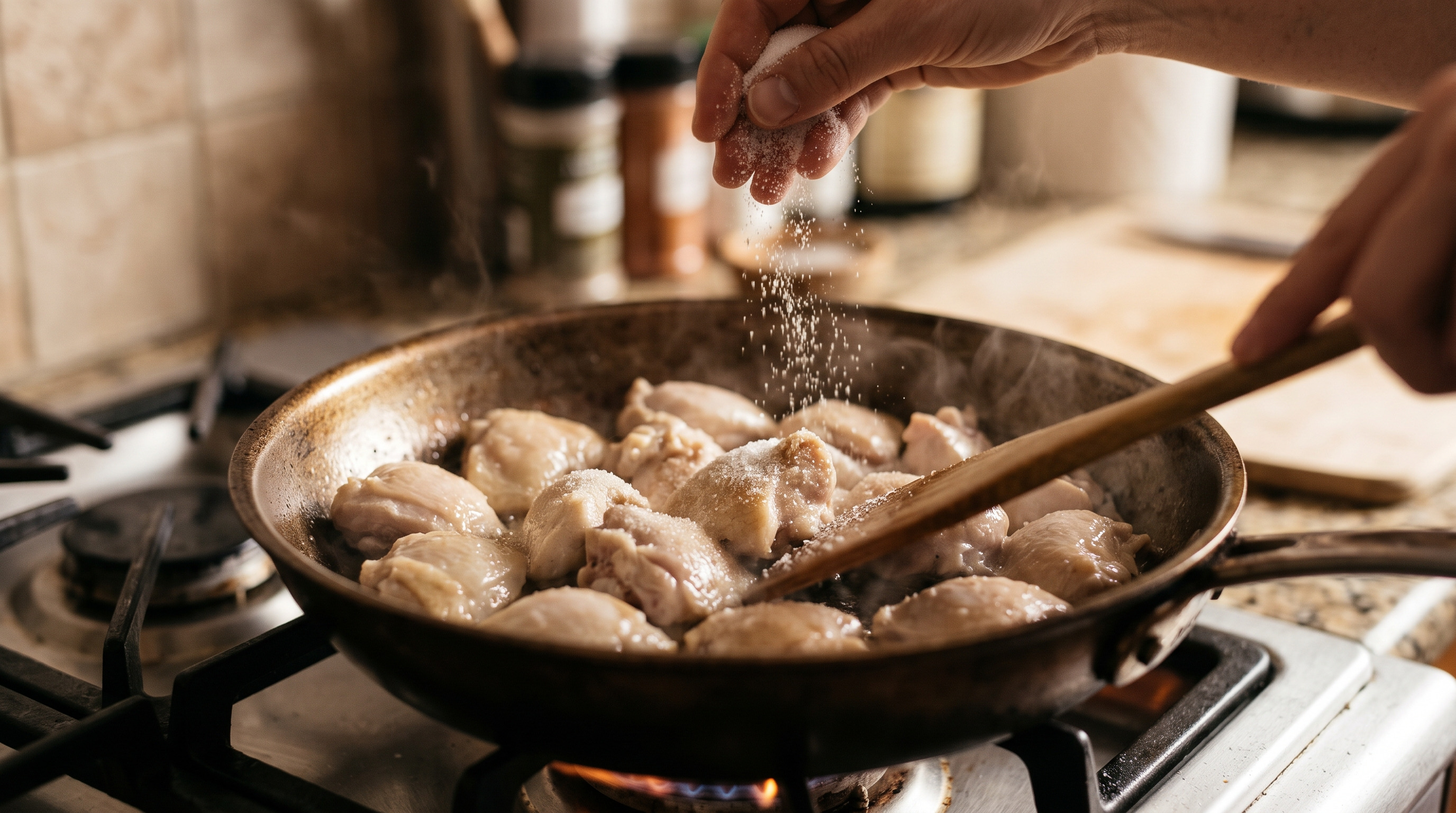
Set your wide braising pot or Dutch oven over medium heat. Add the drained, parboiled chicken pieces into the dry pan (the chicken skin will render enough natural fat). Scatter 2 tablespoons of brown sugar evenly over the chicken.
Stir and toss the chicken for 1 to 2 minutes. As the sugar liquefies, it coats every chicken piece in a translucent, glistening sheen, softening muscle fibers and kickstarting the Maillard reaction.
Step 3. Add Broth, Golden Sauce & Simmer Root Vegetables
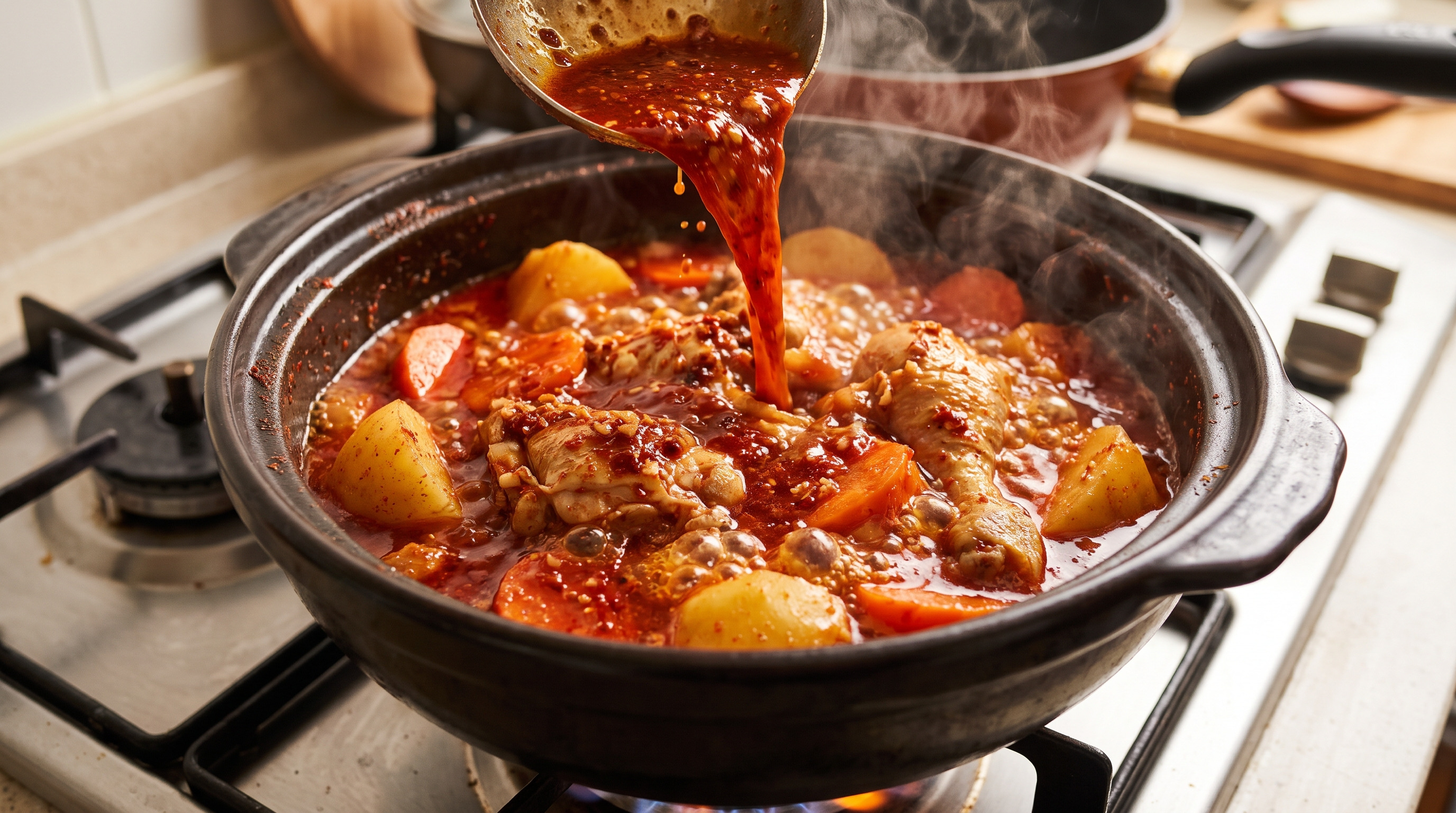
Pour 600ml (2.5 cups) of water or kelp broth directly into the pan. In a small bowl, whisk together the gochugaru, soy sauce, soup soy sauce, gochujang, minced garlic, mirin, corn syrup, and black pepper, then pour this vibrant sauce into the pot, stirring well to dissolve.
Nestle the chamfered potato chunks and sliced carrots into the liquid around the chicken pieces. Bring everything to a rolling boil over high heat. Once boiling, cover with a tight-fitting lid, lower the heat to medium-low, and simmer undisturbed for 15 minutes. This slow braise infuses sauce deep into the chicken while cooking the potatoes through.
Step 4. Add Aromatics & High-Heat Glaze Reduction
Uncover the pot. Pierce a potato chunk with a chopstick; it should slip through with slight resistance (about 80% cooked). Add the thick-cut yellow onion wedges, scallions, and sliced green and red chilies.
Turn the heat up to high and boil vigorously for 5 to 7 minutes, leaving the lid off. Use a ladle to repeatedly scoop the bubbling red broth and baste the chicken and potatoes. The sauce will rapidly thicken and turn into a sticky, deep-crimson glaze. Turn off the heat, drizzle 1 tablespoon of toasted sesame oil, and gently toss before serving.
4. Pro Chef Tips to Elevate Your Dish
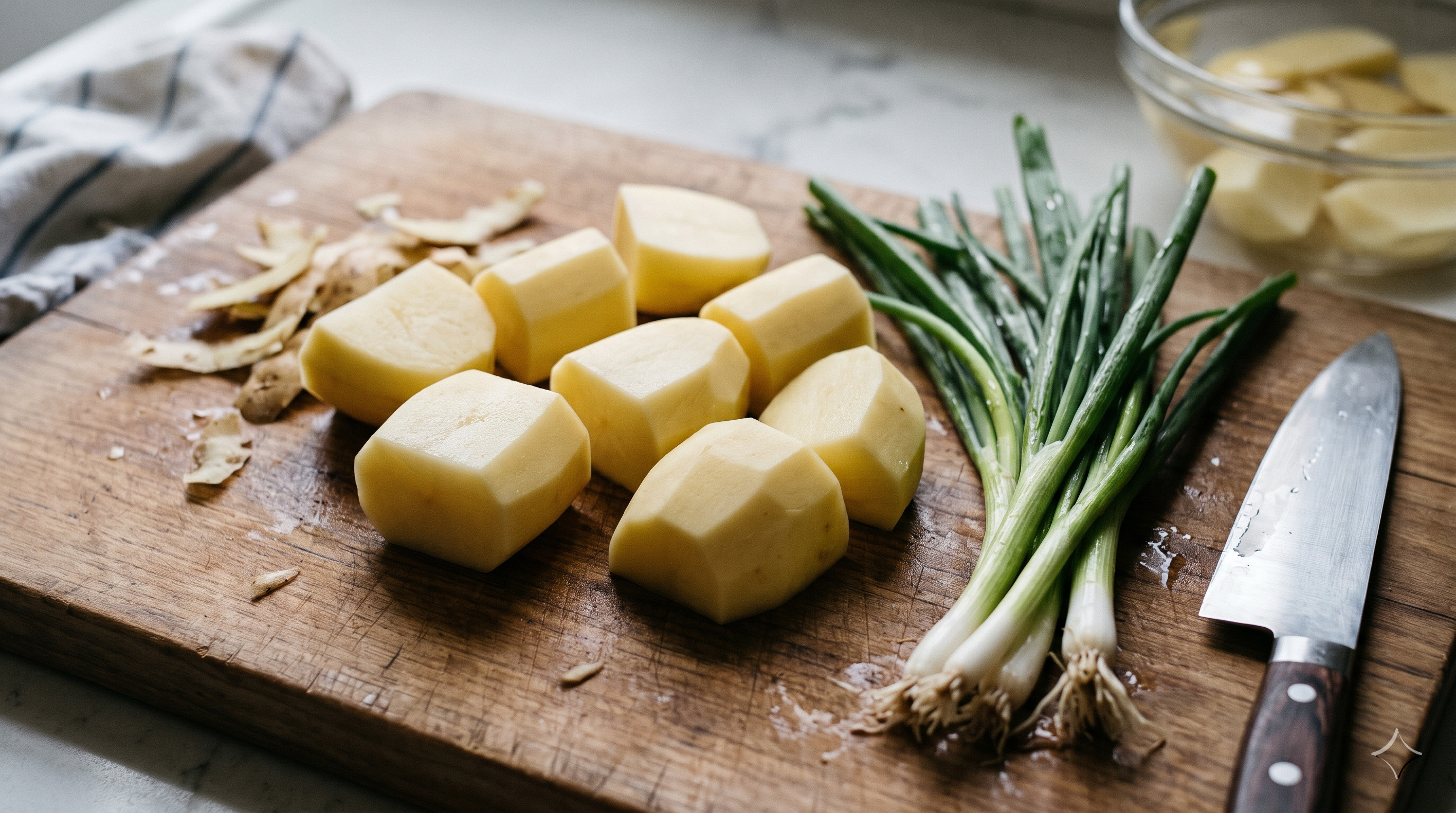
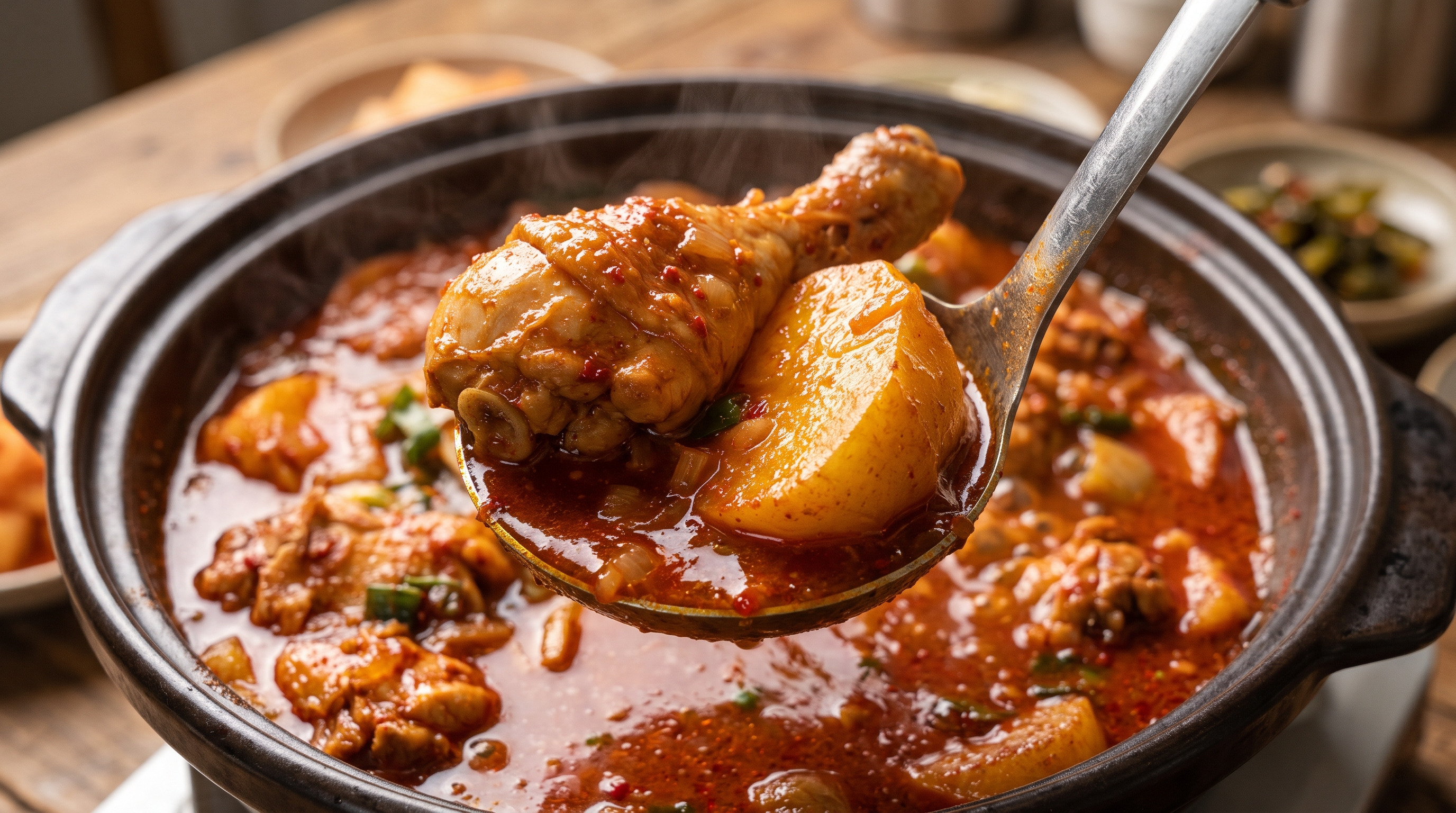
Elevate your homemade stew from simple home cooking to legendary Korean restaurant standards with these three pro-level chef secrets:
- Practice ‘Mentori’ (Edge-Chamfering) on Your Potatoes: When potatoes simmer, their sharp 90-degree corners collide against each other and against chicken bones, shedding millions of tiny starch particles into the sauce. Take 30 seconds to trim the sharp outer edges of each potato chunk into rounded contours. The potatoes will stay completely intact, and your sauce remains silky, glossy, and never muddy.
- The Secret 1/2 Teaspoon of Yellow Curry Powder: Top Seoul braised chicken joints secretly stir 1/2 teaspoon (2g) of mild yellow curry powder (such as S&B or Ottogi) into their red sauce blend. You will not taste distinct curry flavors; instead, the turmeric and fenugreek eliminate any lingering meat odor while adding an irresistible, mouthwatering golden depth to the savory profile.
- Add Starch Noodles (Dangmyeon) or Rice Cakes in the Final 5 Minutes: If you love chewy Korean glass noodles (dangmyeon) or rice cakes (tteok), soak them in lukewarm water for at least 30 minutes beforehand. Only introduce them during Step 4 (the final 5 minutes of high-heat reduction). Adding them too early causes them to soak up all your precious braising liquid, scorching the bottom of the pot.
5. Frequently Asked Questions (FAQ)
Q1. Should I remove all the chicken skin before braising?
No, stripping 100% of the skin leads to dry meat and a watery sauce. Chicken fat renders down into the braising liquid to form a rich, velvety emulsion with the gochujang and starch. Trim away only excessive flabby skin around the tail and neck, keeping about 70% intact for optimal mouthfeel.
Q2. Can I make this in an Instant Pot or pressure cooker?
Yes! High-pressure cooking tenderizes the chicken in just 12-15 minutes. However, intense pressure turns regular potato pieces into mush. Cut your potatoes into double-sized jumbo pieces, pressure cook for 12 minutes with natural release for 5 minutes, then switch to Sauté mode uncovered for 3-5 minutes to reduce the sauce to a thick glaze.
Q3. How do I make the famous K-dessert fried rice with the leftover sauce?
Save 3 to 4 ladles of the leftover sauce along with 1 braised potato chunk in the pot. Mash the potato with a spatula, add 1 bowl of warm steamed rice, 2 tbsp of finely chopped sour kimchi, shredded roasted seaweed (gim), and 1 tbsp of sesame oil. Fry over medium-high heat, spread thin, and let the bottom crisp up for 2 minutes to form golden scorched rice (nurungji).
6. Serving Suggestions & Related Recipes
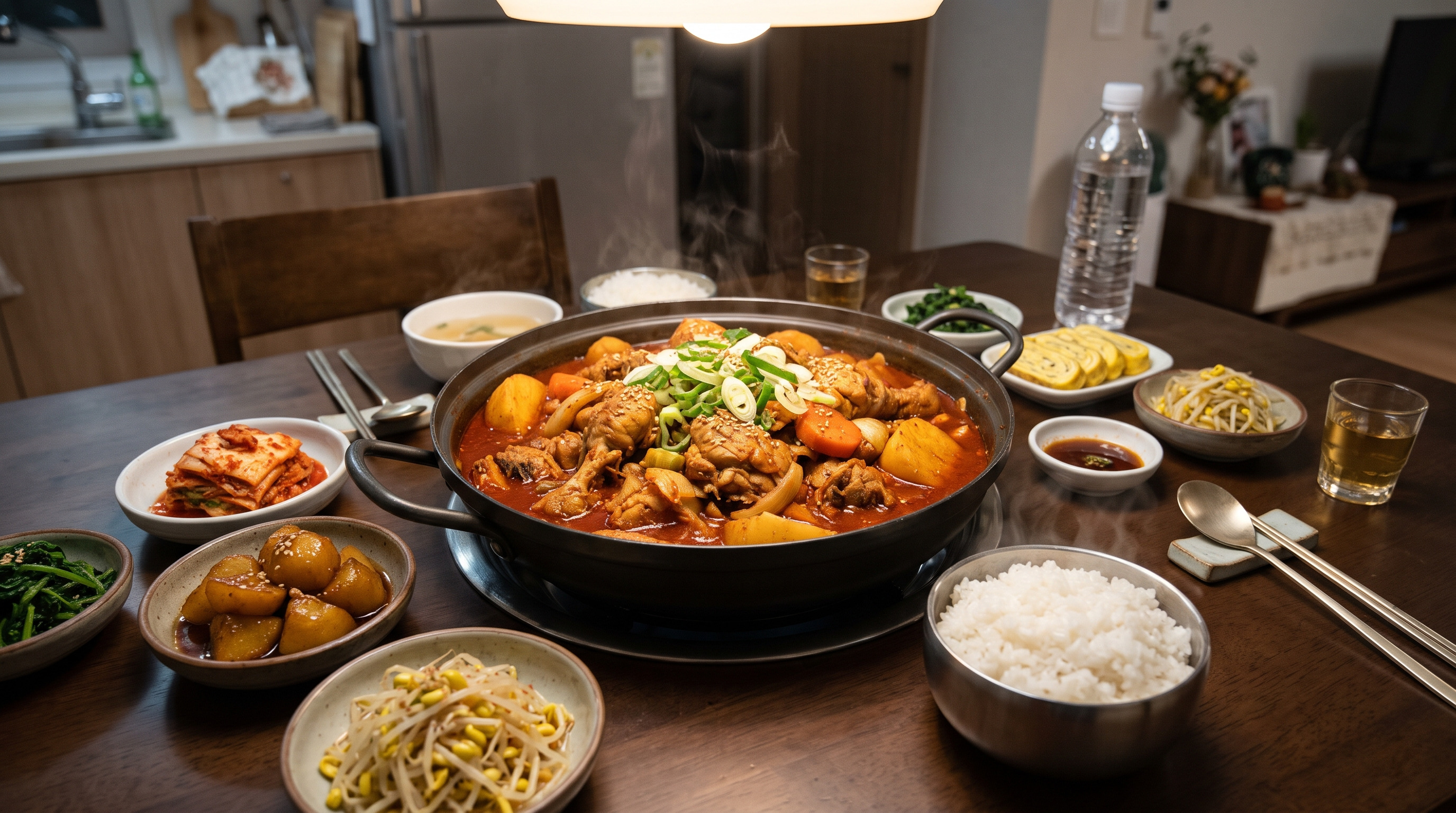
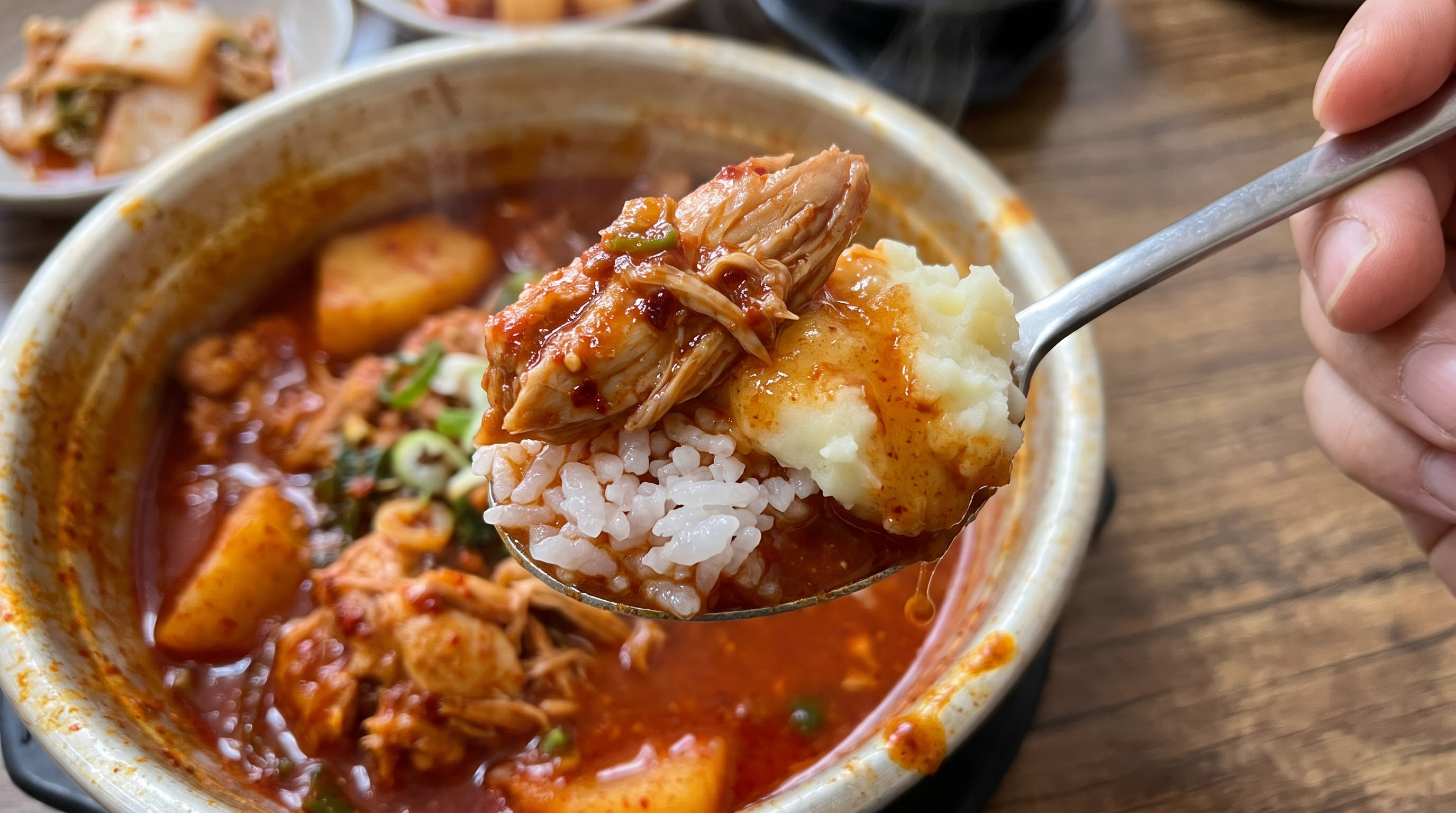
Dakbokkeumtang is best served piping hot in a wide shallow pot right at the center of your dining table. Serve with bowls of warm, short-grain steamed white rice and mild Korean side dishes (banchan) that balance the bold heat, such as rolled omelet (gyeran-mari), seasoned bean sprouts (kongnamul-muchim), or crisp cucumber salad.
For beverage pairings, an ice-cold Korean lager beer or chilled traditional soju cuts through the rich, savory chicken fat with refreshing elegance.
If you love authentic Korean homestyle braises and stews, explore these classic companion recipes:
- Craving a sweet, savory soy-glazed alternative? Try our rich Andong Jjimdak (Korean Braised Soy Chicken).
- Looking for deep pork and fermented umami? Check out our slow-simmered Pork Kimchi Jjigae.
- Want a fiery wok-fired meat dish for dinner tonight? Don’t miss our classic Jeyuk Bokkeum (Spicy Korean Pork Stir-Fry).