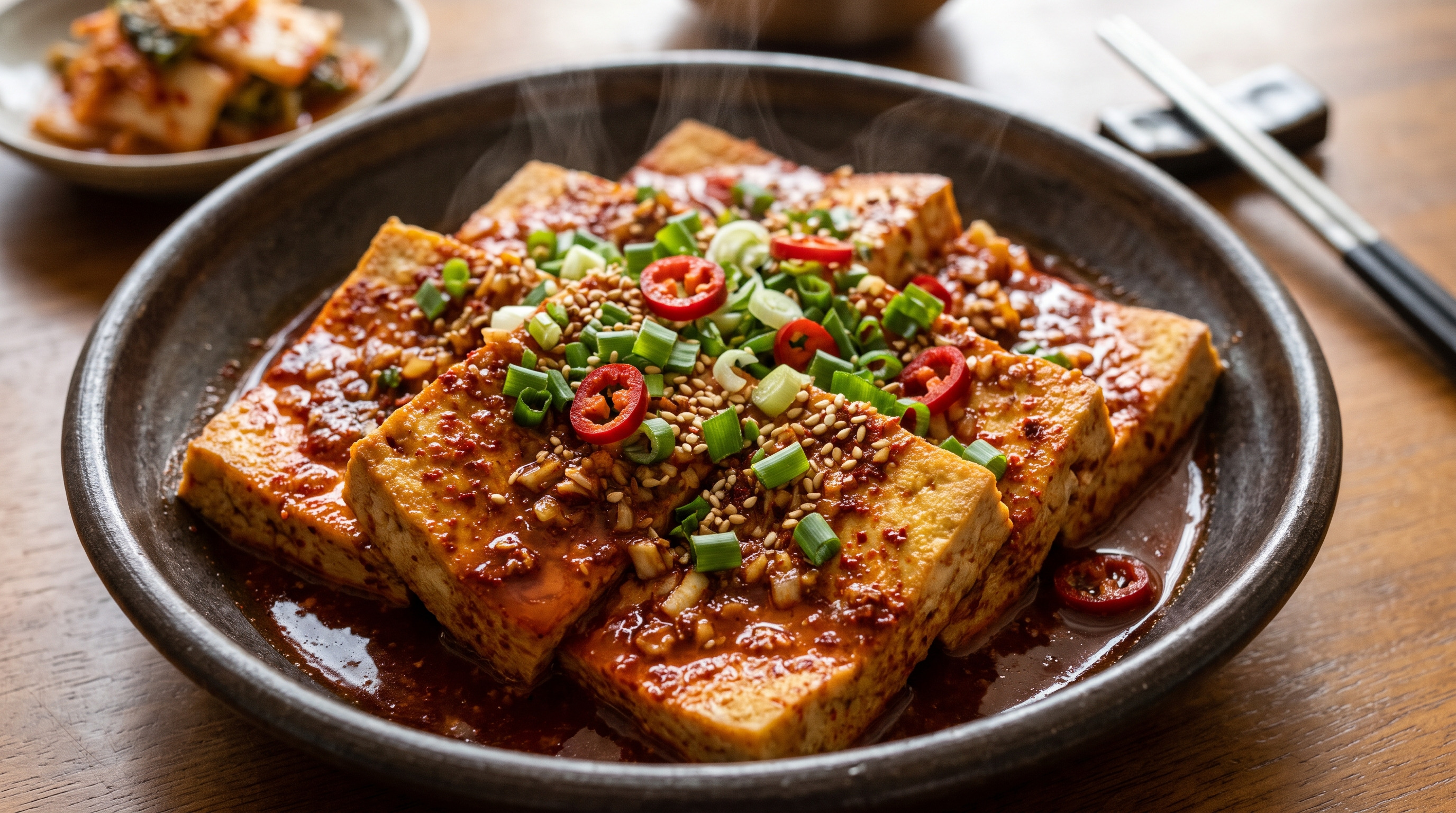
Quick Recipe Snapshot: ⏱️ Prep: 10 mins | 🔥 Cook: 15 mins | 🍽️ Servings: 2–3 | 💡 Key Secret: 10-minute salt rest pulls excess water + sear in perilla-neutral oil blend for a crisp shell + braise uncovered over an onion bed.
Among the pantheon of beloved Korean homestyle side dishes (banchan), Dubu-jorim (두부조림) stands out as the ultimate rice thief (bap-doduk). Featuring slabs of tofu pan-seared to a golden, resilient crisp, then braised in a deeply savory, sweet-spicy garlic glaze until every microscopic pore drinks in rich flavor, it elevates humble pantry ingredients into centerpiece dining.
Yet home cooks frequently run into frustrating culinary hurdles: tofu slices that crumble and disintegrate the moment they are flipped in the skillet, a braising sauce that slides right off the surface leaving the inside completely bland, or a sauce that scorches on the pan bottom before the tofu has absorbed any seasoning.
The solution lies in practical food chemistry: osmotic salt dehydration, surface glycinin protein heat-denaturation, and open-skillet reduction over an allium thermal shield.
With this restaurant-tested 20-minute guide, you will master the art of creating Korean braised tofu that stays beautifully intact, boasting a chewy, caramelized exterior and a velvety, melt-in-your-mouth interior.
1. The Culinary Science Behind Restaurant Flavor
Tofu is an emulsion of soy protein curd holding more than 80% bound water. Understanding how to manage this internal liquid transforms your cooking results:
💡 Culinary Science 1: Osmotic Salting & Glycinin Protein Heat-Denaturation
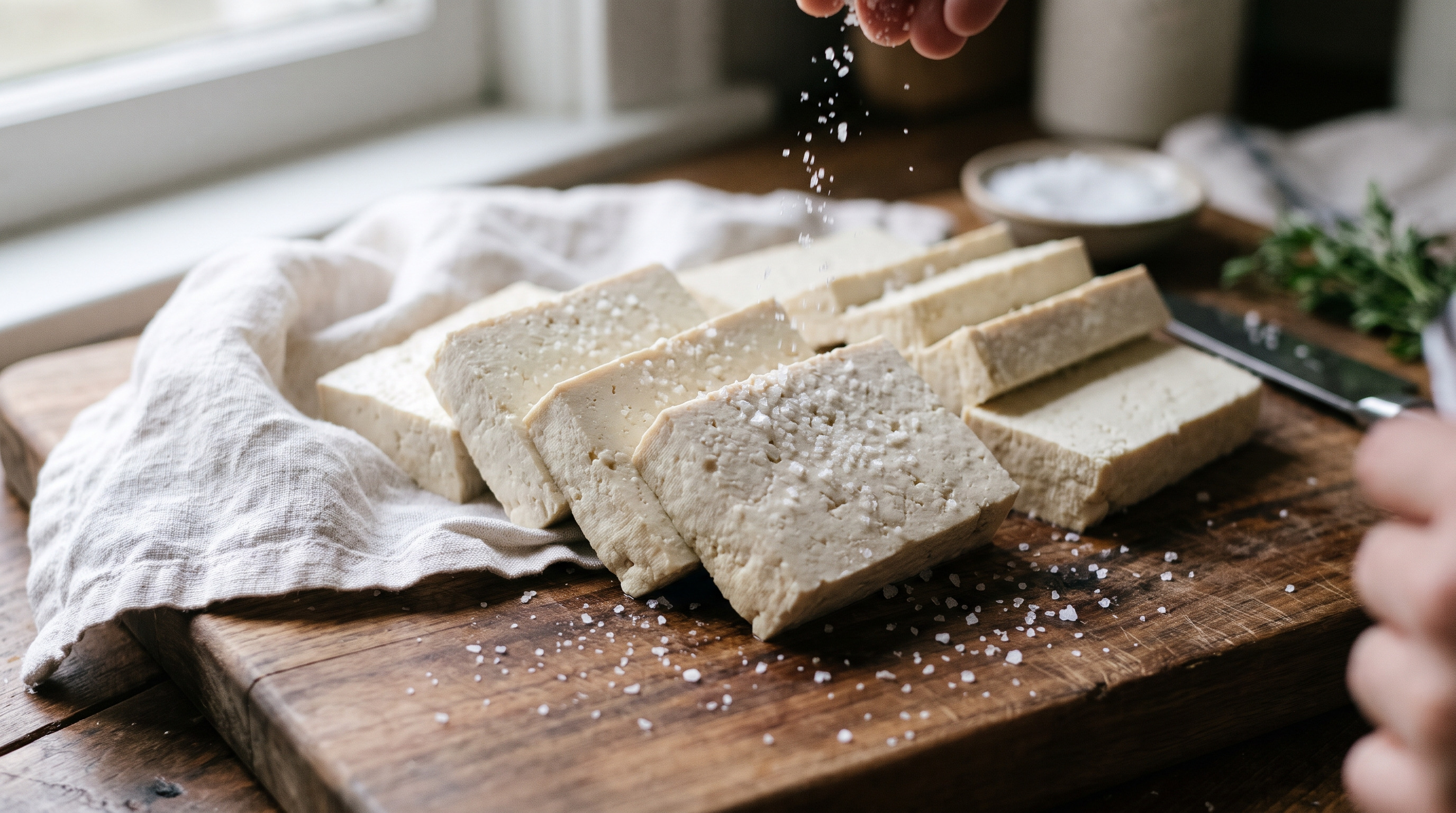
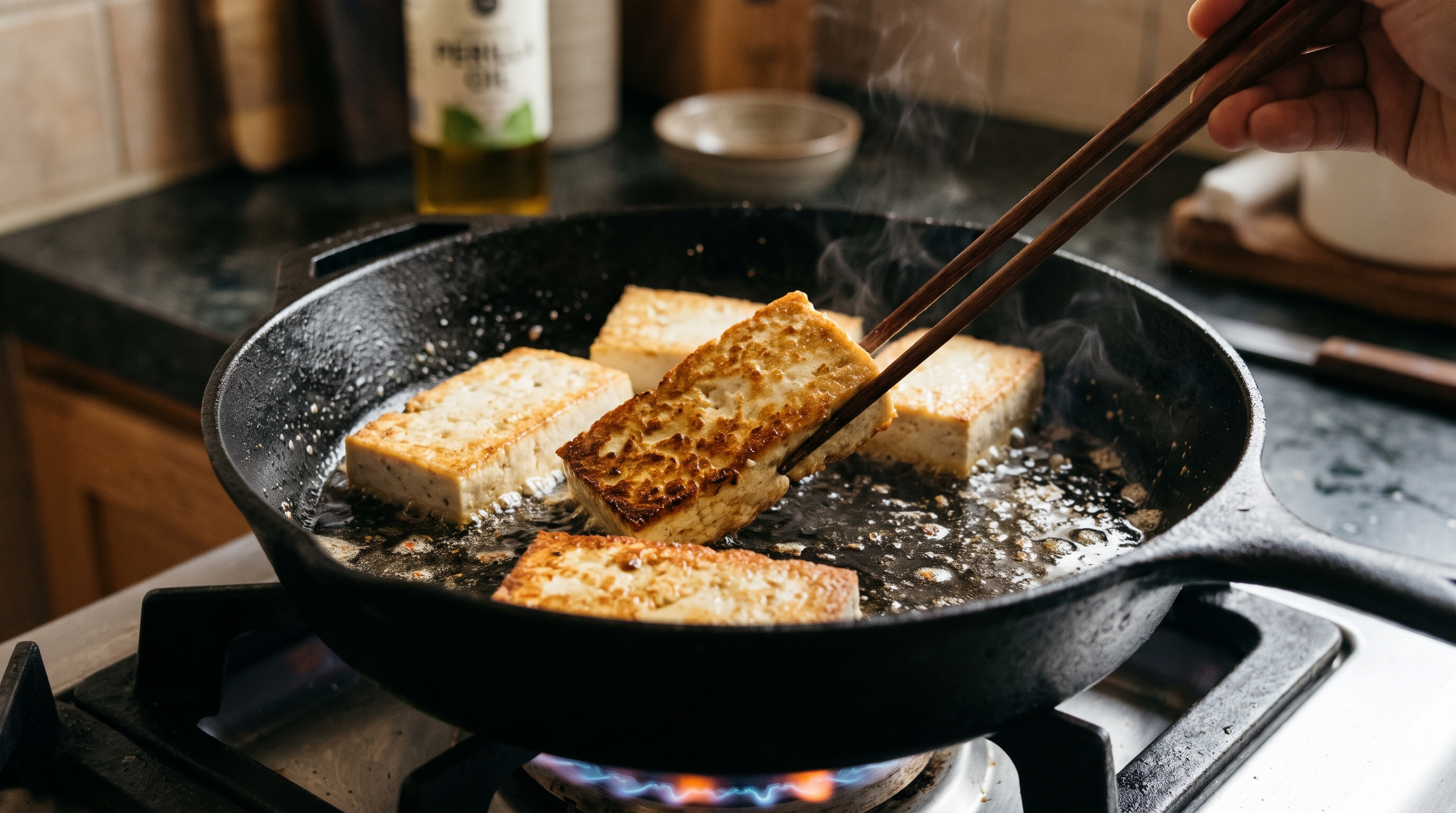
If raw tofu is placed directly into hot oil, internal water immediately vaporizes and explodes into steam, dropping the pan temperature and causing the curds to fuse stubbornly to the cookware. Sprinkling sliced tofu with fine sea salt creates a high-solute external boundary. Through osmosis, excess water beads up on the surface over 10 minutes and can be blotted away. When subsequently seared in hot oil at 180°C (356°F), the surface soy proteins (glycinin and beta-conglycinin) undergo rapid thermal denaturation and cross-linking, building a resilient, golden-brown exterior shield that will not crumble during braising.
💡 Culinary Science 2: Inosinic-Glutamic Umami Synergy & Open-Lid Braising
Professional Korean kitchens rarely use plain tap water to braise tofu. Incorporating Korean anchovy-kelp stock introduces abundant natural inosinic acid (from dried anchovies) and glutamic acid (from kelp and soy sauce). When inosinate and glutamate bind together to human taste receptor proteins, umami intensity multiplies by up to eight times. Additionally, braising uncovered allows steam to escape freely while the liquid concentrates. The expanding capillary pores of the seared tofu act like a microscopic sponge, pulling the savory reduction deep into the center.
2. Essential Ingredients & The Golden Ratio Sauce
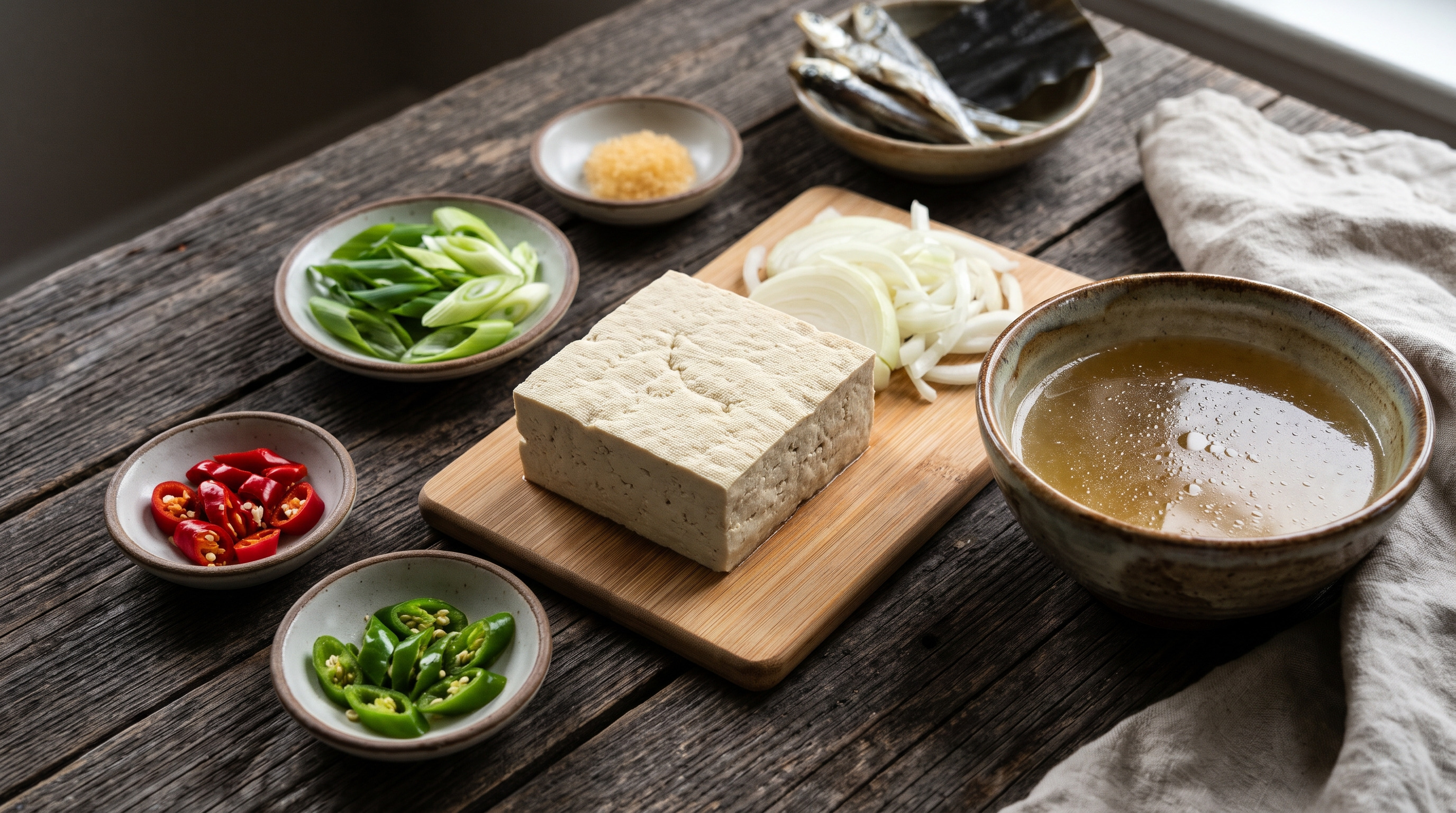
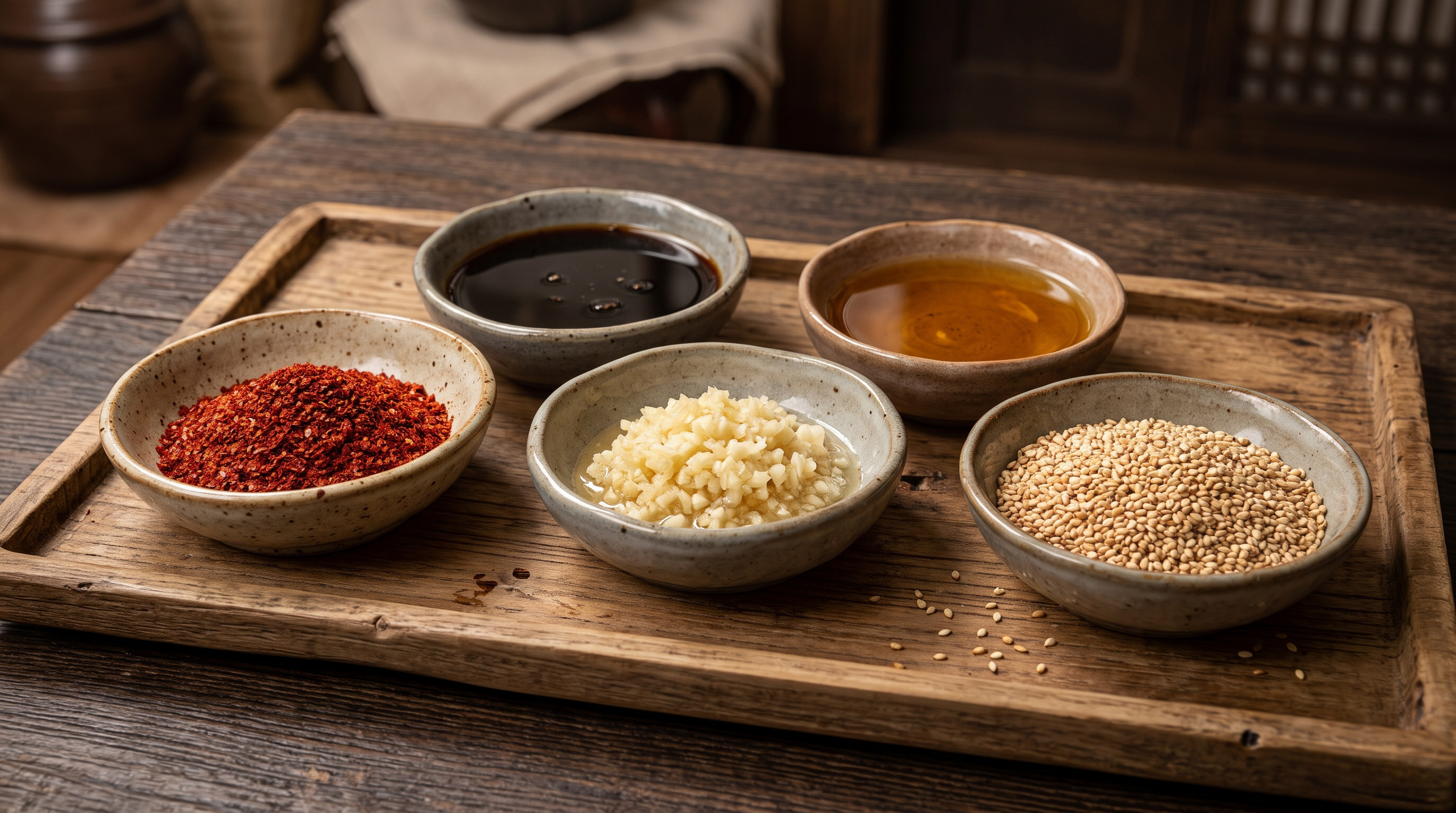
Here is the exact ingredient measurement breakdown for 2 to 3 servings.
| Category | Ingredients & Amounts (Metric & US) | Chef’s Notes & Substitutions |
|---|---|---|
| Main Tofu | 1 block firm or extra-firm tofu (350g-400g / 14 oz) 1/3 tsp fine sea salt | Choose firm tofu packed in water (not soft or silken). Extra-firm tofu holds shape best during searing. |
| Aromatic Shield | 1/2 medium yellow onion (100g / 3.5 oz) 1 scallion stalk (40g / 1.4 oz) 1-2 Korean green chilies (cheongyang) 1/2 red chili pepper | Sliced onion acts as a natural barrier preventing tofu from scorching. Cheongyang chilies provide clean, pungent heat. |
| Searing Oil Blend | 2 tbsp toasted perilla oil (deulgireum) 2 tbsp neutral oil (avocado, canola, vegetable) | 100% perilla oil has a low smoke point (160°C). Blending 1:1 with high-heat neutral oil boosts the smoke point past 200°C without losing herbal aroma. |
| Braising Stock | 1 cup (200ml / 6.8 fl oz) anchovy-kelp stock | Homemade or steeped from dashi tea bags. In a pinch, combine 200ml water with 1/2 tbsp tuna fish sauce or mushroom broth. |
| Golden Ratio Sauce | 3 tbsp regular soy sauce (jin-ganjang) 0.5 tbsp Korean soup soy sauce (guk-ganjang) 2 tbsp Korean red pepper flakes (gochugaru) 1 tbsp minced garlic 1 tbsp granulated sugar 1 tbsp rice syrup (ssal-yeot) or oligodang 1 tbsp mirin Freshly ground black pepper | Rice syrup provides a brilliant mirror-like gloss and clings tenaciously to the tofu crust compared to table sugar alone. |
| Finishing Touches | 1/2 tsp perilla oil 1 tsp toasted sesame seeds | Added off the heat to preserve aromatic volatile terpenes and nutty crunch. |
3. Step-by-Step Cooking Instructions
Step 1. Slice Tofu & 10-Minute Salt Rest (Moisture Extraction)
Rinse the block of firm tofu and pat it dry on all sides using paper towels. Cut the block in half lengthwise, then slice into uniform slabs approximately 1.2cm to 1.5cm (1/2-inch) thick.
Arrange the slabs in a single layer on a cutting board or flat tray. Dust 1/3 teaspoon of fine sea salt evenly over the tops and let them rest undisturbed for 10 minutes. You will notice beads of moisture forming on the surface. Press clean paper towels firmly across the tofu to blot away all released moisture.
Step 2. Pan-Sear in Perilla-Neutral Oil Blend (Protein Crust)
Heat a wide, heavy-bottomed skillet over medium-high heat. Add 2 tablespoons of perilla oil and 2 tablespoons of neutral cooking oil, swirling to coat the entire surface.
Carefully lay the dried tofu slices into the hot pan in a single layer. Fry without moving them for 3 to 4 minutes until the underside forms a sturdy, deep golden crust. Flip each piece over with tongs or a spatula and fry the second side for another 3 minutes. Transfer the seared tofu slices onto a plate.
Step 3. Layer Onion Bed, Arrange Tofu & Pour Golden Sauce
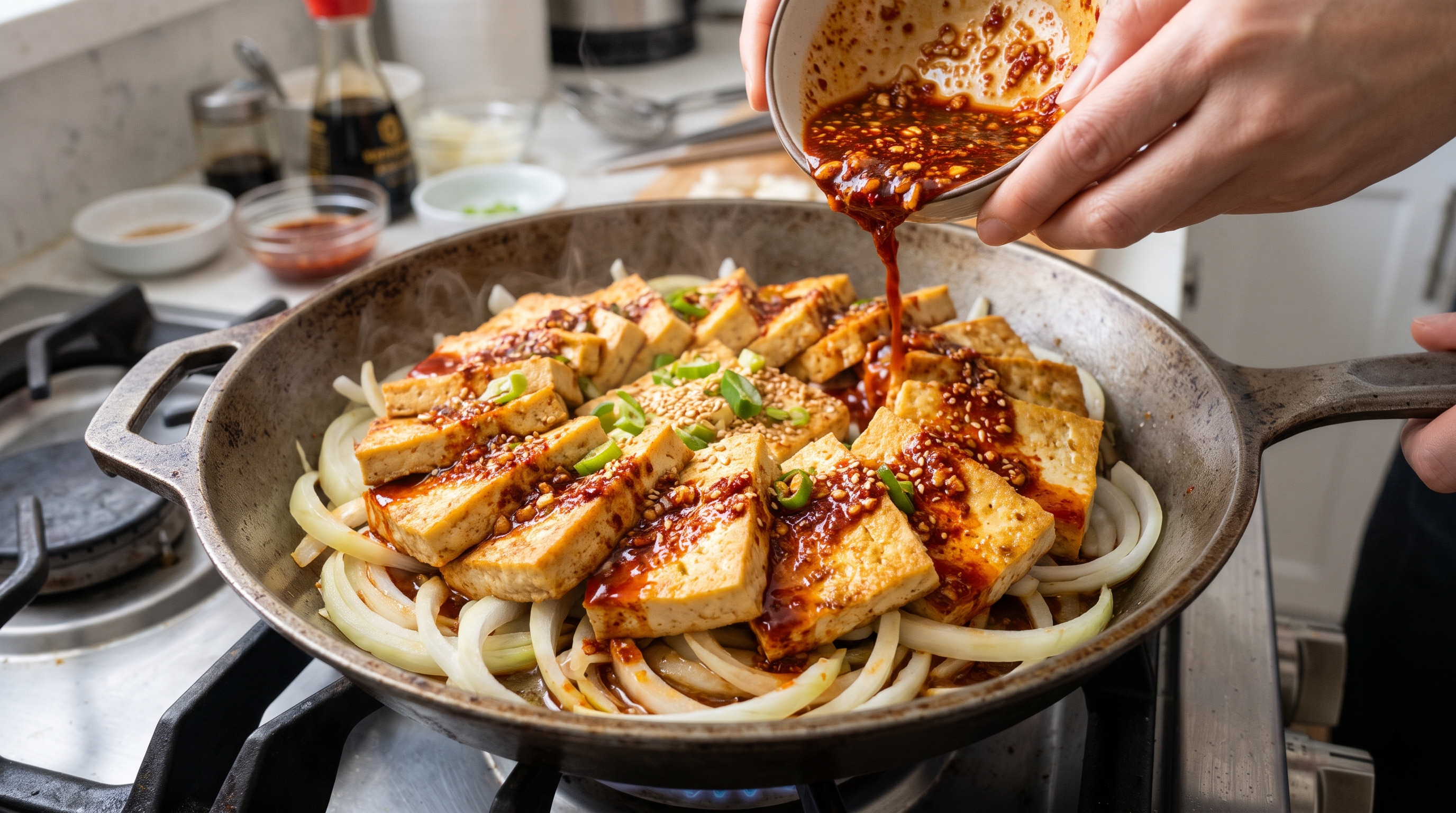
While the tofu sears, whisk together the soy sauce, soup soy sauce, gochugaru, minced garlic, sugar, rice syrup, mirin, and black pepper in a small bowl. Thinly slice 1/2 yellow onion and cut the scallion and chili peppers into bite-sized rounds.
In the same skillet (or a shallow braising pan), spread the sliced onions evenly across the bottom to create a protective aromatic carpet. Shingle the golden tofu slices neatly over the onions. Scatter the chopped scallions and chilies over the tofu. Pour the mixed seasoning sauce over the tofu slices, then pour 1 cup (200ml) of anchovy stock around the perimeter of the pan.
Step 4. Braise Uncovered & Baste Glaze
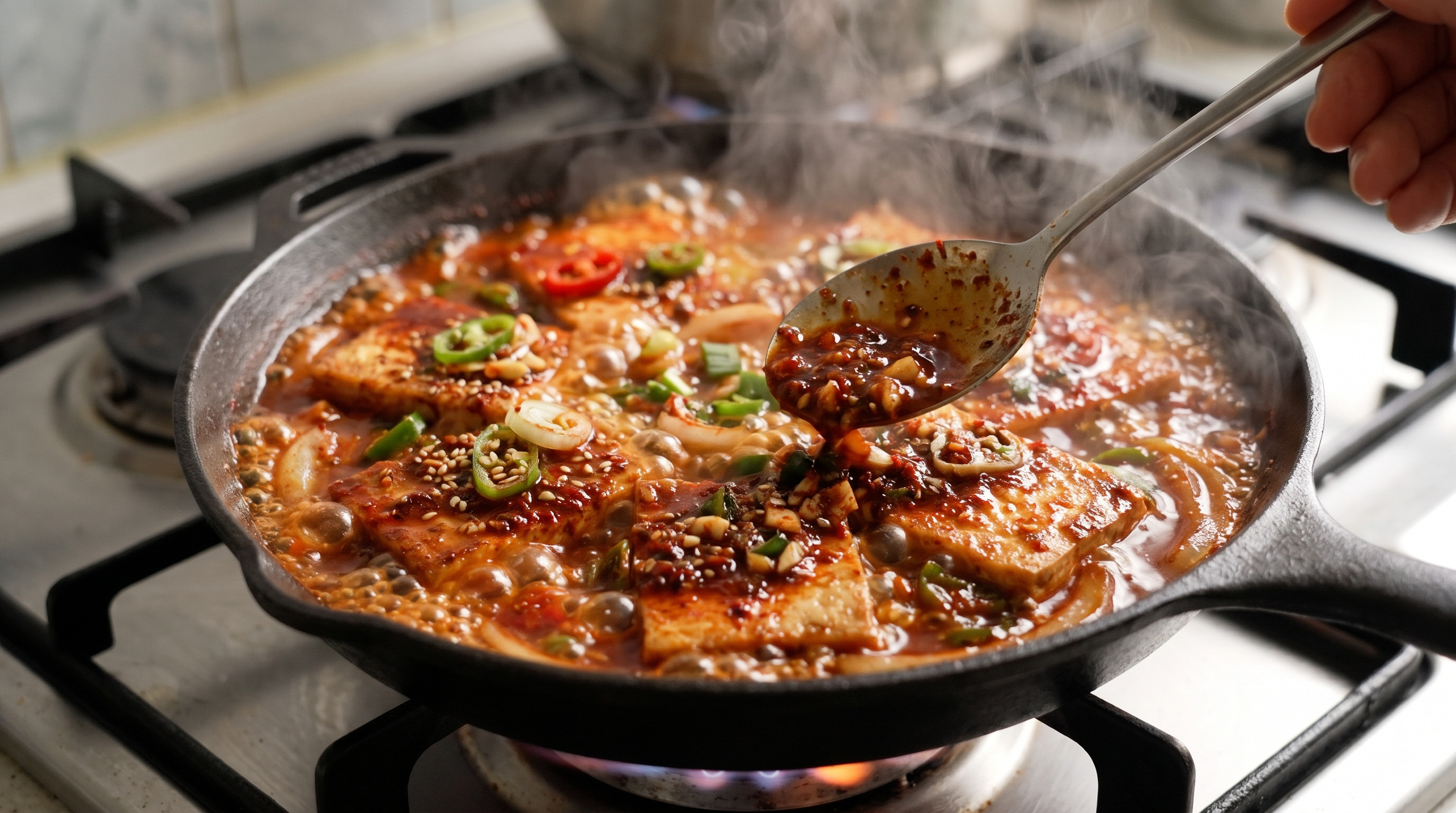
Turn the stove to high heat and bring the liquid to an active, rolling boil. Once bubbling, adjust the heat to medium-low and simmer uncovered for 7 to 8 minutes.
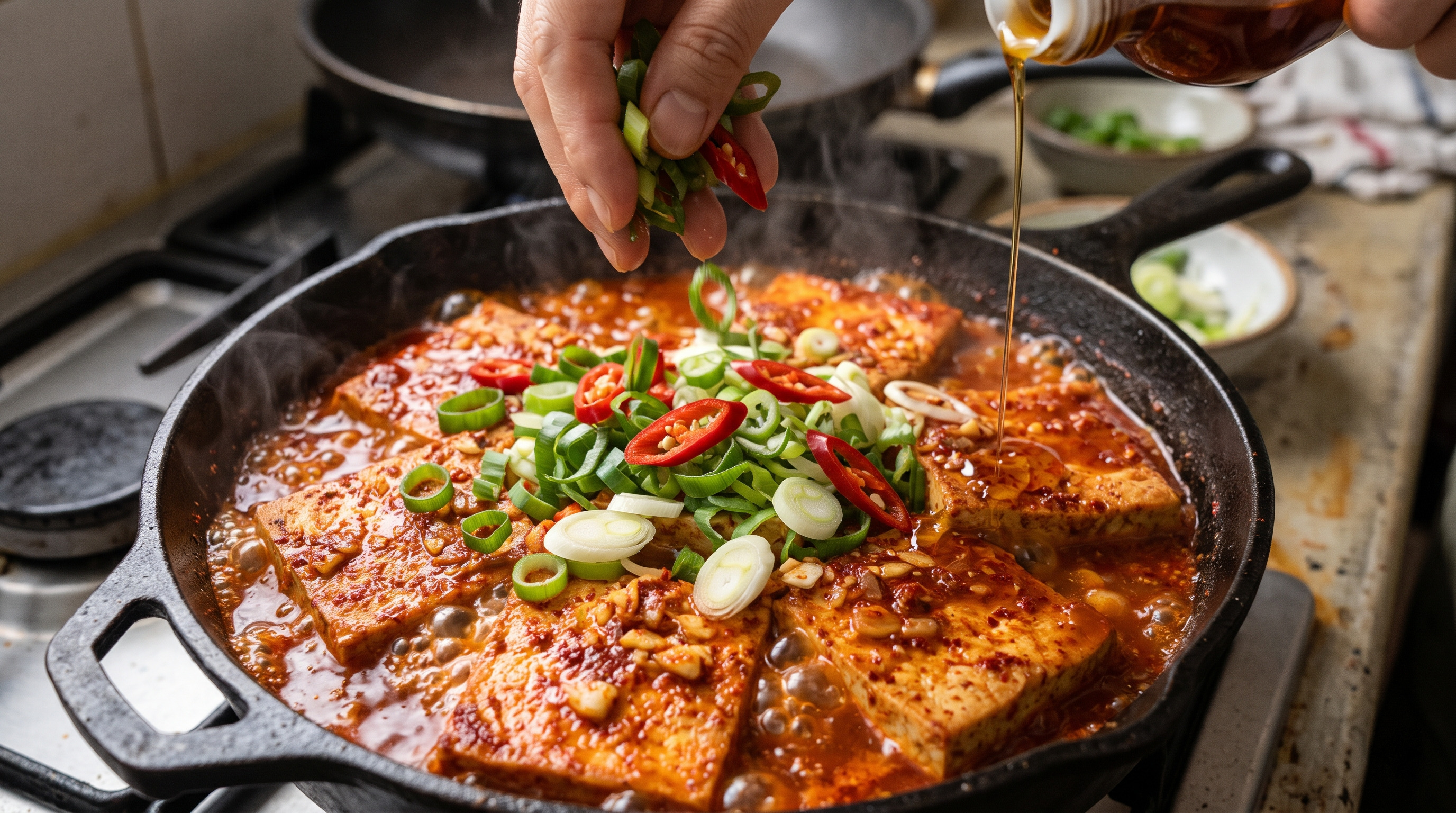
Do not stir with a spoon, which might tear the tofu; instead, tilt the pan slightly and use a soup spoon to continuously scoop up the bubbling red broth and baste the tops of the tofu slabs. When the liquid reduces to 3 to 4 tablespoons of thick, syrupy glaze, remove from heat. Finish with 1/2 teaspoon of perilla oil and a shower of toasted sesame seeds.
4. Pro Chef Tips to Elevate Your Dish
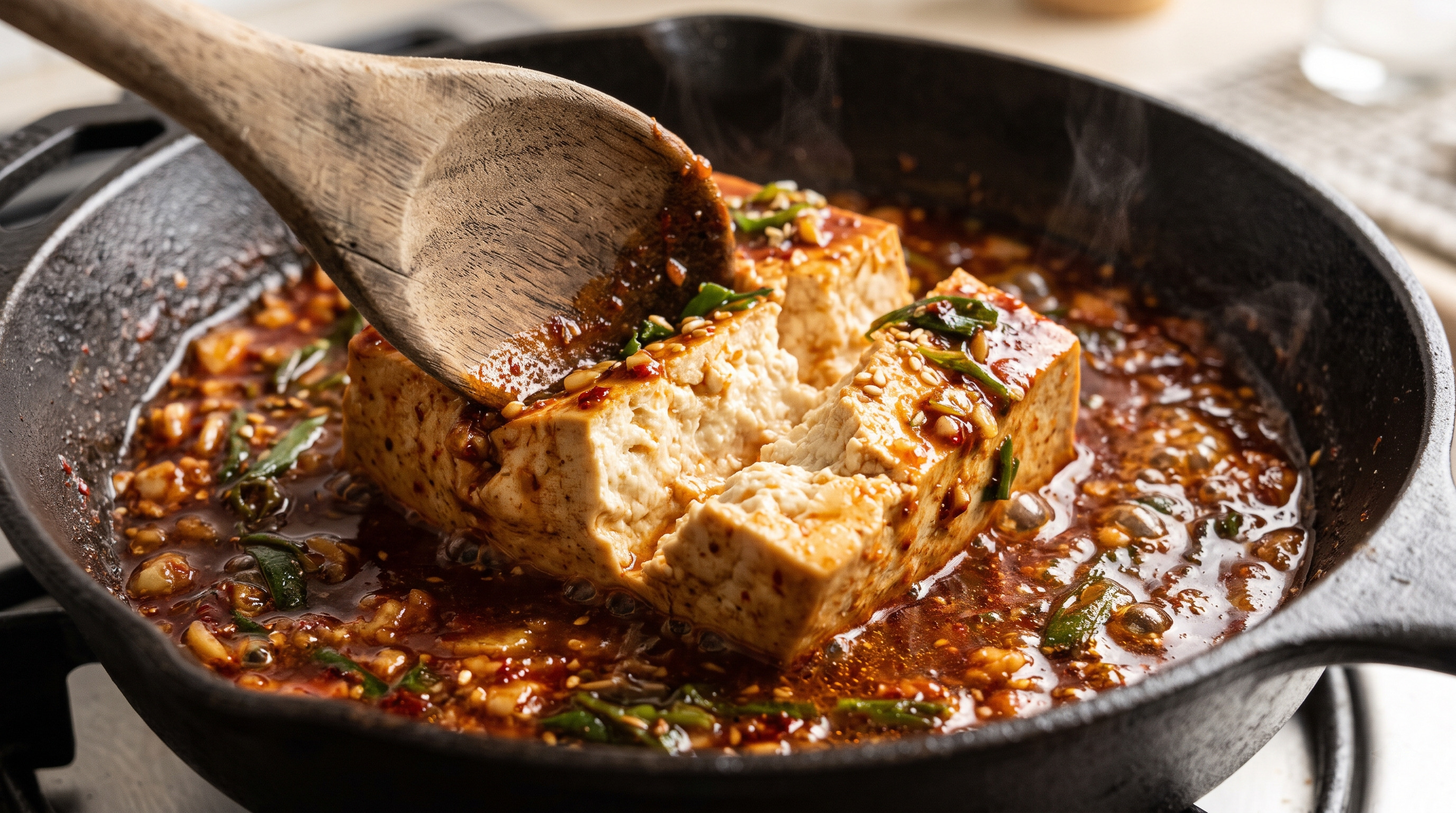
- The Onion Carpet Prevents Scorching: Braising sauces rich in sugar, rice syrup, and gochugaru burn easily if placed directly against hot metal. Laying a bed of sliced yellow onions beneath the tofu acts as a protective buffer. As the onions gently caramelize, they release sweet allium juices into the broth while shielding the tofu from direct contact with the pan bottom.
- 1:1 Oil Blending Elevates the Smoke Point: Pure toasted perilla oil has a low smoke point of 160°C (320°F) and will break down into bitter acrolein if overheated. Blending it 1:1 with high-smoke-point neutral oil (such as canola or avocado oil) raises thermal tolerance to over 200°C (392°F), allowing you to achieve a deeply crispy crust while keeping that signature rustic, nutty flavor intact.
- Rice Syrup Locks Moisture Even When Chilled: Unlike Western sauces that rely solely on granulated sugar, Korean braises incorporate rice syrup (ssal-yeot) or oligodang. Its higher viscosity coats the seared protein matrix, preventing moisture loss. Even if you store leftovers in the refrigerator and eat them cold the next day, the tofu remains glossy and succulent.
5. Frequently Asked Questions (FAQ)
Q1. Can I braise the tofu raw without searing it in oil first?
We strongly advise against it. Raw tofu contains over 80% moisture. If simmered raw without searing, it leaches excess water into the sauce, turning it bland and watery. Furthermore, unseared tofu easily breaks into small mushy chunks the moment you spoon sauce over it. Searing creates a durable protein shield that holds its shape.
Q2. What is the best substitute if I do not have anchovy-kelp stock?
Substitute with 1 cup (200ml) of plain water mixed with 1/2 tablespoon of Korean tuna fish sauce (chamchi-aek) or 1/2 teaspoon of dashi powder. If cooking strictly vegan, use a simple dried kelp (dashima) and shiitake mushroom steep.
Q3. Can I make a mild, kid-friendly soy version without chili flakes?
Yes! Omit the gochugaru and chilies. Whisk 4 tbsp soy sauce, 1 tbsp oyster sauce (or vegetarian mushroom oyster sauce), 2 tbsp rice syrup, 1 tbsp mirin, 1/2 tbsp minced garlic, and 1 tbsp sesame oil. Braise as instructed for a savory-sweet glazed tofu banchan.
6. Serving Suggestions & Related Recipes
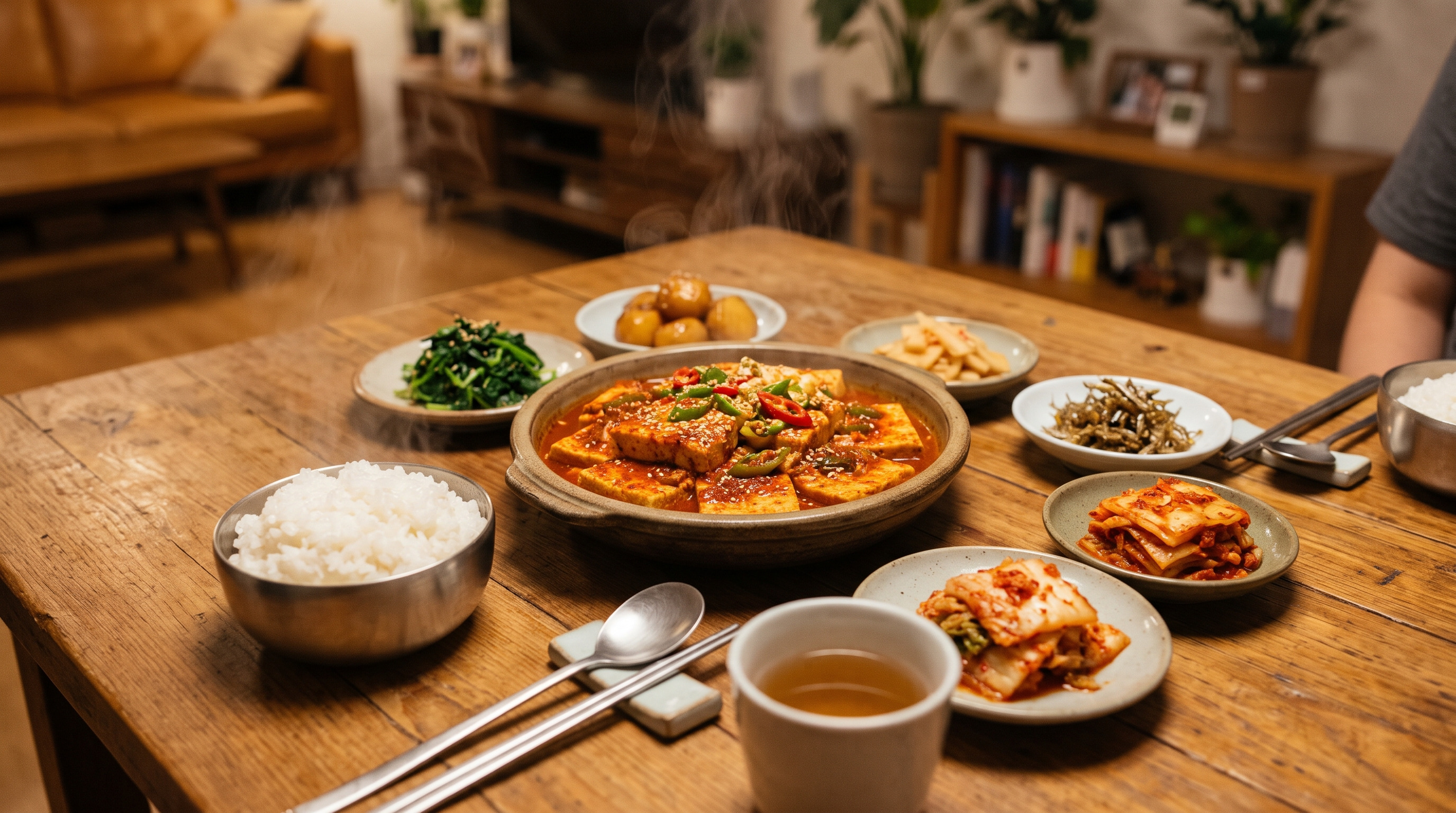
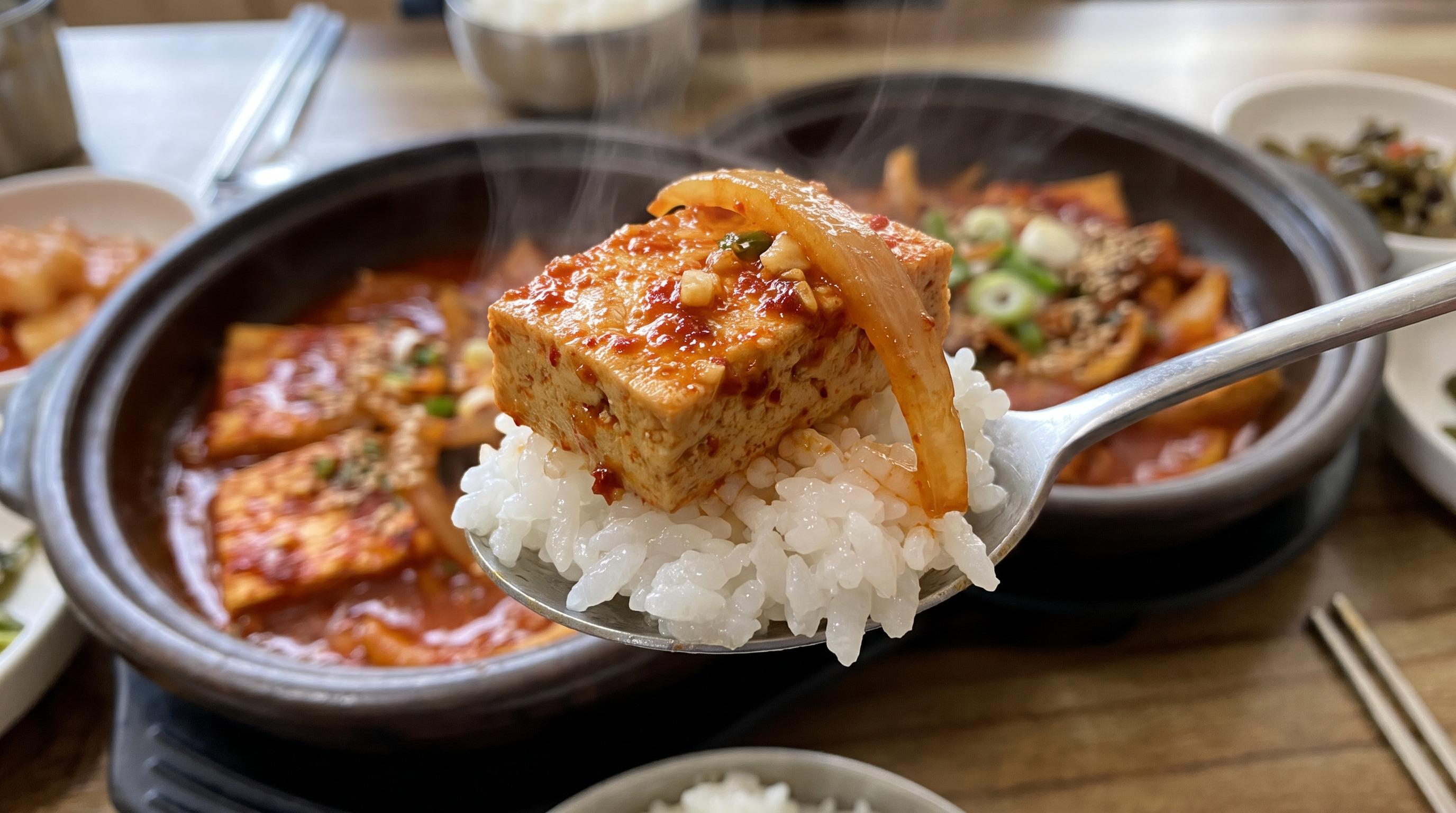
Dubu-jorim is fantastic served hot straight from the skillet, warm at room temperature, or even straight from the fridge the next day as a staple meal-prep banchan. Spoon the caramelized onions and thick red sauce generously over a bowl of freshly cooked short-grain white rice, place a tender tofu slab on top, and break it open with your spoon.
Pair this satisfying side dish with comforting Korean stews and classic meat dishes for a well-rounded meal:
- Want another classic Korean tofu specialty? Try our bubbling Spicy Soft Tofu Stew (Sundubu Jjigae).
- Pairing with an earthy, hearty stew? Explore our savory Beef Brisket Doenjang Jjigae.
- Love saucy, protein-packed tofu preparations? Compare with spicy Sichuan-style Mapo Tofu.