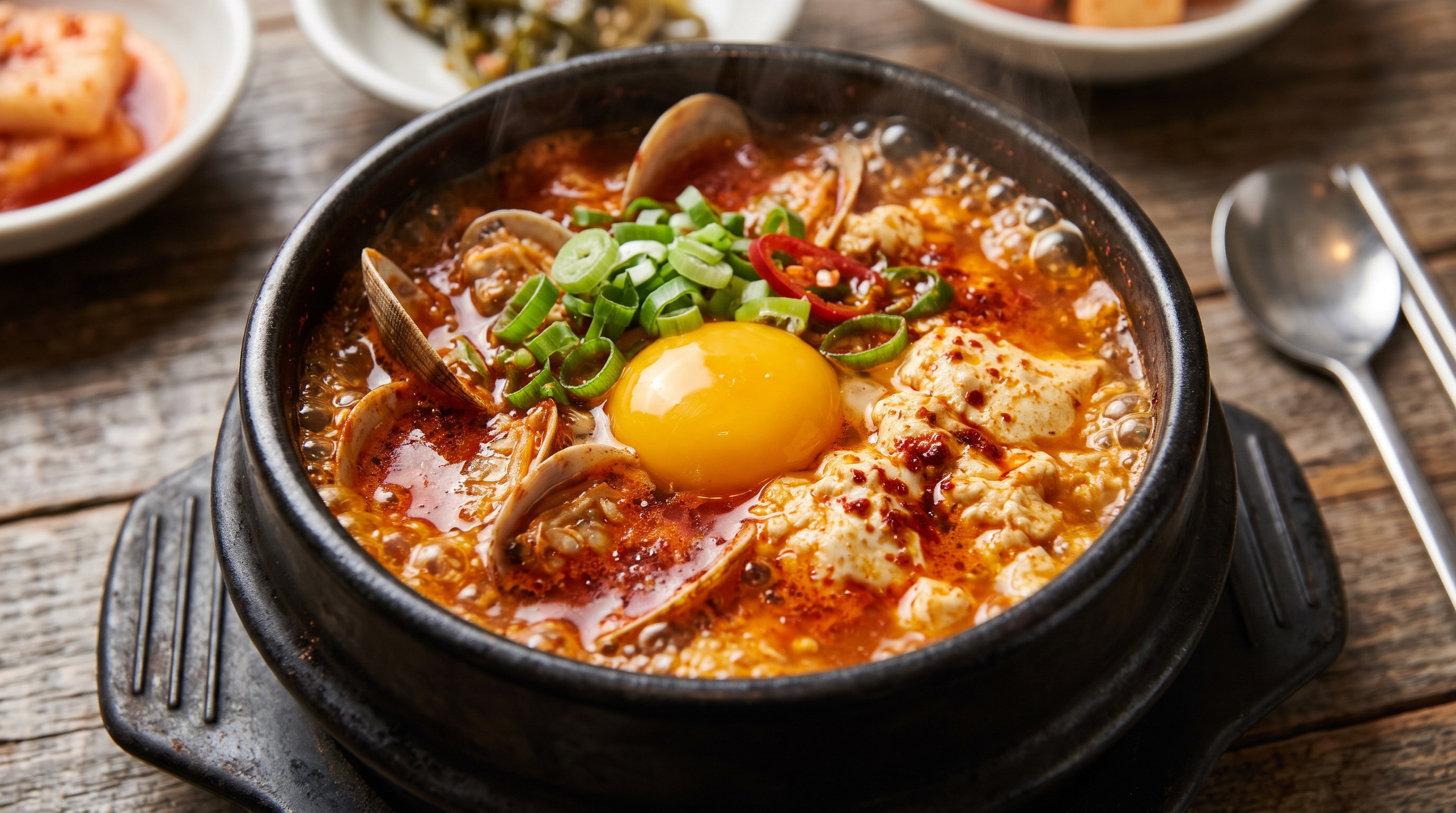
Quick Recipe Snapshot: ⏱️ Prep: 10 mins | 🔥 Cook: 15 mins | 🍽️ Servings: 2 | 💡 Key Secret: Drain tofu whey for 10 minutes + bloom gochugaru on low heat for bitter-free chili oil + halve the broth volume for concentrated flavor.
Served bubbling furiously inside a piping hot Korean earthenware pot (ttukbaegi), Sundubu-jjigae (순두부찌개) is the quintessential Korean comfort soup. Featuring cloud-like pillows of delicate uncurdled soft tofu floating in an aromatic, fiery crimson chili broth, studded with sweet Manila clams and crowned with an unctuous raw egg yolk that cooks gently at the table, it offers instant warmth and deep revitalization.
Yet many home attempts fall flat. Common complaints include a watery, diluted broth that lacks punch, burnt, bitter chili oil that ruins the soup’s clarity, or broken, pulverized tofu that looks like baby food.
The difference between mediocre soup and iconic K-Town restaurant excellence comes down to three culinary science principles: controlled carotenoid extraction at sub-scorching temperatures, pre-cook whey dehydration, and succinic acid and glutamate synergy.
With this straightforward 15-minute formula, you can prepare restaurant-caliber Korean spicy soft tofu stew in your own kitchen using simple, accessible ingredients.
1. The Culinary Science Behind Restaurant Flavor
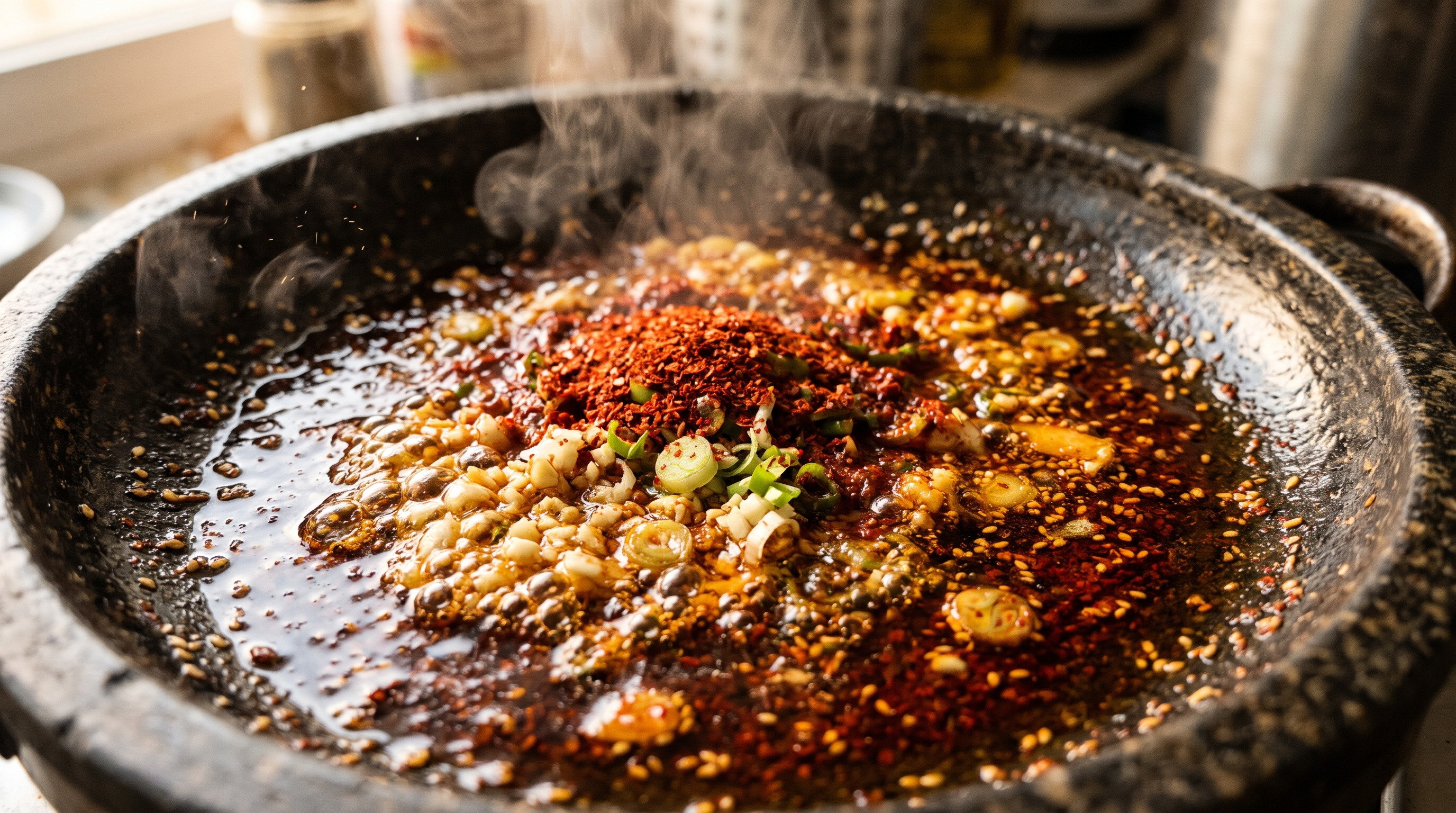
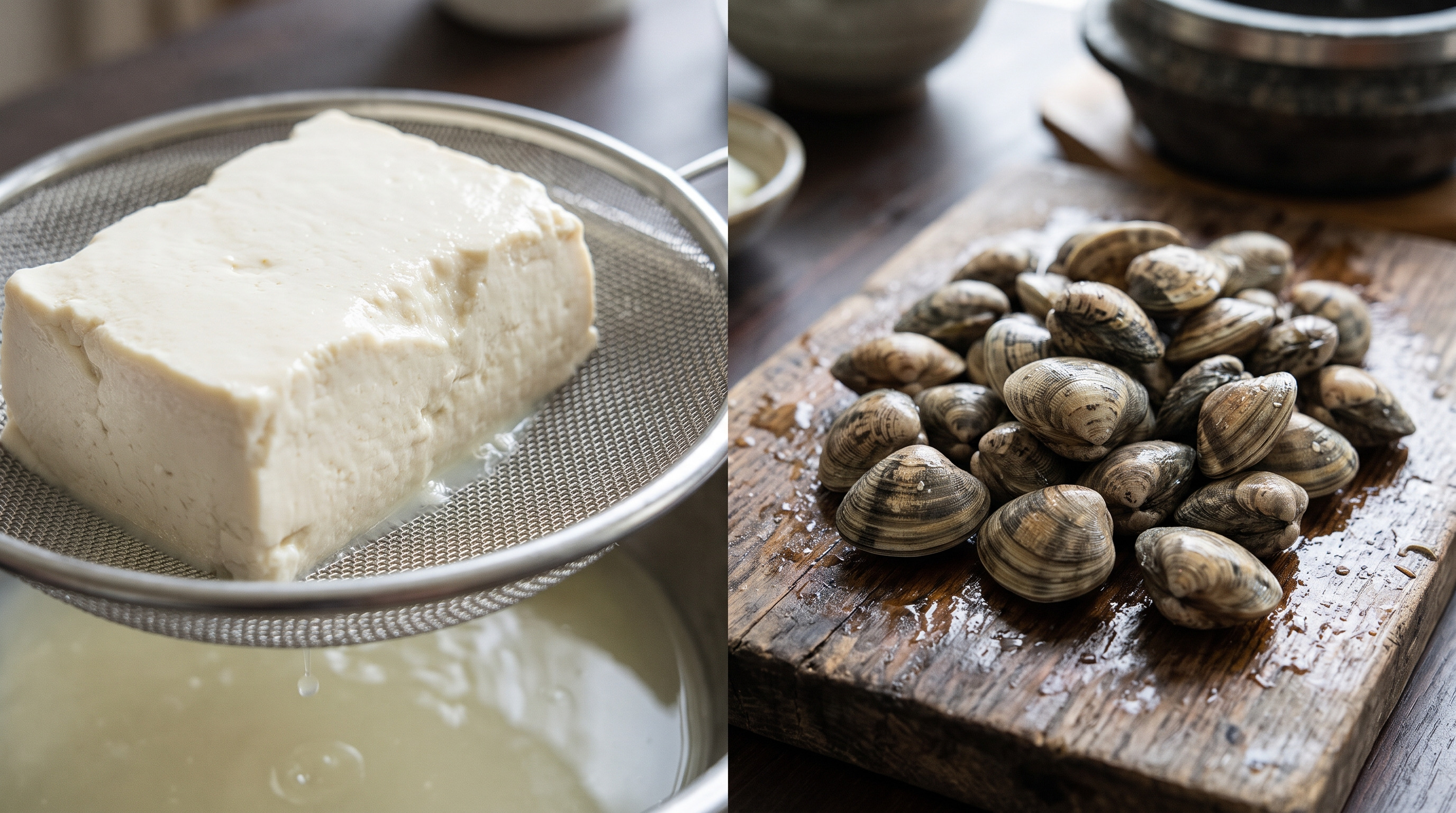
Mastering the physical properties of soft tofu and chili pigments guarantees foolproof results every single time:
💡 Culinary Science 1: Low-Temperature Extraction of Fat-Soluble Capsaicin & Carotenoids
Gochugaru (Korean red chili pepper flakes) contains abundant natural sugars and delicate fat-soluble pigments called capsanthins and carotenoids. If chili flakes hit oil hotter than 150°C (302°F), the sugars burn into acrid black carbon in fewer than 10 seconds, imparting a harsh, bitter taste to your stew. To extract pristine chili oil, sauté your scallions and garlic over low heat first to drive off water. Then remove the pan from heat or switch to the absolute lowest flame before stirring in the gochugaru. The residual thermal energy gently dissolves the lipophilic flavor compounds and red pigments into the oil without scorching.
💡 Culinary Science 2: Sundubu Whey Draining & Manila Clam Succinic Acid Synergy
Korean tube soft tofu is over 90% water by weight. When introduced to boiling soup, thermal contraction squeezes out excess water (whey), which dilutes your broth into a flavorless soup. Slicing open the tofu tube and resting it in a strainer for 10 minutes prior to cooking sheds up to 100ml of excess liquid. Furthermore, pairing fresh Manila clams with Korean soup soy sauce triggers a biological umami explosion: clams provide succinic acid (an organic acid unique to shellfish), which synergistically binds to human umami receptors alongside the glutamic acid from fermented soy sauce and anchovy broth.
2. Essential Ingredients & The Golden Ratio Base
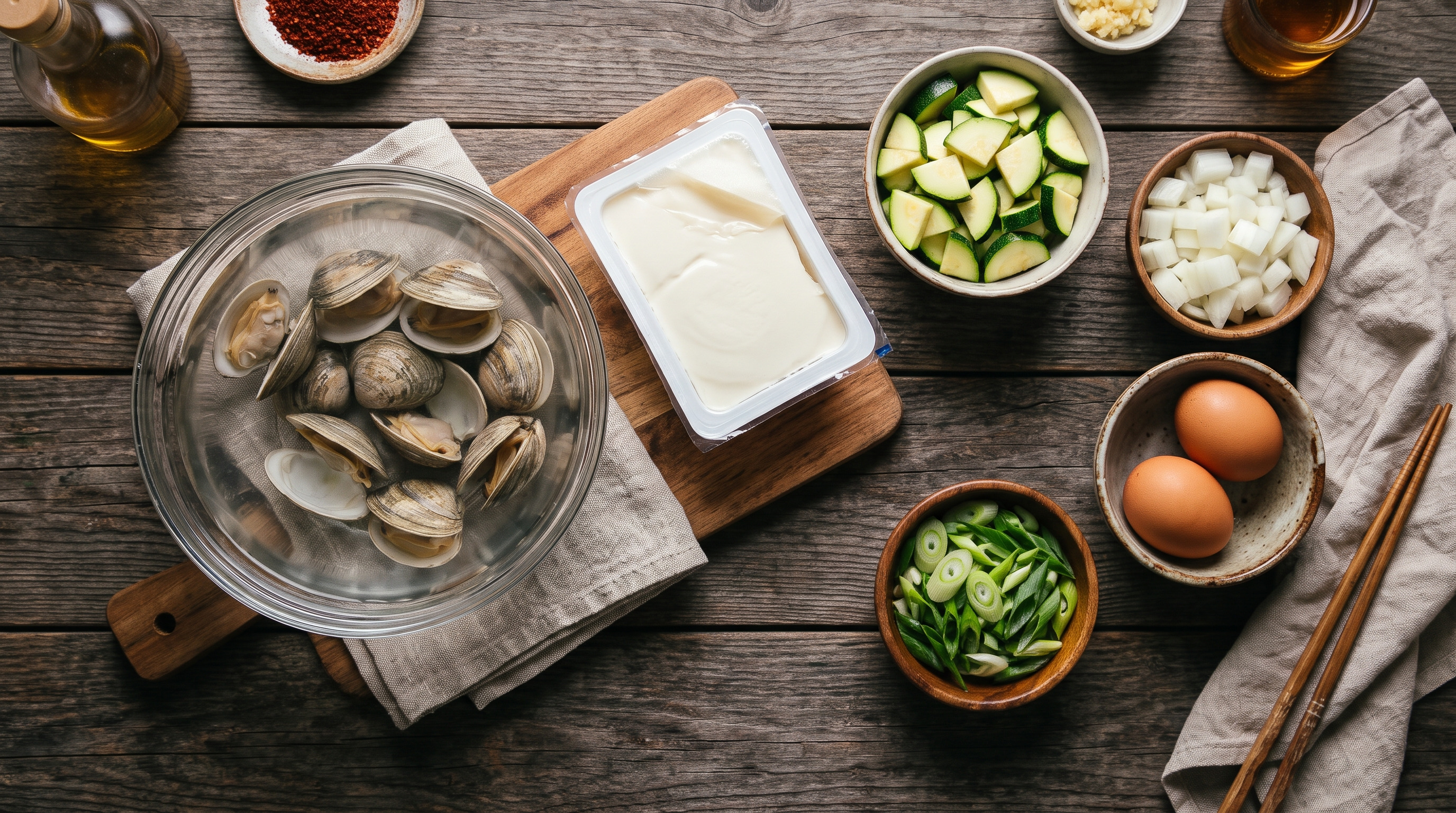
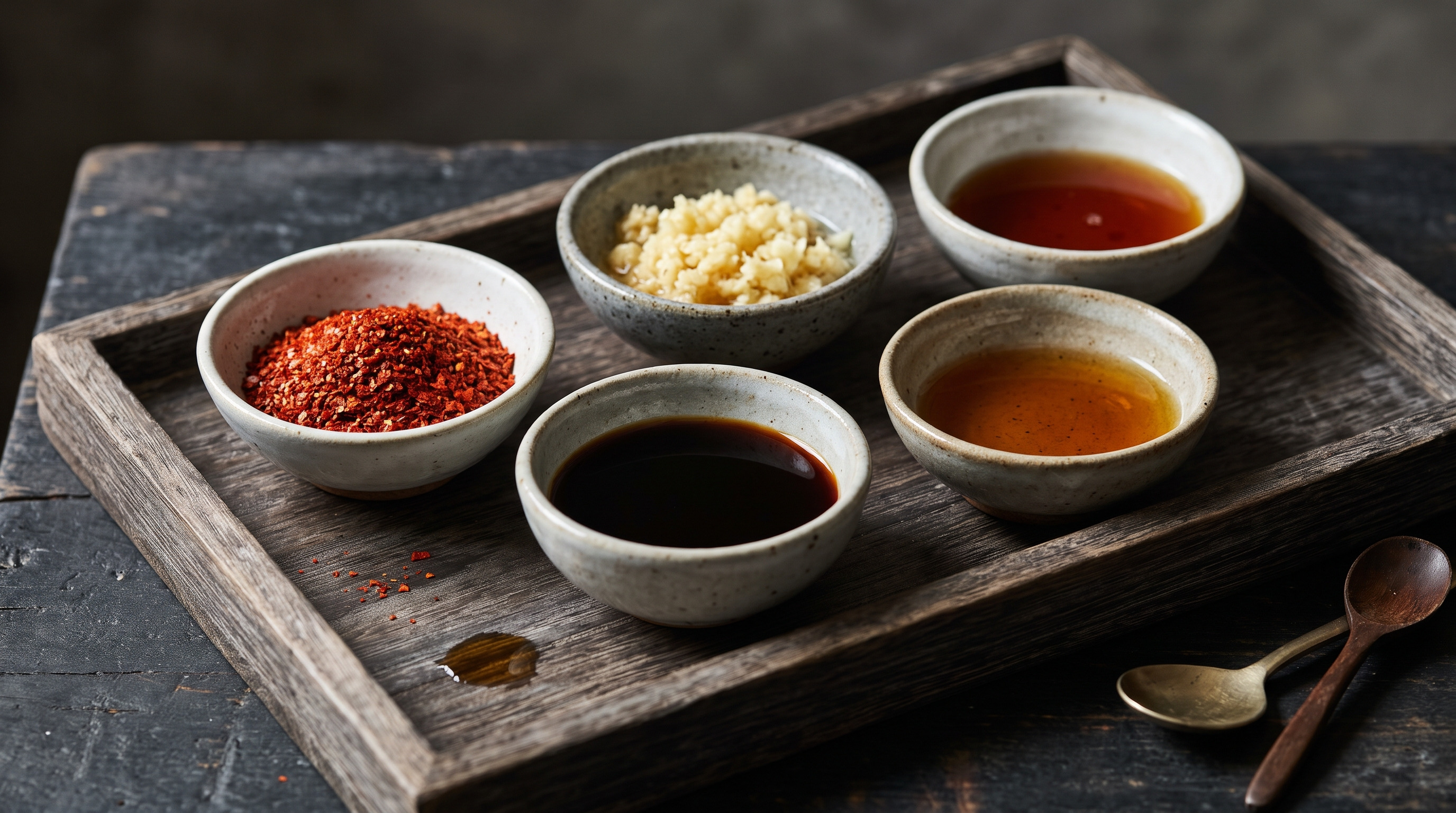
Here is the precise measurement breakdown for 2 comforting servings.
| Category | Ingredients & Amounts (Metric & US) | Chef’s Notes & Substitutions |
|---|---|---|
| Star Protein | 1 tube Korean soft tofu (sundubu, 350g-400g / 14 oz) 150g-200g (5.3-7 oz, 15-20 count) Manila clams | Look for silken soft tofu sold in plastic cylindrical tubes at H-Mart. Fresh Manila clams or littleneck clams work beautifully. |
| Egg & Vegetables | 1-2 large fresh eggs 1/4 medium onion diced (50g / 1.8 oz) 1/2 stalk scallion sliced (30g / 1 oz) 1/5 zucchini sliced (50g / 1.8 oz) 1 Korean green chili (cheongyang) sliced | The raw egg yolk is cracked directly into the boiling soup at the table, creating a silky custard when swirled. |
| Chili Oil Base | 1.5 tbsp neutral cooking oil 0.5 tbsp toasted sesame oil 2 tbsp Korean red pepper flakes (gochugaru) 1 tbsp minced garlic | Blending sesame oil with neutral oil prevents scorching while delivering a rich nutty aroma. |
| Broth Liquid | 250ml (approx. 1 cup / 8.5 fl oz) anchovy-kelp stock or milky rice water (ssaltteumul) | Crucial: Keep broth volume to just 1 cup. The soft tofu will naturally release additional liquid while simmering. |
| Umami Seasoning | 1 tbsp Korean soup soy sauce (guk-ganjang) 0.5 tbsp Korean fish sauce (or oyster sauce) 2-3 pinches fine sea salt Pinch of ground black pepper | A splash of fish sauce provides authentic deep seafood complexity without any fishy smell. |
3. Step-by-Step Cooking Instructions
Step 1. Purge Clams & Drain Tofu Whey (Moisture Control)
In a bowl, dissolve 1 tablespoon of coarse salt in 2 cups of cold water (approx. 3.5% salinity). Add the fresh Manila clams, drop in a stainless steel spoon, cover with foil or a dark bag, and let purge in a cool place for 30 minutes. Scrub the clam shells against each other under cold running water and drain.
Cut the tube of soft tofu in half with a chef’s knife. Slide the cylinders out into a fine-mesh strainer set over a bowl. Make 3 to 4 gentle horizontal cuts across the tofu curds and let them sit for 10 minutes to shed excess watery whey.
Step 2. Bloom Low-Heat Allium Chili Oil (Aromatic Base)
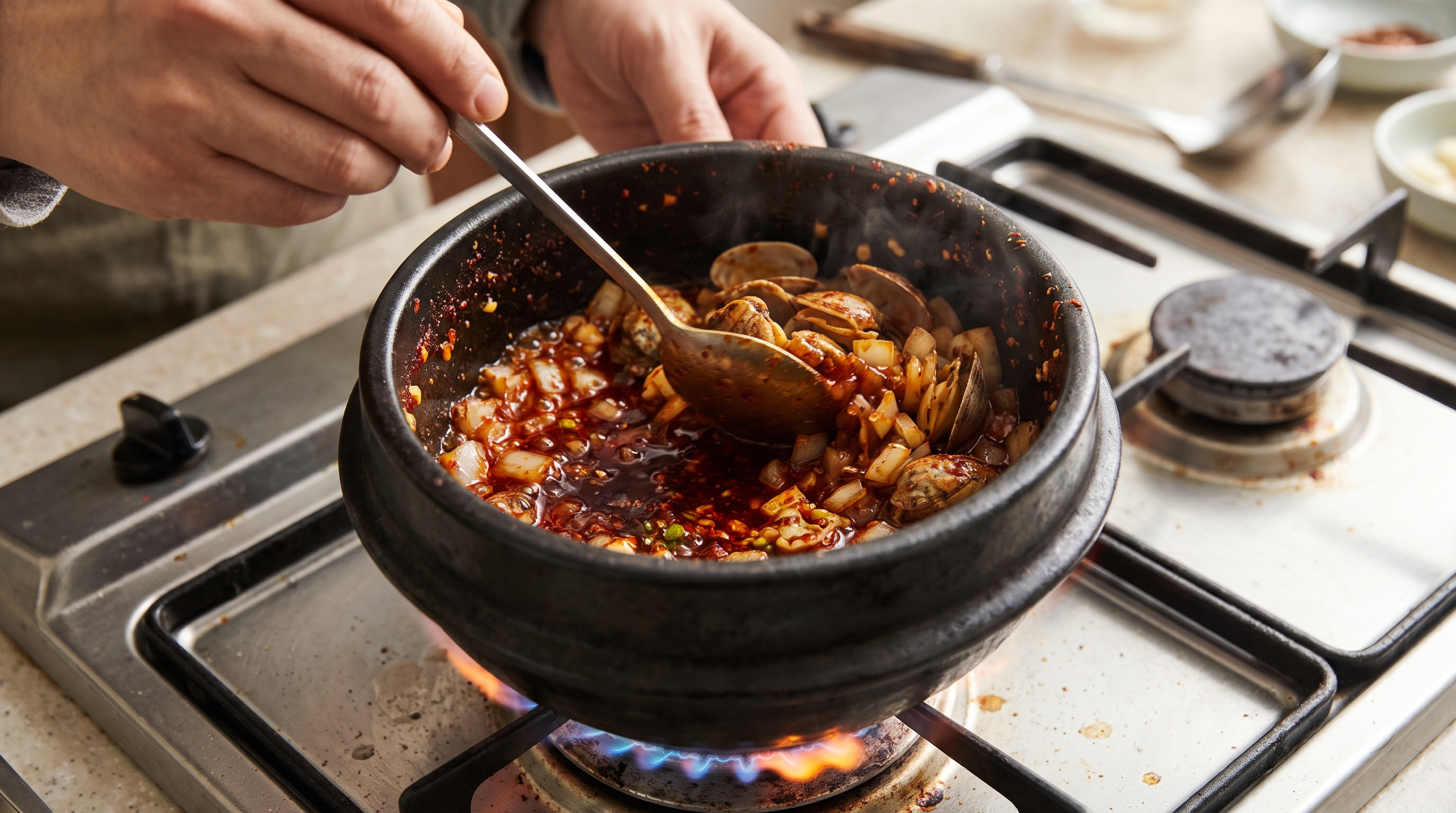
Place your Korean earthenware pot (ttukbaegi) or a small heavy saucepan over low heat. Add 1.5 tablespoons of neutral oil and 0.5 tablespoon of toasted sesame oil. Add the diced yellow onion, minced garlic, and chopped scallion white parts.
Sauté gently for 1 to 2 minutes until the onions become translucent and your kitchen fills with sweet allium fragrance. Reduce heat to the absolute lowest setting (or slide the pan off the burner). Scatter in 2 tablespoons of gochugaru. Stir continuously in the warm oil for 30 to 45 seconds to bloom the vibrant red chili oil without scorching the flakes.
Step 3. Pour Broth, Season & Open Clams
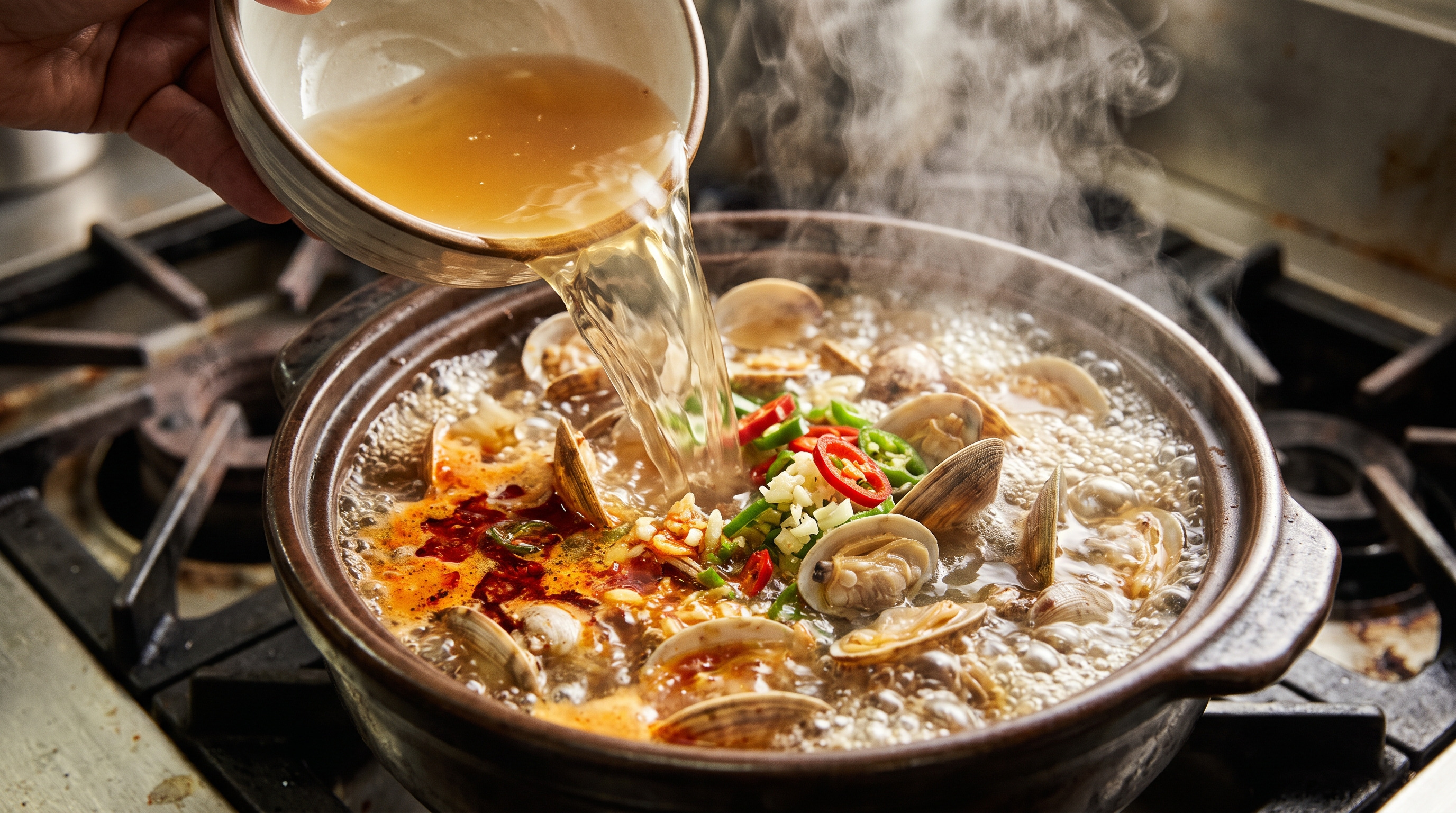
Pour 250ml (approx. 1 cup) of anchovy-kelp stock or rice water directly into the pot with the chili oil. Add 1 tablespoon of Korean soup soy sauce and 0.5 tablespoon of fish sauce.
Turn the heat up to high and bring the broth to a furious rolling boil. Drop in the purged Manila clams and sliced zucchini. Cook for 2 to 3 minutes over high heat until the clams snap open, infusing the fiery broth with savory briny liquor.
Step 4. Add Large Curds of Soft Tofu & Crack Egg
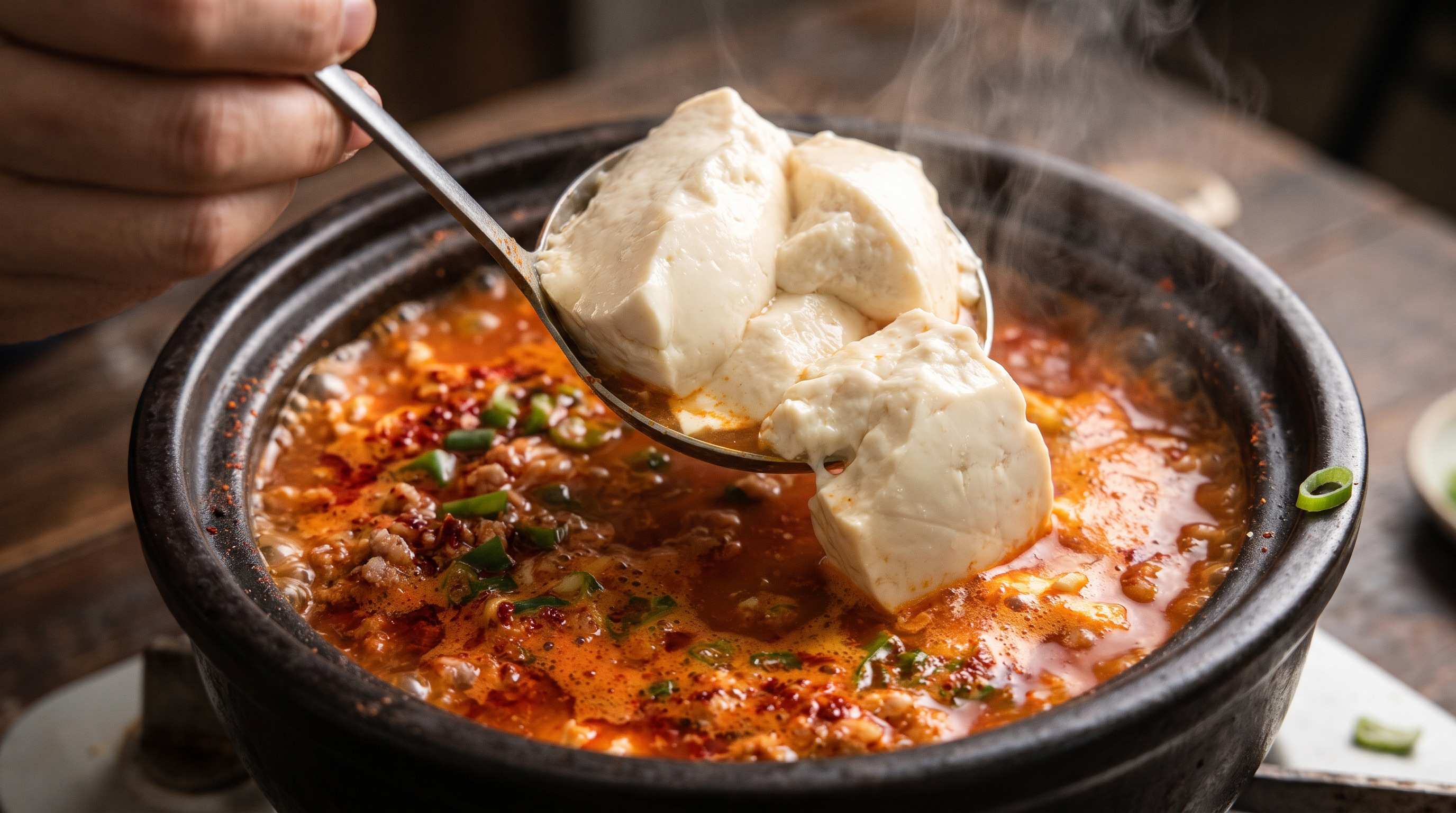
Using a large soup spoon, scoop the drained soft tofu in large, generous pillow-sized dollops into the bubbling soup. Do not stir or chop with a spoon, or you will turn the stew into mush.
Instead, tilt the pot slightly and gently ladle hot broth over the tops of the tofu curds. Simmer for 2 minutes to allow the tofu to absorb heat and flavor. Taste the broth and add 1 to 2 pinches of sea salt if needed.
Scatter the sliced green and red chilies and remaining scallions across the top. Crack a fresh whole egg right into the boiling center. Remove from heat immediately and serve piping hot.
4. Pro Chef Tips to Elevate Your Dish
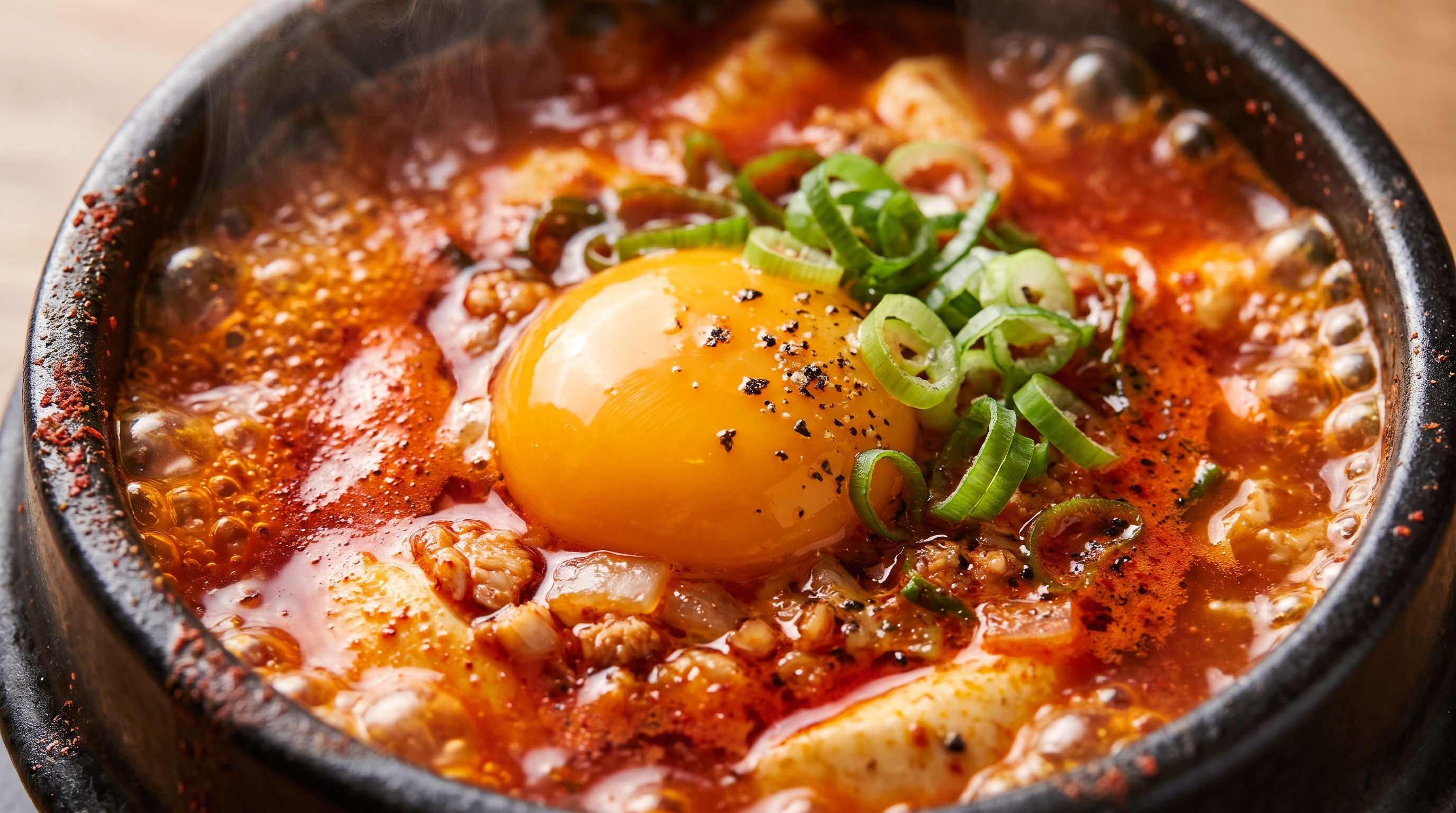
- Use Exactly Half the Broth You Think You Need: The number one mistake home cooks make with Sundubu-jjigae is pouring in 2 to 3 cups of broth like a standard soup. Soft tofu continuously sheds liquid as it simmers. Starting with only 250ml (approx. 1 cup) yields a concentrated, richly seasoned red broth once the cooking process concludes.
- Keep Tofu in Large Pillows: In top Seoul tofu houses, soft tofu is treated like delicate poached eggs. Never whisk, mash, or blend the tofu into the broth. Large, intact spoonfuls preserve the silky contrast between the fiery soup and the mild, custardy soy core.
- Add 2 Tablespoons of Minced Pork for K-Town Diner Body: If you love the hearty, rich body found in Los Angeles K-Town restaurants (such as BCD Tofu House), add 2 tablespoons (30g) of finely ground pork or beef brisket into the pot during Step 2 before adding the gochugaru. The rendered animal fat binds with the chili oil, producing a decadent, velvety mouthfeel.
5. Frequently Asked Questions (FAQ)
Q1. How do I properly purge Manila clams so there is zero sand grit?
Dissolve 1.5 tablespoons of coarse sea salt into 500ml of cold water to replicate ocean salinity (approx. 3.5%). Submerge the clams, drop in a stainless steel spoon or fork (which accelerates purging through subtle ion interaction), cover with a dark plastic bag, and rest in a cool spot for 1 hour. Rinse the clams by scrubbing their shells together under running water.
Q2. Can I use store-bought chili oil instead of making it from scratch?
Yes! If you are short on time, drizzle 2 tablespoons of store-bought chili oil into the pot and sauté the aromatics directly. However, blooming fresh gochugaru directly in oil produces a much fresher aroma, vibrant ruby color, and authentic Korean restaurant flavor.
Q3. Can I substitute the tube of soft tofu with regular firm or silken tofu?
While tube soft tofu (sundubu) provides the iconic velvety, melt-in-the-mouth texture, Japanese silken tofu or soft block tofu makes an excellent substitute. Avoid firm or extra-firm tofu, as it cannot absorb the delicate broth in the same way.
6. Serving Suggestions & Related Recipes
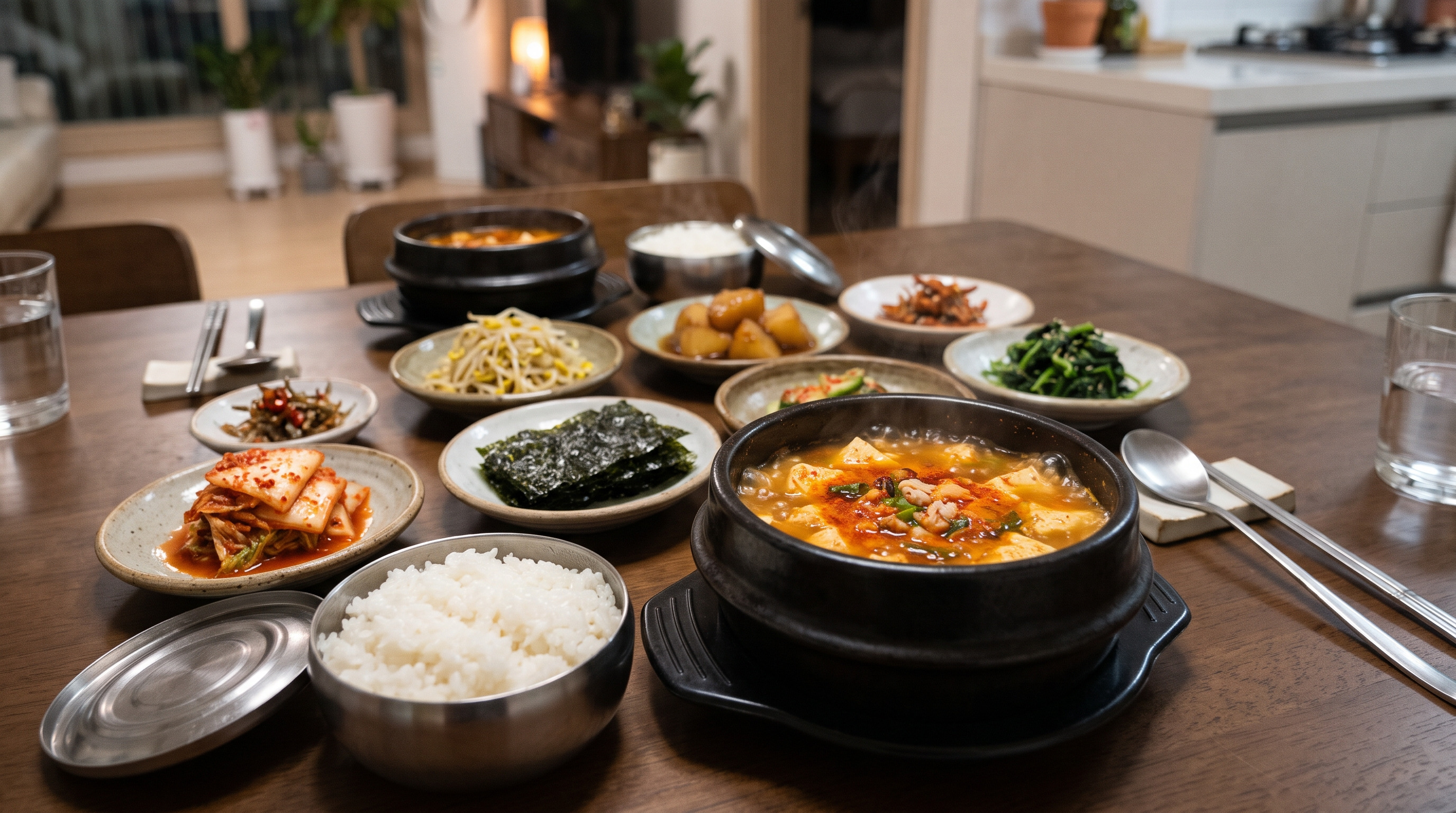
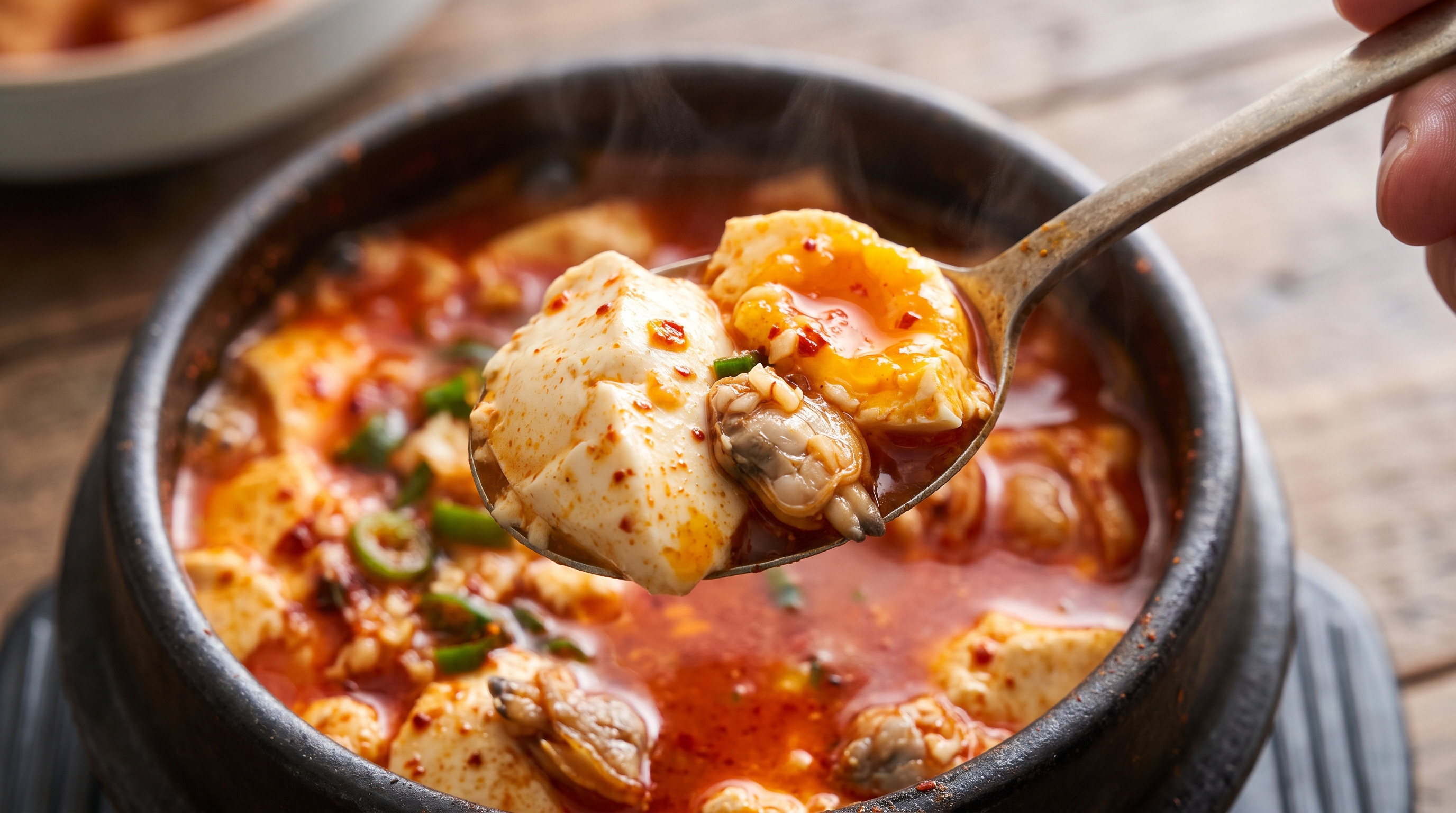
Sundubu-jjigae must be brought to the table while still bubbling violently inside its earthenware vessel. As soon as it arrives, take a metal spoon and gently break the soft egg yolk, swirling it into the red broth to create a rich, silky liaison that mellows the sharp heat.
Spoon several mounds of soft tofu, plump clams, and fiery broth over a steaming bowl of freshly cooked short-grain white rice. Enjoy alongside seasoned seaweed sheets (gim), kimchi, and pickled radish.
To broaden your repertoire of authentic Korean comfort classics, explore these delicious recipes:
- Prefer a deeply savory fermented bean broth? Cook our rich Beef Brisket Doenjang Jjigae.
- Want an intensely tangy, aged-pork classic? Try our beloved Pork Kimchi Jjigae.
- Looking for a firmer, glazed tofu banchan? Discover our pan-crisped Spicy Braised Tofu (Dubu-jorim).