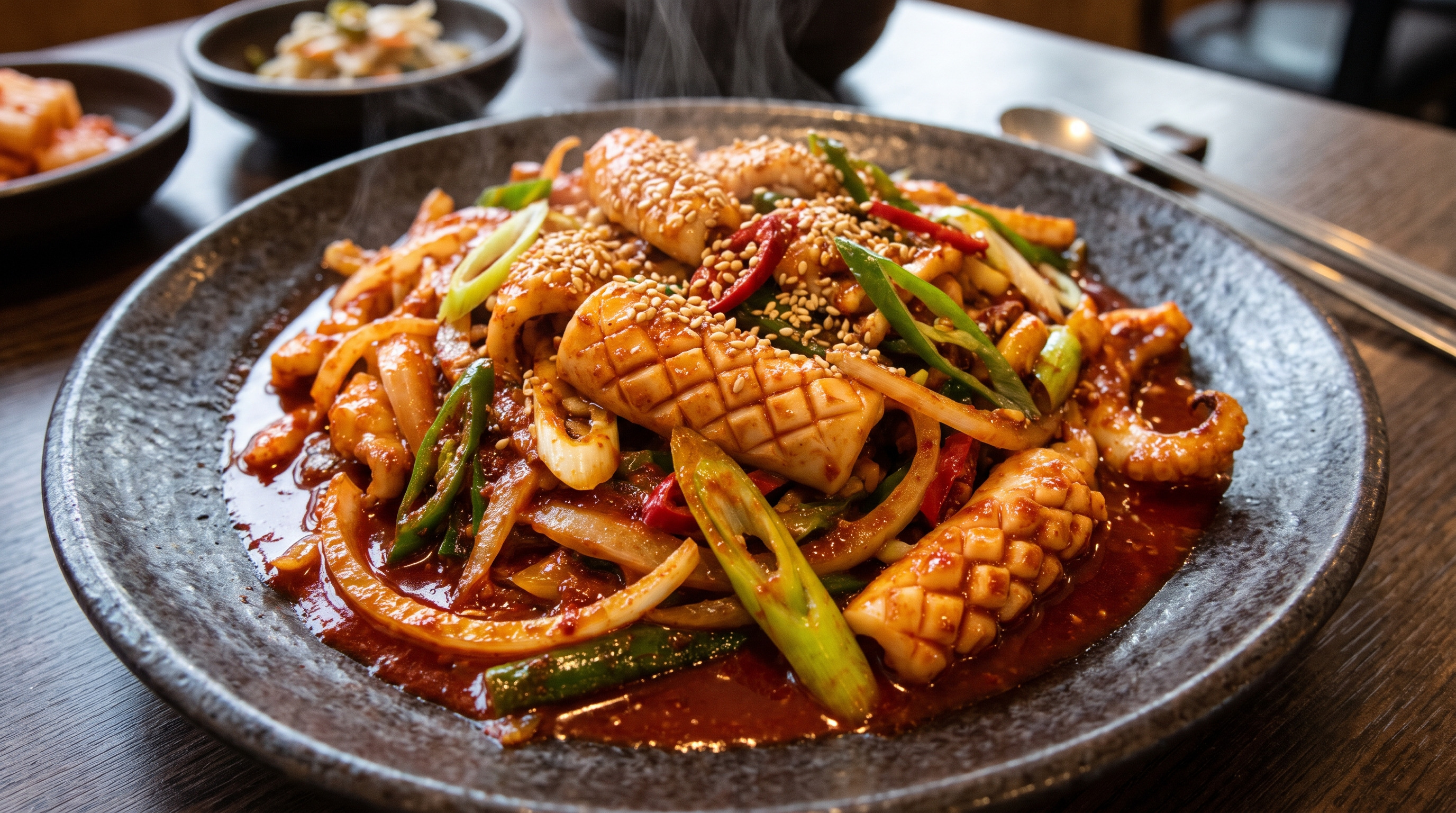
Quick Recipe Snapshot: ⏱️ Prep: 10 mins | 🔥 Cook: 10 mins | 🍽️ Servings: 2–3 | 💡 Key Secret: 30-second flash blanch locks out excess water + sugar-first sear tenderizes squid + scorch soy sauce on the pan rim for authentic smoky wok hei.
Glistening with a vibrant crimson chili sheen and releasing an irresistible aroma of roasted garlic, scallion oil, and smoky caramelized soy sauce, Ojingeo-bokkeum (오징어볶음) is one of Korea’s most legendary stir-fries. Each bite delivers tender, snappy rings of squid enveloped in a thick, sweet-spicy glaze, complemented by the satisfying crunch of fresh cabbage and pungent chili peppers.
Yet recreating this dish at home frequently ends in disappointment: watery liquid floods the pan, diluting the fiery sauce into a bland, murky soup, while the squid overcooks into tough, rubbery elastic bands.
The secret to dry, restaurant-style Korean squid stir-fry lies not in owning a commercial jet-burner wok, but in three targeted culinary science techniques: the 30-second thermal protein seal, carbohydrate pre-coating tenderization, and pan-edge soy sauce pyrolysis (Maillard wok hei).
By applying this 20-minute master recipe, you can turn two simple squids into a restaurant-worthy feast boasting tender, juicy seafood, crunchy vegetables, and a thick, clingy glaze.
1. The Culinary Science Behind Restaurant Flavor
Understanding cephalopod muscle structure unlocks the secret to cooking squid with zero unwanted liquid:
💡 Culinary Science 1: The 30-Second Flash Blanch & Thermal Protein Moisture Barrier
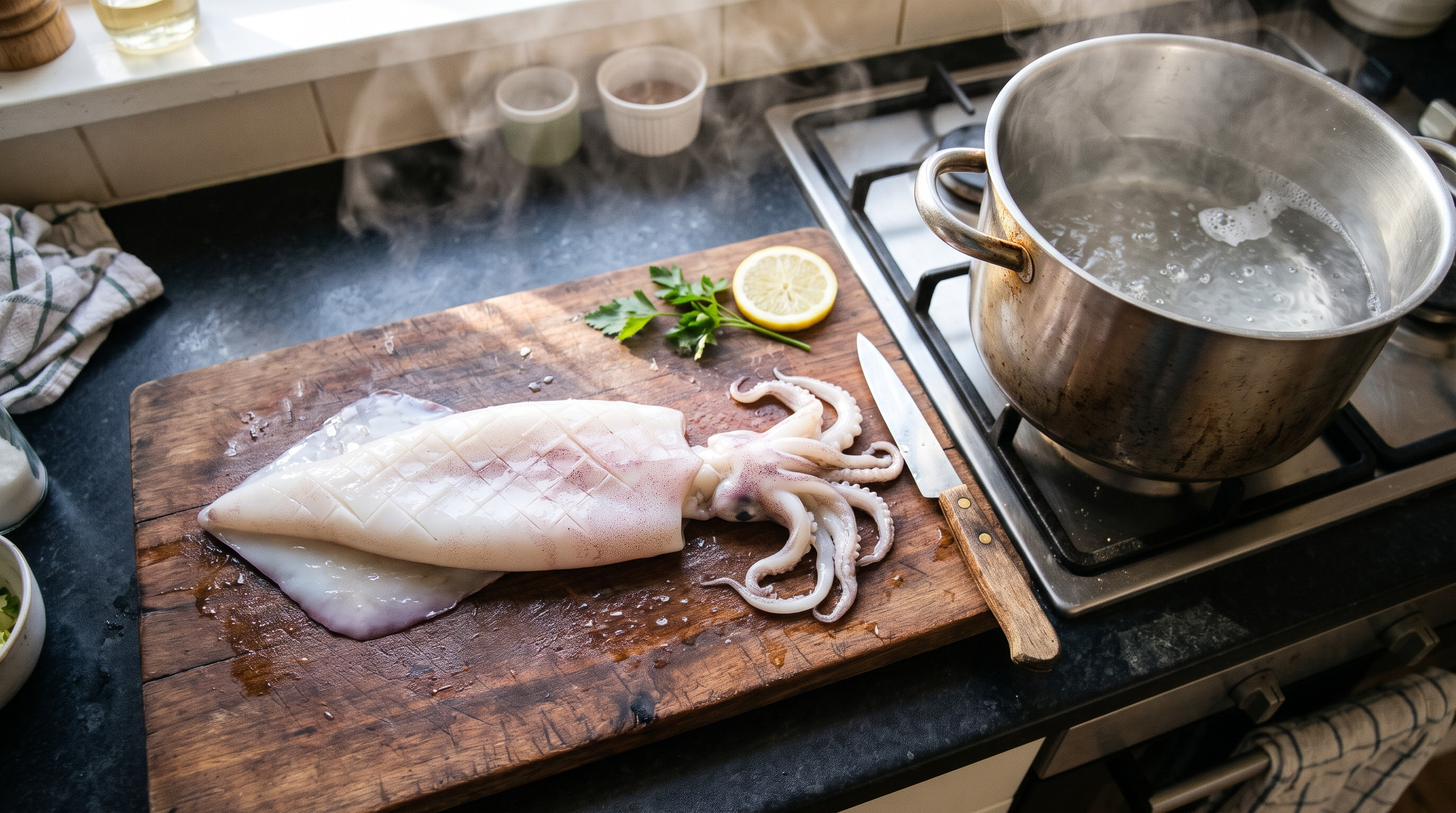
Cephalopod muscle tissue is composed of tight, circular and radial muscle fibers containing over 80% intracellular moisture. When raw squid is added directly to a domestic frying pan, the surface heats up slowly. Muscle proteins (myosin and paramyosin) contract gradually, squeezing internal water outward into the skillet like a wrung sponge. By plunging scored squid into rolling boiling water with a touch of rice wine and vinegar for just 20 to 30 seconds, the exterior protein layers undergo rapid surface thermal coagulation. This instantaneous heat reaction creates a micro-barrier that traps all internal moisture within the flesh, ensuring that zero water leaks out during high-heat stir-frying.
💡 Culinary Science 2: Sugar-First Glaze & Edge-Scorched Soy Sauce Pyrolysis (Wok Hei)
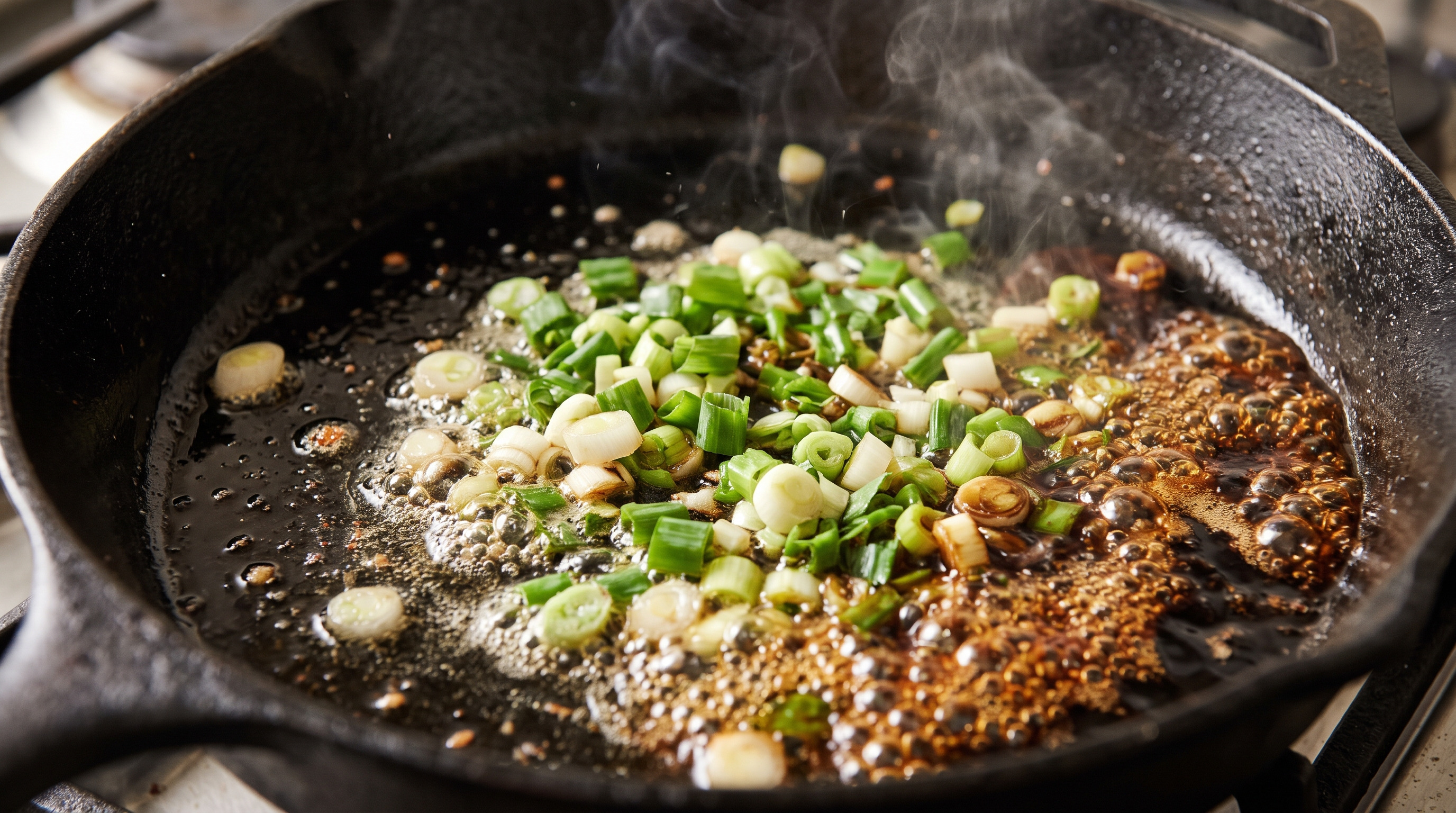
When the blanched squid enters the hot scallion oil, sprinkling granulated sugar directly onto the seafood before any liquid seasoning is added serves two critical functions. First, sucrose melts at 160°C (320°F), creating a glistening caramel matrix that coats the squid mantle and relaxes protein elasticity. Second, sliding the squid aside and splashing regular soy sauce against the scorching hot outer perimeter of the wok causes flash pyrolysis and rapid Maillard browning. The free amino acids and simple sugars in the soy sauce vaporize and caramelize within seconds, imbuing the dish with authentic smoky wok hei (breath of the wok) without requiring an open-fire commercial stove.
2. Essential Ingredients & The Golden Ratio Sauce
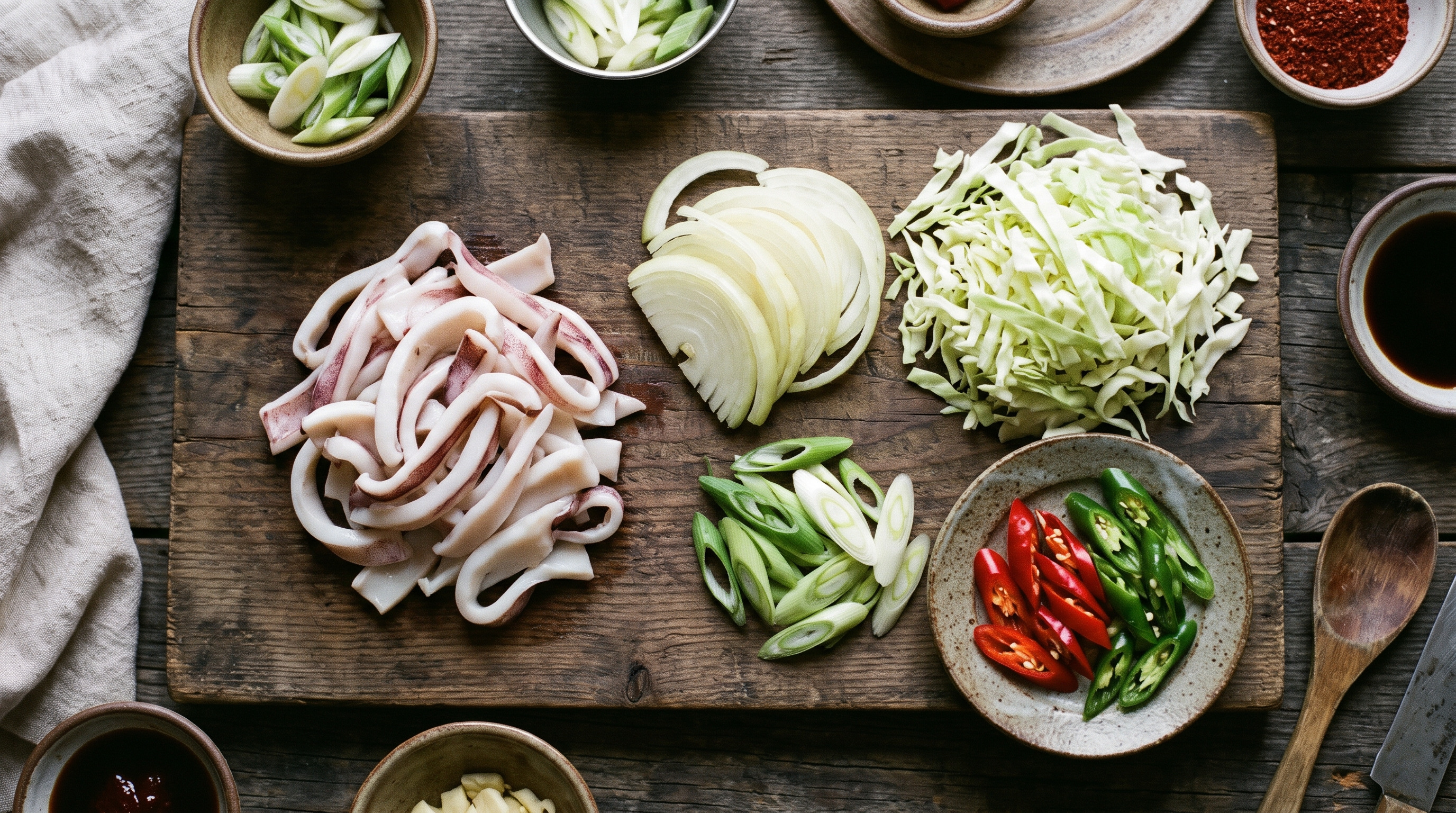
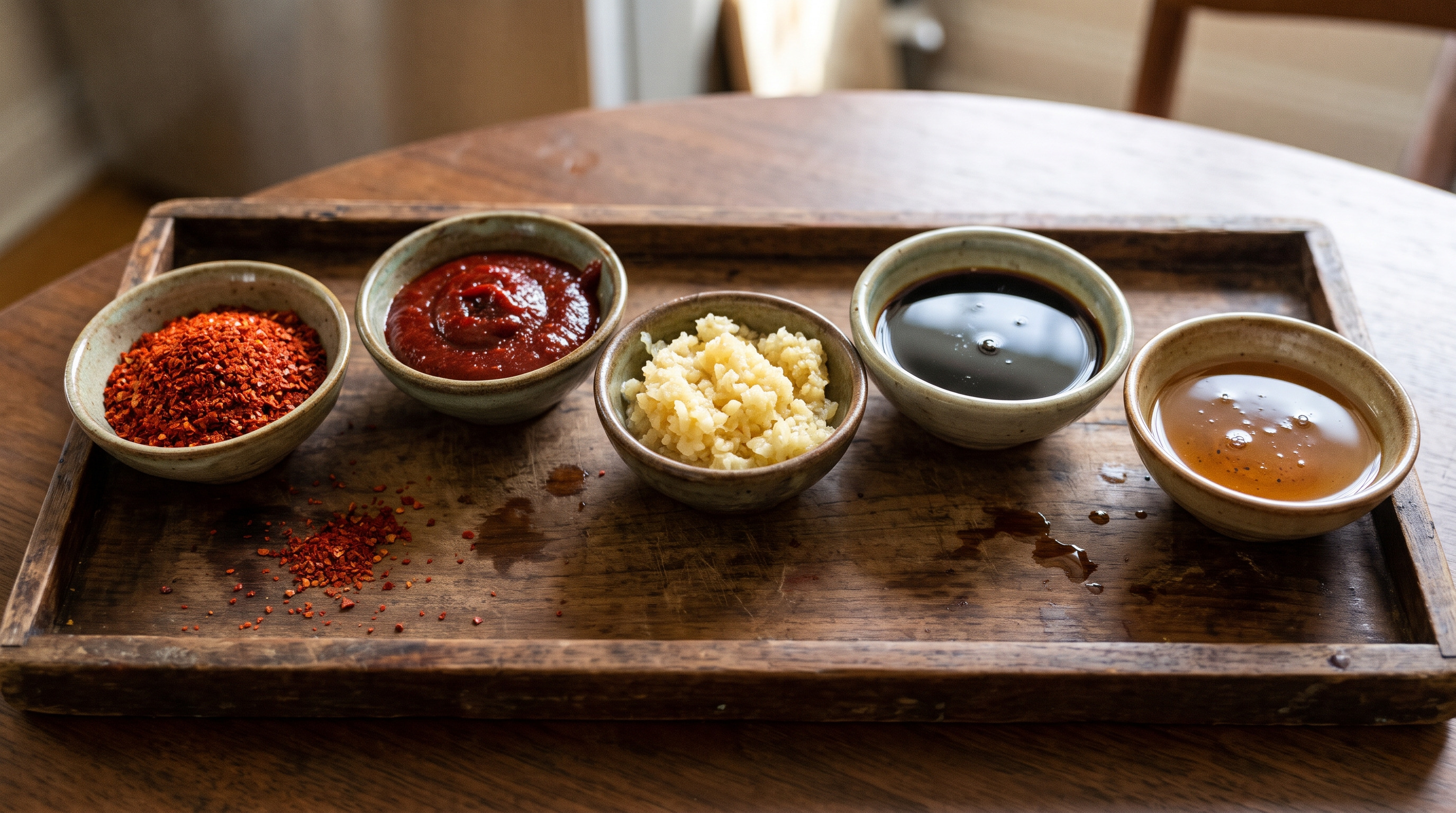
Here is the exact ingredient roster with metric and US imperial measurements for 2 to 3 hearty portions.
| Category | Ingredients & Amounts (Metric & US) | Chef’s Notes & Substitutions |
|---|---|---|
| Seafood | 2 medium fresh squids (400g-500g / 14-17.6 oz total) | Cleaned, gutted, and quills removed. Thawed whole frozen squid or pre-cleaned tubes work equally well. |
| Blanching Agent | 1L (4.2 cups) water 1 tbsp rice wine (cheongju / mirin) 0.5 tbsp rice vinegar | Rice wine and mild acid neutralize fishy trimethylamine odors and firm up the squid texture. |
| Wok Hei Aromatics | 2.5 tbsp neutral cooking oil 1/2 stalk scallion (white part), finely chopped 1-1.5 tbsp sugar 1.5 tbsp regular soy sauce (jin-ganjang) | Scallion whites provide a sweet aromatic base. Soy sauce is drizzled on the bare hot metal rim to create smoky char. |
| Crisp Vegetables | 1/2 medium yellow onion (100g / 3.5 oz) 1/4 medium carrot (50g / 1.8 oz) 2 cabbage leaves (80g / 2.8 oz) 1/2 stalk scallion (green part), cut into batons 2 Korean green chilies (cheongyang) 1/2 red chili pepper | Cut vegetables into uniform flat pieces so they cook evenly in under 90 seconds. |
| Golden Ratio Sauce | 3 tbsp Korean red pepper flakes (gochugaru) 1 tbsp Korean red pepper paste (gochujang) 1 tbsp minced garlic 1 tbsp mirin 1 tbsp corn syrup or oligodang Pinch of ground black pepper | Keep gochujang to 1 tablespoon; excess paste makes the stir-fry heavy and soggy. Gochugaru provides clean, sharp heat. |
| Finishing Touches | 1 tbsp toasted sesame oil 1 tbsp toasted sesame seeds | Stirred in off the flame to deliver nutty richness and glossy sheen. |
3. Step-by-Step Cooking Instructions
Step 1. Score Squid & 30-Second Flash Blanch (Moisture Lock)
Slit the squid mantle open flat. Lay it skin-side down on your cutting board. Hold a sharp chef’s knife at a 45-degree angle and gently slice fine diagonal incisions across the inner surface, then repeat in the opposite direction to form a tight diamond crosshatch grid (do not cut all the way through). Cut the scored mantle into bite-sized strips roughly 1.5cm (0.6-inch) wide, and cut the tentacles into pairs.
Bring 1 liter (4.2 cups) of water to a rolling boil with 1 tablespoon of rice wine and 0.5 tablespoon of vinegar. Plunge the cut squid into the boiling water for exactly 20 to 30 seconds. As soon as the strips curl into pretty pinecone shapes, dump them into a colander. Do not rinse with cold water; let them steam dry naturally for 3 minutes so the surface moisture evaporates completely.
Step 2. Infuse Scallion Oil, Sugar Coat & Scorch Soy Sauce
Set your largest skillet or wok over medium heat. Add 2.5 tablespoons of neutral oil and the finely minced white scallions. Sauté for 1 minute until the oil turns fragrant and the scallions show a slight golden color.
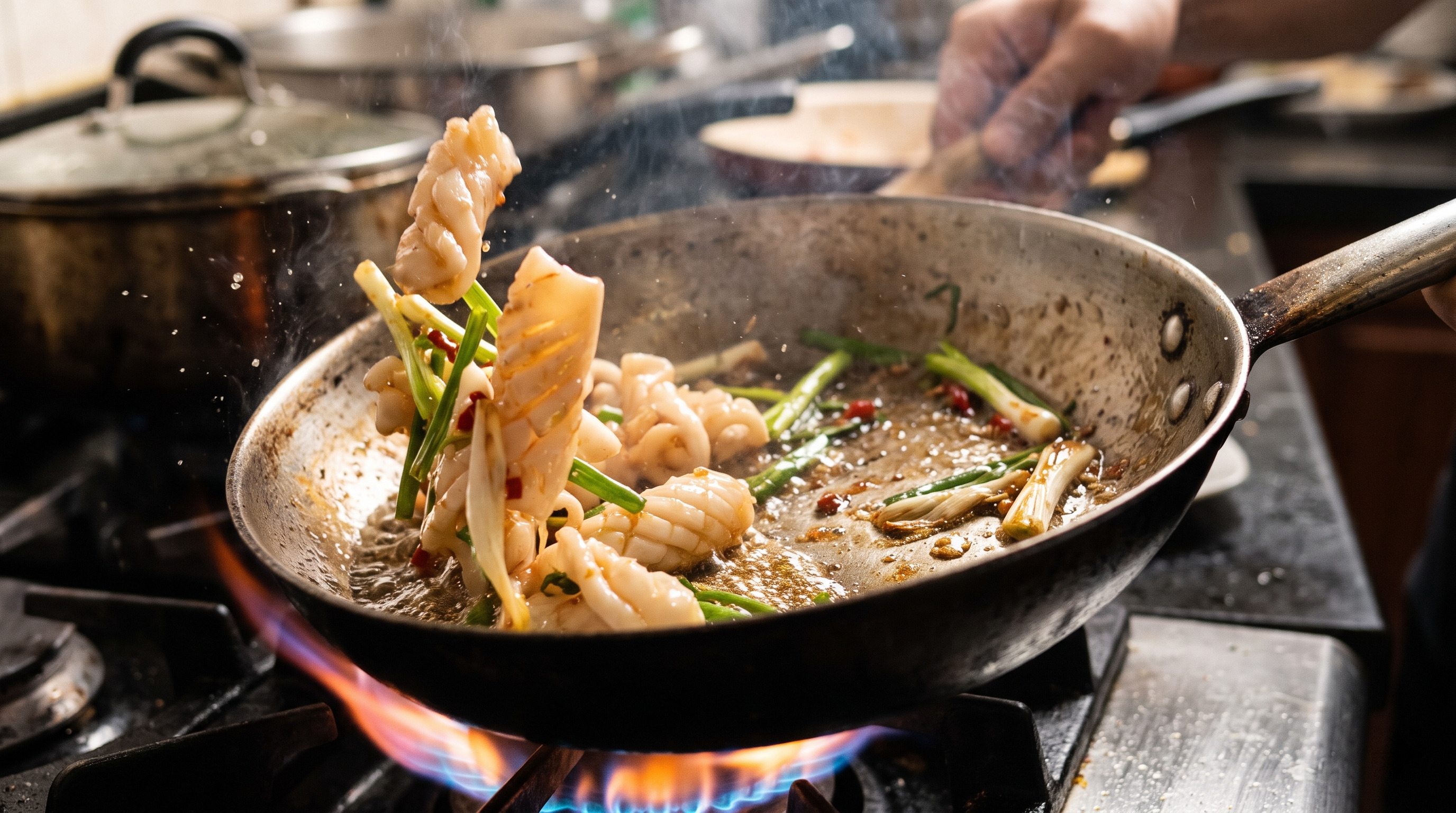
Turn the heat up to maximum high. Toss in the drained squid strips and immediately sprinkle 1 to 1.5 tablespoons of granulated sugar over them. Toss vigorously for 30 seconds as the sugar melts into a gleaming protective film.
Quickly push the squid to one side of the wok. Pour 1.5 tablespoons of soy sauce directly onto the bare, sizzling hot pan metal on the opposite side. Let it bubble and scorch into a smoky aroma for 3 seconds, then immediately stir the squid into the scorched soy sauce.
Step 3. Add Golden Sauce, Crisp Vegetables & High-Heat Wok Toss
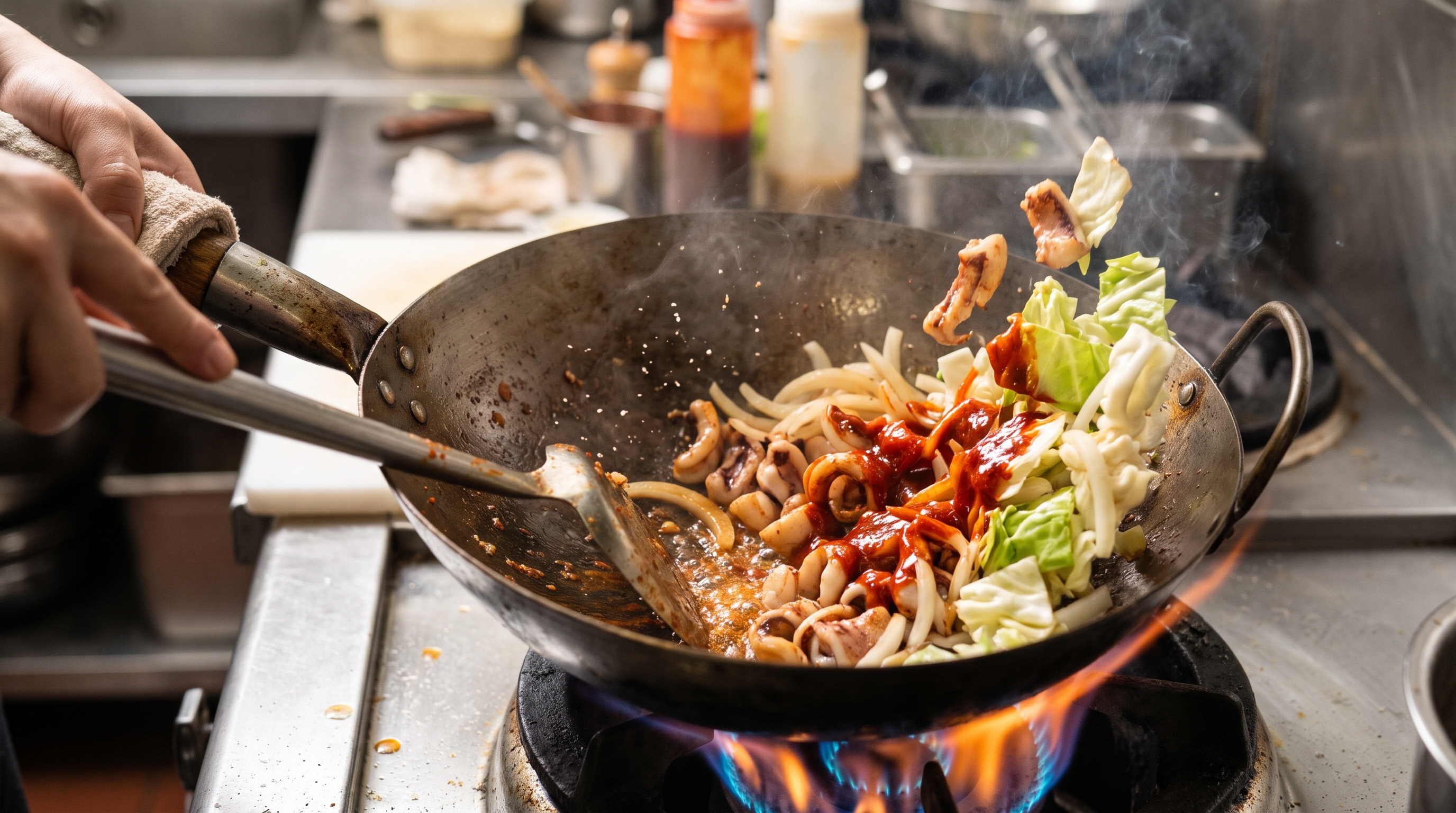
Without reducing the flame, dump in the pre-mixed golden sauce (gochugaru, gochujang, minced garlic, mirin, corn syrup, black pepper) together with the sliced onions, carrots, and cabbage squares.
Keep your burner on the highest possible heat. Using two wooden spatulas or cooking tongs, stir-fry continuously and rapidly for 60 to 90 seconds. The thick chili paste will melt into the rendered oils, coating the squid and vegetables in an intensely glossy, clinging glaze while the cabbage remains pleasantly crisp.
Step 4. Toss Aromatic Garnishes & Finish with Sesame Oil
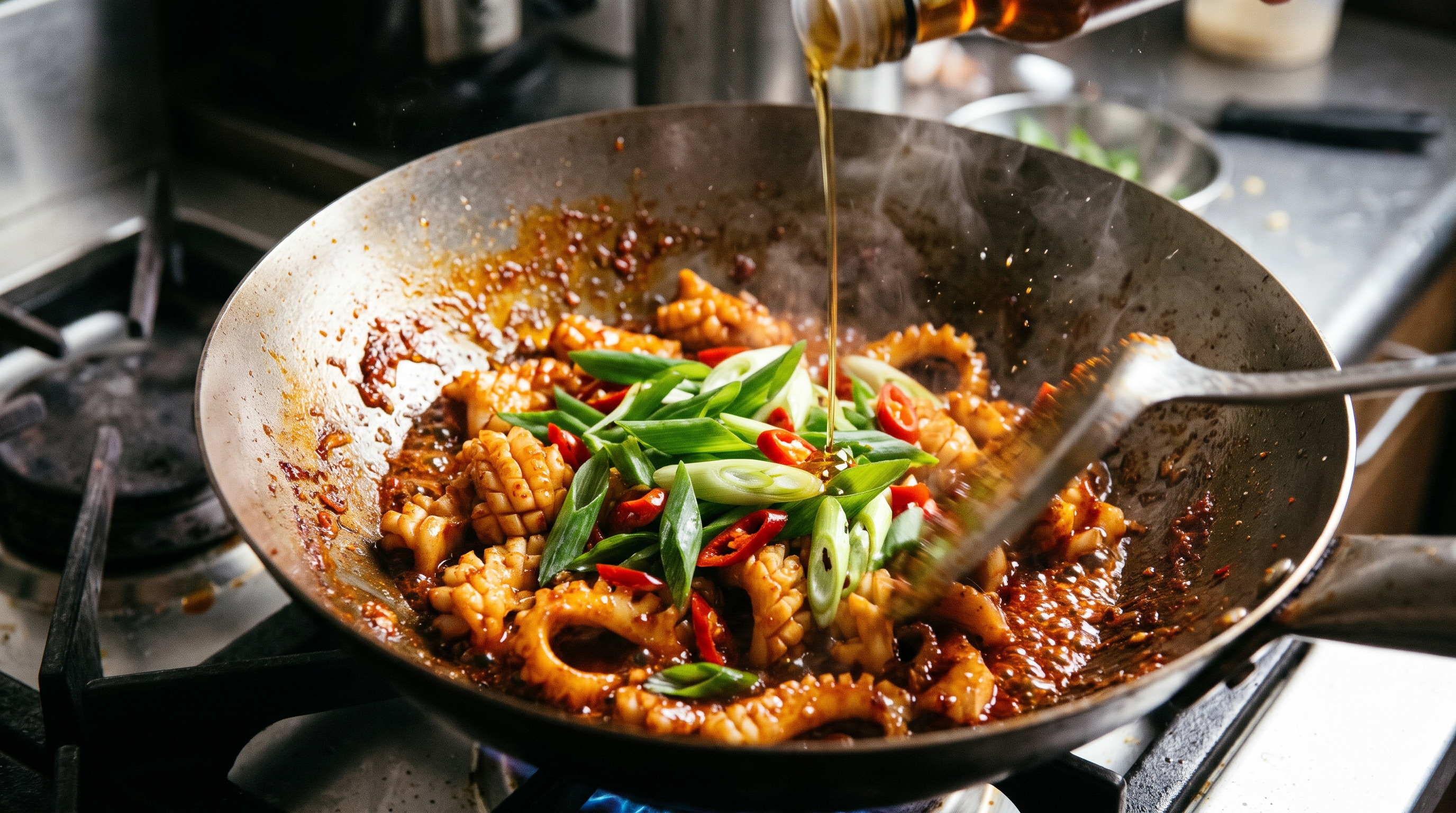
Scatter the scallion batons and sliced green and red chilies into the pan. Stir-fry for 20 seconds to release their fresh, piquant aroma.
Turn off the heat completely. Drizzle 1 tablespoon of toasted sesame oil and sprinkle 1 tablespoon of toasted sesame seeds over the dish. Give the wok two final vigorous tosses to incorporate the nutty oil, and transfer immediately to a wide serving platter.
4. Pro Chef Tips to Elevate Your Dish
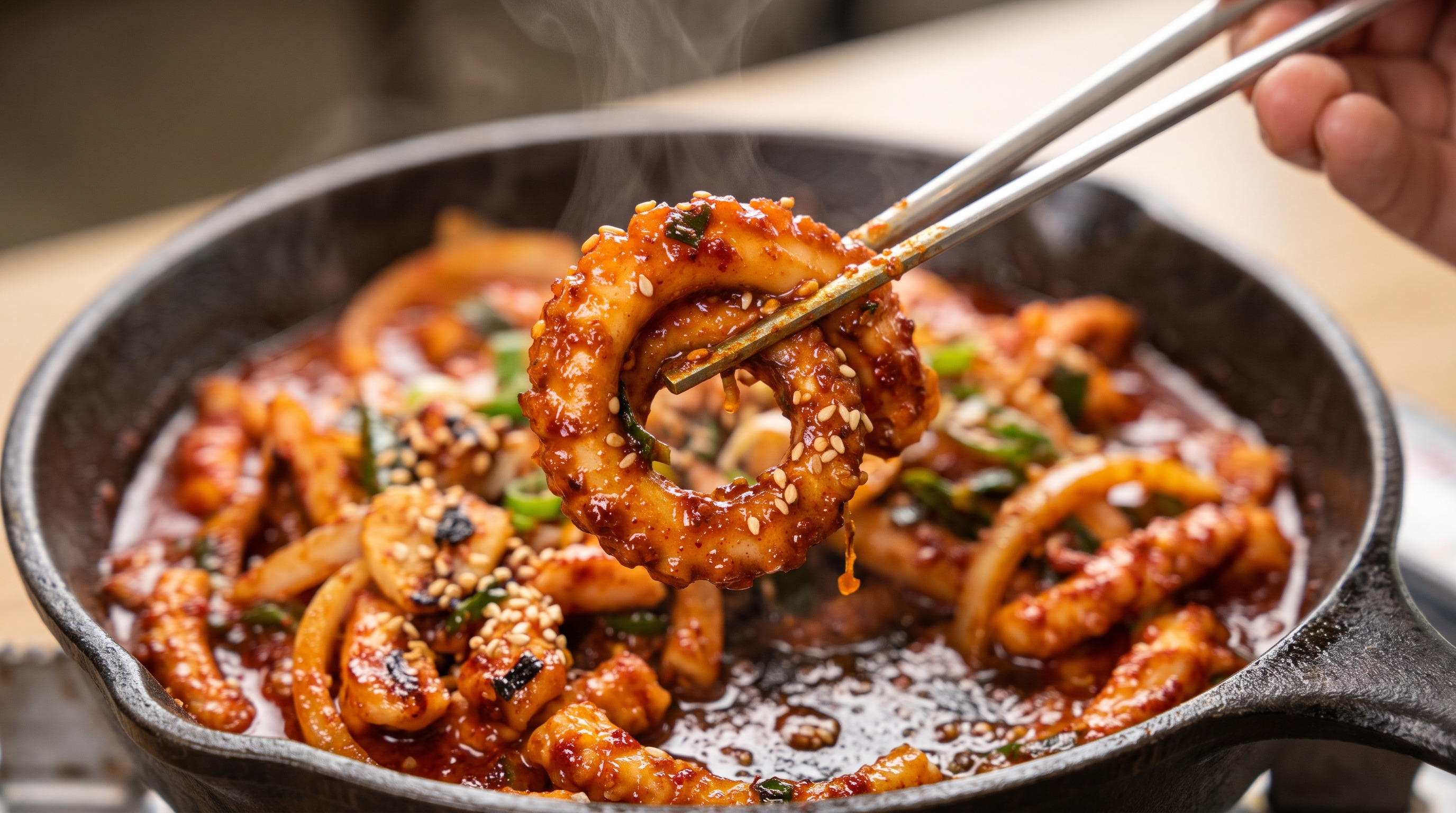
- The Diamond Scoring Grid Multiplies Sauce Adhesion: Squid flesh is naturally smooth and slick, which causes liquid seasonings to slide off. Scoring a tight diamond grid on the inner side creates thousands of tiny pockets. As the squid hits heat, it curls into ribbed “pinecones” that trap the fiery chili sauce within every crevice.
- Pre-Bloom Gochugaru in the Sauce 15 Minutes Early: Mix your gochugaru, gochujang, soy sauce, and garlic together in a bowl 15 minutes before cooking. Giving the chili flakes time to absorb the liquids allows the coarse powder to hydrate and release its natural deep ruby-red pigments, yielding a vibrant, restaurant-quality color without any raw pepper taste.
- Transform Leftovers into K-Dessert Squid Fried Rice: Never discard leftover sauce remaining on your plate! Transfer the concentrated sauce and any remaining squid or cabbage bits into a frying pan. Add 1 bowl of warm steamed rice, 2 tablespoons of chopped kimchi, a handful of shredded roasted seaweed (gim), and a teaspoon of sesame oil. Stir-fry over high heat, spread flat, and let the bottom develop a crunchy golden crust (nurungji) for an unforgettable finish.
5. Frequently Asked Questions (FAQ)
Q1. Is the 30-second blanch really necessary? Can I stir-fry raw squid directly?
Yes, flash blanching is the definitive restaurant secret for home cooks. Standard domestic stove burners do not output the 50,000+ BTU heat of commercial wok burners. Sautéing raw squid on a home stove causes its cell walls to collapse, shedding up to 1/2 cup of watery liquid that turns your stir-fry into an unintentional soup. A 30-second parboil seals the outer protein layer, keeping all juices locked inside.
Q2. Can I make this with frozen squid tubes or squid rings?
Absolutely! Thaw frozen squid completely in cold water, pat the surfaces thoroughly dry with paper towels, and proceed with the same 20-30 second blanch in boiling water with rice wine. The resulting stir-fry will be wonderfully tender, springy, and free of any freezer odors.
Q3. What should I do if the pan seems too dry or starts to burn during high-heat stir-frying?
Never add plain water, which dilutes the rich seasoning and makes the sauce runny. Instead, drizzle 1 tablespoon of mirin (cooking rice wine) or 1/2 tablespoon of cooking oil around the edges of the pan. This loosens any caramelized sauce without degrading the concentrated glaze.
6. Serving Suggestions & Related Recipes
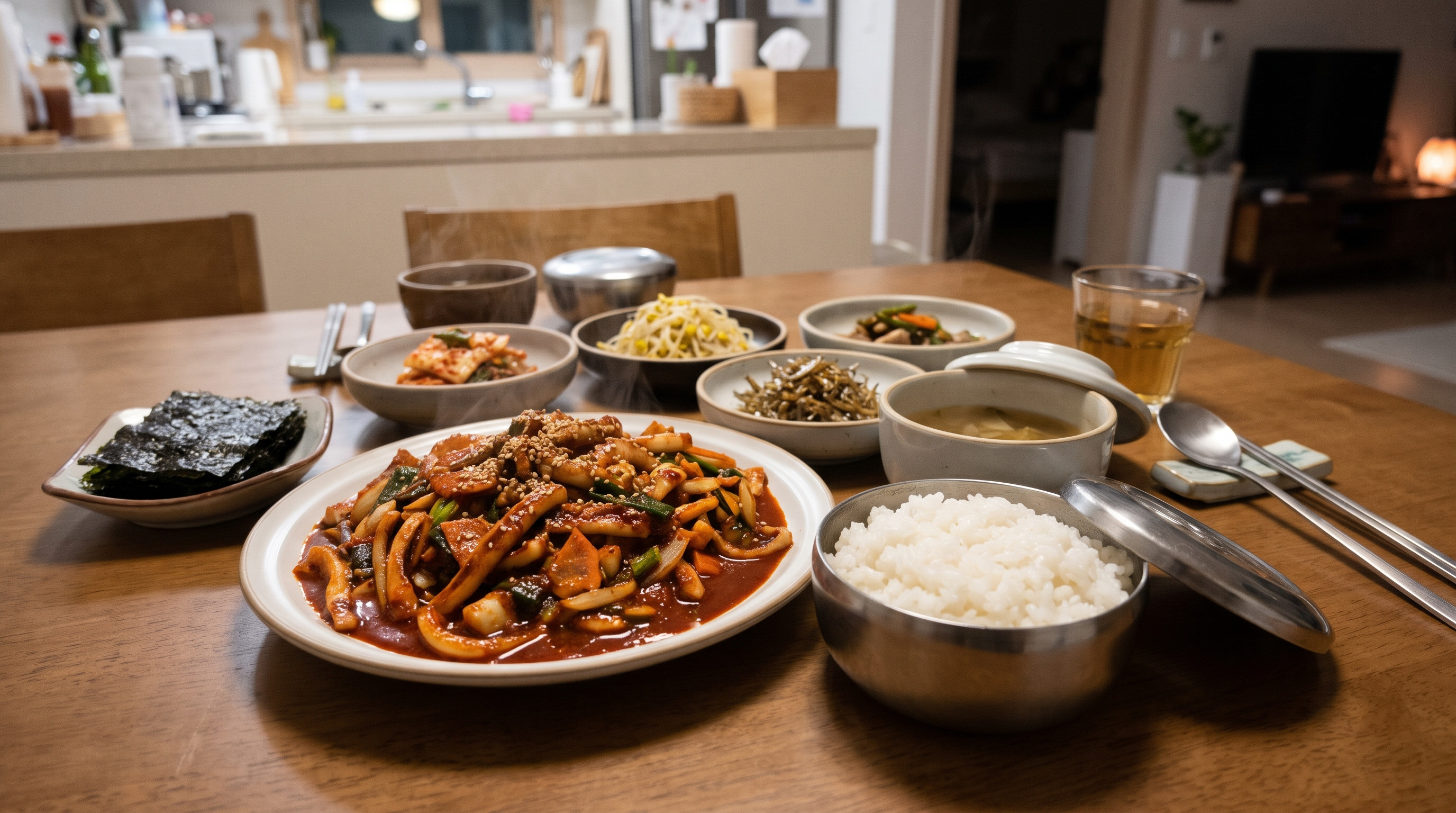
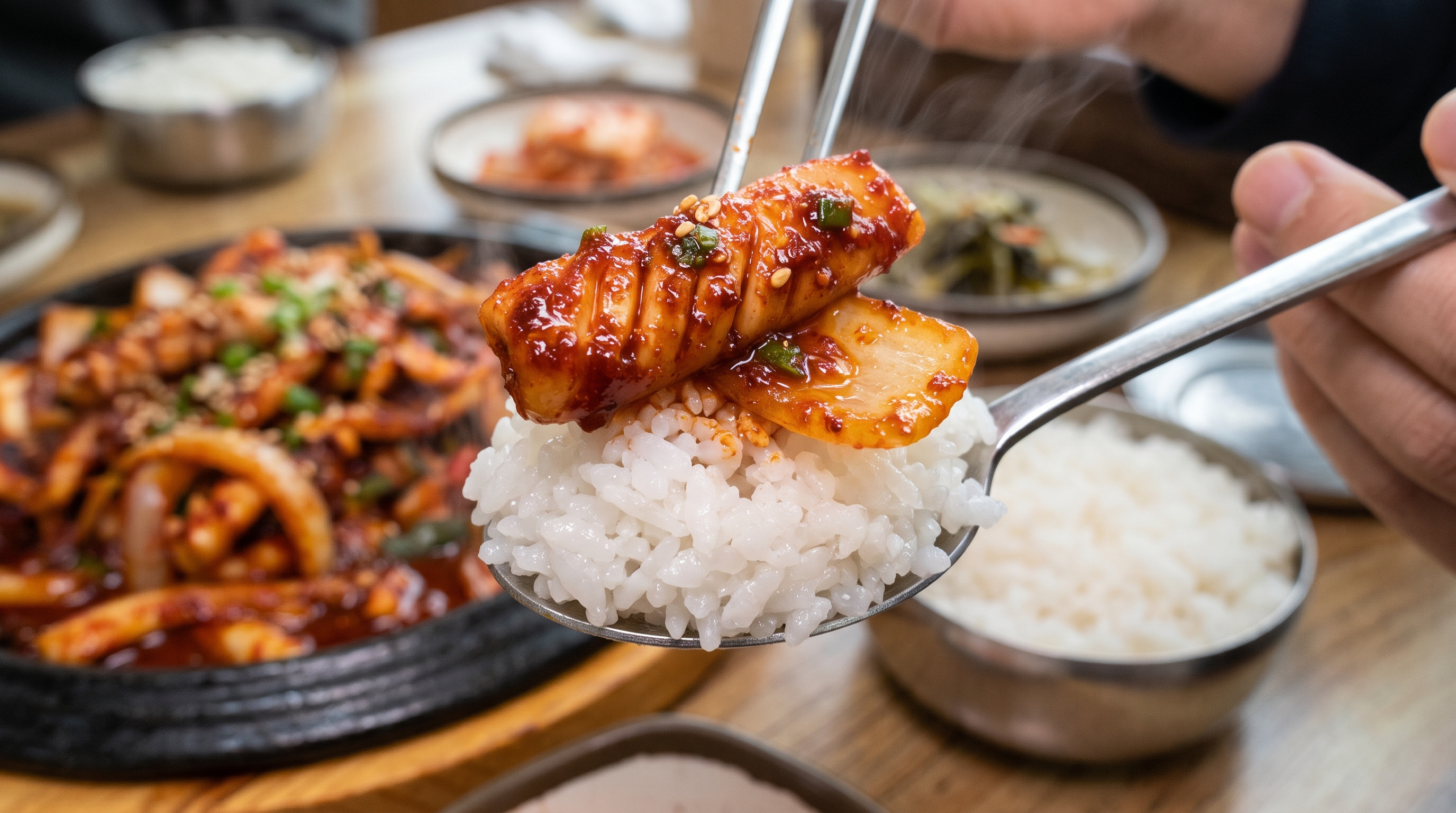
Ojingeo-bokkeum is phenomenal served as a hearty dinner main dish alongside bowls of warm, fluffy white rice, or served over rice as an all-in-one rice bowl known as Ojingeo Deopbap (오징어덮밥). In Korea, it is also one of the country’s most cherished drinking foods (anju), pairing exceptionally well with ice-cold beer (maekju) or smooth soju.
To balance its fiery warmth, pair it with cooling side dishes like steamed egg custard (gyeran-jjim), chilled seaweed cold soup (miyeok-naengguk), or crisp leafy lettuce wraps (ssam).
Explore these delicious related Korean stir-fries and seafood specialties:
- Want a pork-based stir-fry with equal fire and wok aroma? Cook our famous Jeyuk Bokkeum (Spicy Korean Pork Stir-Fry).
- Craving a rich braised chicken alternative? Try our hearty Spicy Braised Chicken (Dakbokkeumtang).
- Love spicy Korean seafood broth? Dive into a steaming bowl of Seafood Jjamppong.