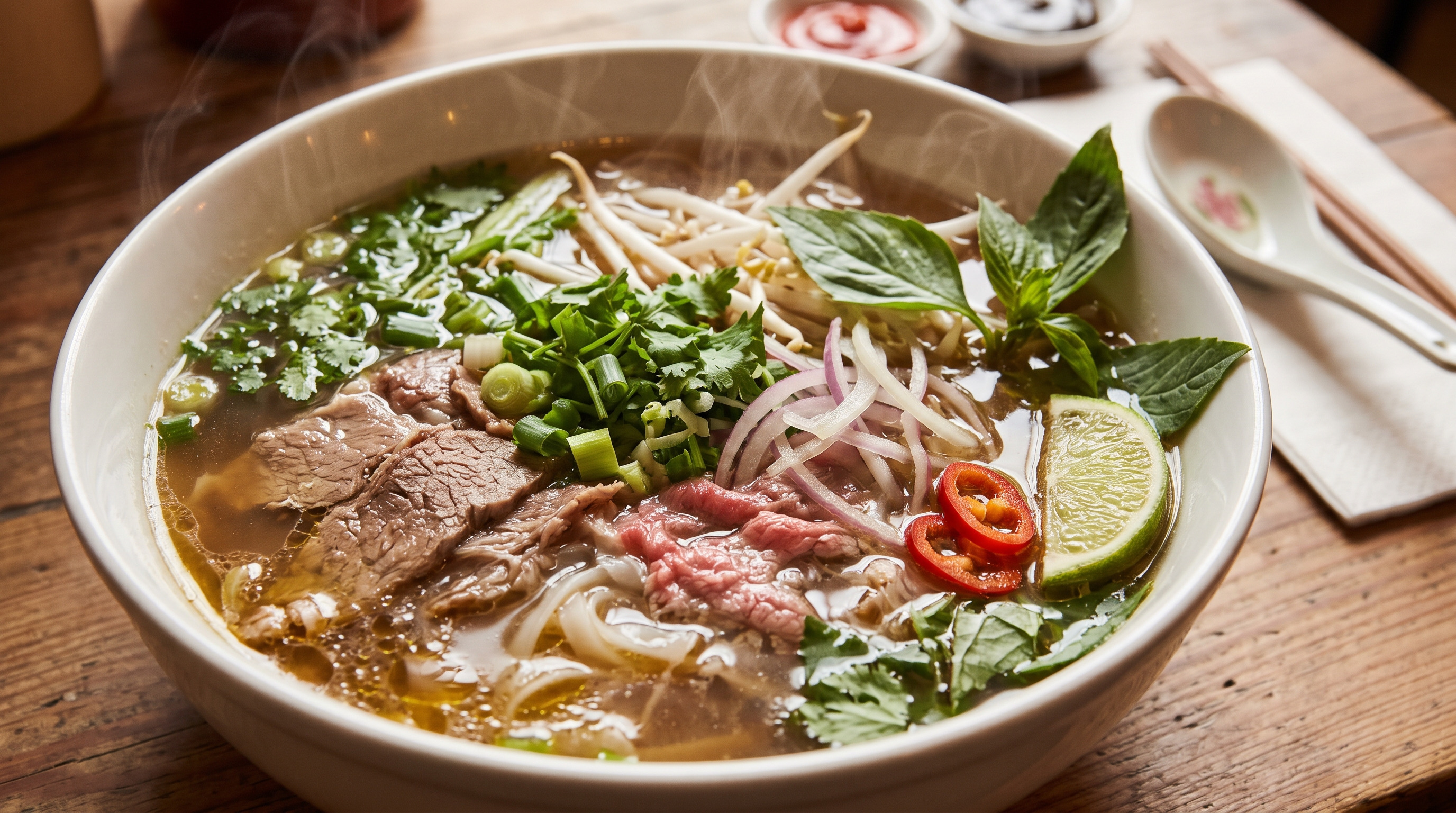
Quick Recipe Snapshot: ⏱️ Prep: 10 mins | 🔥 Cook: 15 mins | 🍽️ Servings: 2–3 | 💡 Key Secret: Char onions and ginger on a dry pan for smoky depth + blend bone broth with fish sauce and chicken stock for instant 24-hour richness + soak noodles in room-temp water first.
Steaming with fragrant vapors of roasted ginger, star anise, and sweet cinnamon, a warm bowl of Vietnamese Beef Pho (Phở Bò) is celebrated worldwide as the ultimate soothing comfort soup. Composed of slippery, silky rice noodles bathed in a crystal-clear yet deeply beefy broth, piled high with tender ribbons of beef, crisp bean sprouts, aromatic cilantro, and bright lime juice, it provides pure culinary healing in every spoonful.
Traditional pho broth takes 8 to 12 hours of simmering beef knuckle bones, brisket, and oxtail with constant skimming. For home cooks, that arduous labor is impractical for a weeknight meal. On the other hand, relying strictly on store-bought boxed pho cubes often produces a salty, artificial soup lacking body and aroma.
The secret to achieving authentic Vietnamese restaurant flavor in just 25 minutes lies in three food science principles: Maillard pyrolysis through dry charring, glutamate-inosinate cross-species umami amplification, and pre-hydration noodle gelatinization (“Trần Phở”).
With this master guide, you can recreate the intoxicating depth of Hanoi and Saigon street pho stalls right in your own kitchen in under half an hour.
1. The Culinary Science Behind Restaurant Flavor
Understanding the chemistry of aromatic roasting and starch hydration allows us to condense a 12-hour simmer into 25 minutes:
💡 Culinary Science 1: Direct Charring (Maillard Pyrolysis) & Essential Oil Volatilization
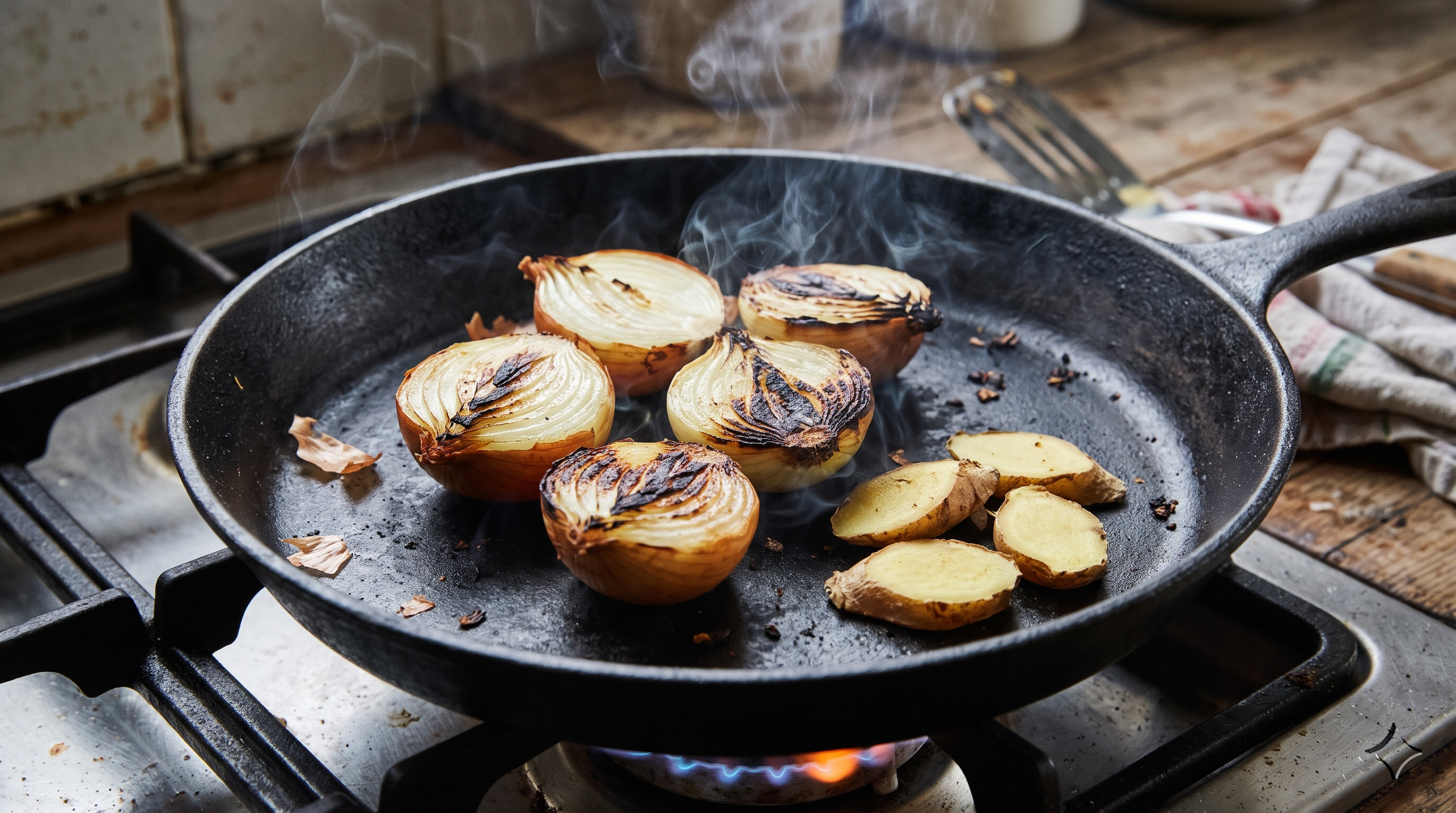
If raw onions and fresh ginger are simmered directly in broth, they impart sharp pungency and excess sulfur. Placing unpeeled cut onions and ginger slices on a dry, ungreased smoking pan at 230°C (450°F) causes rapid surface pyrolysis. Natural allium fructans and sugars caramelize into sweet, roasted aroma compounds called pyrazines and furans. Simultaneously, dry-toasting whole star anise and cinnamon sticks unlocks fat-soluble essential oils (anethole and cinnamaldehyde), which immediately blossom and infuse into the warm bone broth, delivering that unmistakable smoky, sweet street-cart pho fragrance.
💡 Culinary Science 2: Cold-Water Hydration & Flash-Blanching (“Trần Phở”) Technique
Dried rice noodles (bánh phở) are manufactured with over 85% pure rice amylose and amylopectin. Dropping stiff, dry rice noodles directly into boiling soup causes the exterior surface to hydrate and disintegrate into cloudy starch sludge before the core ever cooks. Pre-soaking noodles in cold or lukewarm water for 30 minutes allows water molecules to hydrate the inner starch granules evenly without melting the surface. Once fully hydrated, a rapid 20-to-30-second plunge into boiling water gelatinizes the starch instantly, yielding perfectly elastic, bouncy noodles that never turn mushy or cloud your pristine broth.
2. Essential Ingredients & The Golden Ratio Broth
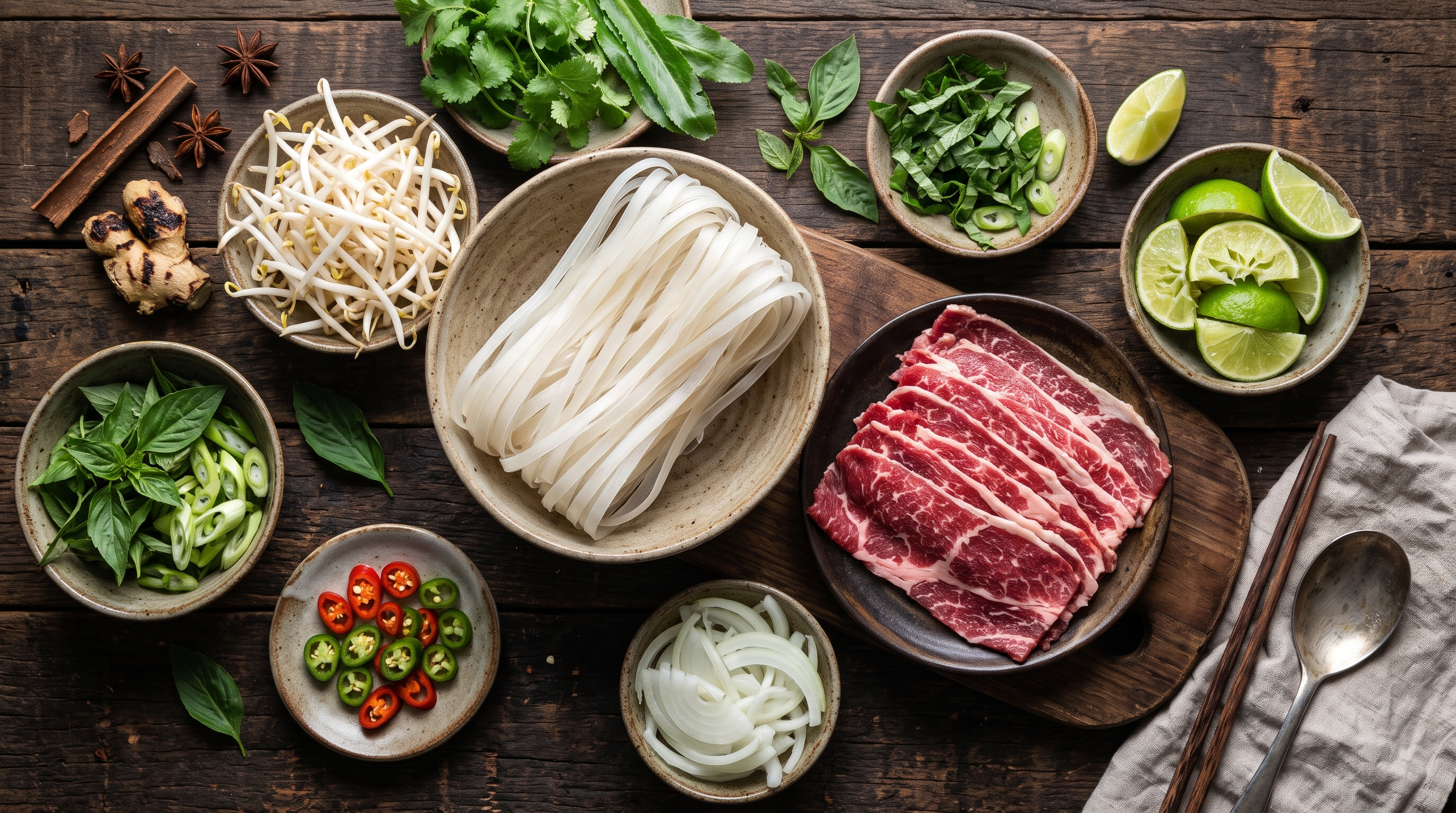
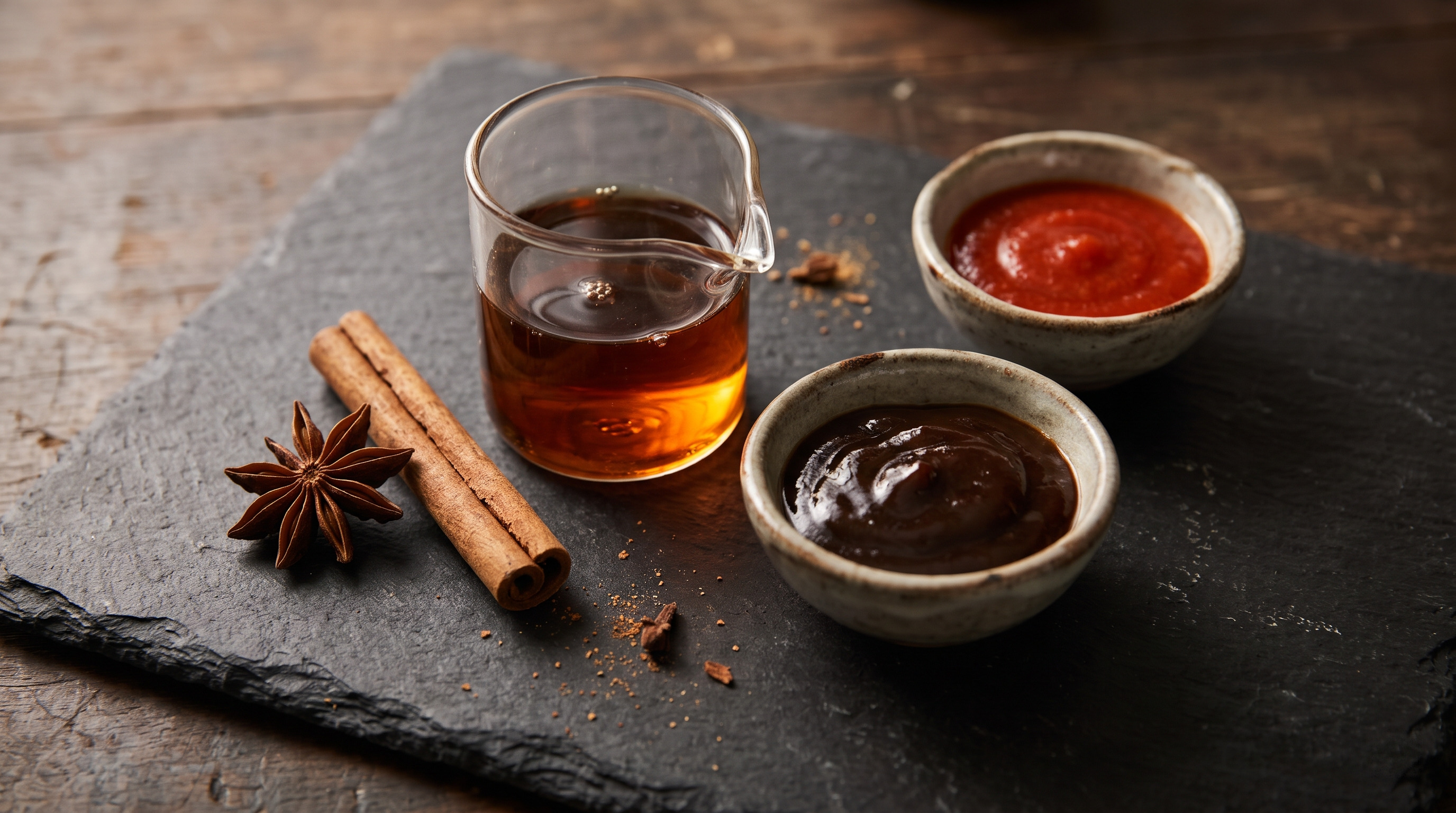
Here is the complete ingredient checklist with exact metric and US imperial measurements for 2 to 3 generous servings.
| Category | Ingredients & Amounts (Metric & US) | Chef’s Notes & Substitutions |
|---|---|---|
| Noodles & Beef | 200g (7 oz) dried flat rice noodles (bánh phở) 250g-300g (8.8-10.5 oz) thinly sliced beef | Medium-width (3mm-5mm) dried rice noodles work best. Use thinly sliced beef brisket, flank, eye of round, or sirloin (shabu-shabu cut). |
| Broth Foundation | 1.5L (6.3 cups) filtered water 500ml (2.1 cups) commercial rich beef bone broth | Using Korean packaged sagol gomtang broth (or unsalted beef bone broth) provides rich collagen body and natural gelatin in minutes. |
| Charred Aromatics | 1 large yellow onion halved (200g / 7 oz) 20g (0.7 oz) fresh ginger sliced into thick coins 1 scallion white stalk 2 whole star anise pods 1 cinnamon stick (5cm / 2 inches) | Char in a dry pan until blackened on the edges. Whole spices release essential oils without clouding the soup. |
| Golden Ratio Seasoning | 3 tbsp premium fish sauce (Red Boat / Squid Brand) 1.5 tbsp oyster sauce 1 tbsp chicken bouillon powder 1 tbsp granulated sugar (or rock sugar) 0.5 tbsp fine sea salt Pinch of ground black pepper | Fish sauce supplies inosinic umami, while chicken bouillon introduces concentrated glutamates, creating multi-layered depth. |
| Fresh Herbs & Garnishes | 200g (7 oz) fresh bean sprouts 1/2 onion thinly shaved (quick pickled) 2 Thai bird’s eye chilies or green chilies 1 fresh lime or lemon cut into wedges Fresh cilantro sprigs & Thai basil | The contrast between steaming hot broth, crunchy bean sprouts, and bright lime juice defines the authentic pho experience. |
| Table Dipping Sauces | Hoisin sauce Sriracha chili sauce | Swirled together in a small condiment dish for dipping the poached beef slices. |
3. Step-by-Step Cooking Instructions
Step 1. Hydrate Rice Noodles & Quick-Pickle Onions
Submerge the dried rice noodles in a wide bowl of lukewarm water. Let soak for 30 minutes until they turn opaque white and bend easily like soft ribbon.
Shave 1/2 yellow onion as thinly as possible using a mandoline or sharp knife. In a small bowl, combine 2 tablespoons of white vinegar, 1 tablespoon of sugar, and 1/3 teaspoon of salt. Toss the sliced onions in the brine and set aside for 15 minutes to create tangy, sweet pickled onions (hành trần dấm).
Step 2. Char Aromatics & Simmer Infused Broth
Set a dry cast-iron skillet or heavy stainless steel pan over high heat. Lay the cut yellow onion halves cut-side down, alongside the thick ginger slices and scallion whites. Char without moving for 3 to 4 minutes until the cut surfaces turn deeply blackened and caramelized. During the final 60 seconds, drop in the star anise pods and cinnamon stick to toast until fragrant.
In your main soup pot, combine 1.5 liters of filtered water and 500ml of beef bone broth. Add the charred onions, ginger, scallion, toasted star anise, and cinnamon. Bring to a rolling boil over high heat, then adjust the flame to medium-low and simmer gently for 15 minutes to extract their aromas.
Step 3. Strain Broth, Season & Flash-Poach Beef
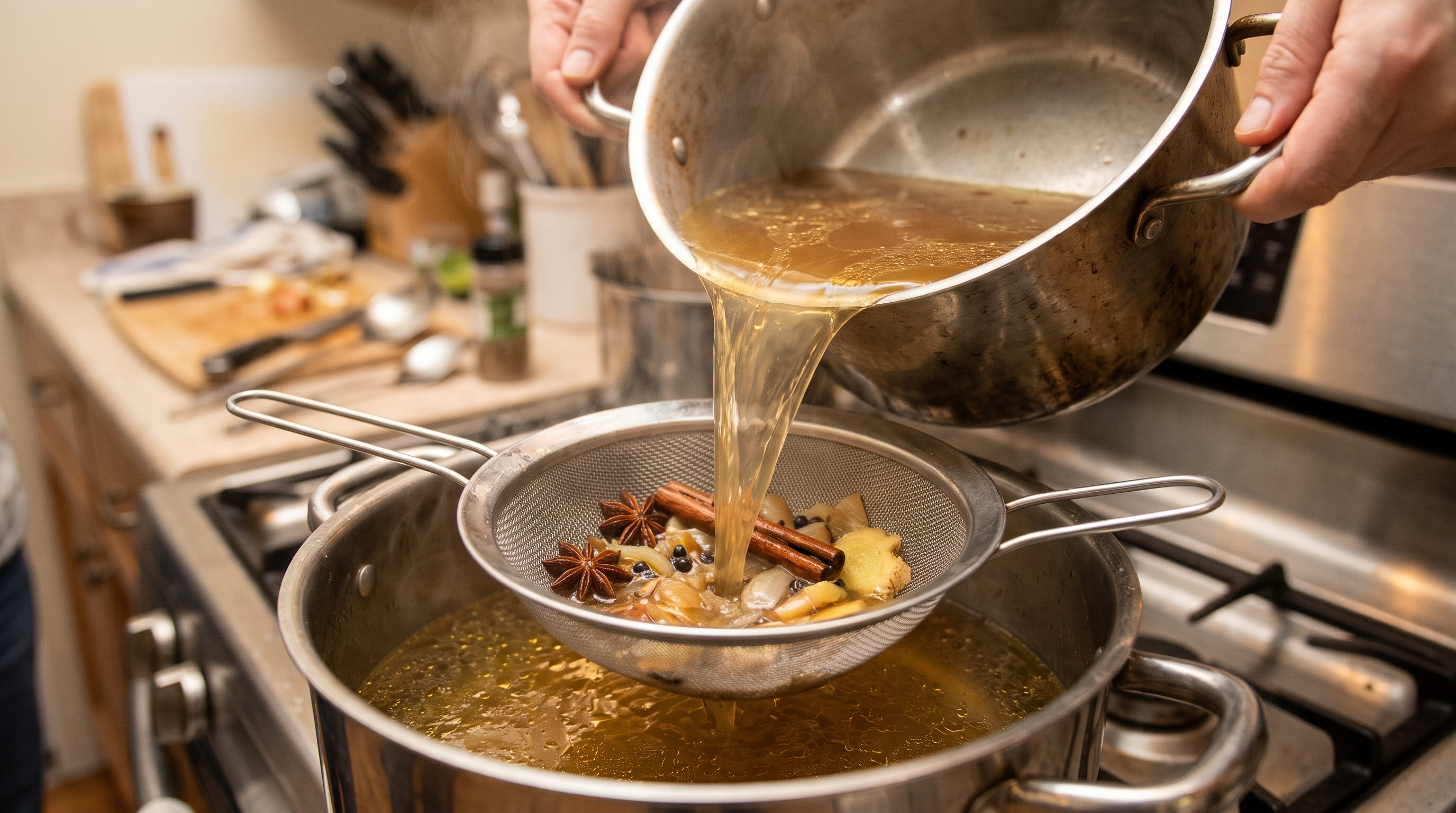
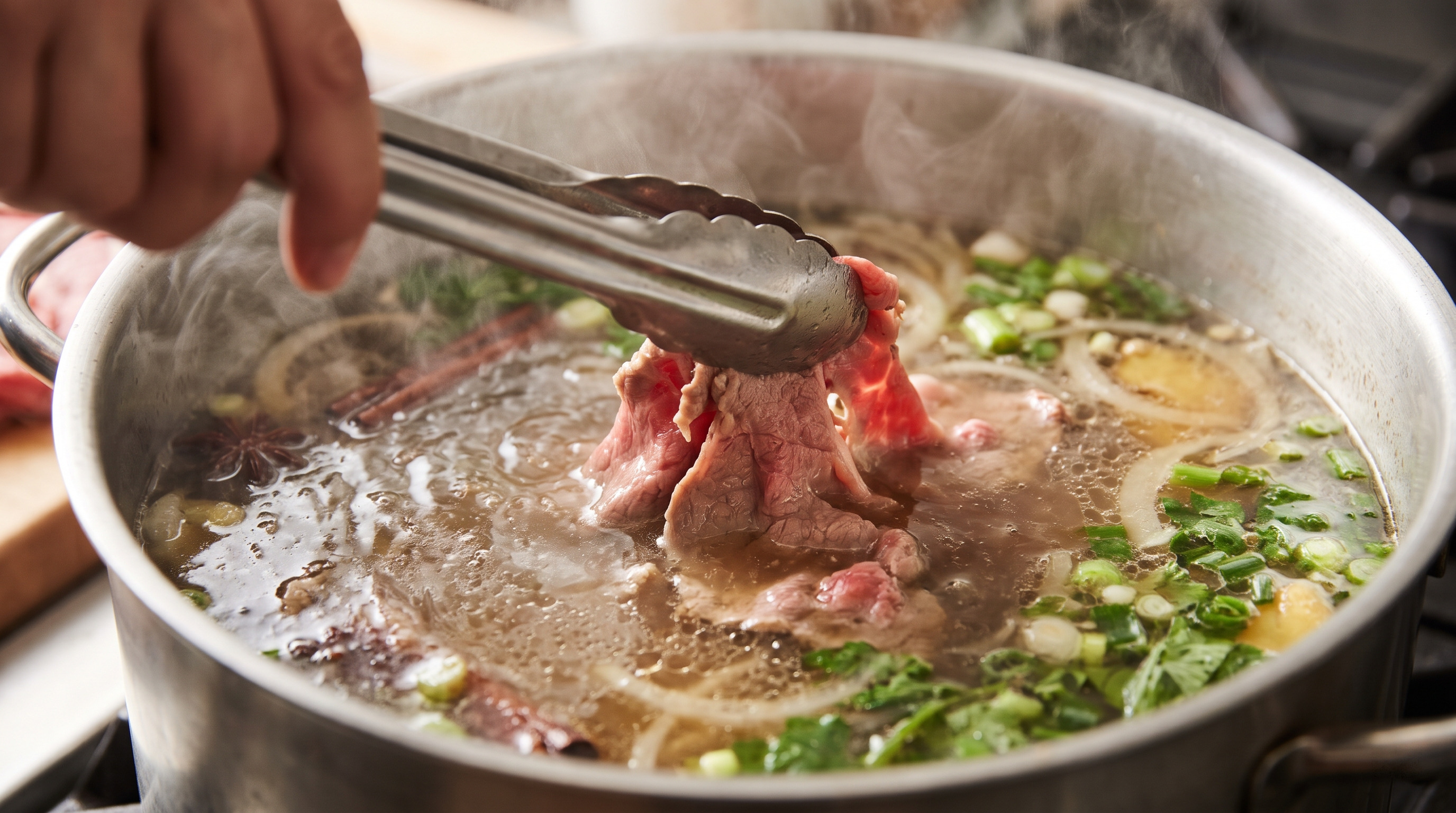
Place a fine mesh strainer over a clean pot and pour the simmering broth through, discarding the spent onion, ginger, and spices. You will be left with a gleaming, clear, golden-amber broth.
Return the strained broth to the stove. Stir in 3 tablespoons of fish sauce, 1.5 tablespoons of oyster sauce, 1 tablespoon of chicken bouillon, 1 tablespoon of sugar, and 1/2 tablespoon of salt. Bring back to a vigorous rolling boil.
Using tongs, swish the thinly sliced beef into the bubbling broth for 45 to 60 seconds until the pink color just disappears. Immediately transfer the cooked beef slices to a plate. (Flash-poaching preserves supreme tenderness and prevents the meat from turning stringy or tough.)
Step 4. Flash-Blanch Noodles, Assemble & Garnish
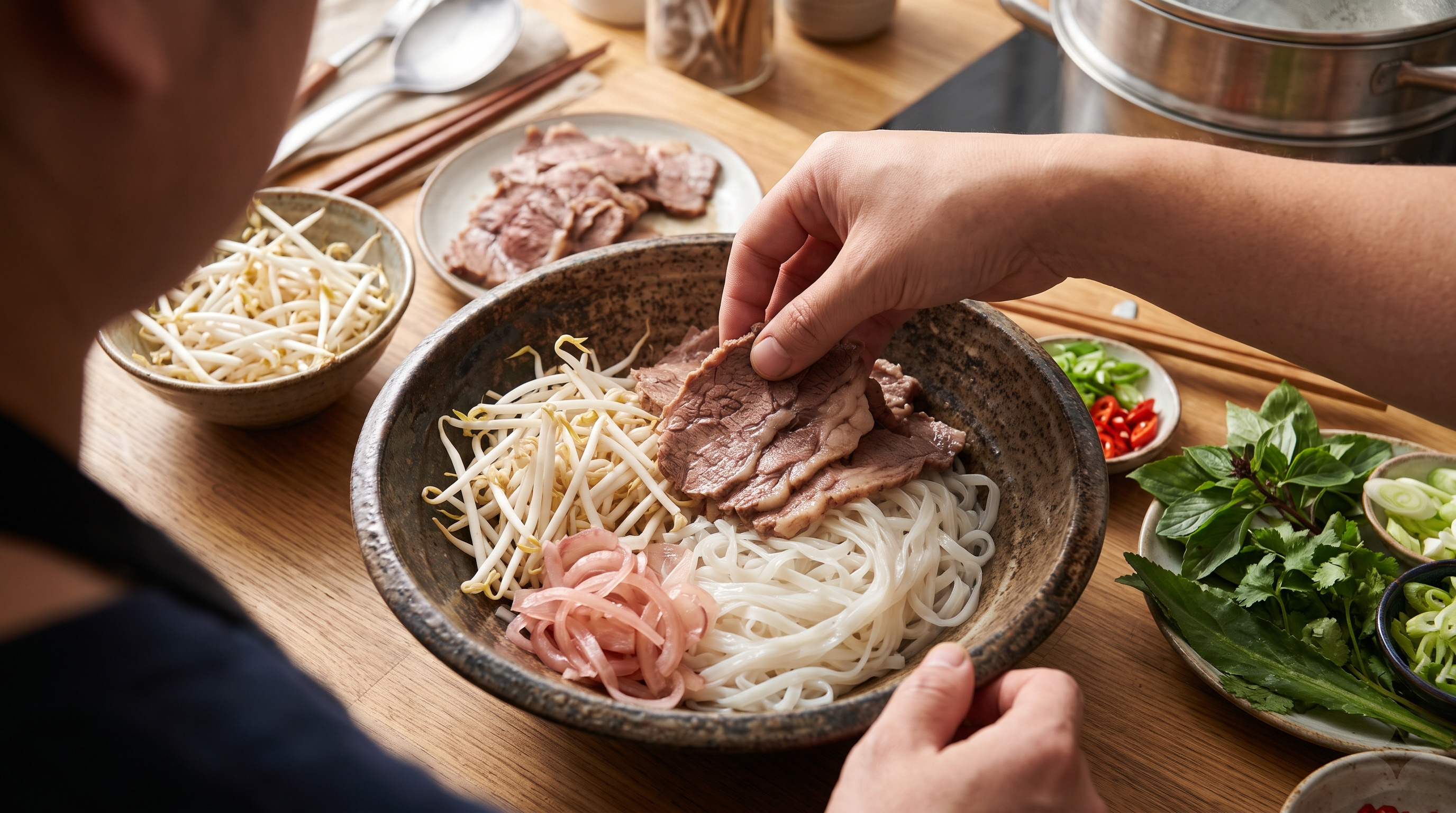
Bring a separate pot of plain water to a rolling boil. Place the soaked, drained rice noodles into a noodle strainer basket. Dip the noodles into the boiling water for exactly 20 to 30 seconds. Lift, shake off excess water vigorously, and divide evenly between deep serving bowls.
Immediately top the noodles with a handful of fresh bean sprouts and arrange the tender beef slices over the center. Spoon on the drained pickled onions, sliced chilies, and torn cilantro sprigs.
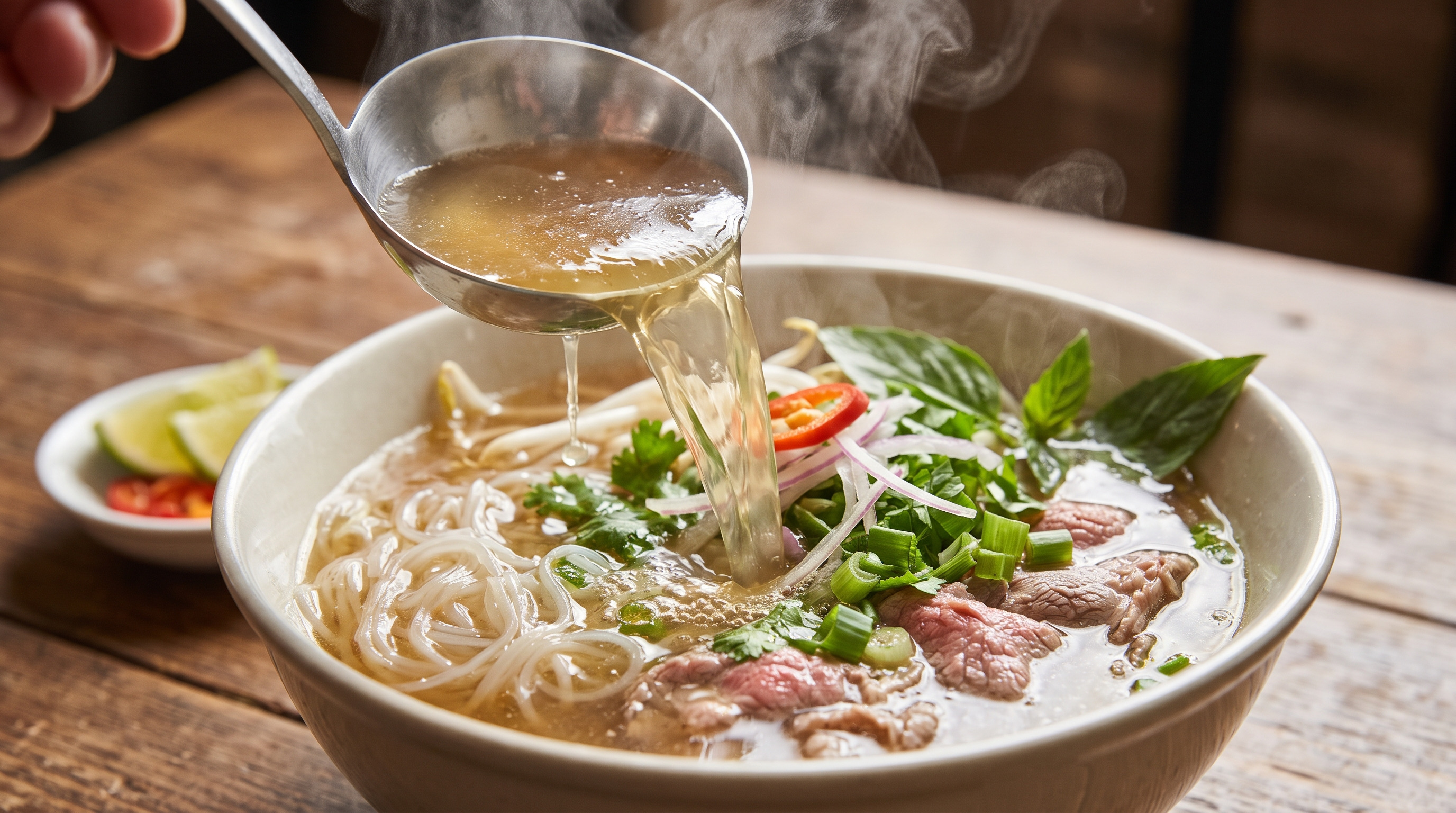
Ladle the boiling-hot aromatic broth generously over the bowl, completely submerging the noodles and warming the sprouts. Serve immediately with fresh lime wedges, Thai basil, hoisin sauce, and Sriracha on the side.
4. Pro Chef Tips to Elevate Your Dish
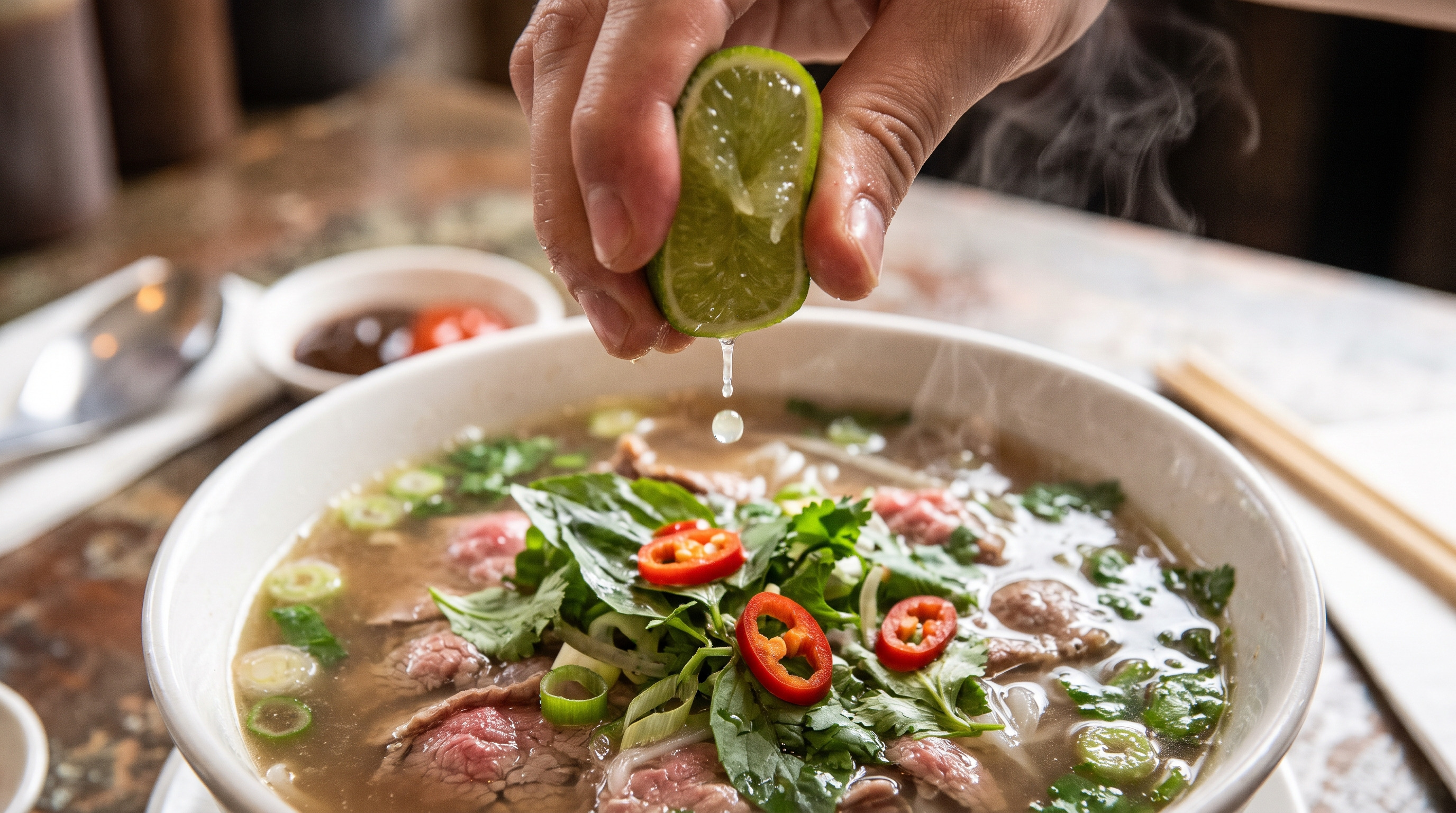
- The Beef Bone Broth + Chicken Stock Synergistic Trick: Restaurant broths obtain their soul-warming mouthfeel from dissolved marrow collagen and cross-species amino acids. By combining 1 pack of rich commercial beef bone broth (sagol gomtang) with 1 tablespoon of chicken bouillon, you create a dual inosinate + glutamate umami cascade that mimics 24 hours of traditional marrow boiling in just 15 minutes.
- Quick-Pickled Onions Provide Vital Acidity: In authentic Vietnamese pho restaurants, a small dish of tangy vinegar-soaked onions is always provided. Adding these crisp, slightly sour onions directly over your hot noodles cuts through the richness of the beef fat and refreshes your palate between bites.
- Try the Hanoi “Phở Tái” Raw Beef Method: If using high-grade, thinly sliced beef (such as prime ribeye or tenderloin), do not pre-poach the meat. Lay the paper-thin raw slices directly over the hot blanched noodles in the bowl, then pour furiously boiling broth straight over the beef. The boiling broth cooks the beef to medium-rare within seconds, producing the juiciest, most tender texture imaginable.
5. Frequently Asked Questions (FAQ)
Q1. Can I skip the whole star anise and cinnamon stick if I don’t have them?
Star anise and cinnamon are the essential aromatic signature of Vietnamese pho. Omitting them turns the soup into a standard beef broth. If whole spices are unavailable, use 1/4 teaspoon of Chinese five-spice powder or steep a pre-packaged pho spice bag (available at Asian grocers) for 10 minutes.
Q2. Can I substitute fish sauce with Korean anchovy sauce or regular soy sauce?
Korean anchovy sauce (myeolchi-aekjeot) or sand lance sauce (kkanari-aekjeot) works as a 1:1 substitute with identical savory umami depth. Do not substitute with regular soy sauce, as soy sauce darkens the broth excessively and shifts the flavor profile toward Japanese ramen.
Q3. Should the bean sprouts be blanched or served raw?
Authentic Vietnamese pho is served with raw bean sprouts placed directly in the bottom of the bowl or on a side plate. The boiling-hot broth poured on top gently wilts the sprouts while keeping their crisp, refreshing crunch. If you are sensitive to raw bean sprouts, blanch them in boiling water for 5 seconds beforehand.
6. Serving Suggestions & Related Recipes
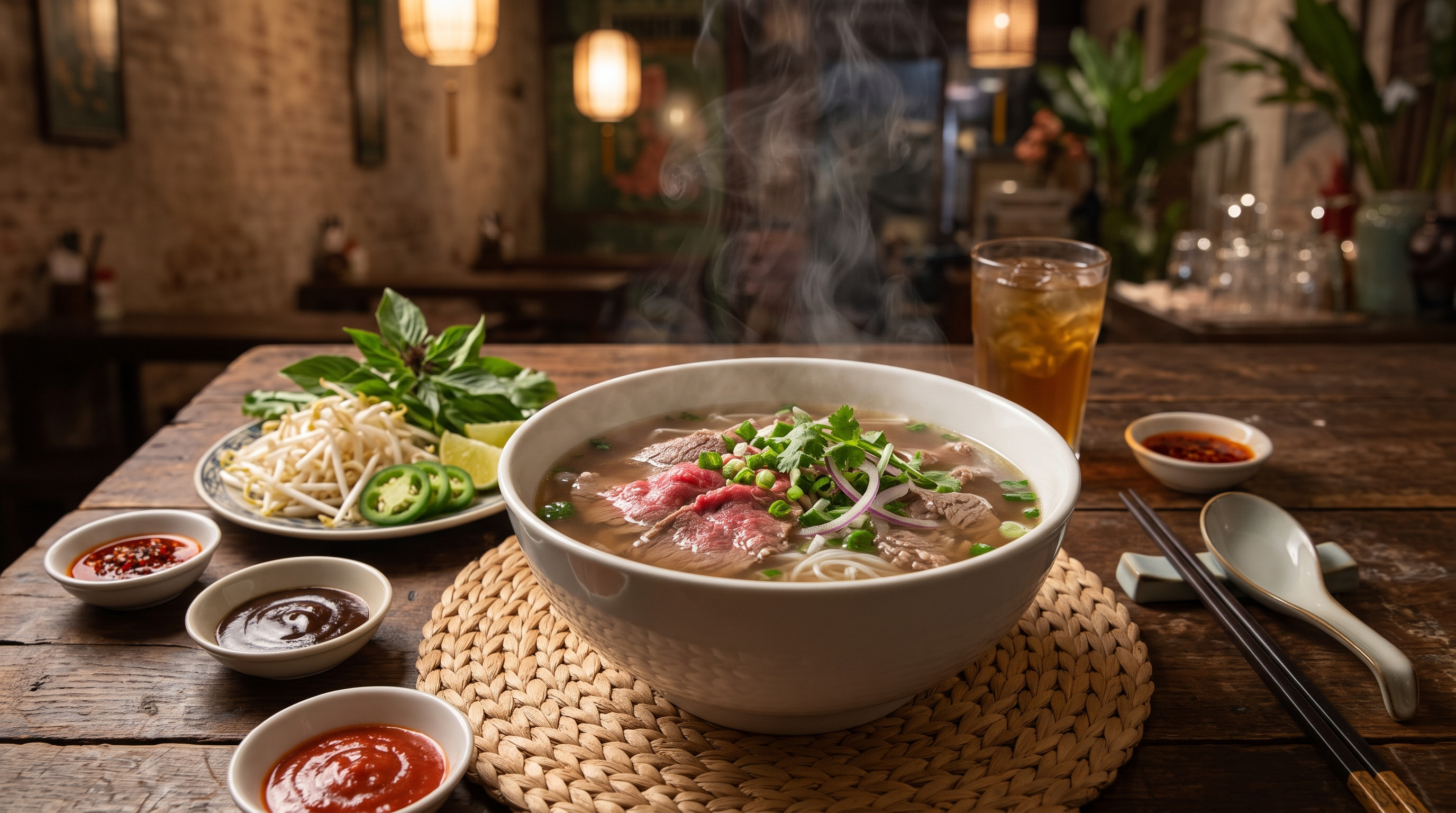
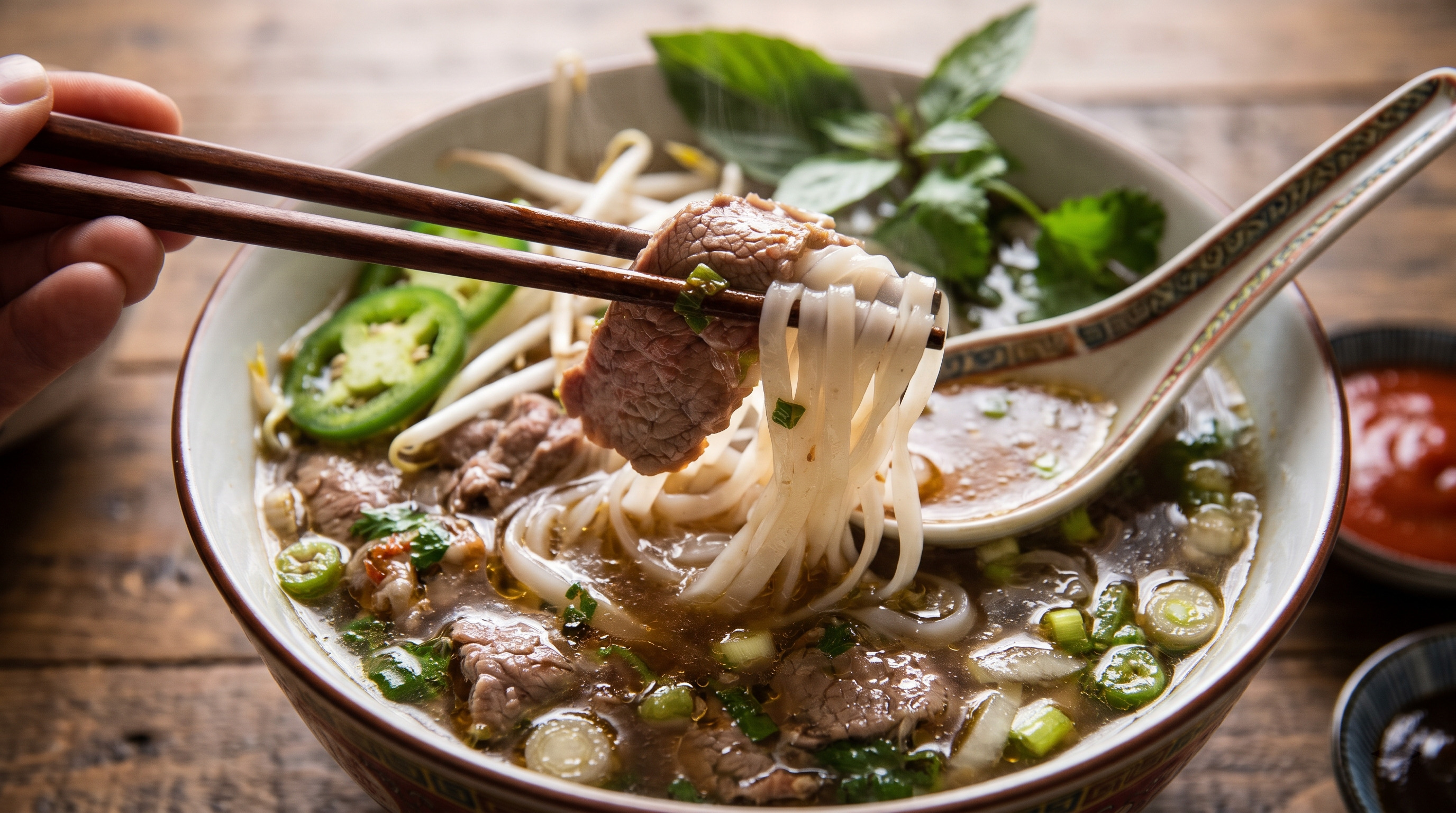
Vietnamese Beef Pho is an entire culinary experience in a single bowl. Before taking your first bite, squeeze a fresh lime wedge over the broth, tear fresh Thai basil leaves into the soup, and inhale the rich aromatic steam. In a small side dish, mix equal parts hoisin sauce and Sriracha for dipping your tender beef slices between noodle slurps.
For the ultimate Southeast Asian noodle experience or comforting Asian beef dishes, check out these related favorites:
- Craving sweet, savory, and tangy stir-fried noodles? Cook our authentic Shrimp Pad Thai.
- Love tender simmered beef over rice? Try our quick Japanese comfort classic Japanese Beef Gyudon.
- Looking for another soothing Korean beef broth? Discover our classic Beef Miyeokguk (Seaweed Soup).